
Introduction
ActiveCampaign has long been considered a powerhouse in the marketing automation space. It is a robust, feature-dense platform capable of executing highly complex workflows.
Streamline your software evaluation process
However, for mid-sized companies in 2026, "power" often translates directly into "feature bloat." Marketing directors are increasingly frustrated by paying enterprise-level rates for overly complex systems that require a dedicated technical architect to manage. You need agility, speed, and clear ROI, not a steep learning curve that alienates your marketing generalists.
Let us address the elephant in the room: "sunk cost" anxiety. Switching platforms is intimidating because of the years of workflow logic, tagged data, and team training invested in your current setup.
However, clinging to a platform that drains productivity is a far greater liability. The fear of losing historical data should not keep you tethered to a tool that no longer serves your growth.
The marketing technology landscape has evolved. Today's best marketing automation software for mid-sized companies offers faster time-to-value, highly intuitive user interfaces, and scalable pricing.
If your team is dealing with price creep, sluggish platform performance, or technical debt, it is time to evaluate the top ActiveCampaign competitors to achieve enterprise marketing automation without complexity.
Key Takeaways
Top All-in-One Replacement: HubSpot is the best choice for marketing directors seeking unified sales and marketing alignment without the technical debt and feature bloat of ActiveCampaign.
Best for E-commerce: Klaviyo and Omnisend offer superior data-driven personalization and omnichannel growth for retail brands.
Best for Budget & Speed: Brevo and MailerLite provide scalable messaging and intuitive interfaces, directly solving ActiveCampaign's recent price creep and sluggish UI.
Best for Specific Niches: Kit (formerly ConvertKit) is the undisputed leader for creator-led strategies, while Keap excels in service-based business automation.
Migration Strategy: Transitioning away from ActiveCampaign takes roughly 30 days. Focus on platforms with strong API robustness, SOC2/GDPR compliance, and dedicated support to ensure a seamless switch and high team adoption.
🏆 Top Software Picks
HubSpot — Best for integrated CRM, marketing automation, and revenue reporting.
Klaviyo — Best for ecommerce personalization and behavior-based automation.
Brevo — Best for multichannel email, SMS, and WhatsApp campaigns.
GetResponse — Best for marketing funnels, email automation, and webinars.
Keap — Best for service businesses automating sales and client management.
Omnisend — Best for ecommerce email and SMS automation.
Mailchimp — Best for accessible campaign creation and broad integrations.
PipelinePRO — Best for combining sales pipelines, CRM, and marketing automation.
Kit — Best for creators, newsletters, and audience monetization.
Zoho Campaigns — Best for affordable email automation within the Zoho ecosystem.
MailerLite — Best for simple email campaigns, newsletters, and landing pages.
Moosend — Best for budget-friendly email marketing and workflow automation.
Software Covered in this Article
To help you understand CRM software in the right context, this article refers to a carefully curated set of leading CRM alternatives:










Quick Comparison: Top 12 ActiveCampaign Alternatives at a Glance
When evaluating an activecampaign vs hubspot vs brevo vs getresponse vs klaviyo comparison 2025 2026 marketing automation setup, or a specific activecampaign vs hubspot vs brevo vs getresponse vs klaviyo comparison 2025 2026 email marketing automation strategy, directors must match tools to their primary channels:
Tool | Price | Best For | Features |
PipelinePRO | Starts at $67/mo | High-Velocity Sales Pipelines | Unlimited contacts, integrated sales CRM, SMS automation |
Brevo | Free, Paid from $15/mo | Scalable Transactional Messaging | Unlimited contacts on free, SMS/WhatsApp, advanced routing |
Keap | Starts at $299/mo | Service-Based Business Automation | Invoicing, appointment scheduling, pipeline management |
HubSpot | Free, Starter $14/mo | Unified Marketing & Sales | World-class UI, unified CRM, advanced reporting |
Mailchimp | Free, Paid from $13/mo | Established Brands | Journey builder, predictive analytics, robust integrations |
Kit | Free, Paid from $39/mo | Creator-Led Marketing | Visual automations, paid newsletter features, easy UI |
GetResponse | Starts at $19/mo | Multi-Channel Inbound Funnels | AI campaign generator, webinars, website builder |
Omnisend | Free, Paid from $16/mo | Omnichannel E-commerce Growth | Pre-built ecommerce workflows, SMS, push notifications |
Klaviyo | Free, Paid from $20/mo | Data-Driven Personalization | Predictive AI, deep Shopify integration, behavioral triggers |
Moosend | Starts at $9/mo | Budget-Friendly Automation | Unlimited emails, drag-and-drop automation, countdown timers |
MailerLite | Free, Paid from $10/mo | Speed and UI Simplicity | Lightning-fast interface, intuitive builder, clean templates |
Zoho Campaigns | Free, Paid from $3/mo | Deep Ecosystem Integration | Zoho CRM native sync, dynamic content, autoresponders |
*Note: All prices shown reflect typical monthly billing. Vendors often offer lower pricing for annual commitments, but those discounts are excluded here for easier comparison. Actual costs may vary depending on your requirements, usage volumes, and negotiated terms.
Why Marketing Directors are Switching from ActiveCampaign in 2026
Before diving into the specific alternatives, it is crucial to understand why so many mid-market decision-makers are migrating their marketing stacks. Validating your reasons for switching ensures you select a replacement that actually solves your core pain points.
1. The Frustration of Price Creep
ActiveCampaign's pricing model is heavily tied to contact volume. As your business grows and your database expands, you are often forced into higher pricing tiers—even if you are only actively emailing a fraction of those contacts.
Many modern affordable marketing automation platforms have shifted to pay-per-send models or offer flat-fee structures that provide much better cost predictability.
2. Feature Bloat and Technical Debt
ActiveCampaign offers an incredible array of triggers, webhooks, and conditional logic paths, but this complexity often creates technical debt.
Companies shouldn't need to hire a dedicated ActiveCampaign expert just to manage basic marketing automation. When only one person understands how your core lead-routing works, marketing agility plummets. Teams are increasingly switching to CRM alternatives that offer intuitive, "one-click" templates rather than requiring manual logic building from scratch.
3. Sluggish Interface and Support Bottlenecks
Speed matters. A recurring complaint among ActiveCampaign users is the sluggishness of the platform's automation builder, especially when handling large workflows.
Furthermore, as a mid-sized company, you cannot afford to wait 48 hours for a ticket response when a critical lead flow breaks. Marketing directors are moving toward platforms that offer lightweight, fast-loading UIs paired with dedicated, responsive live support.
Deep Dive: The 12 Best ActiveCampaign Alternatives
1. PipelinePRO: Best for High-Velocity Sales Pipelines
Who is this best for?
Sales-driven mid-market teams that need tight, seamless alignment between their marketing automation efforts and a high-velocity sales pipeline. It functions as an all-in-one sales and marketing engine rather than a standalone best-of-breed email tool.

Why it beats ActiveCampaign
PipelinePRO is fundamentally built around sales velocity. While ActiveCampaign has a CRM component, its deal stages can feel clunky compared to PipelinePRO's hyper-focused sales dashboard.
More importantly, PipelinePRO operates on a model that often includes unlimited contacts, completely eliminating the contact-count pricing penalty.
Key Capabilities
Unified Dashboard: Merges lead generation metrics directly with sales conversion data.
Native SMS and Voice: Built-in two-way text messaging and pipeline calling without needing third-party integrations.
Flat-Fee Predictability: Avoids the exponential price increases associated with database growth.
Migration Difficulty & Support Quality
Migration Difficulty: 2/5. The platform offers straightforward CSV imports and excellent onboarding documentation.
Support Quality: Highly responsive live chat and dedicated onboarding specialists ensure your sales team does not experience downtime.
The Verdict
If your marketing department exists primarily to feed qualified leads to a hungry sales team, PipelinePRO removes the friction between lead capture and the closed-won deal.
2. Brevo: Best for Scalable Transactional and Marketing Messaging
Who is this best for?
Budget-conscious companies sending high volumes of transactional and promotional messages. As a best-of-breed multi-channel sender, it integrates easily with external CRMs.

Why it beats ActiveCampaign
In any Brevo vs ActiveCampaign comparison, pricing is the standout differentiator. Brevo completely flips the script by charging per email sent rather than per contact.
You can maintain unlimited contacts on their free tier. For a mid-sized company with a massive historical database, this model saves thousands of dollars annually.
Key Capabilities
Omnichannel Routing: Seamlessly transition a customer journey from an email to a WhatsApp message based on engagement.
Superior Deliverability Tools: Advanced inbox previews and spam testing to ensure high placement rates.
Agile UI: A significantly flatter learning curve for new marketing hires.
Migration Difficulty & Support Quality
Migration Difficulty: 1/5. Brevo is renowned for its frictionless setup and one-click integrations with major e-commerce and CRM platforms.
Support Quality: Excellent email and live chat support, with priority routing for premium mid-market tiers.
The Verdict
Choose Brevo if you want powerful multi-channel messaging without being financially punished for maintaining a large contact database.
3. Keap: Best for Service-Based Business Automation
Who is this best for?
Mid-sized service providers, consultants, and agencies who need marketing automation tied directly to client management. It is a true all-in-one operational hub.

Why it beats ActiveCampaign
ActiveCampaign is a pure marketing and sales tool. Keap handles the actual administrative delivery of your service.
It bridges the gap between marketing to a prospect and actually onboarding them, offering native invoicing, payment processing, and calendar bookings right within the automation flow.
Key Capabilities
Lifecycle Automation: Automate the entire journey from initial lead capture to paid invoice and follow-up review requests.
Client Portal: A centralized hub for your clients to view documents and pay bills.
Sales Pipeline: Visual drag-and-drop pipelines tailored for service delivery.
Migration Difficulty & Support Quality
Migration Difficulty: 3/5. Because it touches invoicing and scheduling, migration requires careful mapping, but Keap provides strong guided assistance.
Support Quality: Keap offers dedicated account managers and robust phone support, far exceeding standard ticket-based systems.
The Verdict
If you run a service-based business and want to consolidate your marketing software, scheduling tool, and invoicing platform into one system, Keap is the definitive choice.
4. HubSpot: Best for Unified Marketing and Sales Alignment
Who is this best for?
Marketing directors who require a single, uncompromised source of truth for both marketing and sales. It is the ultimate all-in-one platform providing cost-effective CRM and automation at the starter tiers.

Why it beats ActiveCampaign
While ActiveCampaign integrates with external CRMs, HubSpot is the CRM, ensuring flawless data visibility between marketing touchpoints and sales activity.
When comparing HubSpot vs Klaviyo vs ActiveCampaign vs Omnisend omnichannel ease of use, HubSpot's unified architecture takes the lead. Klaviyo and Omnisend are highly capable for e-commerce messaging but require third-party CRMs for complex sales. ActiveCampaign offers a built-in CRM, yet its interface can feel fragmented across channels. HubSpot provides a single, intuitive dashboard to manage email, social, ads, and SMS, making it the gold standard for usability.
Key Capabilities
Generative AI Integration: Native AI tools for drafting emails, creating landing page copy, and building reports.
Advanced Revenue Attribution: See exactly which marketing email generated a specific closed-won deal.
Modular Upgrades: Start free and only pay for the specific "Hubs" your team actually uses.
Migration Difficulty & Support Quality
Migration Difficulty: 4/5. Moving to a full CRM ecosystem takes time, but HubSpot's migration tools and partner network are world-class.
Support Quality: Premium 24/7 phone and chat support that sets the industry benchmark for reliability.
The Verdict
If data silos are costing you revenue and you need an enterprise-grade but user-friendly unified ecosystem, HubSpot is worth the investment.
5. Mailchimp: Best for Established Brands Needing Familiarity
Who is this best for?
Traditional retail or B2B brands that need a highly recognizable, best-of-breed platform with a massive, plug-and-play integration ecosystem.

Why it beats ActiveCampaign
ActiveCampaign's automation canvas can be intimidating. Mailchimp's Customer Journey Builder has evolved into a highly visual, accessible tool that non-technical staff can master quickly.
Because Mailchimp is ubiquitous, almost any new marketing hire will already know how to use it, drastically reducing onboarding time.
Key Capabilities
Predictive Analytics: Built-in tools that predict customer lifetime value and likelihood to purchase.
Creative Assistant: AI-driven design tools that automatically resize and format brand assets for different campaigns.
Unmatched Integrations: If a software exists, it likely has a native, one-click integration with Mailchimp.
Migration Difficulty & Support Quality
Migration Difficulty: 1/5. Incredibly simple to import lists and connect to existing tech stacks.
Support Quality: Robust 24/7 chat and email support, with phone support available on higher tiers.
The Verdict
If your team is suffering from "feature fatigue" and you simply need a reliable, familiar tool to execute standard marketing campaigns efficiently, Mailchimp remains a top contender.
6. Kit (earlier branded as ConvertKit): Best for Creator-Led Marketing Strategies
Who is this best for?
Mid-sized media companies, course creators, and personal-brand-led businesses. It is a best-of-breed platform focused entirely on audience monetization.

Why it beats ActiveCampaign
ActiveCampaign is built for traditional B2B and B2C sales cycles. Kit is purpose-built for the creator economy.
It strips away the unnecessary CRM bloat and focuses entirely on audience segmentation, content monetization, and beautifully simple visual automations.
Key Capabilities
Native Paid Newsletters: Seamlessly charge subscribers for premium content without needing a third-party paywall.
Creator Network: Built-in growth tools that allow you to cross-promote with other newsletters to grow your list organically.
Frictionless UI: Visual automation builders that are incredibly straightforward and fast to deploy.
Migration Difficulty & Support Quality
Migration Difficulty: 2/5. Offers free concierge migration for lists over 5,000 subscribers, making the switch painless.
Support Quality: Highly responsive live chat tailored to digital creators and media operators.
The Verdict
If content monetization and audience engagement are your primary revenue drivers, Kit offers a much cleaner, more focused experience than ActiveCampaign.
7. GetResponse: Best for Multi-Channel Inbound Funnels
Who is this best for?
Marketing teams that rely heavily on webinars, landing pages, and automated lead-nurturing funnels. It serves as an all-in-one inbound marketing suite.

Why it beats ActiveCampaign
When evaluating the best webinar software in a HubSpot, GetResponse, and ActiveCampaign comparison for 2025 or 2026, GetResponse stands out as the top contender. ActiveCampaign requires third-party integrations like Zoom, creating data gaps. Conversely, GetResponse features a robust, native webinar platform built directly into the software. You can trigger automations based on exact attendee watch time, all within one unified dashboard.
Key Capabilities
AI Campaign Generator: Instantly generate a landing page, welcome email, and follow-up sequence based on a single prompt.
Conversion Funnels: Pre-built, visual funnel templates that guide you through setting up a complete inbound campaign.
Native Webinars: Host, record, and automate follow-ups for webinars without leaving the platform.
Migration Difficulty & Support Quality
Migration Difficulty: 2/5. The funnel-based approach requires a slight mindset shift, but list migration is seamless.
Support Quality: Award-winning 24/7 live chat support that is consistently praised in user reviews.
The Verdict
If you want to reduce your software stack by consolidating your landing page builder, webinar software, and email automation into a single platform, GetResponse is ideal.
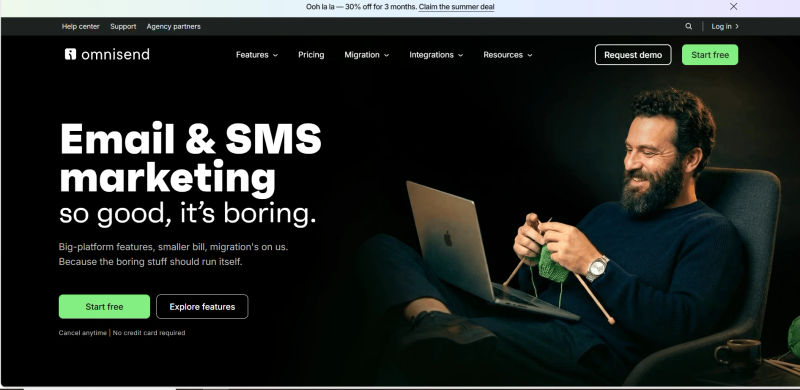
8. Omnisend: Best for Omnichannel E-commerce Growth
Who is this best for?
Mid-sized e-commerce brands looking for pre-built, revenue-generating workflows across email, SMS, and push notifications. It is a best-of-breed e-commerce tool.
Why it beats ActiveCampaign
ActiveCampaign requires you to build e-commerce automations largely from scratch. Omnisend is exclusively tailored for e-commerce.
It comes out of the box with one-click templates for cart abandonment, browse abandonment, and post-purchase follow-ups that natively pull product data from your store.
Key Capabilities
Deep Store Integration: Flawless, one-click sync with Shopify, BigCommerce, and WooCommerce.
Global SMS: Integrated SMS marketing that works in tandem with your email flows to maximize reach.
Gamified Forms: Interactive pop-ups like the "Wheel of Fortune" that significantly increase email capture rates.
Migration Difficulty & Support Quality
Migration Difficulty: 2/5. Direct integrations with major e-commerce platforms make syncing historical purchase data effortless.
Support Quality: 24/7 live chat with specialized e-commerce onboarding specialists.
The Verdict
If you run an e-commerce store and your primary goal is to increase revenue through automated lifecycle marketing, Omnisend provides a much faster time-to-value than ActiveCampaign.
9. Klaviyo: Best for Data-Driven Personalization
Who is this best for?
Advanced e-commerce marketing directors who need deep predictive analytics and behavioral segmentation. It is the premier best-of-breed data engine for retail.

Why it beats ActiveCampaign
While ActiveCampaign is a generalist tool, Klaviyo is the undisputed leader in e-commerce data utilization.
Klaviyo pulls in vastly more granular historical purchase data and behavioral metrics from your store. This allows you to create hyper-targeted segments with ease.
Key Capabilities
Predictive AI: Automatically predicts the date of a customer's next order and triggers campaigns accordingly.
Dynamic Product Recommendations: Inserts highly accurate, personalized product suggestions into emails based on browsing history.
Robust Benchmarking: Compare your open rates and conversion metrics against similar brands in your specific industry.
Migration Difficulty & Support Quality
Migration Difficulty: 3/5. Migrating complex segments takes planning, but Klaviyo's documentation is exhaustive.
Support Quality: Strong email and chat support, with dedicated customer success managers for mid-market tiers.
The Verdict
If maximizing Customer Lifetime Value (CLV) through data-rich, hyper-personalized campaigns is your top priority, Klaviyo is the most powerful alternative on the market.
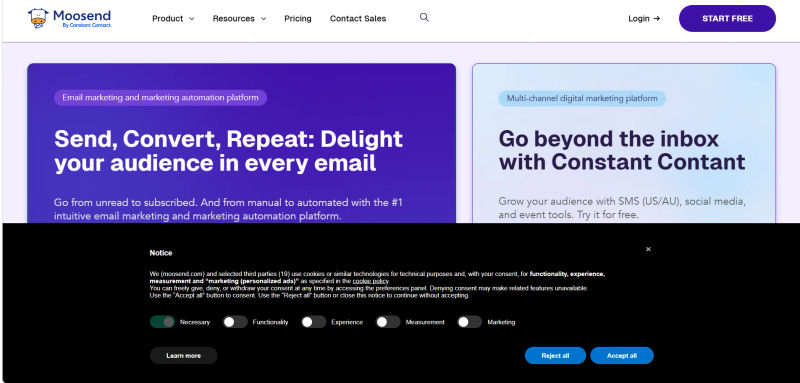
10. Moosend: Best for Budget-Friendly Automation Power
Who is this best for?
Cost-conscious marketing teams that need advanced automation triggers without paying enterprise software prices. It is a highly scalable best-of-breed platform.
Why it beats ActiveCampaign
Moosend offers a drag-and-drop automation builder that rivals ActiveCampaign's core functionality at a fraction of the cost. More importantly, it is built to scale.
If you are wondering if Moosend can handle 50k+ contacts, the answer is yes—it easily manages high-volume sending for mid-sized lists without breaking the bank or slowing down.
Key Capabilities
Unlimited Emails: Send as many campaigns as you want without hitting arbitrary sending limits.
Advanced Personalization: Native weather-based triggers and countdown timers to drive urgency.
E-commerce AI: Product recommendation blocks that automatically populate based on user behavior.
Migration Difficulty & Support Quality
Migration Difficulty: 1/5. The platform is incredibly intuitive, making list and template migration a breeze.
Support Quality: Highly rated live chat support that is fast and genuinely helpful.
The Verdict
If you are migrating strictly to reduce software overhead while maintaining core, reliable automation capabilities at scale, Moosend is the smartest financial choice.
11. MailerLite: Best for Speed and User Interface Simplicity
Who is this best for?
Marketing generalists who are frustrated by slow loading times and cluttered interfaces. It is a best-of-breed tool focused purely on speed and design.

Why it beats ActiveCampaign
ActiveCampaign's interface can be notoriously heavy. MailerLite is the exact opposite. It is lightweight, incredibly fast, and features a minimalist UI.
Do not let the "Lite" in the name fool you; MailerLite robustly supports mid-market databases of 50k to 250k+ contacts with excellent deliverability rates, removing the friction from daily marketing tasks.
Key Capabilities
Lightning-Fast Builder: A highly responsive drag-and-drop editor that never lags.
Clean, Modern Templates: A library of aesthetically pleasing templates that require minimal customization.
Monetization Tools: Built-in features to sell digital products and subscriptions directly through your emails.
Migration Difficulty & Support Quality
Migration Difficulty: 1/5. One of the easiest platforms to adopt, with a nearly zero learning curve.
Support Quality: 24/7 live chat support that consistently receives top marks for friendliness and speed.
The Verdict
If your team's biggest complaint is the sheer amount of time it takes to navigate, build, and launch a simple automated campaign, MailerLite will instantly boost your productivity.
12. Zoho Campaigns: Best for Deep Ecosystem Integration
Who is this best for?
Companies that are already using, or planning to migrate to, the broader Zoho suite of business applications. It provides cost-effective CRM and automation in one all-encompassing ecosystem.
Why it beats ActiveCampaign
Zoho Campaigns secures its position as the best value marketing automation in 2026 compared to HubSpot, ActiveCampaign, and Mailchimp. While ActiveCampaign requires third-party connectors like Zapier for ecosystem integration, Zoho Campaigns offers native, seamless data flow.
By avoiding the steep price scaling of its competitors, Zoho delivers enterprise-grade features for a significantly lower total cost of ownership.
Key Capabilities
Native CRM Sync: Bi-directional data syncing with Zoho CRM that updates in real-time without API delays.
Dynamic Content: Easily swap out email content blocks based on the recipient's CRM status.
Unified Analytics: View campaign performance directly alongside your sales data in Zoho Analytics.
Migration Difficulty & Support Quality
Migration Difficulty: 3/5. Easy if you are already in the Zoho ecosystem; requires more setup if you are migrating multiple external tools simultaneously.
Support Quality: Comprehensive phone, email, and chat support backed by a massive global team.
The Verdict
If your strategy involves consolidating your entire business software stack into one unified, cost-effective ecosystem, Zoho Campaigns is the logical choice.
Decision Matrix: How to Choose Your Next Automation Tool
Selecting the right tool from a list of ActiveCampaign alternatives requires moving beyond feature comparisons and looking at how the software impacts your daily operations. Use this framework to guide your final decision.
1. Assessing Total Cost of Ownership (TCO) and Marketing Automation ROI for Directors
Do not just look at the base pricing tier. ActiveCampaign is known for "price creep." When evaluating alternatives, calculate the Total Cost of Ownership for the next 24 months to ensure true marketing automation ROI for directors. Factor in:
Contact Growth: Will you be penalized as your list grows? Look at Brevo or PipelinePRO for better scaling.
Add-Ons: Does the alternative charge extra for SMS credits, dedicated IPs, or premium integrations?
Seat Licenses: How much does it cost to add your new marketing coordinator or sales rep to the platform?
2. Evaluating Ease of Migration and Team Adoption
Migration is the biggest hurdle for mid-sized companies. The best marketing automation software for your team is one that offers a frictionless transition.
Migration Services: Look for platforms that offer free, white-glove migration services or one-click data imports.
The 30-Day Rule: Can your team successfully launch their first automated campaign within 30 days of signing the contract? If the UI is too complex, adoption will stall.
3. Security, SOC2, and GDPR Compliance
For regulated industries, security is non-negotiable. When comparing the best compliance documentation for financial services providers (Mailchimp, HubSpot, ActiveCampaign, Brevo)—or the best compliance documentation Finanzdienstleister (Mailchimp, HubSpot, ActiveCampaign, Brevo)—capabilities vary significantly:
HubSpot: Leads with an enterprise-grade security portal and comprehensive SOC2/ISO documentation.
Brevo: Excels for EU-based institutions needing strict local data hosting.
ActiveCampaign: Offers solid SOC2 Type II compliance, but audit reports often require enterprise tiers.
Mailchimp: Features accessible documentation, though it lacks the specialized depth required by strict financial institutions.
Always ensure your choice includes GDPR-compliant data processing agreements and data residency controls.
4. API Robustness and Tech Stack Integration
If you are opting for a best-of-breed tool rather than an all-in-one system, API robustness is critical. Your new automation platform must play nice with your existing tech stack.
Evaluate whether the platform offers native, bi-directional syncs with your data warehouse (like Snowflake), your internal communication tools (like Slack), and your dedicated sales CRM.
Stop the guesswork—evaluate top ActiveCampaign alternatives for free on AuthenCIO.
The 30-Day ActiveCampaign Migration Guide
To mitigate sunk cost anxiety and ensure a smooth transition, follow this structured marketing automation migration guide to move off ActiveCampaign in 30 days.
Week 1: Audit and Cleanse Do not migrate your mess. Audit your current ActiveCampaign setup to identify "zombie automations" that are running but generating no revenue. Cleanse your contact list of hard bounces and unengaged subscribers to lower your starting tier costs on the new platform.
Week 2: Data Mapping and Export Map your custom fields from ActiveCampaign to your new tool. Export your contacts, tags, and historical suppression lists via CSV. If your new tool offers a concierge migration service, hand off your data map to their team.
Week 3: Rebuilding Core Workflows Focus only on your top 20% of revenue-generating workflows (e.g., welcome series, abandoned cart, core lead nurture). Use the intuitive visual builders in your new platform to recreate these essential paths. Leave the complex, low-impact workflows behind.
Week 4: Testing and Go-Live Run internal tests to ensure tags are applying correctly and triggers are firing. Warm up your new dedicated IP address if applicable. Once verified, switch your lead capture forms to point to the new system and turn off your ActiveCampaign billing.
Try AuthenCIO
Move to faster, smarter software evaluation with AI
Conclusion: Selecting the Right Alternative for Your Strategy
The era of paying for bloated, overly complex marketing software is ending. Marketing directors are prioritizing agility, clear ROI, and user-friendly interfaces that empower their teams rather than slowing them down.
Whether you need the high-velocity sales alignment of PipelinePRO, the deep e-commerce personalization of Klaviyo, or the budget-friendly simplicity of Moosend, there is a perfect ActiveCampaign competitor tailored to your specific use case.
The key to marketing stack optimization 2026 is to clearly define your primary marketing goal and choose the platform built specifically to execute it. Simplify your stack, reduce your overhead, and empower your team to focus on strategy rather than software management.
Ready to take the next step? Download a migration template, schedule a demo with your top two choices, and begin your transition today.