.webp&w=64&q=75)
Introduction
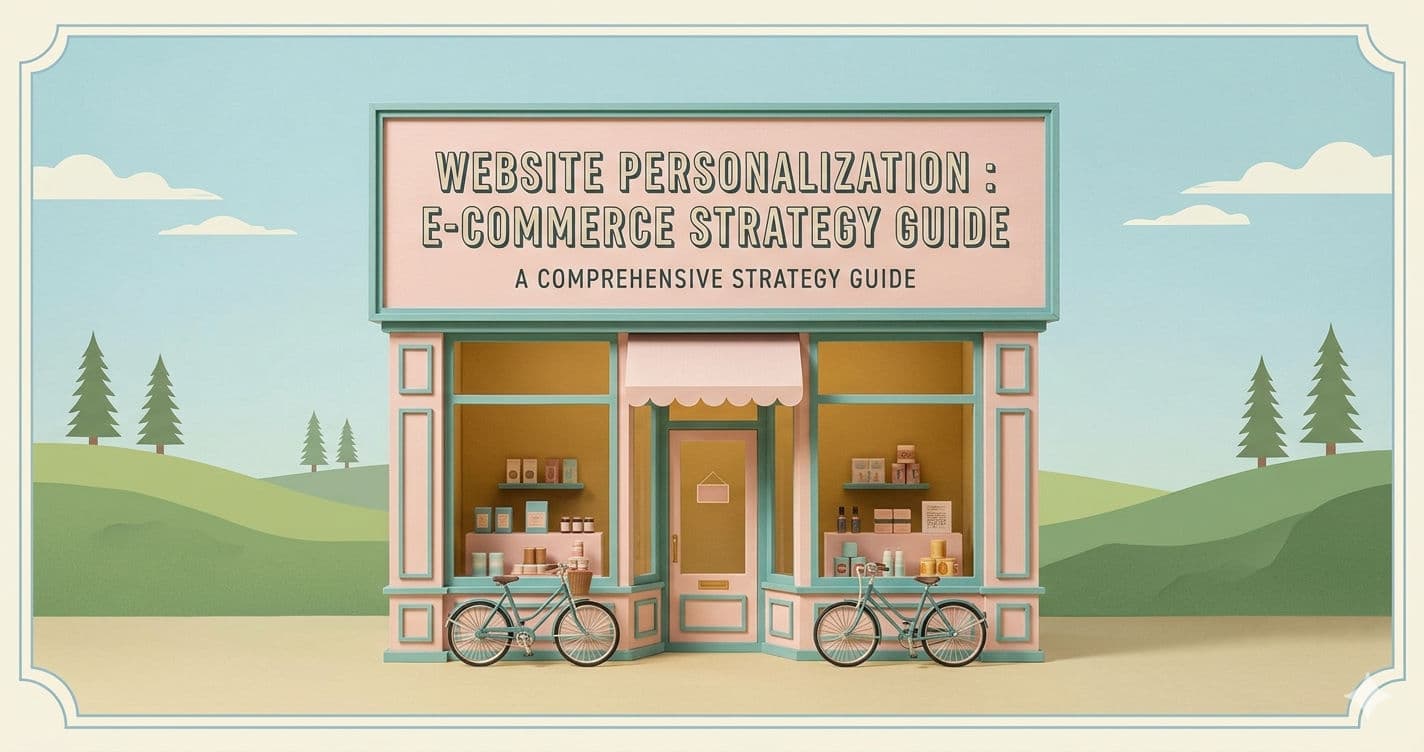
By 2026, the concept of the "average user" has officially retired from the digital marketing lexicon. In an era dominated by predictive AI and hyper-connectivity, presenting a static, one-size-fits-all homepage is a strategic liability. The core benefits of website personalization in 2025 and 2026 center on immediate profitability and long-term retention: it directly increases conversion rates through adaptive interfaces, maximizes Return on Ad Spend (ROAS) by offsetting historically high Customer Acquisition Costs (CAC), and drives higher Customer Lifetime Value (CLV) by building trust through relevant, permission-based experiences. Visitors no longer just prefer personalized experiences; they demand them as the baseline for engagement.
Streamline your software evaluation process
For Marketing Directors and E-commerce Managers, the stakes have never been higher. With CAC stabilized at historic highs, the efficiency of your on-site funnel is the primary lever for profitability. If a visitor lands on your site and fails to see themselves reflected in the content, products, or messaging within the first three seconds, they bounce. That bounce is not just a lost session; it is wasted ad spend and a hit to your brand equity.
However, this demand for relevance coincides with the "Privacy-Personalization Paradox." As regulatory frameworks like the evolved GDPR and CCPA tighten in 2026, consumers are simultaneously demanding hyper-relevance while guarding their privacy. Trust has become the new currency. Successful website personalization strategies now hinge on a delicate balance: delivering a curated experience without crossing the line into surveillance. True personalization is about architecting a fluid, adaptive digital environment that reassembles itself in real-time based on permissioned intent, behavior, and psychographic data.
Key Takeaways
Generative UI Replaces DTR: Modern e-commerce personalization has moved beyond basic dynamic text replacement, utilizing AI to generate custom user interfaces in real-time.
Zero-Party Data Drives Strategy: Collecting data directly from consumers via interactive content is critical, provided brands actively manage and mitigate interactive fatigue.
Scaling the N=1 Segment: AI-driven experimentation enables true individual-level personalization, maintaining contextual continuity and message match even across high-SKU catalogs.
Positive Reinforcement Nudging: Conversion rate optimization in 2026 prioritizes positive behavioral nudges and micro-conversions over outdated, anxiety-driven scarcity tactics.
Integrated Governance: Building a robust personalization engine requires specialized human capital, cross-functional integration, and strict adherence to the 2026 data hierarchy.
Software Covered in this Article
Executing these strategies requires the right technology. When evaluating the best platforms for website content personalization across 2025 and 2026, advanced Conversion Rate Optimization (CRO) solutions lead the market. Here are the top platforms currently defining dynamic, 1-to-1 content personalization:








How to Choose a Website Personalization Engine in 2026
Selecting the right platform requires shifting focus from basic segmentation to real-time, AI-driven adaptability. The best practices for choosing a website personalization engine in 2025 and 2026 center on data interoperability, latency, and generative capabilities. Your chosen tool must seamlessly ingest zero-party data and integrate with your existing composable commerce architecture without degrading page load speeds.
When evaluating website personalization tools for e-commerce in 2026, prioritize these key factors:
Real-Time Decisioning: The engine should process behavioral signals and update the UI in milliseconds, moving beyond batch-processed segments.
Generative UI Support: Look for platforms capable of assembling dynamic layouts and content blocks on the fly, rather than just swapping pre-built templates.
Privacy-First Architecture: Ensure the tool relies on first- and zero-party data frameworks, offering robust compliance with global data privacy regulations.
Experimentation Integration: The best engines natively combine personalization with continuous A/B testing to statistically validate the impact of individualized experiences.
The Mechanics of Modern Personalization
To understand how to execute personalization at scale, we must first dismantle the outdated notion of linear customer journeys. Today’s journey is a matrix of touchpoints, and your website must act as the intelligent hub that connects them. The shift has moved decisively from broad demographic targeting (age, location, gender) to granular psychographic and behavioral targeting (intent, sentiment, propensity).
At the core of this shift is the evolution of the tech stack. The modern personalization engine relies on a sophisticated interplay between Customer Data Platforms (CDPs) and Digital Experience Platforms (DXPs). This infrastructure allows for deterministic matching—the ability to recognize that the user browsing on a mobile device during their commute is the same user who abandoned a cart on their desktop the night before. This continuity is essential for reducing friction.
Furthermore, we are seeing the widespread adoption of propensity modeling. This AI-driven approach analyzes historical data to predict the likelihood of a specific visitor performing a specific action—such as purchasing a high-ticket item or churning. By leveraging these models, marketers can serve content that creates a self-fulfilling prophecy of conversion. For instance, if a user exhibits high price sensitivity, the system dynamically highlights value bundles or installment payment options.
From DTR to Generative UI
While Dynamic Text Replacement** (DTR)** was the standard in the early 2020s, 2026 has ushered in the era of Generative UI. We are no longer simply swapping headlines to match ad copy; we are using AI to restructure the DOM (Document Object Model) in real-time. Based on a visitor's propensity score, the layout itself adapts.
A "high-intent" buyer might see a streamlined, conversion-focused interface with prominent "Buy Now" buttons and minimal distraction. Conversely, a "research-mode" visitor might be served a content-rich layout featuring comparison tables, video reviews, and detailed specs. This moves beyond content injection to interface fluidity, ensuring the UX itself is optimized for the user's current cognitive state.
Strategy 1: Leveraging Zero-Party Data with Interactive Content
In the post-cookie world of 2026, the most reliable data is the data a customer voluntarily gives you. This is zero-party data—data that a customer intentionally and proactively shares with a brand. It can include preference center data, purchase intentions, personal context, and how the individual wants to be recognized. The most effective vehicle for capturing this data at scale is interactive content.
Platforms such as Outgrow have emerged as pivotal tools in this domain, allowing marketers to bridge the gap between engagement and data collection. Static forms are friction points; interactive quizzes, calculators, and assessments are value-exchange mechanisms. By implementing an Outgrow widget, you are not just asking for an email address; you are facilitating a conversation.

Consider a mid-market skincare brand. Instead of a generic "Shop Now" hero banner, they deploy a "Build Your 2026 Skincare Routine" quiz. As the visitor answers questions about their skin type, environmental concerns, and budget, two things happen simultaneously:
Immediate Value: The visitor receives a personalized recommendation, which psychologically primes them for purchase due to the endowment effect—they feel they "built" this solution.
Data Activation: The answers are fed instantly into the personalization engine. The next time this visitor lands on the homepage, the generic imagery is replaced with products specific to "Dry Skin" and "Anti-Aging," effectively curating the store for an audience of one.
Overcoming Interactive Fatigue
By 2026, users have seen thousands of "Which character are you?" quizzes. To combat "Interactive Fatigue," sophisticated brands must employ "Value-First" logic jumps. The interaction cannot feel like a survey disguised as content. The exchange must be equitable. If a user provides three data points about their preferences, the system must immediately provide a tangible insight or utility—such as a custom ROI calculation or a personalized size fit analysis—before asking for the signup. Tools like Outgrow allow for this conditional logic, ensuring the user feels served, not harvested.
Strategy 2: Contextual Continuity in Landing Pages
One of the most significant leaks in the e-commerce funnel occurs in the transition from ad to landing page. This is the "continuity gap." If a user clicks on an Instagram ad promoting "Sustainable Running Shoes for Winter," but lands on a generic category page for "All Footwear," the disconnect creates friction. According to web personalization techniques 2025 2026 best practices, Contextual Continuity is a non-negotiable requirement for high-performance campaigns.
A critical component of this continuity is the above-the-fold experience. To align with ecommerce hero banner best practices conversion, the hero section must instantly validate the user's click with matching visuals and copy. Landingi provides the architectural flexibility required to solve this at scale. The platform allows marketing teams to bypass the bottleneck of engineering tickets, enabling the creation of dynamic landing pages that adapt based on referral parameters. This is where the concept of Message Match becomes operational.
Using Landingi, a marketing director can create a single "master" landing page template that dynamically adjusts its hero image, headline, and even social proof elements based on the UTM parameters of the incoming traffic. For example, traffic coming from a LinkedIn campaign targeting corporate gifting buyers will see a hero banner focused on "Bulk Orders and Volume Discounts," while traffic from a TikTok influencer campaign landing on the exact same URL will see a headline focused on "Trending Styles" and user-generated content.

Scaling Message Match for High-SKU Catalogs
For enterprise e-commerce managers dealing with thousands of SKUs, manually building templates is impossible. The solution lies in programmatic template management. By integrating Landingi with your product feed (PIM), you can dynamically inject product-specific assets into the landing page based on the ad clicked. If a user clicks on a specific red sneaker, the landing page hero image, testimonials, and technical specs dynamically populate for that specific SKU, all within a single high-converting framework. This automation solves the scalability crisis, allowing for 1:1 relevance across a 10,000-product catalog without exploding the creative workload.
Find Perfect Software For Your Business
Strategy 3: AI-Driven Customer Experience through Experimentation
There is a critical distinction that sophisticated teams must make: A/B testing is about finding the best average experience for the total population; personalization is about finding the best specific experience for a distinct segment. In 2026, the most successful brands use experimentation to validate personalization hypotheses.
When evaluating ConversionWax vs VWO, the choice depends on your testing maturity. VWO stands out as a robust platform for this experimentation-led approach, allowing marketers to move beyond cosmetic changes and test complex behavioral workflows. In contrast, Conversion Wax is preferred for rapid, lightweight deployment and automated insights, making it ideal for quick, iterative tweaks. A common pitfall is assuming a personalization tactic will work; these platforms allow you to prove it.
For instance, you might hypothesize that returning visitors who have previously purchased from the "Accessories" category will respond better to a cross-sell popup than a discount offer. Using VWO, you can segment audiences based on past purchase behavior and browsing history to run a controlled experiment. You serve the "New Arrivals in Accessories" module to Segment A and a generic "10% Off" banner to Segment B (the control).
The Statistical Significance of the 'N=1' Segment
As segments become more granular—approaching the "Segment of One"—traditional frequentist statistics fail because the sample size (n) is too small. To solve the "n=1 problem," advanced strategists use Bayesian statistical models available in platforms like VWO. This allows for faster decision-making with smaller data sets by using prior probabilities. Instead of waiting weeks for a micro-segment to reach 95% significance, the system can probabilistically determine the "winning" experience for that specific user type and dynamically allocate traffic, minimizing the "regret" of serving suboptimal content.
Strategy 4: Behavioral Nudging and Micro-Conversions
While macro-conversions (the purchase) are the ultimate goal, the path to purchase is paved with micro-conversions. These are the small, psychological nods of agreement a user gives as they navigate your site. Personalization in 2026 involves identifying moments of hesitation and deploying behavioral nudges to keep the user moving forward.
Conversion Wax specializes in these neuro-marketing triggers. The platform focuses on user psychology, tailoring interventions to individual session behavior. Agencies frequently utilize the "Conversion Wax" CRO partner program to deploy these triggers at scale. Through "Conversion Wax" partnerships, CRO agencies gain access to advanced behavioral nudging playbooks for their clients. Imagine a user who adds an item to their cart but idles on the page, perhaps comparison shopping in another tab. Conversion Wax detects this "dwell time" anomaly and the exit intent cursor movement, triggering the exact right micro-conversion prompt to save the sale.

Positive Reinforcement over Scarcity
In the early 2020s, nudges were often fear-based (e.g., "Only 2 left!"). By 2026, consumers have developed blindness to artificial scarcity. The winning strategy has shifted to Positive Reinforcement Nudges. Instead of threatening the user with loss, Conversion Wax can trigger a notification that says, "Great choice! You've unlocked free priority shipping based on your cart value." or "This item is highly rated by people with your skin type." These nudges validate the user's decision-making process rather than pressuring it, building long-term brand equity while securing the immediate conversion.
The Data Spectrum: A Comparative Overview
To execute the strategies above effectively, one must understand the fuel that powers them. Not all data is created equal. In the current landscape, the value of third-party data has plummeted due to privacy regulations and browser restrictions. The focus has shifted entirely to owned data assets.
The 2026 Data Hierarchy for E-commerce Personalization
The following table outlines the hierarchy of data types essential for a modern personalization stack, comparing their utility, trust levels, and collection difficulty in the current market.
Data Type | Source | Collection Difficulty | Personalization Utility |
Zero-Party | Voluntarily given by user (Quizzes, Preference Centers) | Medium: Requires value exchange. | Direct insight into intent and preference. |
First-Party | Observed behavior on your site (Clicks, Purchase History) | Low: Collected automatically via pixels/CDP. | Great for behavioral targeting . |
Second-Party | First-party data shared by a trusted partner | High: Requires biz-dev partnerships. | Useful for audience expansion. |
Third-Party | Aggregated from external sources/DMPs | Low: Purchased programmatically. | Declining relevance; used mostly for broad awareness. |
Understanding this spectrum is vital. Relying on third-party data for personalization is like trying to write a letter to a stranger; you might get the city right, but you will miss the nuance. Zero and First-party data allow you to write to a friend.
The Personalization Team: Roles, Governance, and Integration
Technology and data are the engines, but people are the drivers. One of the most common failure points for personalization strategies in 2026 is the lack of a dedicated operational framework. It is no longer sufficient to add personalization to the "to-do" list of a generalist marketer. It requires a specialized unit.
1. Roles and Human Capital
At the enterprise level, successful teams are cross-functional. The Data Architect ensures that the plumbing between the CDP, the DXP (like Landingi), and the experimentation layer (like VWO) is leak-proof. The AI Ethicist or Governance Lead is a crucial new role for 2026, responsible for auditing algorithms to ensure they do not "hallucinate" biases or serve inappropriate content to sensitive segments. Finally, the CRO Lead orchestrates the strategy, moving beyond simple A/B testing to manage the complex matrix of personalized experiences.
2. Integration and Governance
A disconnected stack leads to a fractured user experience—where a user sees a "Welcome New Visitor" banner despite just buying a product. Integration via robust APIs is critical. Your interactive content tool (Outgrow) must push attributes directly to your behavioral nudge tool (Conversion Wax) in real-time.
Furthermore, governance protocols must be established to set "frequency caps" on personalization. Just because you can personalize every pixel doesn't mean you should. Over-personalization can lead to the "creepy factor." A governance framework ensures that the AI operates within brand-safe guardrails, prioritizing user comfort alongside conversion metrics.
Try AuthenCIO
Move to faster, smarter software evaluation with AI
Conclusion: Building Your Personalization Engine
The era of the static website is over. In 2026, your website is a living, breathing entity that must adapt to the needs of every unique visitor. The "Personalization Paradox"—the balance between being helpful and being intrusive—is solved not by guessing, but by using the right data and the right tools.
To succeed, you must move beyond basic segmentation. You need to leverage zero-party data through interactive experiences to understand intent. You must ensure contextual continuity from ad to page using dynamic templates. You need to rigorously validate your segments through Bayesian experimentation. And finally, you must employ positive behavioral nudges to guide users through the final mile of conversion.
This is not just about increasing the conversion rate (CR); it is about maximizing Customer Lifetime Value (CLV). When a customer feels understood, they don't just buy; they return. They become advocates. The technology exists, and the roadmap is clear. The only remaining variable is your willingness to execute.