
Introduction
In the fast-paced digital landscape of 2026, generating traffic is no longer the primary bottleneck for most businesses. With the proliferation of AI-driven content, programmatic advertising, and mature social algorithms, getting eyeballs on your site is achievable. The real crisis facing new marketers and business owners today is the "leaky bucket" syndrome: paying for visitors who arrive, glance around, and leave without spending a dime.
Streamline your software evaluation process
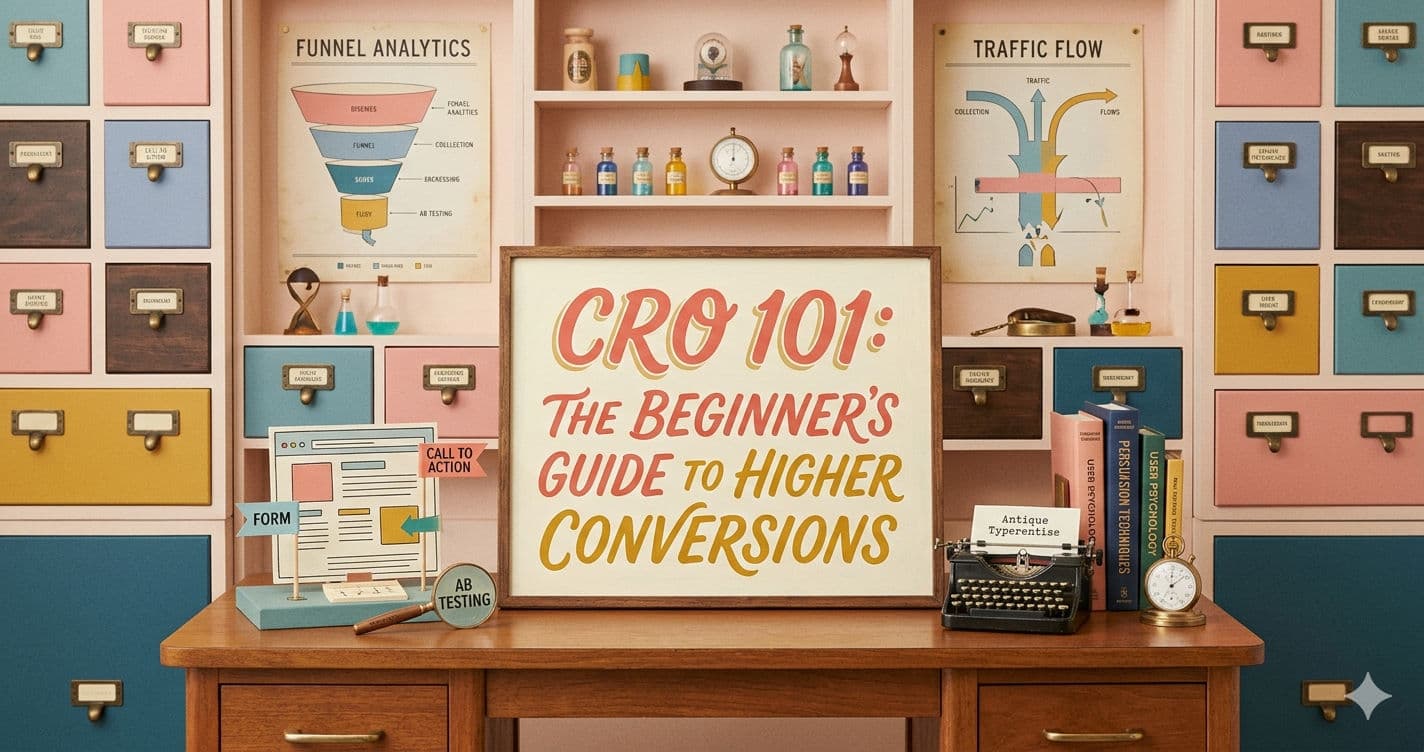
It is an emotionally draining experience. You watch your ad spend climb, hoping for a corresponding spike in sales, only to see your dashboard flatline. If you have ever stared at your analytics, frustrated that 10,000 visitors resulted in only 10 sales, you are looking at a conversion problem, not a traffic problem. This guide is your solution. You are reading the ultimate beginner's guide to CRO designed to turn that ship around.
Conversion Rate Optimization (CRO) is your most valuable asset in this economy. It is the difference between a business that burns cash on ads and one that scales profitably. CRO is not about guessing. It is not about changing a button color from green to red because you read a blog post from a decade ago. In 2026, CRO is a systematic, data-driven discipline. It combines user psychology, heuristic analysis, and rigorous testing to turn passive browsers into active buyers.
For the modern marketer, understanding CRO is the highest leverage activity you can perform. A 1% increase in conversion rate can double your revenue without you spending a single extra dollar on acquisition. This guide will walk you through the foundational pillars of CRO, demystify the jargon, and introduce you to the essential software stack you need to succeed.
Leading Conversion Rate Optimization Solutions to Know
While this guide explores key industry insights, seeing these principles in action requires the right platform. Here is a snapshot of the most recognized Conversion Rate Optimization solutions currently shaping the market.








Defining CRO in the 2026 Landscape
Conversion Rate Optimization is the process of increasing the percentage of website visitors who complete a desired action. While "sales" are the most common macro-conversion, CRO applies to any metric that drives business value. This could be filling out a lead form, signing up for a newsletter, downloading a whitepaper, or even engaging with a specific interactive element on a page.
In 2026, the definition of CRO has expanded significantly. It is no longer just about A/B testing landing pages on a desktop monitor. It now encompasses the entire User Experience (UX) across mobile devices, voice interfaces, and personalized AI-driven journeys. The modern consumer is privacy-conscious and impatient. They demand speed, clarity, and relevance. If your site fails to provide these within milliseconds, your conversion rate will suffer.
Successful CRO requires a shift in mindset. You must move from "I think this looks better" to "The data proves this works better." It involves balancing Quantitative Data (the what—numbers, bounce rates, drop-off points) with Qualitative Data (the why—user recordings, heatmaps, surveys). When you marry these two data streams, you stop making assumptions and start making revenue.
Furthermore, the rise of AI in 2026 means predictive analytics now plays a huge role. We aren't just reacting to what users did yesterday; we are optimizing for what they are likely to do tomorrow. However, for a beginner, the core principle remains empathy. It is about understanding the anxieties and motivations of your specific audience persona. Why are they hesitating? Do they trust your security badges? Is your pricing transparent? Optimization is ultimately the act of answering these questions before the user even has to ask them.
The Language of Optimization: Key Terms You Must Know
Before diving into frameworks and tools, you must speak the language of the industry. CRO professionals use specific jargon to maintain precision. Understanding these terms will help you interpret reports, set up tests correctly, and communicate with stakeholders or agencies.
Below is a breakdown of the essential terminology you will encounter in your optimization journey.
Term | Definition | Why it matters |
Conversion Rate | The percentage of visitors who complete a desired goal (conversions / total visitors * 100). | The primary metric of success. It tells you how efficient your site is. |
Bounce Rate | The percentage of visitors who navigate away from the site after viewing only one page. | A high bounce rate often indicates a disconnect between ad messaging and landing page content. |
CTR (Click-Through Rate) | The ratio of users who click on a specific link to the number of total users who view a page, email, or advertisement. | Critical for measuring the effectiveness of headlines and Calls to Action (CTAs). |
Statistical Significance | The likelihood that the difference in conversion rates between a variation and the control is not due to random chance. | You never want to declare a winner without at least 95% statistical significance to ensure validity. |
Lift | The percentage increase in conversion rate between the control version and the successful variation. | This measures the direct impact of your optimization efforts. |
Above the Fold | The portion of a webpage that is visible without scrolling. | This is prime real estate. Your most important value proposition and CTA should usually live here. |
Friction | Any element that makes it difficult for a user to convert (e.g., slow load times, too many form fields). | The goal of CRO is often simply identifying and eliminating friction. |
AOV (Average Order Value) | The average amount of money each customer spends per transaction. | Increasing AOV is often easier than increasing traffic. It directly boosts revenue per conversion. |
Developing Your Conversion Rate Optimization Strategy
Before you start moving pixels, you need a plan. A solid conversion rate optimization strategy acts as your roadmap. Without it, you are just testing random ideas, which rarely leads to sustainable growth. Your strategy should begin with a deep dive into your current performance and a clear understanding of your business goals.
Start by asking: What is the one metric that matters most right now? For an e-commerce store, it might be checkout completion. For a SaaS company, it might be demo requests. Once you identify this North Star metric, you can work backward to identify the barriers preventing users from reaching it.
Consider the "Before and After" of a typical landing page audit.
The "Before" State: A landing page with a generic headline like "Welcome to Our Services." It has three different buttons ("Learn More," "Contact Us," "Read Blog"), a slow-loading hero image, and a wall of text describing the company's history. The conversion rate is stuck at 0.5%.
The "After" State: You apply your strategy. You change the headline to a benefit-driven statement: "Cut Your Accounting Time in Half." You remove the navigation menu to keep users focused. You replace the three buttons with one clear CTA: "Start Your Free Trial." You add a trust badge near the form. Suddenly, the conversion rate jumps to 2.5%.
This transformation didn't happen by magic; it happened because the strategy focused on clarity, relevance, and friction reduction. Your strategy must always prioritize the user's needs over your desire to "show off" every feature of your product.
Find Perfect Software For Your Business
The 4-Step CRO Framework for Beginners
Many beginners make the mistake of jumping straight into testing. This is a recipe for failure. To achieve consistent results, you need a structured framework. In 2026, the standard workflow follows a cycle of Research, Hypothesis, Testing, and Analysis.
Step 1: Heuristic Analysis and Data Gathering
Before you change a single pixel, you must audit your current performance. This phase involves gathering both quantitative and qualitative data. Start with your analytics platform. Look for pages with high traffic but high bounce rates—these are your biggest opportunities.
Next, perform a Heuristic Analysis. Don't let the fancy name scare you. It simply means an expert review of your website based on common sense and recognized usability principles. Walk through your own checkout process or lead generation form. Is it clear what the user should do next? Is the text legible? Does the page load instantly? You are looking for "low-hanging fruit"—obvious barriers to conversion that don't even require testing to fix.
Step 2: Formulating a Hypothesis
Once you have identified a problem (e.g., "Users are dropping off at the shipping information page"), you must formulate a hypothesis. A good hypothesis follows this structure: "By changing [Variable], I predict [Result] will happen because [Rationale]."
For example: "By removing the optional 'Company Name' field from the checkout form, I predict completion rates will increase by 10% because it reduces cognitive load and physical friction for B2C customers." This structure ensures you are testing a specific theory, not just throwing spaghetti at the wall.
Step 3: Running the Test (A/B vs. Multivariate)
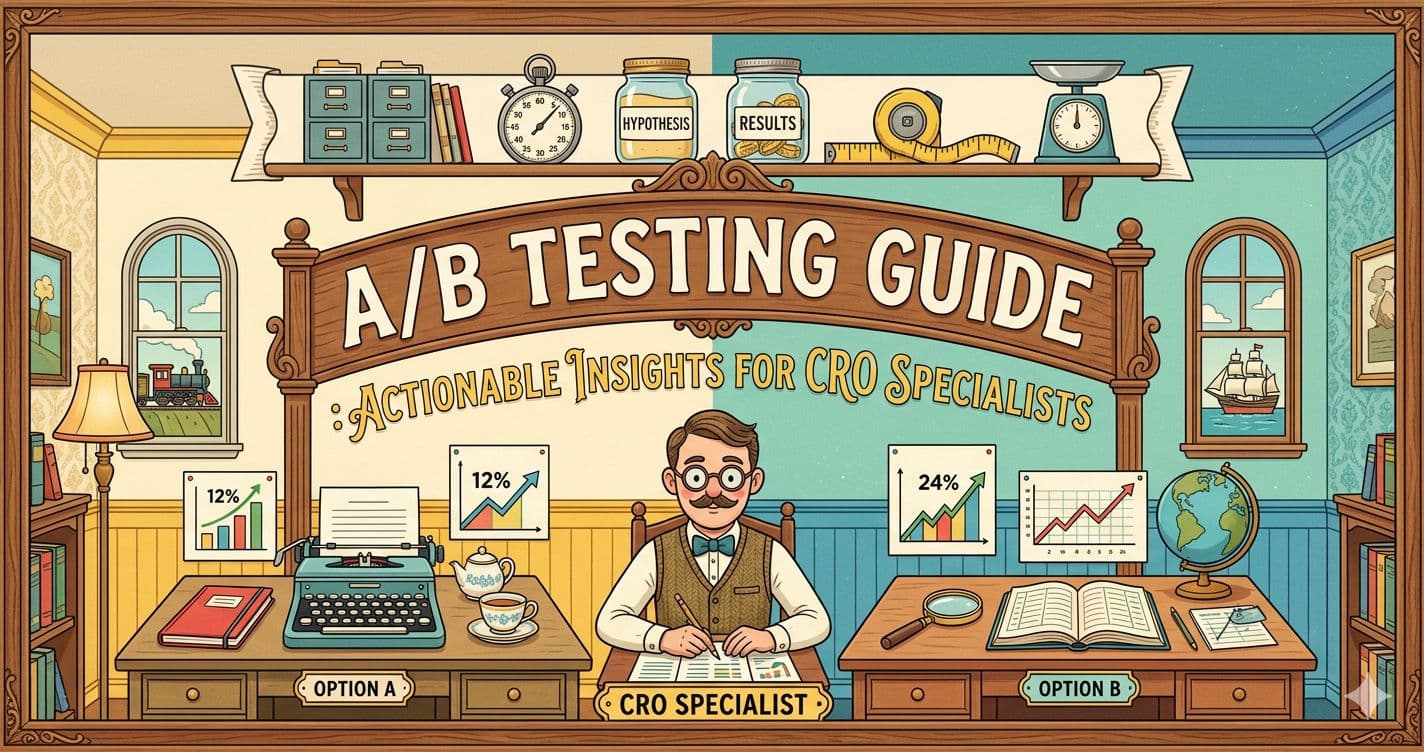
Now you launch the experiment. For beginners, A/B Testing (or Split Testing) is the gold standard. This involves showing 50% of your traffic the original version (Control) and 50% the new version (Variant).
Think of Statistical Significance like flipping a coin. If you flip a coin 10 times and get 7 heads, it might just be luck. If you flip it 1,000 times and get 700 heads, the coin is likely weighted. You need enough traffic (coin flips) to prove that your new page version is actually better, not just lucky.
Multivariate Testing (MVT) is more complex, testing multiple variables simultaneously. While powerful, MVT requires significantly more traffic. In 2026, unless you have over 100,000 monthly visitors, stick to A/B testing to keep your data clean and actionable.
Step 4: Analysis and Iteration
After the test has run for a sufficient duration (usually a minimum of two business cycles, or 2-4 weeks), analyze the results. Did you achieve a statistically significant lift? If yes, roll out the winner. If no, that is still a valuable insight—it means your hypothesis was wrong, and you have learned something about your audience. CRO is iterative. Document your findings and restart the cycle.
The Essential CRO Tech Stack: Tools to Get the Job Done
You cannot execute a modern CRO strategy with spreadsheets alone. The market in 2026 offers specialized tools that automate data collection, testing, and personalization. To build a high-converting funnel, you need a stack that covers page building, testing, social proof, and engagement.
Here are the industry-standard tools that define a robust CRO toolkit:
1. Building High-Converting Pages with Landingi
Your website's homepage acts as a directory, but your conversion campaigns need dedicated landing pages. Landingi remains a top-tier solution for marketers who need to deploy optimized pages without coding. Its drag-and-drop interface allows you to rapidly build pages that are pre-optimized for speed and mobile responsiveness. In CRO, speed of implementation matters. If you have a hypothesis, Landingi allows you to publish a test page in minutes, not weeks, bypassing the bottleneck of waiting for a developer.
2. Experimentation and A/B Testing with VWO
For the actual testing engine, VWO (Visual Website Optimizer) is a powerhouse. While basic tools exist, VWO has solidified its place as a comprehensive experimentation platform. It allows you to run A/B tests, split URL tests, and multivariate tests with a visual editor. Beyond simple testing, VWO offers behavioral segmentation, allowing you to target specific changes only to users coming from mobile devices or specific geographic locations. This level of granularity is essential for advanced optimization.
3. Enhancing Engagement with POWR and Outgrow
Sometimes, the barrier to conversion is a lack of engagement. Static text can be boring. Outgrow solves this by allowing you to create interactive content like calculators, quizzes, and recommendation engines. For example, instead of a "Contact Us" form, a B2B agency might use an Outgrow ROI calculator. This provides immediate value to the user, significantly increasing the likelihood of lead capture.
Similarly, POWR offers a suite of plugins that reduce friction and boost engagement. From customizable popup forms that trigger on exit intent to countdown timers that induce scarcity, POWR provides the tactical elements that nudge a hesitant visitor toward action. These micro-conversions often pave the way for the macro-conversion.
4. Leveraging Real-Time Credibility with Proof
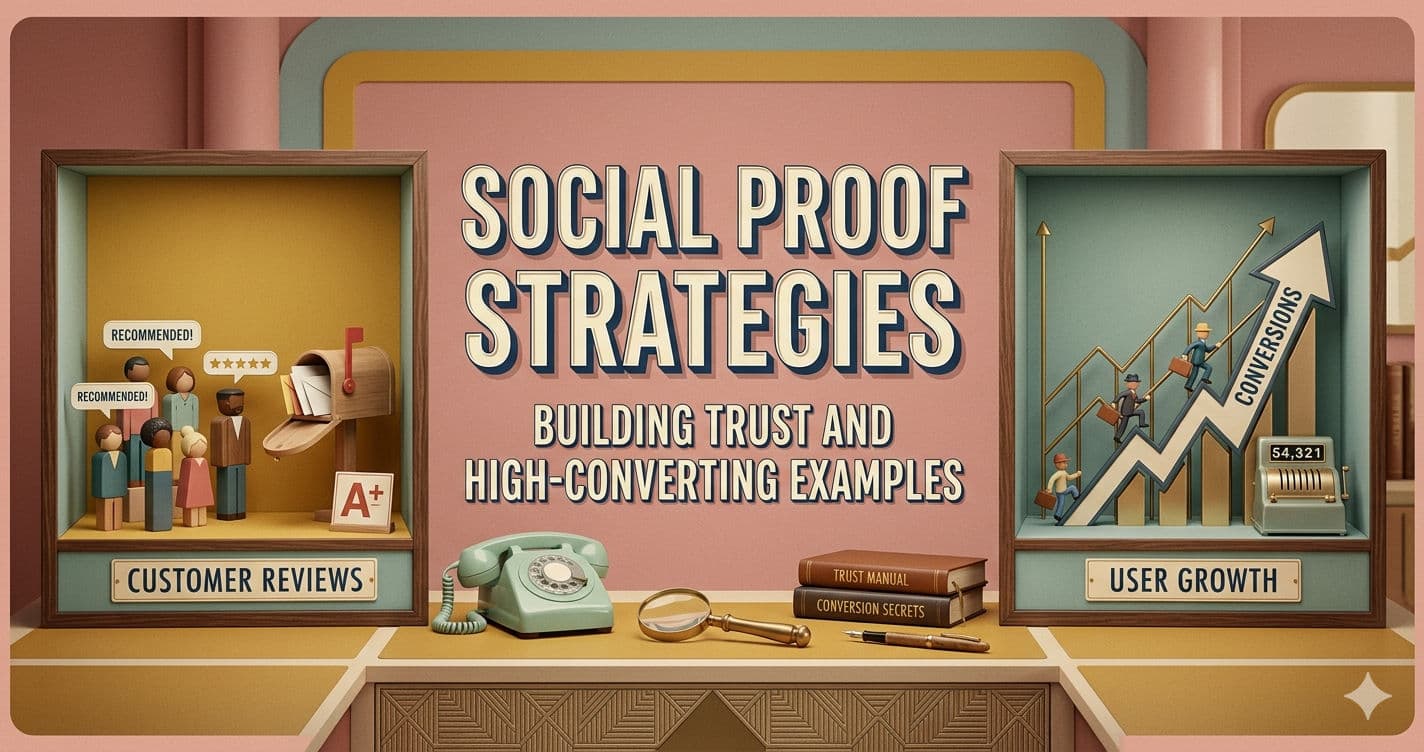
Social proof is a psychological phenomenon where people copy the actions of others. Proof operationalizes this by displaying real-time notifications on your site, such as "Jane from Austin just bought the Starter Plan." In 2026, where trust is the currency of the web, seeing that real humans are interacting with your brand can drastically reduce skepticism. It creates a "bandwagon effect" that is incredibly powerful for SaaS and e-commerce businesses.
5. Auditing and Heatmaps with Conversion Wax
Before you test, you need to see what is happening. Conversion Wax is an essential tool for the audit phase. It provides deep insights into user behavior through heatmaps and session recordings. You might think your CTA is visible, but Conversion Wax will show you if users are actually scrolling down far enough to see it. It helps you identify the "cold" spots on your page where attention dies, allowing you to make data-backed decisions on where to place your most important elements.
6. Starting on a Budget
If you are a small business owner, looking at this list might feel overwhelming financially. You do not need to buy everything on Day 1. Start with Conversion Wax to understand your users. Once you have data, use Landingi to build better pages. As you scale and revenue increases, reinvest that profit into VWO and Proof to refine your optimization. CRO is a journey, not a sprint.
Advanced Tactics: Reducing Cognitive Load and Friction
Once you have your tools and framework in place, you can move to advanced psychological optimization. The overarching goal here is to reduce Cognitive Load—the amount of mental processing power required to use your site.
1. Applying Hick’s Law
Hick’s Law states that the time it takes to make a decision increases with the number and complexity of choices. In CRO, this means "less is more." If your navigation menu has 15 items, you are paralyzing your user. If your pricing page has 7 different tiers, you are inducing decision fatigue.
Audit your pages and ruthlessly eliminate non-essential elements. Every image, every line of text, and every link should serve the single goal of that page. If it doesn't support the conversion, it is a distraction.
2. The F-Pattern and Visual Hierarchy
Eye-tracking studies from authorities like the Nielsen Norman Group have consistently shown that users scan content in an F-shaped pattern. They look across the top, then down a bit and across, and then scan the left side.
Place your most critical value propositions and keywords in these hot zones. Use visual hierarchy—varying font sizes, contrasting colors, and whitespace—to guide the eye. A common mistake is having a "Submit" button that blends in with the background. Your CTA should stand out like a beacon, utilizing a color that contrasts sharply with your brand palette.
3. Addressing Privacy and Trust
In 2026, users are hyper-aware of data privacy. Generic "we use cookies" banners are no longer enough. You must actively build trust. Display security badges (e.g., Norton, McAfee) near credit card fields. Use clear, plain-English micro-copy under your lead forms stating, "We hate spam as much as you do." These small reassurances reduce the anxiety associated with handing over personal information.
Join 8000+ businesses who have found the right software with AuthenCIO.
Common Pitfalls for New Marketers to Avoid
Even with the best tools and intentions, it is easy to stumble. Here are the most common traps beginners fall into when starting their CRO journey:
Testing Too Many Variables at Once: If you change your headline, image, and button color all at the same time, and your conversion rate goes up, you won't know which change caused the lift. Stick to one variable per test until you are advanced enough for multivariate testing.
Stopping Tests Too Early: It is tempting to peek at the results after 24 hours and declare a winner. This is a statistical error. You must let the test run for full business cycles (including weekends) to account for different user behaviors on different days.
Ignoring Mobile Traffic: In 2026, mobile traffic often exceeds desktop traffic. A page that converts beautifully on a laptop might be unusable on a smartphone. Always audit and test your mobile experience separately.
Copying Competitors Blindly: Just because a competitor does something doesn't mean it is working for them. They might be testing a bad idea themselves! Always rely on your own data, not someone else's design choices.
Try AuthenCIO
Move to faster, smarter software evaluation with AI
Conclusion: Building a Culture of Constant Optimization
Conversion Rate Optimization is not a one-time project; it is a culture. It requires humility—the willingness to admit that your "best guess" might be wrong—and the discipline to let the data dictate the path forward.
By following the framework outlined in this guide—auditing with Conversion Wax, building with Landingi, engaging with Outgrow and POWR, adding social proof with Proof, and testing it all with VWO—you are setting your business up for sustainable growth. You move from being a marketer who hopes for sales to one who engineers them.
Your Day 1 Checklist
Ready to start? Here is what you should do immediately after reading this article:
Install Analytics: Ensure you are tracking goals, not just pageviews.
Watch 5 User Sessions: Use a tool like Conversion Wax to watch real people struggle with your site.
Identify One Friction Point: Find one obvious thing that is broken or confusing.
Formulate One Hypothesis: Write down "If I fix X, then Y will happen."
Run Your First Test: Even if it's a small change, get the ball rolling.
Remember, the goal is not just to optimize a webpage; it is to optimize the customer journey. Start small, test often, and let the insights guide you to higher revenue.