
Introduction
Finding the best cro tools for e-commerce in 2026 is no longer just about tweaking button colors; it is about surviving record-high customer acquisition costs (CAC). With ad markets saturated and stricter privacy regulations limiting targeting, the primary lever for profitable growth is converting the traffic you already have. If you are looking for the best conversion rate optimization tools for e-commerce, you need software that actively plugs the "leaky bucket" syndrome—where industry benchmarks show nearly 70% of shopping carts are still abandoned before checkout.
Streamline your software evaluation process
Furthermore, the technical ground has shifted beneath our feet. The final deprecation of third-party cookies and the universal adoption of server-side tracking have fundamentally changed how we measure success. Reliance on pixel-based tracking alone is now a liability. Simultaneously, consumers are experiencing "AI fatigue." While automation is essential for backend operations, shoppers crave authentic, human-centric experiences and can spot a generic, AI-generated recommendation engine from a mile away. The challenge for 2026 is to use technology that optimizes conversion without stripping away the humanity of the brand.
This reality has elevated Conversion Rate Optimization (CRO) from a nice-to-have tactic to a survival necessity. It is not enough to have a beautiful storefront on Shopify or BigCommerce; your site must be a finely tuned engine designed to guide users psychologically and technically toward the purchase button. The difference between a 2% and a 3% conversion rate might seem small on paper, but for a store generating $1 million in revenue, that single percentage point represents a 50% increase in sales without spending a dime more on ads.
However, the market is flooded with tools promising instant results. From AI-driven personalization engines to behavioral analytics suites, the choices can be paralyzing. The challenge isn't finding a tool; it's finding the right tool that integrates seamlessly with your specific tech stack, respects your site's loading speed, and actually moves the needle on revenue. In this guide, we cut through the noise to analyze the best cro tools 2026 has to offer, focusing specifically on how these top CRO tools tackle cart abandonment and integrate with modern e-commerce workflows.
Key Takeaways for Decision Makers:
Traffic is expensive; Conversion is efficient. Focusing on CRO yields a higher ROI than increasing ad spend in the current 2026 market.
Integration is non-negotiable. Tools must sync with your inventory and CRM (like Klaviyo) in real-time to be effective.
Speed kills (or converts). Any tool that negatively impacts your Core Web Vitals must be rejected immediately.
Privacy is paramount. With GDPR and CCPA firmly enforced, your CRO tools must handle data compliance automatically.
🏆 Top Software Picks
OptinMonster — best for advanced lead generation and conversion automation.
VWO — best for A/B testing and data‑driven CRO optimization.
Outgrow — best for interactive content that increases engagement and leads.
Proof — best for real‑time social proof that builds visitor trust.
Hello Bar — best for simple pop‑ups and banners that capture leads.
POWR — best for customizable website widgets that enhance conversions.
Software covered in this article
For learning and reference, this listicle presents a selective overview of best CRO tools for e-commerce to scale profit:






What to Look for in E-commerce CRO Software
Before diving into specific platforms, it is critical to establish the criteria that define a high-performing CRO tool in the current e-commerce environment. In 2026, a tool cannot just be a standalone widget; it must be an integrated part of your customer experience (CX) ecosystem. Here are the five pillars you should evaluate before adding any software to your stack.
Ready to boost your e-commerce conversions? Compare the best CRO platforms for free on AuthenCIO
1. Seamless Integration with Major Platforms
First and foremost is integration depth. Whether you are running on Shopify, Magento (Adobe Commerce), WooCommerce, or BigCommerce, the CRO tool must talk to your store's backend. Surface-level integration is insufficient. You need tools that can read cart values, identify specific SKUs in the basket, and trigger actions based on real-time inventory levels.
Shopify/Shopify Plus: Look for "Built for Shopify" certification to ensure the app uses the latest checkout extensibility features.
Magento (Adobe Commerce): Ensure the tool supports headless architectures if you are running a PWA frontend.
WooCommerce: When you evaluate the e-commerce platforms v2 company WooCommerce on ecommerce CRO, consider its open-source WordPress architecture. It offers unparalleled customization but requires CRO tools that integrate cleanly via the REST API without bloating your database or degrading site speed.
BigCommerce: When you evaluate the e-commerce platforms v2 company BigCommerce on ecommerce CRO, look at its robust API and headless flexibility. Ensure your chosen CRO tool can leverage BigCommerce's native customer segmentation and handle multi-storefront data for international targeting.
For example, an exit-intent popup is far more effective if it knows the user has high-margin items in their cart and offers a discount specific to that category, rather than a generic "Wait! Don't go!" message. The tools selected for this list all excel in their ability to pass data back and forth with major e-commerce platforms, ensuring that your optimization efforts are data-aware.
2. Impact on Site Speed and Core Web Vitals
Site speed is a ranking factor and a conversion factor. In 2026, where mobile commerce dominates over 75% of transactions, every millisecond of latency counts. Bloated scripts that block the main thread can devastate your Core Web Vitals, leading to lower organic search rankings and higher bounce rates. The best CRO software utilizes asynchronous loading and lightweight scripts. They are designed to execute their functions—whether it's rendering a heatmap or triggering a social proof notification—without freezing the user interface or delaying the First Contentful Paint (FCP). We have prioritized tools that balance powerful functionality with code efficiency.
3. Feature Specificity: The Right Tool for the Job
Avoid the "Swiss Army Knife" fallacy unless you have the budget and team to manage an enterprise suite. Different tools solve different psychological barriers. If your problem is trust, you need social proof. If your problem is distraction, you need directed flows. If your problem is price sensitivity, you need timely incentives. The tools below are categorized by their primary strength—Social Proof, Urgency, Testing, and Engagement—allowing you to select the software that directly addresses your store's specific bottleneck.
4. Implementation Effort (Low vs. High Code)
As a manager, you need to assess the resource cost of installation. Does the tool require a dedicated developer to configure custom events, or is it a low-code/no-code solution that a marketing manager can deploy via a tag manager? In 2026, the best tools offer "visual selectors" that allow you to map on-site elements (like an "Add to Cart" button) to tracking events without writing a single line of JavaScript. However, for advanced server-side testing, some developer involvement is often unavoidable to ensure data accuracy.
5. Data Privacy & Compliance (GDPR/CCPA)
With the tightening of global privacy laws, including the California Privacy Rights Act (CPRA) and strict GDPR enforcement in Europe, your CRO tools must be compliant by design. This means they should offer features like automatic data anonymization, consent management integration (working with tools like OneTrust or Cookiebot), and the ability to purge user data upon request. Using a non-compliant tool in 2026 is not just a technical risk; it is a legal liability that can result in massive fines.
Boost Conversions Today — Compare the 6 Best CRO Tools for 2026
Best AI Tools for CRO Ecommerce (2025 & 2026)
Artificial intelligence is the core engine driving the best AI tools for CRO ecommerce 2025 2026. AI-driven conversion rate optimization software eliminates the guesswork from traditional A/B testing by using machine learning to predict user behavior, personalize product recommendations in real-time, and dynamically adjust page layouts based on individual visitor intent.
If you want to leverage machine learning to scale your store's profitability, these are the top AI-focused platforms leading the market:
Dynamic Yield: A powerhouse for AI-driven personalization, allowing e-commerce brands to deliver individualized product recommendations and dynamic content blocks tailored to real-time user behavior.
AB Tasty: Features advanced AI algorithms and predictive audience routing, ensuring that traffic is automatically directed to the highest-converting variations without waiting for manual test conclusions.
Klevu: An AI-powered product discovery suite that optimizes on-site search and merchandising. It learns from every visitor click to push the most relevant products to the top of search results and category pages.
Mutiny: Known for its AI-powered audience segmentation and automated copy suggestions, helping brands instantly personalize the buying journey based on referral source and user data.
Integrating these AI solutions allows e-commerce stores to automate complex data analysis. By personalizing the user experience at scale, these platforms ensure your store adapts to consumer trends and maximizes revenue per visitor effortlessly.
1. Proof: The Power of Social Influence
Proof (UseProof) remains the gold standard for leveraging social psychology to drive conversions. In the context of e-commerce, trust is the currency of the transaction. When a new visitor lands on your product page, they are often looking for validation that others have made the same choice. Proof automates this validation through real-time notifications, capitalizing on the Fear Of Missing Out (FOMO).
Key Features and Functionality
Proof’s flagship feature, Pulse, displays live visitor counts and recent activity notifications. For an e-commerce store, this is transformative. Imagine a customer viewing a pair of sneakers; Proof can display a subtle notification stating, "28 people are viewing this product right now" or "Julie from Austin, TX just purchased this." This creates a sense of a busy, thriving marketplace rather than a static digital catalog. Another critical feature for 2026 is Hot Streaks, which aggregates data to show high-volume activity, such as "150 people bought this in the last 24 hours." This is particularly effective for flash sales or limited-edition drops.
Technical Implementation & Integration
Proof is designed to be lightweight. It installs via a simple JavaScript pixel that can be added through Google Tag Manager or directly into your Shopify theme files. For 2026, Proof has enhanced its script loading to be non-blocking, ensuring it doesn't degrade your LCP (Largest Contentful Paint). It integrates deeply with checkout flows to reduce abandonment by reinforcing the decision to buy right up until the final click. By placing social proof signals near the "Add to Cart" button, you provide the subconscious reassurance a hesitant buyer needs.
Expected ROI Timeline
Immediate. Because Proof leverages psychological triggers that act instantly on the user's perception, most stores see a lift in add-to-cart rates within the first 48 hours of going live. It is one of the fastest ROI tools on this list because it doesn't require a "learning phase" like A/B testing tools.

2. Hello Bar: Strategic Messaging to Capture On-Site Traffic
While simple in concept, Hello Bar has evolved into a sophisticated tool for directing user attention and managing traffic flow. It is often the first line of defense against bounce rates, allowing store owners to communicate critical information without disrupting the user experience.
Mastering the Announcement Bar
Hello Bar allows you to deploy sticky bars, modals, and sliders that remain visible as the user scrolls. In 2026, the most common and effective use case for Hello Bar in e-commerce is the dynamic free shipping threshold. If your free shipping starts at $50, Hello Bar can calculate the user's current cart value and display a message like, "Add $12.50 more to unlock Free Shipping!" This gamifies the shopping experience and directly increases Average Order Value (AOV). Unlike intrusive interstitials that block content, the sticky bar is a persistent but polite reminder of the value proposition.
Reducing Friction for Mobile Users
Mobile responsiveness is where Hello Bar shines. Many popups are impossible to close on mobile devices, leading to frustration and site abandonment. Hello Bar’s mobile-specific settings ensure that your CTAs are thumb-friendly and compliant with Google’s intrusive interstitial policies. Whether you are announcing a site-wide sale or capturing emails for a pre-launch waitlist, Hello Bar ensures the message is seen by the right segment of traffic at the right time.
Technical Implementation & Integration
Hello Bar offers a "no-code" installation for most platforms, including a dedicated WordPress plugin and a Shopify app. The dashboard allows for granular targeting rules, such as showing specific bars only to visitors from Instagram or TikTok ads. This ensures your messaging aligns with the traffic source, maintaining continuity in the user journey.

Expected ROI Timeline
Days. The impact on AOV is usually visible as soon as you implement the dynamic shipping threshold bar. List growth metrics typically see a 20-30% improvement within the first week of optimizing the bar's copy and design.
Find Perfect Software For Your Business
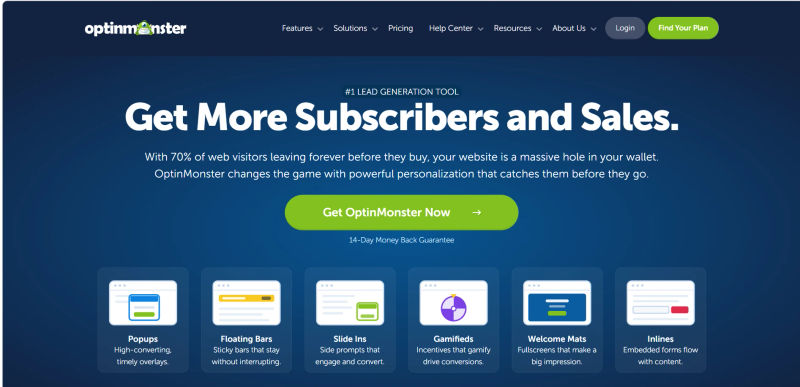
3. OptinMonster: The King of Exit-Intent
OptinMonster is the undisputed leader in stopping users from leaving empty-handed. Recognized as premier ecommerce profit recovery software, its exit-intent technology combats cart abandonment directly. As one of the best tools for managing online checkout flows 2026, it intercepts exiting traffic with targeted offers to instantly recover lost revenue.
Recovering Abandoning Visitors
OptinMonster’s Exit-Intent® Technology tracks the mouse movement of desktop users and the scroll behavior of mobile users to detect the precise moment they are about to leave the site. For an e-commerce manager, this is the "Hail Mary" moment. You can trigger a targeted campaign specifically for users who have items in their cart but are moving toward the browser close button. A well-timed popup offering a 10% discount code or free shipping in exchange for completing the purchase can recover a significant percentage of otherwise lost revenue.
Advanced Targeting with MonsterLinks
Beyond standard popups, OptinMonster offers MonsterLinks, which turn any image or link into a two-step opt-in process. This utilizes the Zeigarnik effect—the psychological principle that people are more likely to finish a task once they have started it. Additionally, their geo-location targeting allows you to show shipping-specific offers (e.g., "Free Shipping to the UK today only") which increases relevance and conversion. The platform’s ability to segment users based on referral source, device, and on-site behavior ensures that high-intent buyers are not annoyed by irrelevant offers.
Technical Implementation & Integration
OptinMonster integrates seamlessly with all major email marketing platforms (ESPs) like Klaviyo, Mailchimp, and Drip. This is crucial for 2026, as the "recovery" often happens via email if the user doesn't convert immediately. The installation is straightforward via a plugin or code snippet. Crucially, OptinMonster includes "TruLead" technology which filters out temporary or spam email addresses, ensuring you don't pay to market to bots.
Expected ROI Timeline
Immediate. Once the exit-intent campaigns are active, you will begin capturing leads that would have otherwise bounced. Revenue recovery attribution is clear and trackable from day one.
4. VWO: Comprehensive A/B Testing
VWO ranks among the best experimentation tools for CRO conversion rate optimization in ecommerce for 2025 and 2026. For high-volume stores requiring rigorous data, VWO provides an enterprise-grade testing suite. It is the CRO platform proven to drive the highest uplift in add-to-cart and checkout completion rates, replacing intuition with statistical significance to ensure every site change scales profitability.
Data-Driven Experiments
VWO allows you to run complex A/B, split, and multivariate tests on your product pages and checkout flows. You can test completely different layouts of a product page to see if a "Buy Now" button performs better above or below the fold, or if a carousel of images converts better than a grid. VWO’s visual editor allows non-technical teams to make these changes without needing a developer to rewrite the site's code for every test. This agility is crucial for e-commerce managers who need to iterate quickly during peak seasons like Black Friday.
Pro Tip: To run effective A/B testing for product pages, you generally need at least 1,000 unique visitors per variation per week to reach statistical significance quickly. If your store has lower traffic, focus on high-impact changes (like pricing or headline offers) rather than subtle design tweaks.
Heatmaps and Session Recording
Understanding why a test failed is just as important as knowing it failed. VWO includes robust heatmaps and session recording tools that show you exactly where users are clicking, scrolling, and getting stuck. If you notice a high drop-off rate on the shipping information page, a session recording might reveal that the form fields are confusing or that the address validator is broken. This qualitative data complements the quantitative testing data, providing a holistic view of the user journey.
Technical Implementation & Integration
VWO offers both client-side and server-side testing capabilities. For maximum performance in 2026, server-side testing is recommended as it eliminates the "flicker" effect (where the original page shows briefly before the variation loads). This requires developer resources to set up but ensures zero impact on Core Web Vitals. VWO's "SmartStats" engine uses Bayesian logic, which allows you to reach faster conclusions with less traffic than traditional frequentist models.

Expected ROI Timeline
Weeks to Months. Unlike social proof or exit intent, testing requires time to gather data. You should expect to run a test for at least 2-4 weeks to ensure the data is reliable. However, the ROI is compounding—a winning test that improves conversion by 10% pays dividends forever.
5. POWR: The Plugin Suite for Agility
POWR takes a modular approach to CRO, offering a library of customizable plugins that can be mixed and matched to solve specific problems. For founders who may not have a dedicated development team, POWR offers a way to add sophisticated features via a simple drag-and-drop interface.
Customizable Widgets for Engagement
POWR’s suite includes countdown timers, social feed integrations, and multi-step forms. The Countdown Timer is particularly effective for e-commerce, creating a visual urgency for flash sales or shipping deadlines (e.g., "Order in the next 2 hours for delivery by Friday"). Unlike hard-coded timers that can be difficult to manage, POWR’s widgets can be deployed, styled, and removed in minutes. This flexibility allows store managers to spin up campaigns instantly without waiting for engineering sprints.
Enhancing Product Pages
POWR also offers plugins for reviews and FAQ accordions that can be embedded directly onto product pages. Answering customer questions regarding sizing, materials, or return policies directly on the page reduces the need for the user to navigate away to a support page, thereby keeping them in the conversion funnel. The ability to style these plugins to match your brand's CSS ensures they look native to the site rather than like third-party add-ons.
Technical Implementation & Integration
POWR is a low-code solution. It is available as a direct plugin in the Shopify App Store, Wix, and BigCommerce. The installation is typically one-click. The widgets are hosted on POWR's cloud, meaning they update instantly without you needing to redeploy your website code. It is an excellent choice for teams with limited technical bandwidth.
Expected ROI Timeline
Immediate. Features like countdown timers create immediate urgency. If deployed during a sale, you can expect to see an uptick in conversion rate within hours of the widget going live.

6. Outgrow: Interactive Content for Engagement
Outgrow addresses a specific nuance of modern e-commerce: decision paralysis. Sometimes customers don't buy because they aren't sure which product is right for them. Outgrow solves this by allowing you to build interactive quizzes, calculators, and recommendation engines.
Guiding Purchase Decisions
Instead of forcing a user to browse through 50 types of skincare products, Outgrow allows you to create a "Find Your Perfect Skin Routine" quiz. The user answers a few questions about their skin type and concerns, and the tool generates a personalized bundle of products that they can add to their cart with one click. This interactive approach mimics the experience of a helpful in-store associate. In 2026, where personalization is expected, this level of guided selling significantly increases conversion rates and reduces return rates, as customers feel more confident that they have purchased the correct item.
Zero-Party Data Collection for Personalization
The secondary benefit of Outgrow is the rich data it collects. You aren't just getting an email address; you are getting zero-party data about the customer's preferences and needs. This data can be synced with your email marketing platform (like Klaviyo or HubSpot) to send highly targeted follow-up flows. If a user takes a quiz about running shoes but doesn't buy, you can send them an email specifically highlighting the shoes that were recommended to them, rather than a generic newsletter. This capability is invaluable in a post-cookie world.
Technical Implementation & Integration
Outgrow content can be embedded as a full page, a popup, or an iframe within a product page. The builder is drag-and-drop, similar to Typeform but designed for commerce. It connects with over 1,000 tools via native integrations and Zapier, ensuring the data collected flows immediately into your CRM for segmentation.
Expected ROI Timeline
Medium Term. Building a high-quality quiz takes time and strategy. However, once live, the lead capture rate on interactive content is typically 2-3x higher than static forms. You will see the ROI in both higher immediate conversion and higher Lifetime Value (LTV) from better-segmented email marketing.

Comparative Analysis: Ecommerce Sales Optimization Platforms
For users seeking the best cro platforms 2026 comparison or the best cro tools 2026 comparison, evaluating top alternatives side-by-side is essential. We compiled this data based on the most popular plans for mid-sized e-commerce businesses.
Comparing these alternatives ensures you select software matching your specific conversion goals. When evaluating ecommerce sales optimization platforms, consider not just the price, but the "Best For" column to align with your current growth stage.
Plan | Price | Best For | Features |
Proof | Starts at $29/mo | Social Proof & FOMO | Live Visitor Count, Hot Streaks, Recent Activity, Mobile Optimized, Zapier Integration, Custom Timing, A/B Testing |
Hello Bar | $39/mo | Announcements & Traffic Flow | Advanced A/B Testing, Smart Targeting, Premium Design, No Branding, Priority Support, Exit-intent, Yes/No Questions |
OptinMonster | $7/mo | Cart Abandonment Recovery | Exit-Intent Technology, OnSite Retargeting, Coupon Wheel, Geolocation, AdBlock Detection, ManyChat Integration, Real-Time Personalization |
VWO | Custom | Advanced A/B Testing | Visual Editor, Heatmaps, Session Recording, Form Analytics, Surveys, On-page Surveys, Observation Mode |
POWR | Starts at $7/mo | Modular Widgets | Countdown Timer, Popup, Social Feed, PayPal Button, Remove Branding, Custom CSS/JS, Fast Loading |
Outgrow | Starts at $14/mo | Interactive Quizzes | 3 Content Pieces, 1000 Leads, Logic Jump, Calc & Quizzes, Standard Support, Excel Export, Basic Integrations |
*Note: All prices shown reflect typical monthly billing. Vendors often offer lower pricing for annual commitments, but those discounts are excluded here for easier comparison. Actual costs may vary depending on your requirements, usage volumes, and negotiated terms.
Try AuthenCIO
Move to faster, smarter software evaluation with AI
Conclusion: Choosing the Right Tool for Your Store
Selecting the right CRO tool for your e-commerce business in 2026 is not about finding the one with the most features, but rather the one that addresses your specific growth blockers. If your traffic is high but trust is low, Proof will help validate your brand. If you are struggling with cart abandonment at the very last step, OptinMonster's exit-intent technology is likely your highest ROI investment. For those needing to simplify complex product catalogs, Outgrow offers a path to clarity for your customers.
Ultimately, the goal is to build a stack that works together—using VWO to test the placement of your Hello Bar, or using POWR timers to drive traffic to a Proof-validated product page. By integrating these tools thoughtfully, you can stop leaving money on the table and build a checkout flow that converts consistently.
Your First Step
If you are feeling overwhelmed, start small. Audit your bounce rate and cart abandonment rate.
If Bounce Rate is high (>60%): Implement Hello Bar to guide users to your best-selling collections immediately.
If Cart Abandonment is high (>70%): Implement OptinMonster with an exit-intent offer to capture revenue before it leaves.
Don't try to boil the ocean. Pick the tool that solves your most expensive problem today.