
Introduction
To grasp the true CRM reports meaning, you must look beyond raw data. A CRM report is a structured, analytical summary of customer, sales, and marketing data extracted from your Customer Relationship Management system. Reports in CRM platforms analyze historical and real-time interactions to provide actionable insights. Whether you are generating standard reports on CRM performance or building a custom report, CRM tools help leaders track progress against strategic goals and learn how to optimize operations.
In today's business landscape, you are sitting on a mountain of customer data. Every interaction, lead, and support ticket is meticulously logged. Yet, this wealth of information often creates an executive paradox: drowning in data, but starving for wisdom. While 74% of businesses have implemented a CRM, studies show 66% of users don't leverage advanced analytics, leaving critical insights untapped. Knowing how to configure and interpret CRM reports is essential for bridging this gap.
Streamline your software evaluation process
This is where strategic reporting, a cornerstone of effective business intelligence CRM reports and CRM analytics for leaders, comes in. It is not about generating dozens of charts; it is about focusing on a select few that transform your CRM from a passive data repository into an active command center. Neglecting this leads to missed growth opportunities and reactive strategies. The right reports cut through the noise, providing an objective view of operations to drive sustainable growth.
This guide will walk you through how to leverage ten essential CRM reports, culminating in the customizable Executive Dashboard, that every business leader should have at their fingertips. We will explore what they measure, why they are critical, and the best practices for using them to steer your company with confidence.
Key Takeaways
Strategic Alignment: CRM reporting bridges the gap between raw data and executive strategy, enabling proactive, data-driven decision-making.
Comprehensive Visibility: Utilizing a mix of sales (Pipeline, Forecasting), marketing (ROI, CLV), and service (Churn, CSAT) reports provides a 360-degree view of organizational health.
Data Integrity is Paramount: The accuracy of CRM insights depends entirely on data quality; leaders must prioritize clean data entry and address the human element of change management.
Predictive Future-Proofing: Establishing a regular review cadence and integrating advanced AI analytics transforms static historical reporting into a predictive engine for sustainable growth
Software Covered in this Article
To help you understand CRM Software in the right context, this article refers to a carefully curated set of players:







Why CRM Reporting is Crucial for Business Leaders
For executives, a CRM's true value extends beyond storing contacts. Effective CRM reporting is the engine that converts raw customer data into actionable strategy. By generating a comprehensive CRM analysis report, leaders can evaluate performance, identify bottlenecks, and uncover growth opportunities. Best practices dictate that reporting in CRM must align with specific business KPIs to maximize value. This alignment bridges the gap between raw metrics and executive decisions, ensuring that from standard CRM reports CRM insights emerge to confidently guide your next move.
1. Bridging Data and Strategy: The Executive Imperative
Your role is to set the vision and strategy, not get lost in the operational weeds. Strategic CRM reports bridge the gap between day-to-day activities and high-level business objectives. They provide a common language, backed by objective data, for discussing performance with your department heads. Instead of relying on anecdotal evidence, you can pinpoint bottlenecks in the sales pipeline, identify your most profitable marketing channels, and spot early signs of customer churn—all from a single, consolidated view.
2. Key Benefits of Robust CRM Reporting
Integrating a regular cadence of CRM report analysis into your leadership routine yields significant benefits. Companies that effectively integrate a CRM see an average revenue increase of 29% and a productivity boost of 34%.
Enhanced Forecasting Accuracy: Move from guesswork to data-driven predictions for revenue, resource needs, and market demand.
Improved Accountability: Set clear, measurable KPIs for your sales, marketing, and service teams and track progress against those goals.
Optimized Resource Allocation: Understand which activities and campaigns deliver the highest ROI, allowing you to invest your budget and team's time more effectively.
Proactive Problem-Solving: Identify negative trends like declining deal velocity or rising customer churn before they become critical issues.
Strategic Alignment: Ensure that your sales, marketing, and customer service departments are all working cohesively towards the same overarching business goals.
What is the Best CRM Report for Market Intelligence?
The best CRM report for market intelligence is the Win/Loss Analysis Report, closely supported by the Competitor Tracking Report. When executives ask what is the best CRM report for market intelligence, they require actionable data that reveals exactly why deals are won or lost within the broader industry context.
A Win/Loss Analysis Report aggregates data from closed opportunities to identify patterns in customer decision-making. By analyzing the specific reasons behind closed-lost deals—such as pricing objections, missing features, or losing to a specific rival—business leaders gain direct insight into shifting market demands and current product positioning.
To build the best CRM reports for market intelligence, organizations must also leverage competitor tracking dashboards. By cross-referencing lost deals against specific competitors, you can identify emerging market threats, track rival pricing strategies, and pivot your executive strategy to capture more market share.
🚀 Find out how AI can simplify your CRM decisions — Try AuthenCIO today!
Understanding Your Sales Performance: Key CRM Sales Reports
The sales department is your organization's revenue engine. To diagnose pipeline health and drive revenue, leaders rely on core CRM sales reports. By reviewing practical CRM report examples and actionable CRM reports samples—such as pipeline analysis, forecasting, and lead conversion—you can see exactly how to track team momentum, measure sales activity, and optimize overall performance.
1. Sales Pipeline Report
What it is & Why it's Important
Think of the Sales Pipeline Report as an MRI of your entire sales process. It provides a visual representation of all active deals, categorized by their current stage (e.g., Qualification, Proposal, Negotiation). Its importance cannot be overstated: this report immediately highlights the health, density, and flow of your revenue stream. It answers the fundamental question: Do we have enough opportunities in the works to hit our future targets?
Key Metrics to Monitor
Deal Count & Value per Stage: How many deals are in each stage, and what is their cumulative value? A pipeline that's top-heavy with early-stage deals and thin at the bottom signals a future revenue gap.
Stage Progression/Conversion Rate: What percentage of deals successfully move from one stage to the next? Low conversion rates at a specific stage point to a clear bottleneck.
Deal Velocity: How long, on average, does it take for a deal to move from creation to close? A slowing velocity can indicate market friction or an inefficient sales process.
Actionable Insights for Leaders:
💡 If you see deals stalling in the 'Proposal' stage, you can direct your sales enablement team to create better templates or provide more negotiation training. If deal velocity is slowing, it might be time to review your qualification criteria. This report is your primary tool for sales process optimization.
Platforms like Pipedrive and Close are renowned for their highly visual, drag-and-drop pipeline views. For more complex enterprises, Salesforce Opportunity Stage reports offer deep customization and automation.
2. Sales Forecasting Report
What it is & Why it's Important
While the pipeline report shows you what you have now, the Sales Forecasting Report predicts what you'll have in the future. It applies probability percentages to deals based on their stage and historical win rates to project future revenue. For a leader, this report is indispensable for financial planning, resource allocation, and setting realistic company-wide targets.
Key Metrics to Monitor
Predicted Revenue (Weighted Pipeline): The total value of the pipeline multiplied by the probability of closing for each deal. This is your most likely revenue outcome.
Forecast Category (Commit, Best Case): Many CRMs allow reps to categorize deals to provide a more nuanced forecast beyond simple stage probability.
Forecast Accuracy: How does your predicted revenue compare to your actual closed-won revenue over time? This metric helps you refine your forecasting model.
Actionable Insights for Leaders
*💡*If your forecast consistently falls short of your target, you can work with marketing to generate more top-of-funnel leads or with sales managers to improve closing techniques. It's your early warning system for revenue shortfalls.
Revenue Forecasting Comparison: HubSpot Sales Hub vs Zoho CRM vs Microsoft Dynamics 365 vs Salesforce (2025 or 2026): When evaluating these major platforms for 2025 and 2026, each CRM targets specific organizational forecasting needs:
HubSpot Sales Hub: Provides highly intuitive, out-of-the-box forecasting tools well-integrated into its platform, ideal for mid-market teams needing rapid adoption.

Zoho CRM: Offers strong value with Zia AI, delivering accessible anomaly detection and predictive sales forecasting tailored for small to mid-sized businesses.

Microsoft Dynamics 365: Excels for large organizations by leveraging advanced AI and predictive analytics to deliver sophisticated revenue projections seamlessly integrated with enterprise ERPs.
.webp?updatedAt=1783634317433&tr=w-800%2Cq-80%2Cf-auto%2Cc-at_max)
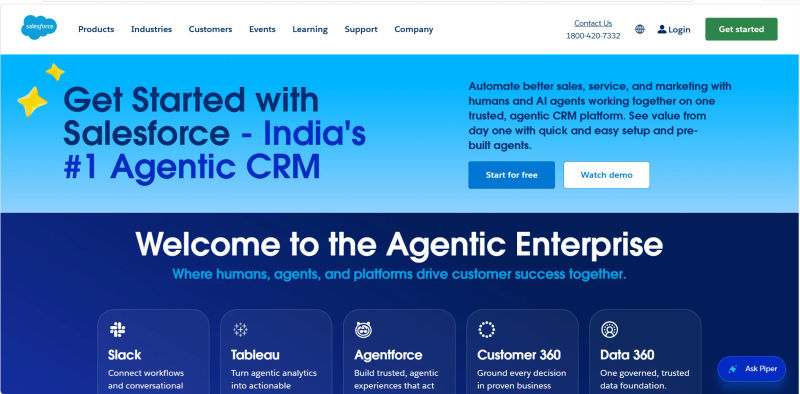
Salesforce: Leads enterprise forecasting with Einstein AI, offering highly customizable, multi-currency revenue predictions based on deep historical data.
3. Lead Conversion & Source Report
What it is & Why it's Important
This report connects the dots between your marketing efforts and your sales outcomes. It tracks where your leads are coming from (e.g., website, trade show, paid ads) and, more importantly, which sources produce the leads that actually convert into paying customers. This is the ultimate arbiter of marketing ROI and sales efficiency.
Key Metrics to Monitor
Lead Volume by Source: Which channels are generating the highest quantity of leads?
Lead-to-Opportunity Ratio: What percentage of leads from each source are qualified enough to become a sales opportunity?
Conversion Rate by Source: Of the opportunities from each source, what percentage ultimately become closed-won deals? This is the most crucial metric.
Actionable Insights for Leaders
*💡*If you discover that trade shows generate a high volume of leads but have a very low conversion rate, while leads from organic search have a high conversion rate, you have a clear data point for reallocating your marketing budget. This report ensures you're not just filling the funnel, but filling it with the right prospects.
Zoho CRM offers robust lead analytics that make it easy to track conversion from source to close. Similarly, a sales-focused CRM like Close provides clear funnel visualizations to see how leads from different sources progress through the pipeline.
4. Sales Activity Report
What it is & Why it's Important
This report measures the operational tempo of your sales team by tracking key activities like calls made, emails sent, and meetings booked. Its strategic value lies in correlating activity with results, not for micromanagement, but for coaching and process improvement. It helps you understand the specific actions that lead to success and build a repeatable playbook.
Key Metrics to Monitor
Activity Volume per Rep: The raw number of key activities performed by each salesperson.
Activity-to-Opportunity Ratio: How many calls or emails does it take, on average, to generate a qualified opportunity?
Activity-to-Win Ratio: How does the activity level of your top-performing reps compare to that of your average reps? This often reveals a 'recipe for success.'
Actionable Insights for Leaders
*💡*Instead of just tracking volume, use this data for coaching. If a rep has high activity but low results, they need coaching on the quality of their interactions. By identifying the best practices of top performers, you can optimize the entire sales process for efficiency and effectiveness.
Work OS platforms like Monday.com can be configured as a CRM with excellent activity tracking. Dedicated systems like CRMOne provide out-of-the-box performance dashboards that link rep activities directly to sales outcomes.
Optimizing Marketing & Customer Acquisition: Key CRM Marketing Reports
Marketing's role is to fuel the sales engine with high-quality leads. These CRM reports are essential for measuring the effectiveness of that effort and ensuring that every marketing dollar is spent wisely.
5. Marketing ROI Report
What it is & Why it's Important
This is the bottom-line report for your marketing team. It directly attributes closed-won revenue back to the specific marketing campaigns that influenced the deal. By tracking the cost of a campaign against the revenue it generated, you can calculate a clear Return on Investment (ROI). This report is crucial for justifying marketing spend and making strategic decisions about future budget allocation.
Key Metrics to Monitor
Customer Acquisition Cost (CAC): The total cost of a campaign divided by the number of new customers it generated.
Cost Per Lead (CPL): A leading indicator that shows how efficiently you are generating interest.
Return on Ad Spend (ROAS): Measures the direct revenue generated for every dollar spent on advertising.
ROI by Campaign/Channel: A direct comparison of which marketing initiatives are delivering the best financial returns.
Actionable Insights for Leaders
💡 With this report, you can confidently double down on high-performing campaigns and cut or re-tool underperforming ones. Modern CRMs are also crucial for navigating the complexities of multi-touch attribution, ensuring all contributing marketing efforts are recognized in the final ROI calculation.
When evaluating a CRM ROAS reporting comparison, it is critical to look at how platforms handle ad spend tracking and multi-touch attribution. To effectively evaluate ad spend across platforms, establish a unified tracking parameter strategy (like UTMs) and ensure your CRM integrates directly with your primary ad networks.
Here is how top platforms compare and best practices for each:
HubSpot: Offers out-of-the-box ROAS dashboards via native ad network integrations (Google, Meta, LinkedIn), automatically tying ad spend to specific contacts and closed deals. Best practice: Use its native tracking pixel and auto-tagging features for seamless closed-loop reporting.
Salesforce: Provides Campaign Influence reports for sophisticated, multi-touch attribution. ROAS tracking is highly customizable via Marketing Cloud Account Engagement, ideal for complex enterprise journeys. Best practice: Leverage custom attribution models to accurately weigh first-touch versus last-touch ad interactions.
Zoho CRM: Features a direct Google Ads integration that delivers straightforward ROAS metrics for SMBs without complex setup. Best practice: Utilize its offline conversion tracking to map phone calls or in-person sales back to specific ad clicks.
6. Customer Lifetime Value (CLV) Report
What it is & Why it's Important
Customer Lifetime Value (CLV) is a predictive metric that estimates the total revenue your business can expect from a single customer account. A CLV report in your CRM segments this value by different customer attributes, such as acquisition channel or company size. It's a profoundly strategic report that shifts focus from short-term acquisition to long-term profitability and retention.
Key Metrics to Monitor
Average CLV: A baseline metric for the entire customer base.
CLV by Acquisition Channel: Do customers from organic search have a higher CLV than those from paid ads? This adds a critical layer to the Lead Source Report.
CLV to CAC Ratio: A key indicator of business health. A high ratio means you're acquiring profitable, long-term customers.
Actionable Insights for Leaders
*💡*If you find that customers from a specific industry segment have a 3x higher CLV, you can direct your marketing and sales teams to target that vertical more aggressively. However, to ensure the accuracy of your CLV report, maintaining high data hygiene and consistent tracking of customer interactions within your CRM is paramount.
Many CRMs require some customization to track CLV effectively. However, platforms like Zoho CRM and Freshdesk provide the foundational customer data and analytics modules that can be used to calculate and monitor this crucial metric.
Enhancing Customer Retention & Satisfaction: Key CRM Service Reports
Acquiring a new customer is expensive; retaining an existing one is profitable. These reports focus on the post-sale experience, helping you build a loyal customer base that drives recurring revenue and referrals.
7. Customer Churn Rate Report
What it is & Why it's Important
Customer churn, or attrition, is the percentage of customers who stop doing business with you over a given period. The Churn Rate Report is a vital health metric for any recurring revenue business. It highlights how well you are retaining customers and, when enriched with qualitative data, explains why they are leaving.
Key Metrics to Monitor
Customer Churn Rate: (Lost Customers / Total Customers at Start of Period) x 100.
Revenue Churn Rate: The percentage of monthly recurring revenue (MRR) lost from existing customers.
Reasons for Churn: A qualitative metric that categorizes reasons (e.g., price, missing feature, poor service).
Actionable Insights for Leaders
*💡*A rising churn rate is a critical alert. This report allows you to diagnose the cause. If the top reason for churn is 'missing feature,' that's direct feedback for your product roadmap. Encourage structured data capture for these reasons (e.g., predefined dropdown menus) to facilitate trend analysis and actionable insights.
Freshdesk offers customer success features that can track customer health scores, a leading indicator of churn. Salesforce Service Cloud provides powerful analytics to track churn and its root causes through case resolution data.
8. Customer Satisfaction (CSAT/NPS) Report
What it is & Why it's Important
This report aggregates customer feedback, typically through surveys integrated with your CRM. It measures sentiment using metrics like Customer Satisfaction (CSAT) and Net Promoter Score (NPS)—'How likely are you to recommend our company?' This report quantifies customer loyalty and brand advocacy.
Key Metrics to Monitor
CSAT Score: Provides immediate feedback on specific interactions, like a support ticket resolution.
NPS Score: Categorizes customers into Promoters, Passives, and Detractors, providing a high-level gauge of brand loyalty.
Sentiment Analysis: Many modern CRMs use AI to analyze text feedback to identify common themes.
Actionable Insights for Leaders
*💡*A declining NPS score is an early warning sign of future churn. High CSAT and NPS scores are not just vanity metrics; they directly correlate with increased loyalty, higher retention rates, and a greater propensity for upsells, cross-sells, and valuable customer referrals.
HubSpot Service Hub includes tools for creating and distributing CSAT and NPS surveys. Microsoft Dynamics 365 Customer Voice is a dedicated enterprise feedback management solution that integrates seamlessly with its CRM.
9. Service Ticket & Resolution Report
What it is & Why it's Important
For any company with a customer support function, this report is the cornerstone of operational efficiency and service quality. It tracks the volume of incoming support requests (tickets) and measures how effectively and efficiently your team is resolving them.
Key Metrics to Monitor
Ticket Volume: The total number of support tickets created. Spikes can indicate a product issue.
Average Resolution Time: How long does it take, on average, to resolve a customer issue?
First Contact Resolution (FCR): What percentage of issues are resolved during the very first interaction? A high FCR is a strong indicator of efficiency and customer satisfaction.
Actionable Insights for Leaders
*💡*If average resolution time is creeping up, it may signal a need for better training or knowledge base resources. A low FCR rate could mean issues are being escalated unnecessarily, indicating a skills gap on the front line. This report helps you optimize one of the most critical customer touchpoints.
CRMs with integrated helpdesks like Freshdesk and Zoho Desk excel at this type of reporting, providing clear, out-of-the-box dashboards for all key service metrics.
Holistic Business Overview: Cross-Functional CRM Reports
While departmental reports are crucial, the ultimate goal is a unified view of the entire customer lifecycle. This is where executive-level dashboards come into play.
10. Executive Dashboard & Custom Reports
What it is & Why it's Important
The Executive Dashboard curates the most critical KPIs from across your organization into a single interface, providing a 30,000-foot view of business health. Building custom crm reports and dashboards is equally vital, allowing leaders to answer specific strategic questions by combining cross-departmental data.
Key Metrics to Monitor
Consolidated KPIs: Top-level metrics like Total Pipeline Value, Weighted Sales Forecast, Marketing Qualified Leads (MQLs), Customer Churn Rate, and overall NPS.
Custom Business Objectives: Progress tracking against strategic goals (e.g., "Increase enterprise sales by 20% QoQ").
Best CRMs for Executive Sharing
When teams ask, "what crm makes it easy to share dashboards and reports with leadership?", the answer lies in automated distribution and accessibility. The best crm for easily sharing dashboards and reports with leadership is often HubSpot, thanks to its intuitive interface, scheduled recurring emails, and Slack integrations that bypass complex permission barriers.
Enterprise platforms like Salesforce (via Tableau integration) offer unparalleled customization and automated delivery directly to executive inboxes. For the mid-market, Zoho CRM integrates deeply with Zoho Analytics for powerful business intelligence and secure URL sharing. CRMOne also delivers highly customizable dashboards with simple export and sharing features.
Actionable Insights for Leaders
*💡*This dashboard allows you to spot cross-functional trends instantly. For example, a spike in MQLs paired with a flat sales pipeline immediately prompts a strategic conversation about lead quality and sales/marketing alignment. The most effective executive dashboards are highly personalized to the specific strategic priorities of the individual leader.
Best Practices for Leveraging CRM Reports as a Business Leader
Having the right reports is only half the battle. To truly drive growth, you must integrate them into the rhythm of your business.
1. Data Quality is Paramount
Your reports are only as good as the data entered into the CRM. As a leader, you must champion data hygiene. Implement clear data entry protocols, provide training on their importance, and regularly audit data for accuracy to ensure the insights you rely on are trustworthy.
2. Address the Human Element & Change Management
Effective reporting requires team buy-in. Leaders should clearly communicate the 'why' behind data collection, demonstrating how accurate data benefits individual performance and team goals. This fosters a culture of trust and data-driven accountability rather than a feeling of being micromanaged.
3. Establish a Regular Review Cadence
Consistency turns data review from a chore into a strategic habit. Establish a rhythm for reviewing these reports, such as a weekly sales pipeline review, a monthly marketing ROI analysis, and a quarterly customer health check-in.
4. Explore Advanced Analytics & AI
Modern CRMs are increasingly leveraging AI for predictive analytics, such as lead scoring, churn prediction, and personalized customer recommendations. Business leaders should explore these advanced features to gain forward-looking insights and automate strategic decision-making.
Ready to move beyond generic CRM advice?
Let AuthenCIO tailor your shortlist
Choosing the Right CRM for Your Reporting Needs
When evaluating CRM reporting tools, buyers frequently ask: which CRM tools provide the best analytics and reporting features? The top platforms vary based on your specific data requirements and technical ecosystem:
Salesforce: Best for advanced AI and predictive analytics via Einstein.
HubSpot: Best for intuitive, out-of-the-box dashboards and unified marketing metrics.
Microsoft Dynamics 365: Best for deep data visualization via seamless Power BI integration.
Zoho CRM: Best for cost-effective data blending and custom reporting.
The ability to generate strategic insights should drive your software selection. Prioritize platforms that offer real-time data syncing and automated report distribution.
Selection Criteria | Why It Matters | What to Look For |
Scalability | Supports business growth and evolving needs | User limits, data capacity |
Customization | Adapts to unique workflows and reporting needs | Custom fields, layouts, KPI tools |
Ease of Use | Ensures team adoption and reduces training time | Clean UI, onboarding resources |
Connects with other business tools (marketing, support, finance) | API support, connectors | |
Vendor Support | Provides help for troubleshooting and ongoing optimization | Docs, live support, community |
Cost of Advanced Features | Balances budget and features for long-term ROI | Transparent pricing, modular add-ons |
Try AuthenCIO
Move to faster, smarter software evaluation with AI
Conclusion: Empowering Your Business with Strategic CRM Insights
In the modern business world, your CRM is far more than a digital Rolodex—it's your primary source of business intelligence. By focusing on this curated list of essential reports, you can cut through the data deluge and concentrate on the metrics that truly drive strategic decisions. From pipeline health and marketing ROI to customer churn, these reports provide the objective insights needed to hold teams accountable, forecast accurately, and steer your organization toward sustainable growth.
The first and most critical step, however, is ensuring your CRM platform can deliver these insights clearly and effectively. For unbiased guidance in selecting the ideal CRM that aligns with your strategic reporting needs, explore vendor-neutral platforms.
👉 Try Authencio.com for free - a vendor-neutral platform that helps businesses compare and choose the right CRM without the guesswork or sales pressure.