
Introduction
For sales leaders, operations managers, and business owners, the Customer Relationship Management (CRM) system is the central nervous system of the business. It holds the key to unlocking revenue, understanding customers, and aligning teams. Yet, have you ever heard a collective groan when you ask your team to update the CRM? For many organizations, this powerful tool is underutilized, suffering from a critical, persistent challenge: low user adoption.
Streamline your software evaluation process
Incomplete data, inaccurate forecasting, and missed opportunities become the norm. But what if you could transform this perception? What if you could make the right actions not just easy, but rewarding, engaging, and even a little competitive?
This is the promise of CRM gamification. It's not about turning your sales floor into an arcade; it's a strategic application of game-design principles and behavioral psychology to business processes. The goal is to motivate specific, high-value behaviors, drive user engagement, and ultimately, boost your bottom line.
👉This guide provides a strategic blueprint for implementing gamification in your CRM to solve real-world business problems and unlock its full potential.
Key Takeaways
Adoption is a Business Imperative: Low CRM engagement leads to poor data quality and lost revenue. Gamification tackles this by using behavioral psychology to drive both intrinsic and extrinsic motivation.
Strategy Over Superficiality: Effective gamification goes beyond simple points and leaderboards. It requires defining clear KPIs, identifying specific target behaviors, and integrating challenges seamlessly into existing CRM workflows.
Versatile Applications: Gamified CRM initiatives deliver measurable results across multiple departments, from motivating sales teams and improving customer service response times to accelerating employee onboarding and ensuring data compliance.
Measurable ROI: To prove the value of your gamification efforts, establish a clear baseline before launch, track engagement metrics continuously, and iterate on your reward structures based on real user data.
Software Covered in this Article
To help you understand CRM Software in the right context, this article refers to a carefully curated set of players:





Why CRM Engagement is Critical: The Business Imperative
A CRM's value is directly proportional to the quality and quantity of the data within it. When engagement falters, the system becomes a glorified, expensive rolodex. True engagement means your team is not just using the CRM, but relying on it—proactively updating pipelines, logging every interaction, and leveraging its insights. Without this, the entire revenue engine sputters.
1. The Cost of Low CRM Adoption and Disengagement
Low CRM user adoption isn't just an IT headache; it's a significant financial drain. The costs manifest in several ways:
Poor Data Hygiene: Incomplete or outdated contact information, deal stages, and interaction logs lead to flawed decision-making. Poor data quality costs businesses billions annually in wasted resources and missed opportunities.
Inaccurate Forecasting: When sales reps don't consistently update their pipelines in a platform like Pipedrive or Salesforce, leadership is flying blind, unable to predict revenue with any certainty.
Missed Opportunities: A lead follow-up is missed because a task wasn't logged. A cross-sell opportunity is overlooked because customer history isn't complete. These small gaps accumulate into significant revenue loss.
Wasted Investment: The significant capital spent on CRM software and implementation yields a negative return on investment if the system is not used to its full capacity.
Damaged Team Morale: When diligent users can't rely on the data entered by their colleagues, it creates friction, undermines collaboration, and fosters a culture of frustration.
2. Key Metrics Influenced by CRM Engagement
Conversely, high CRM engagement directly and positively impacts the metrics that matter most. It's the foundation to increase CRM productivity across the board:
Sales Velocity: The speed at which deals move through your pipeline. Engaged users who promptly update deal stages and log activities enable managers to identify and resolve bottlenecks faster.
Lead Conversion Rate: With accurate and timely data, teams can better qualify leads, personalize follow-ups, and ultimately convert more prospects into customers.
Customer Lifetime Value (CLV): A well-maintained CRM, such as Hubspot or Keap, provides a 360-degree view of the customer, enabling service and sales teams to provide better experiences, increase retention, and identify upsell opportunities.
CRM Adoption Rate: The primary metric itself. High adoption is the foundation for achieving all other benefits.
What is Gamification and How Does It Apply to CRM?
At its core, gamification is the application of game mechanics—like points, badges, and leaderboards—to non-game contexts to drive engagement. CRM gamification applies these concepts directly to sales and service workflows. By integrating gamification in CRM, businesses create a system of feedback and rewards that encourages users to complete otherwise mundane tasks. A gamified CRM boosts user adoption by tapping into natural desires for achievement and recognition. This guide focuses on internal gamification CRM strategies designed to motivate employees, rather than external, customer-facing applications.
1. Beyond Points and Badges: The Psychology of Gamification
While points and badges are the most visible elements, the true power of gamification lies in its understanding of human psychology. It leverages principles from behavioral economics and operant conditioning to make work feel more compelling. It taps into our intrinsic motivators for autonomy, mastery, and purpose.
The Progress Principle: Small, incremental wins create a powerful sense of momentum and accomplishment, encouraging users to continue their efforts.
Social Influence: Leaderboards and team challenges tap into our innate desires for status, recognition, and friendly competition.
Loss Aversion: Creating streaks for daily logins or consecutive tasks completed can motivate users to maintain their activity to avoid 'breaking the chain.'
By understanding these drivers, you can design a gamified CRM experience that feels less like a mandate and more like a challenge to be mastered.
Practical Strategies for Implementing Gamification in Your CRM
Launching a successful gamification initiative requires a strategic framework, not just turning on a feature. Following a clear plan for how to implement gamification in CRM is crucial for achieving meaningful results.
1. Define Clear Objectives and KPIs
Start with the 'why.' What business outcome are you trying to achieve? Your goal must be specific and measurable.
Bad Example: "We want to improve CRM usage."
Good Example: "We want to increase the number of logged activities (calls, emails, meetings) per sales rep by 25% within Q3."
2. Identify Target Behaviors for Gamification
Once you have your objective, break it down into the specific user actions that will drive that outcome. If your goal is to improve data completeness, the target behaviors might be:
Filling in all required fields on new lead creation.
Updating the deal stage within 24 hours of a customer interaction.
Associating contacts with their correct company records.
3. Choose the Right Gamification Elements
Match the game mechanics to your objectives and target behaviors:
Points: Best for rewarding high-frequency, simple tasks (e.g., 5 points per logged call).
Badges: Ideal for recognizing significant milestones or achievements (e.g., 'First Deal Closed,' '100 Calls Logged').
Leaderboards: Effective for driving competition around key sales metrics (e.g., 'Revenue Closed this Month').
Challenges: Use for short-term, focused initiatives (e.g., 'Book 5 demos this week to earn a bonus badge').
🤔Tired of CRM resistance? Find the CRM that actually works for your business — instantly.
💡 See your best-fit CRM in minutes with AI’s help.
4. Design Engaging Challenges and Rewards
Challenges should align with target behaviors, balancing short-term sprints with long-term milestones. Rewards must be meaningful, though not necessarily monetary. Modern incentives include flexible Friday hours, wellness stipends, digital credentials, or executive mentoring sessions. A 2025 workplace study revealed that 92% of employees report higher productivity when daily workflows incorporate gamified elements, highlighting the power of engagement itself as a reward.
5. Integrate with Existing CRM Workflows
Gamification should feel like a natural extension of the CRM, not a separate, clunky system. Many modern CRMs have built-in capabilities or seamless integrations. For example, Zoho CRM offers Gamescope, a feature that can be configured to award points and badges automatically as users complete tasks within their existing workflow. The key is to minimize friction and automate the process as much as possible.
6. Technical Considerations and Tools
For CRMs without robust native gamification, you have options. Third-party applications like LevelEleven for Salesforce or Ambition for various platforms can add sophisticated layers of competition and coaching. Alternatively, you can build a lightweight system using your CRM's existing tools: create custom fields to track points, use workflow automation to award them, and build custom reports and dashboards to serve as leaderboards. This requires more setup but can be highly tailored to your specific needs.
7. Communicate, Launch, and Start Small
Treat your gamification launch like an internal marketing campaign. Explain the 'why' behind the program, the rules of the game, and what's in it for the employees. Consider starting with a pilot program for a single team. This allows you to test the mechanics, gather feedback, and refine your approach before a company-wide rollout.
8. Monitor, Analyze, and Iterate
Gamification is not a 'set it and forget it' strategy. Continuously monitor your KPIs. Are you seeing the desired lift in behavior? Is engagement waning over time? Solicit feedback from your team and be prepared to tweak the rules, add new challenges, or adjust rewards to keep the program fresh and effective.
Boost CRM adoption with right tools and gamification strategies
Top CRM Gamification Tools: CRMBoost and Alternatives
Selecting the right CRM gamification tool is essential for driving user adoption and transforming mundane tasks into engaging challenges. While native CRM features often provide basic leaderboards, dedicated third-party integrations offer advanced behavioral triggers, customizable rewards, and real-time analytics.
CRMBoost remains a popular choice for sales teams looking to inject competition into their daily workflows. The primary CRMBoost pros include its seamless integration with major platforms like Salesforce and HubSpot, a highly customizable points system, and automated milestone celebrations. However, the cons involve a steep learning curve for administrators setting up complex rule logic and a higher price point compared to entry-level alternatives.
Accessing the platform is straightforward; the CRMBoost login portal supports Single Sign-On (SSO) directly through your existing CRM credentials, minimizing friction for end-users. If CRMBoost exceeds your budget or technical requirements, alternatives like Spinify, Hoopla, and Ambition offer competitive gamification features tailored to different team sizes and engagement goals.
Real-World Examples: Gamification Across CRM Platforms
Different CRMs and business functions can leverage gamification examples CRM software in unique ways.
1. Sales Team Motivation
Accelerating Cycles: A SaaS provider using Zoho implemented a 'Deal Velocity' challenge. Reps earned points for advancing deals quickly, yielding a 10% shorter sales cycle and 15% more closed-won deals.

Niche Consolidation: If you need to track gaming opportunities in your CRM that may be prime targets for consolidation, gamify the discovery process. An M&A firm launched a "Consolidation Hunter" leaderboard, rewarding reps for tagging indie studios fitting acquisition criteria. This drove a 40% increase in qualified pipeline.
2. Customer Service Excellence
Scenario: A B2C company using Freshdesk struggled with inconsistent agent response times. They used the built-in 'Arcade' feature to create a 'Speed Demon' quest, awarding trophies to agents who maintained a first-response time of under one hour for a full week.

Result: Average first-response time dropped by 35%, and CSAT scores related to responsiveness increased by 20%. The friendly competition turned a stressful KPI into a motivating team goal.
3. Onboarding and Training
Scenario: A group of newly hired customer support agents faced low engagement with training modules of Pipedrive. By introducing a gamified onboarding path, the team was awarded badges and points for completing interactive tutorials, scenario simulations, and quick quizzes.
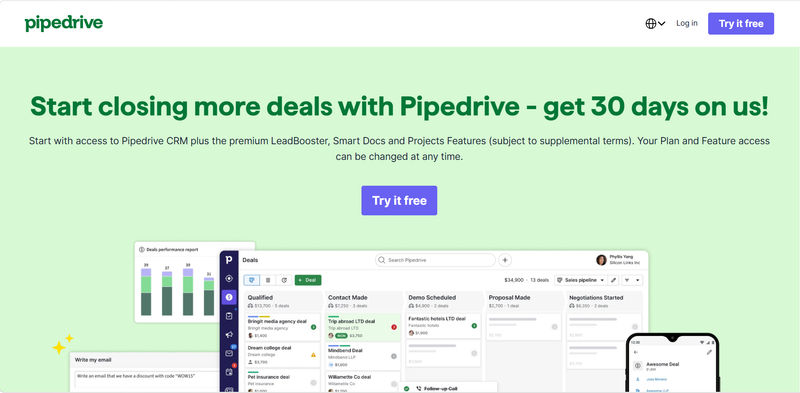
**Result: **Result: Training completion rates surged to 98%, with agents retaining knowledge more effectively. Post-onboarding, customer satisfaction scores rose as agents demonstrated greater product understanding and confidence in resolving issues. The gamified journey transformed onboarding from a routine task into an engaging, skill-building experience.
4. Data Entry and Compliance
Scenario: An organization noticed that their customer data was often incomplete and inconsistent, leading to poor pipeline visibility. To address this, they launched a gamified "Data Perfectionist" challenge, awarding points and achievement badges to team members who regularly updated and verified customer records for accuracy and completeness.
Result: Data completion rates improved by 45%, and error rates in reporting dropped significantly. Team members felt a sense of accomplishment as they tracked their progress on a leaderboard, transforming data entry and compliance from a tedious obligation into a friendly, motivating competition.
Popular platforms like Zoho, Monday.com, Pipedrive, Close, Freshdesk, Salesforce, Zendesk** **offer a unique blend of these capabilities, catering to different business needs and budgets.
Best Practices for Successful CRM Gamification
Avoid common pitfalls by adhering to these best practices to ensure your CRM gamification strategies succeed.
Best Practice | Description/Details | Example |
Align gamification with business goals | Rewards tied to key sales activities (like closing deals or updating customer data) | Points awarded for every updated client record |
Keep rules fair and transparent | Make scoring systems and criteria simple and accessible to all users | Leaderboard criteria posted on the team dashboard |
Offer meaningful rewards | Use incentives that genuinely motivate—monetary, recognition, or skill-building opportunities | Top performer receives a digital badge and a day off |
Secure executive/leadership support | Get buy-in from leadership so gamification is prioritized in daily workflows | Manager publicly congratulates winners in team meetings |
Avoid over-gamification | Maintain balance so features enhance engagement without causing distraction | Only a few badges and leaderboards used in the system |
Measuring the ROI of Gamified CRM Initiatives
To justify continued investment, you must demonstrate financial impact by calculating your broader CRM integration ROI. CRM integration ROI is the financial return generated by connecting your CRM with external platforms—such as gamification software, ERPs, or marketing tools—compared to the total cost of implementation and licensing.
When evaluating the ROI of a gamified CRM integration, measure both direct revenue gains and operational cost savings. Key financial drivers include:
Accelerated Sales Cycles: Gamified incentives and leaderboards directly increase deal velocity and win rates.
Reduced Turnover Costs: Higher user engagement lowers employee churn, saving on recruitment and onboarding.
Operational Efficiency: Incentivized data entry minimizes administrative errors, reducing the time spent on manual data cleanup.
Comparing these quantifiable benefits against your integration costs provides a clear picture of your gamification strategy's profitability.
1. Establish a Baseline and Track Key Metrics
Before you launch, you must establish baseline data. Your measurement plan should include a mix of activity and outcome metrics:
Activity Metrics: CRM login rates, number of calls logged, records updated per user.
Business Outcome Metrics: Sales cycle length, lead conversion rates, user adoption rate, data completeness percentage, customer satisfaction (CSAT) scores, and customer retention.
Track these metrics before and after launching your gamification program to quantify its impact. This data is also crucial for demonstrating the benefits of gamification in CRM for customer loyalty gamification CRM initiatives, as better service directly impacts retention.
2. Attributing Success to Gamification Efforts
While it can be challenging to isolate one factor, you can draw strong correlations. For example, if you launch a challenge focused on logging calls and see a 30% increase in logged calls followed by a 10% increase in qualified meetings the next month, you can confidently attribute the improvement to your initiative. A simple ROI framework could look like this: (Increase in Lead Conversion % * Average Deal Value) - Cost of Gamification Program = ROI.
Try AuthenCIO
Move to faster, smarter software evaluation with AI
Conclusion: Unlock Your CRM's Full Potential with Gamification
Gamification is far more than a trend; it's a powerful strategic lever for behavior change. By applying the principles of game design to your CRM, you can solve the pervasive problem of low user adoption, improve the quality of your business data, and create a motivated, high-performance culture. A successful strategy isn't about the software features themselves, but about a thoughtful approach that aligns with clear business goals.
By transforming mundane tasks into engaging challenges, you empower your team to not only use the CRM but to master it. The result is a virtuous cycle: better engagement leads to better data, which leads to better insights, which ultimately leads to winning more business.
For businesses looking to build their CRM strategy on the right foundation and explore platforms that support robust engagement, a vendor-neutral comparison tool can be invaluable.