
Introduction
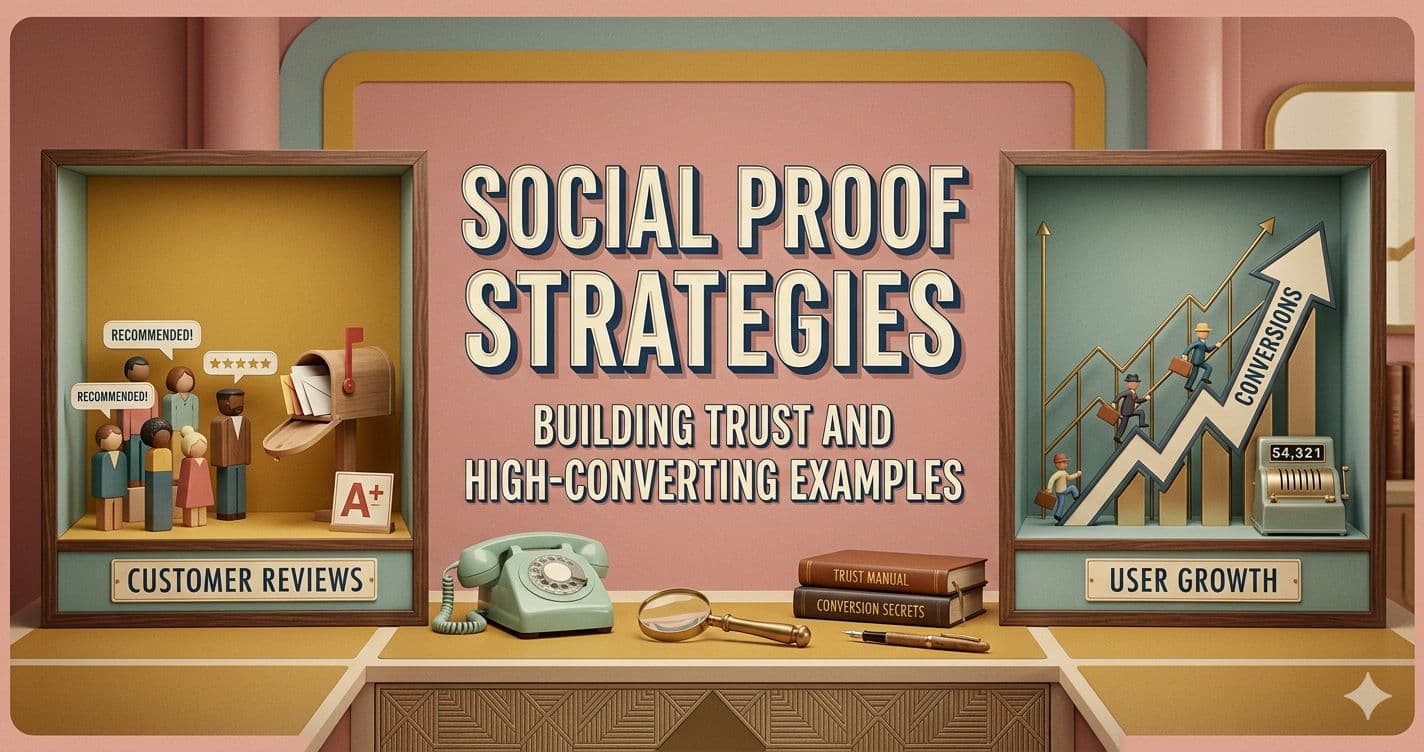
In the algorithmic landscape of 2026, the primary currency of digital commerce is no longer just attention; it is verifiable trust. As Generative AI saturates the market with synthetic content, consumers have developed a sophisticated skepticism. The traditional marketing funnel has fundamentally shifted. For Marketing Managers and Digital Strategists, static claims of excellence are now insufficient. To drive meaningful Conversion Rate Optimization (CRO) and lower Customer Acquisition Costs (CAC), we must strategically deploy social proof marketing strategies 2026—not merely as a design aesthetic, but as a core pillar of the customer experience.
Streamline your software evaluation process
The modern buyer’s journey is fraught with decision paralysis. When faced with an abundance of choices, the human brain defaults to heuristics—mental shortcuts that reduce the cognitive load of decision-making. Social proof is the most potent of these heuristics. It validates the decision to purchase by signaling that others have already successfully navigated the risk.
However, effective execution requires more than pasting a generic testimonial carousel on a homepage. It demands a nuanced understanding of cognitive biases, strategic placement of assets using tools like Instapage and Leadpages, and rigorous multivariate testing via platforms like VWO.
This guide serves as a blueprint for marketing leaders aiming to refine their tech stack and elevate their CRO strategies. We will dissect the psychology behind trust, explore advanced implementation tactics using industry-leading software, and provide a framework for automating and measuring impact. By moving beyond basic implementation and embracing a data-driven trust architecture, you can significantly increase Customer Lifetime Value (CLV).
Leading Conversion Rate Optimization Solutions to Know
While this guide explores key industry insights, seeing these principles in action requires the right platform. Here is a snapshot of the most recognized Conversion Rate Optimization solutions currently shaping the market.








The Psychology of Trust in the 2026 Digital Landscape
To effectively leverage social proof for conversions, one must first understand the cognitive mechanisms at play. In 2026, the concept of "Normative Social Influence" is more prevalent than ever. This psychological principle suggests that individuals will conform to the actions of others to be liked, accepted, or—in a commercial context—to avoid the social risk of making a "wrong" purchase decision.
1. Heuristics and Cognitive Ease
The primary goal of any high-converting landing page is to facilitate "Cognitive Ease." When a visitor lands on your site, their brain is actively scanning for threats and inconsistencies. If the cognitive load required to validate your product is too high, they bounce. Social proof acts as an external validation layer that bypasses the need for deep analytical processing.
We are currently seeing a shift away from generic "informational social influence" toward specific, verifiable data points. The "Bandwagon Effect"—the tendency for people to adopt certain behaviors simply because others are doing so—relies heavily on the volume and recency of the proof. A review from 2024 holds little weight in 2026.
2. The Authority Bias and Halo Effect
In B2B markets, "Authority Bias" plays a critical role. When a recognized expert or industry leader endorses a product, the "Halo Effect" occurs, where the positive impression of the endorser is transferred to the product itself. This is why displaying logos of client companies is standard practice.
However, static logos are often ignored due to banner blindness. To trigger Authority Bias effectively, these signals must be contextual and accompanied by deep-links to case studies or verified reports.
3. Cognitive Dissonance and Post-Purchase Rationalization
A frequently overlooked aspect of social proof is its role in mitigating "Cognitive Dissonance"—the mental discomfort experienced when holding two conflicting beliefs (e.g., "I want this software" vs. "It is too expensive"). Social proof provides the necessary ammunition for the buyer to rationalize the purchase before and after the transaction. By showcasing peer success stories, you provide the buyer with the arguments they need to defend the purchase to their internal stakeholders (or themselves), thereby reducing churn and refund rates.
Manager’s Takeaways:
Audit for Recency: Ensure no testimonial displayed is older than 12 months.
Context over Content: A generic 5-star review is less valuable than a 4-star review that addresses a specific objection.
Visual Hierarchy: Place trust signals near high-friction areas (pricing tables, form fills) to reduce cognitive load.
Optimizing Landing Pages with Static and Dynamic Proof
Once the psychological foundation is understood, the execution phase begins. The landing page is the crucible of conversion, and the placement of social proof here must be surgical. We will look at how to utilize Instapage and Leadpages to execute these strategies.
1. Instapage: Contextual Relevance and Instablocks
Instapage is renowned for its granular control over landing page design, specifically through its "Instablocks" feature. For Marketing Managers, the key is to move away from global footers containing generic reviews. Instead, social proof should be segmented by the traffic source and the specific pain point being addressed.
For example, if you are driving traffic from a LinkedIn ad targeting CTOs, the social proof displayed via Instapage should be a technical case study or a quote from a peer CTO, not a generic user review. This is "Contextual Social Proof." Using Instapage’s dynamic text replacement and block saving features allows you to match the testimonial to the ad copy.
Furthermore, visual hierarchy is paramount. Eye-tracking heatmaps consistently show that users scan in an F-pattern. Placing a high-impact video testimonial "Above the Fold" (ATF) can increase dwell time significantly. Video testimonials have been shown to increase conversion rates by 80% compared to text-only counterparts. Instapage allows for seamless embedding of these assets without compromising page load speed—a critical factor for Core Web Vitals and SEO.
2. Leadpages: The Power of Exit-Intent and Pop-Ups
While Instapage excels at on-page structure, Leadpages offers robust tools for capturing abandoning visitors. The "Exit-Intent" pop-up is a high-friction area where social proof can salvage a lost conversion.
When a user moves their cursor to close the tab, a Leadpages pop-up can trigger. However, instead of a generic "Wait! Don't Go!" message, this is the moment to deploy "Risk Reversal" social proof. This could be a statistic (e.g., "Join 10,000 marketers who increased ROI") or a guarantee backed by a user review.
Leadpages also excels in facilitating the "Micro-Conversion." Before asking for a sale, you might ask for a webinar sign-up. Using social proof here (e.g., "500 spots filled, 20 remaining") leverages scarcity and the Bandwagon Effect simultaneously. The goal is to use the software to inject trust signals at the exact moment of hesitation.
Find Perfect Software For Your Business
High-Converting Social Proof Examples in Practice
Theory must be translated into execution. Below are three specific, high-converting examples of how to structure social proof for different business models using the tools mentioned.
Scenario 1: The B2B SaaS "Enterprise Validator"
Objective: Convince a hesitant Enterprise buyer to book a demo.
Implementation: Using Instapage, create a dedicated section immediately following the Hero image. This section utilizes a "Logo Strip" of recognizable Fortune 500 clients. Crucially, this is not static. Upon hovering over a logo (e.g., Microsoft), a tooltip appears featuring a one-sentence outcome (e.g., "Reduced server costs by 22%").
Why it works: It combines Authority Bias with specific, quantifiable outcomes, addressing the skepticism of high-level decision-makers.
Scenario 2: The High-Ticket Consulting "Authority Anchor"
Objective: Sell a $5,000 training program.
Implementation: Using Leadpages, embed a video testimonial directly next to the pricing table. The video features a past client describing their skepticism before buying and their success after. Below the video is a link to their LinkedIn profile to verify authenticity.
Why it works: It directly addresses the friction of the high price point by mirroring the buyer's internal monologue (skepticism) and resolving it through a peer narrative.
Scenario 3: The E-commerce "Scarcity Trigger"
Objective: Reduce cart abandonment.
Implementation: On the checkout page, use a subtle notification (via Hello Bar or similar integration) that states: "3 people in [User's City] bought this item in the last 24 hours."
Why it works: It leverages localized social proof to make the purchase feel relevant and urgent without being aggressive.
Implementing Urgency and Validation via Notification Bars
Static social proof builds long-term trust, but dynamic social proof drives immediate action. This is where Hello Bar becomes an essential tool in the CRO stack.
1. FOMO and Real-Time Activity
"Fear of Missing Out" (FOMO) is a potent psychological trigger, but it must be used ethically to avoid creating "Negative Social Proof" (where the lack of activity signals a dead product). Hello Bar allows for the implementation of notification bars and modals that broadcast real-time activity.
For instance, displaying a notification that says "Someone in New York just purchased the Enterprise Plan" validates the site's activity. This is known as "Activity Stream" social proof. It signals to the visitor that the site is alive and that transactions are occurring right now. Real-time social proof notifications can boost conversions by up to 98% compared to static pages.
2. UX Orchestration and Privacy Compliance
While powerful, notification bars carry a high "annoyance factor" if mismanaged. In 2026, user experience (UX) is paramount. Marketing Managers must enforce strict frequency capping. A user should not see a "Someone just bought..." notification every 5 seconds; this creates banner blindness and irritation. A cadence of one notification every 45-60 seconds is optimal for maintaining awareness without disrupting the reading experience.
Furthermore, privacy compliance (GDPR, CCPA, and the 2025 Digital Privacy Act) is non-negotiable. When using tools like Hello Bar to display real-time activity, you must ensure that the data is anonymized. Displaying "Someone in London" is acceptable; displaying "John S. from London" requires explicit consent. Ensure your Hello Bar settings are configured to mask Personally Identifiable Information (PII) to maintain trust while leveraging urgency.
Automating the Social Proof Pipeline
One of the most significant pain points for Marketing Managers is the "Cold Start" problem—launching a new landing page or product with zero reviews. Manually chasing clients for testimonials is unscalable. To solve this, you must build an automated social proof pipeline.
1. Leveraging CRM Integrations
The collection of social proof should be triggered by success milestones, not calendar dates. By integrating your CRM (e.g., Salesforce, HubSpot) with your review platforms, you can automate requests based on Net Promoter Score (NPS).
For example, create a workflow where any customer who rates your service a 9 or 10 on an NPS survey automatically receives an email 24 hours later asking for a public review on G2 or Capterra. This ensures you are only asking your happiest customers.
2. Dynamic Content Injection
Once collected, this data shouldn't sit in a silo. Advanced CRO strategies involve using APIs to feed these fresh reviews directly into your Instapage blocks. This ensures that your landing pages always display the most current feedback without manual updates. This "Always-On" approach to social proof prevents your assets from becoming stale and signals to search engines that your content is living and active.
Validating Your Strategy: The Role of A/B Testing
Implementing social proof is not a "set it and forget it" tactic. What works for a B2C e-commerce store may deter a B2B enterprise buyer. This is where VWO (Visual Website Optimizer) enters the equation to provide scientific validation to your hypotheses.
1. Multivariate Testing with VWO
Marketing Managers often rely on "best practices," but best practices are merely starting points. VWO allows for sophisticated Multivariate Testing (MVT) where you can test different combinations of social proof elements simultaneously.
For example, you might test:
Variation A: Video testimonial + Client Logos
Variation B: Trustpilot Widget + Case Study Link
Variation C: Influencer Quote + User Count
VWO’s statistical engine will determine which combination yields the highest lift in conversion rate. It is vital to monitor for the "Distraction Effect." Sometimes, a trust badge placed too close to a CTA button can actually decrease conversions by drawing the eye away from the action. VWO’s heatmaps and clickmaps will reveal if your social proof is acting as a catalyst or a distraction.
2. The Sweet Spot of Imperfection
One counter-intuitive finding that can be validated through VWO testing is the "Blemish Effect." Research suggests that a perfect 5.0 rating can appear censored or fake. Purchase likelihood often peaks at ratings around 4.2-4.5 stars. Users trust a 4.7 rating with a few negative reviews (that are responded to professionally) more than a flawless 5.0. VWO allows you to test displaying raw, unfiltered reviews versus curated ones to see which resonates more with your specific audience persona.
3. Determining Statistical Significance
A common pitfall for managers is ending tests too early. To make a data-driven decision, you must achieve statistical significance (usually 95%). Ending a test because Variation B is "winning" after only 100 visits often leads to false positives (Type I errors).
When using VWO, ensure you account for the buying cycle. In B2B, a test may need to run for 3-4 weeks to capture the full variance of weekday vs. weekend traffic. Do not rely on vanity metrics like click-through rate (CTR) alone; optimize for the final conversion event (demo booked or purchase made) to ensure your social proof is driving revenue, not just curiosity.
Comparative Analysis of Social Proof Tools
Selecting the right tool depends on your specific CRO maturity, technical requirements, and available resources. Below is a comparison of the key social proof capabilities of the platforms discussed, including the effort required to implement them effectively.
Feature | Instapage | Leadpages | Hello Bar | VWO |
Primary Function | Landing Page Builder | Lead Generation & Pop-ups | Notification & Alert Bars | A/B & Multivariate Testing |
Dynamic Text Replacement | Yes (Advanced) | Limited | No | Yes (via Testing) |
Real-Time Activity Alerts | No | No | Yes | No |
A/B Testing Capability | Built-in (Basic) | Built-in (Basic) | Built-in (Basic) | Advanced (Core Feature) |
Implementation Effort | Medium (Design focused) | Low (Template driven) | Low (Script install) | High (Requires dev/analyst) |
Resource Requirements | Designer + Copywriter | Marketer (Solo) | Marketer (Solo) | Data Analyst + Strategist |
Best For... | High-fidelity landing pages | Rapid lead capture & pop-ups | Urgency & FOMO signaling | Scientific validation |
Try AuthenCIO
Move to faster, smarter software evaluation with AI
Conclusion: Building a Data-Driven Trust Architecture
As we navigate the marketing landscape of 2026, social proof has graduated from a "nice-to-have" to a critical component of the conversion infrastructure. The skepticism of the modern consumer requires a sophisticated approach that blends psychology, technology, and data science.
By leveraging Instapage for contextual relevance, Leadpages for capturing exit intent, Hello Bar for driving urgency, and VWO for rigorous testing, Marketing Managers can build a trust architecture that is resilient and high-converting.
Remember, the goal is not to trick the user, but to provide the necessary psychological reassurance they need to make a decision they are already considering. Trust is verifiable, measurable, and optimizable. By applying these conversion rate optimization tactics, you ensure your brand remains credible in an era of digital noise.