
Introduction
In 2026, the SaaS landscape has fundamentally shifted from the "growth at all costs" mentality of the early 2020s to a disciplined focus on Net Revenue Retention (NRR) and efficient scaling. For founders and startup customer success leads, this means that acquiring a customer is only the starting line. The real race is won through retention, expansion, and advocacy. As the market stabilizes, the infrastructure you build to manage customer relationships becomes the bedrock of your valuation.
Streamline your software evaluation process
For early-stage startups, managing customer success often starts in a chaotic mix of spreadsheets, disparate email threads, and mental notes. However, as you scale from Seed to Series A, this manual approach creates dangerous data silos. You risk missing churn signals because usage data lives in one tool while support tickets live in another. This is where a dedicated Customer Success Platform (CSP) becomes non-negotiable.
Perhaps the most significant shift in 2026 is the expectation of efficiency. With the proliferation of AI, the benchmark for CSM capacity has exploded. Where a single CSM once managed 40 accounts, AI-driven "autonomous retention agents" now allow that same individual to effectively monitor and service 200+ accounts. Choosing the right platform is no longer just about organization; it is about leveraging this force multiplier to compete.
Key Takeaways for Founders:
NRR is the New Valuation Metric: Investors in 2026 scrutinize retention efficiency over pure top-line growth.
AI is Mandatory, Not Optional: Modern platforms use predictive intent engines, not just static health scores, to forecast churn.
Data Portability is Critical: Avoid vendor lock-in by ensuring you can export your historical health data if you outgrow the tool.
Integration Defines Usability: Your CSP must sync bi-directionally with your stack (Linear, Slack, HubSpot) to be effective.
Top Customer Success Platforms — 2026 Picks
Evaluating the best customer success platforms for SaaS companies or the best customer success platforms for small startups 2026? Here is our best customer success platform SaaS companies 2026 shortlist:
Freshdesk — best for omnichannel support and unified success.
Gorgias — best for high-velocity B2B2C models.
Totango — best for enterprise-level scalability.
Intercom — best for proactive customer engagement.
Front — best for collaborative team communication.
Join 8000+ businesses who used AuthenCIO to choose their software
Software covered in this article
For learning and reference, this listicle presents a selective overview of the best customer success platforms for SaaS stsrtups:





Why Scaling SaaS Startups Need a Dedicated CS Platform
Growing software and B2B SaaS companies need a dedicated customer success (CS) platform to centralize user data, automate health scoring, and prevent churn. Relying on spreadsheets creates data silos, making it impossible to proactively identify at-risk accounts once you cross the 50-customer mark.
Startups can find the perfect customer success platform free on AuthenCIO.
To scale efficiently, leaders must identify the best customer success platforms for growing B2B SaaS companies. These systems bridge the gap between personalized support and automated workflows. Ultimately, implementing the best customer success platform for growing software companies ensures your team can monitor product usage, trigger playbooks, and maintain high net retention rates (NRR) without constantly adding headcount.
1. The "Visibility Gap" Problem
A dedicated CS platform solves the "Visibility Gap" (formerly known as the black box problem). Without one, customer health is subjective—based on the last conversation a CSM had rather than objective data. In 2026, where investors scrutinize NRR and Gross Retention Rate (GRR) more than ever, relying on subjective health scores is a liability. You need a system that aggregates signals—login frequency, support ticket volume, invoice payment status—into a single, undeniable truth.
2. The Cost of Inaction: Series B Dilution
Founders often delay purchasing a CSP, thinking they can "get by" with a CRM. However, the cost of inaction becomes painfully clear during Series B due diligence. Sophisticated investors will ask for cohort retention analysis and "churn reasons" backed by data. If your answer is anecdotal ("We think they left because of pricing"), your valuation takes a hit. A CSP builds the historical data repository required to prove your retention engine is predictable and scalable, directly influencing your cost of capital.
Key Selection Criteria for Startup Founders: Scalability vs. Simplicity
Finding the best customer success platform for early stage saas startups requires balancing immediate usability with long-term scalability. Many legacy platforms overwhelm small teams with complex implementations. To identify the best customer success platform for early stage b2b saas founders, prioritize tools that deliver value quickly without requiring a dedicated operations team. When evaluating software in 2026, focus on the following core criteria:
1. Time-to-Value (TTV)
For a startup, a six-month implementation cycle is a death sentence. You need a tool that connects to your data stack (Segment, HubSpot, Stripe, Postgres) and starts showing value within weeks, not quarters. We look for platforms with pre-built integrations that require minimal custom API work.
2. Scalability and "Technical Debt"
A common mistake is choosing a tool that is too simple, forcing a migration 18 months later. Conversely, buying an enterprise tool too early creates technical debt—you pay for features you don't use and struggle with a UI designed for teams of 500 CSMs. The ideal startup tool grows with you, offering tiered complexity.
3. Actionability of Data
Data is useless if it doesn't drive action. The best platforms for startups don't just display graphs; they trigger workflows. If a customer's health score drops below 40, the system should automatically assign a task, create a renewal opportunity, or enroll the user in an educational email sequence.
4. Data Portability
In the fast-moving 2026 market, agility is key. You must verify that your chosen platform allows you to export your data easily. If you scale from 100 to 10,000 customers and need to migrate to a massive enterprise solution, you cannot afford to lose three years of health history. Look for clear CSV exports and open APIs.
5. Multi-threading Capabilities
B2B sales are rarely linear. You aren't just selling to a user; you are selling to a committee. A startup-friendly CSP must handle "Multi-threading"—the ability to track the health of different stakeholders (e.g., the Champion, the Economic Buyer, the Admin) within a single account. If your Champion leaves, the tool should flag the account as "At Risk" immediately.
Best Customer Success Platforms for 2026: In-Depth Review
When evaluating the best customer success platforms for SaaS 2025 2026, founders must balance scalability with time-to-value. We selected five tools that rank as the best customer success software for small tech startups. From support-centric helpdesks to proactive engagement engines, these solutions are the best customer success platforms for SaaS companies 2025 2026. Here is our review of the best customer success software for small tech startups 2025 2026.
1. Freshdesk: Best for Unified Support and Success
Overview
Freshdesk, part of the Freshworks ecosystem, ranks as the best unified customer platform for saas companies 2025 2026. For startups that view Customer Success as an extension of Customer Support, it bridges the gap perfectly. For many early-stage SaaS companies, the line between "fixing a bug" (Support) and "ensuring value" (Success) is blurred. Freshdesk excels by unifying these functions into a single interface, preventing the operational silos that plague early-stage teams.
Key Features for Startups
Consistently rated among the best customer service platforms for saas companies 2025 2026, Freshdesk’s "Customer Success" add-on integrates deeply with its ticketing system. This allows support agents to see health scores and renewal dates right next to a ticket. Crucially, it distinguishes between a transactional ticket and a success milestone. For a startup where the CS manager also handles escalation tickets, this context is invaluable. The platform offers robust SLA management and omnichannel support, gathering inquiries from email, chat, phone, and social media into one pane of glass.
Scalability and Usability
Recognized as the best customer service software for fast-growing startups 2025 2026, Freshdesk is incredibly easy to set up. A founder can configure the basic helpdesk and success modules in a weekend. As you scale, the Freshworks suite allows you to add CRM (Freshsales) and IT service management, keeping your data within one ecosystem. However, for pure-play CS teams focusing heavily on complex health modeling and adoption telemetry, Freshdesk may eventually feel limited compared to specialized tools.
Integration Capabilities
It offers native integrations with major CRMs and Slack. The marketplace is extensive, allowing you to plug in almost any tool a startup uses. The API is well-documented, making custom connections straightforward for your engineering team.

2. Gorgias: Best for High-Velocity & B2B2C Models
Overview
While originally positioned heavily toward e-commerce, Gorgias has carved out a significant niche for SaaS startups with high-volume, transactional customer bases—specifically those in the B2B2C space or lower-ACV SaaS products. If your startup relies on speed and handling thousands of interactions efficiently rather than deep, quarterly business reviews, Gorgias is a powerhouse.
Key Features for Startups
In 2026, Gorgias’s automation capabilities are top-tier. It uses advanced intent detection to tag and route conversations automatically. For a lean startup team, this means you can automate responses to repetitive questions ("Where is my invoice?") while routing high-value churn risks directly to a founder or Head of CS. The sidebar widget pulls data directly from your backend, giving you a 360-degree view of the customer without tab-switching.
Scalability and Usability
Gorgias is designed for velocity. The UI is reminiscent of a fast email client rather than a clunky database. Onboarding is rapid, often taking less than a week. However, its focus on "tickets" and "conversations" means it is less suited for high-touch, relationship-based enterprise CS models where you need to map out complex stakeholder hierarchies.
Integration Capabilities
Gorgias integrates exceptionally well with Shopify and Magento (for e-commerce SaaS) but also has strong connections to tools like Linear and Jira, making it easy to escalate bugs from customers directly to your engineering team.

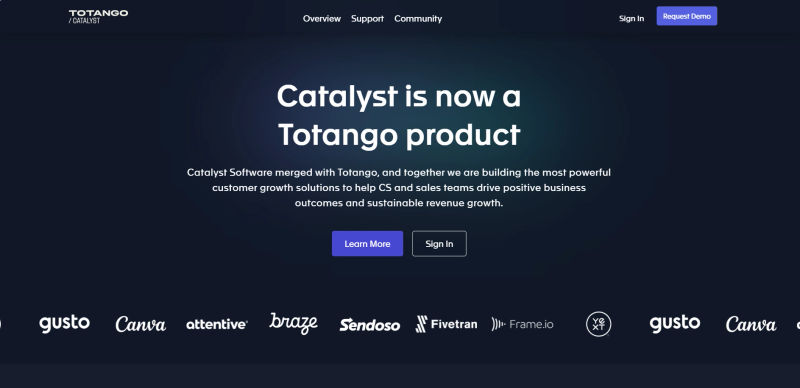
3. Totango: Best for Enterprise-Level Scalability
Overview
Totango is a veteran in the space that has successfully modernized its offering for the 2026 market, positioning itself as the best customer success platform for saas companies over 500 customers. Known for its "Composable Customer Success" approach, Totango allows startups to start small with specific modules and grow into a full-blown enterprise suite. If you need the best customer success platform for saas over 500 customers, Totango is specifically designed to handle high account complexity and large-scale deployments.
Key Features for Startups
The "SuccessBLOCs" concept remains a core strength. These are modular, pre-built programs (e.g., "Onboarding," "Adoption," "Renewal") that come with best-practice KPIs, dashboards, and automation rules out of the box. For a founder who isn't a CS expert, this provides a structured framework to start with. Totango also offers a robust "Canvas" for visual journey mapping, helping teams visualize the customer lifecycle as their user base expands.
Scalability and Usability
Totango offers a unique freemium/growth model that makes it accessible to early-stage startups—a rarity among enterprise-grade tools. You can start for free and upgrade as your revenue grows. This eliminates the barrier to entry usually associated with heavy hitters. It scales infinitely, capable of managing global teams and thousands of accounts, making it the ideal choice once your startup crosses the 500-customer threshold.
Integration Capabilities
Totango connects with virtually everything via its Customer Data Hub. It can ingest data from any source, normalize it, and make it actionable. This is crucial for startups with fragmented tech stacks that need to unify data for a growing enterprise client list.
4. Intercom: Best for Proactive Customer Engagement
Overview
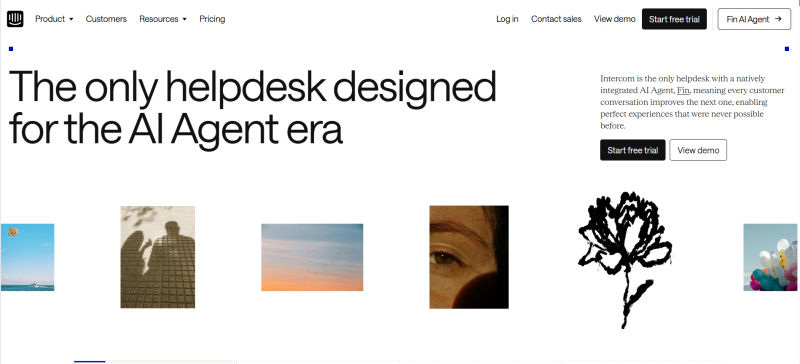
Intercom has evolved from a chat widget into a comprehensive customer engagement platform. Today, it is widely considered the best customer success platform with AI for growing SaaS companies, blurring the lines between support, marketing, and success. For product-led growth (PLG) startups, Intercom is often the default choice because it lives inside your product, allowing you to influence user behavior in real-time.
Key Features for Startups
The "Fin" AI agent (and its 2026 iterations) creates a massive deflection rate for support queries, freeing up CSMs for high-value work. For Success teams, Intercom’s "Product Tours" and "Series" deliver unmatched onboarding workflows. When evaluating the best platforms for SaaS customer onboarding 2025 2026, Intercom consistently ranks at the top due to these automated sequences. You can build onboarding checklists that appear directly in the app, guiding users to their "Aha!" moment. This proactive approach reduces the need for manual onboarding calls and leverages "Autonomous Retention Agents" to engage at-risk users without human intervention.
Scalability and Usability
Intercom is incredibly user-friendly and can be deployed by a non-technical founder in hours. Its visual builders for emails and tours are best-in-class. However, pricing can become steep as your user count grows, often known as the "Intercom Tax." Startups need to be mindful of how they structure their contracts as they scale.
Integration Capabilities
It acts as a central hub, integrating with Salesforce, HubSpot, Stripe, and more. The improved two-way sync ensures that conversation history is logged in your CRM, maintaining a single source of truth.
5. Front: Best for Collaborative Team Communication
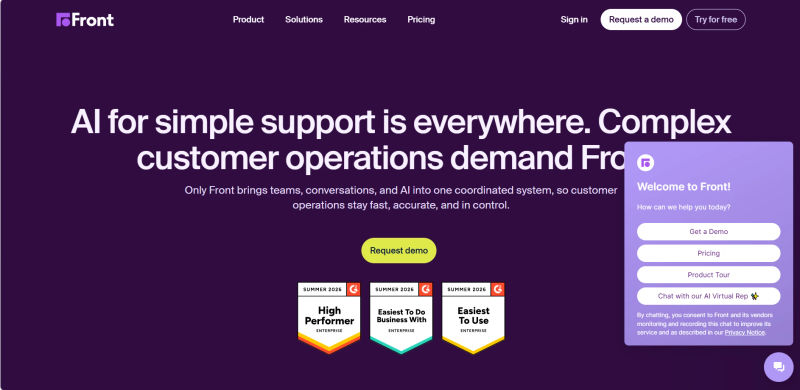
Overview: Evaluating Front as a Customer Success Platform When you evaluate the support platform company Front on customer success platform capabilities, it stands out by reimagining the inbox rather than relying on complex product telemetry. For startups where customer success is a shared responsibility across founders, product, and sales teams, Front acts as an ideal collaborative hub. It turns email into a multiplayer workspace, allowing for internal comments, shared drafts, and automated assignment rules without messy email forwards.
Key Features for Startups Front’s primary strength is cross-functional collaboration. CS reps can comment internally on a customer thread (e.g., "@CTO, can you verify this bug before I reply?"), keeping external communication professional while accelerating internal problem-solving. In 2026, Front expanded its analytics suite to track response times, SLA breaches, and account activity levels, allowing it to function effectively as a "lite" CS platform for high-touch, relationship-driven startups.
Scalability and Usability Because Front operates like a supercharged email client, team adoption is near-instant. It preserves a personalized, human touch in communication, avoiding the robotic feel of traditional ticket numbers. While it lacks the deep algorithmic health scoring of dedicated enterprise CS tools like Totango, it serves as the perfect bridge platform for Seed to Series A companies.
Integration Capabilities Front integrates deeply with startup backend systems and CRMs. You can display custom plugin data directly next to an email thread—surfacing the customer's current plan, MRR, and last login date in the inbox view. This immediate context prevents the friction of asking customers for information your team should already have.
2026 SaaS Customer Success Software Comparison Matrix
Below is our customer success platform pricing comparison to help you evaluate budget and technical fit. Whether you need the best affordable customer success platforms for mid-sized saas companies or affordable customer health monitoring software for startups, this matrix highlights entry-level costs and core health-scoring features.
Plan | Price | Best For | Features | Setup Time |
Freshdesk (Omni) | $19 /agent/mo | Unified Support & Success | Omnichannel ticketing, SLA management, Collision detection, Custom ticket views, Basic help widget, Marketplace apps, Automation rules | 1-2 Weeks |
Gorgias (Pro) | Starts at $40.mo | High-Velocity / B2B2C | Intent detection AI, Shopify/Magento deep integration, Macro responses, Revenue statistics, Social media comments, Sidebar customer data, Auto-responders | 3-5 Days |
Catalyst | Custom | Data-Driven / High-Touch Teams | Customizable health scoring, Playbooks & Workflow automation, Bi-directional Salesforce sync, Segment integration, Customer segmentation, QBR management, Executive dashboards | 4-8 Weeks |
Totango | Custom | Enterprise Scalability on Budget | SuccessBLOCs (pre-built templates), Customer Data Hub, Health Designer, Touchless automation, Campaign management, Visual journey mapping, Zoe (team collaboration) | 2-4 Weeks |
Intercom | $29/mo (per seat) | Product-Led Growth (PLG) | Fin AI Agent, Interactive Product Tours, Outbound Series (Email/Chat), Inbox workflows, Article-to-chat deflection, A/B testing, Custom bots | 1-2 Weeks |
Front | Starts at $25 /user/mo | Collaborative / Shared Inbox | Shared inboxes, Internal comments, Omni-channel (Email, SMS, WhatsApp), Rule-based routing, Analytics & Insights, API custom integrations, CRM sync | 1-3 Days |
Note: All prices shown reflect typical monthly billing. Vendors often offer lower pricing for annual commitments, but those discounts are excluded here for easier comparison. Actual costs may vary depending on your requirements, usage volumes, and negotiated terms.
Find Perfect Software for Your Business
How to Transition from Spreadsheets to a CS Platform
Migrating from a manual process to a dedicated platform is a significant operational shift. The most common pitfall founders face is underestimating the data hygiene required. A CSP is a magnifying glass; if your data is dirty, the tool will only show you a high-definition picture of your mess.
Step 1: Audit Your Data Sources
Before purchasing a tool, map out where your customer data lives. Is your billing data in Stripe? Usage data in Mixpanel? Contact info in HubSpot? You must identify the "Source of Truth" for every data point. For example, determine that "Plan Value" always comes from Stripe, not the manual entry in HubSpot. This audit prevents data conflicts during implementation.
Step 2: Define Health Before Implementation
Don't wait for the tool to tell you what a healthy customer looks like. Define your hypothesis on paper first. "A healthy customer logs in 3 times a week and uses Feature X." Having this definition ready will speed up your Time-to-Value significantly. In 2026, this also means defining your "Predictive Signals"—what early indicators (e.g., change in admin login patterns) correlate with churn?
Step 3: Start with a Pilot Cohort
Do not roll out the new platform to the entire customer base on day one. Select a cohort of 10-20 customers—perhaps your friendliest beta users—and run them through the new system. Test your health scores and automation triggers. Did the "Risk Alert" fire when it was supposed to? Was the automated renewal email accurate?
Step 4: The "Human" Element of Change Management
Even the best software will fail if your team hates it. Involve your CSMs in the selection process. If the UI is clunky, they will revert to their spreadsheets. Ensure the tool makes their life easier, not harder, by automating the tasks they despise, like manual data entry or logging emails.
Step 5: The Sales-to-CS Handoff
A critical failure point is the handoff from Sales to Success. Your new CSP must ingest data from the initial sales discovery calls. If a customer has to repeat their goals to the CSM during onboarding, you have already failed. Configure your CSP to pull "Success Criteria" fields directly from the CRM deal object so the CSM starts the relationship with full context.
Future-Proofing Your Customer Success Tech Stack
As we look beyond 2026, the role of AI in Customer Success is shifting from basic generative text to predictive action. When evaluating the best customer success platforms with ai-driven insights for startups, look for tools investing heavily in predictive analytics. The most future-proof platforms don't just flag at-risk accounts; they explain why and suggest exact intervention scripts based on historical success data.
Founders often ask: are there affordable ecosystem-led platforms for early-stage saas companies? Yes. The market is shifting away from monolithic suites toward modular, ecosystem-led tools that integrate seamlessly with your existing CRM and product analytics. If you are looking for the best affordable customer intelligence platform for b2b saas startups, prioritize vendors that offer robust API ecosystems over bloated all-in-one features. This ensures tight integration between Product and Success, feeding data directly back into roadmapping tools like Linear or Jira.
When selecting a tool, ask vendors about their roadmap for "Headless CS"—the ability to access CS data and logic via API without logging into their dashboard. This flexibility allows you to build custom internal tools or customer-facing portals that leverage your CS data, ensuring your tech stack remains agile as your startup scales.
Try AuthenCIO
Move to faster, smarter software evaluation with AI
Conclusion: Making the Right Choice for Your Growth Stage
Selecting a Customer Success Platform is one of the most strategic infrastructure decisions a founder will make. The right tool acts as a force multiplier, allowing a small team to deliver world-class retention rates that rival public companies. The wrong tool becomes expensive shelfware that obscures reality.
For early-stage startups focused on collaboration and high-touch handling, Front or Freshdesk offer the path of least resistance. For those leaning into Product-Led Growth where automation is key, Intercom is the clear winner. If you are a B2B SaaS scaling past Series A with complex data needs, Catalyst and Totango provide the robust architecture required to manage health at scale.
Remember, the software is only as good as the strategy behind it. No tool will fix a broken customer journey, but the right tool will illuminate the path to fixing it. Invest in clarity, invest in data, and build a foundation that turns your customers into your best growth engine.
24-Hour Action Checklist
To stop reading and start acting, here is your plan for the next 24 hours:
Audit Revenue Data: Check if your Stripe MRR matches your CRM data. If not, fix this before buying a CSP.
Map Red Flags: Write down the top 3 behaviors that indicate a customer is about to churn.
List Integrations: Identify the 3 non-negotiable tools your CSP must connect with (e.g., Slack, Jira, HubSpot).
Book One Demo: Choose the tool from the list above that best matches your stage and schedule a demo for this week.