.webp&w=64&q=75)
Introduction
In 2026, the landscape of customer success (CS) has shifted dramatically. What was once a department reserved for enterprise-level SaaS companies has become a fundamental necessity for startups and solo entrepreneurs. Finding the best customer success software for small business means moving from simple support tickets to proactive relationship management, driven by the fact that retaining a customer is significantly more cost-effective than acquiring a new one.
Streamline your software evaluation process
For the solo CS representative or the small business owner wearing every hat, the challenge isn't just strategy—it is finding the right technology without draining the budget. The "spreadsheet nightmare" of tracking customer health scores, renewal dates, and feedback in disjointed Excel files is no longer a viable way to operate.
Fortunately, the software market has responded with powerful alternatives for startups. Whether you need a comprehensive retention platform or reliable customer service software for small business free of enterprise price tags, today's tools allow small teams to automate workflows, centralize communication, and offer world-class support.
This definitive guide explores the top software picks available in 2026, specifically curated for small business owners and solo reps. We will break down the "forever free" tiers, highlight the features that matter most to single-person teams—like ease of setup and self-service capabilities—and look at the premium powerhouses you should aspire to use as you scale.
Key Takeaways
Top 2026 Picks: The most cost-effective customer success platforms for small businesses are Tidio, Freshchat, HubSpot Service Hub, Crisp, ChurnZero, and Planhat.
Targeted Solutions: Choose Tidio for real-time automation, HubSpot for seamless CRM integration, or ChurnZero for proactive churn reduction.
Solo CS Empowerment: Affordable CS tools eliminate the visibility gap for solo representatives by centralizing customer health scores, shared inboxes, and communication channels.
Scalability: Start with free or low-cost tiers that offer essential features like data portability and core integrations, allowing your team to graduate to premium plans as your customer base expands.
Top Software Picks
If you need the best customer success platforms alternatives 2025 2026 or the meilleures alternatives customer success tools 2026 (and meilleures alternatives customer success), these are the top affordable options:
Tidio — best for live chat and chatbot automation to boost engagement
Freshchat — best for omnichannel messaging and quick customer support
ChurnZero — best for tracking customer health and reducing churn risk
Planhat — best for managing customer success metrics and renewals
HubSpot Service Hub — best for integrated ticketing and feedback management
Crisp — best for unified inbox and real‑time team collaboration
Software covered in this article
For learning and reference, this listicle presents a selective overview of the best affordable customer success tools:


.webp?tr=w-112%2Cq-80%2Cf-auto%2Cc-at_max)



Why Small Businesses Need Dedicated Customer Success Tools
For years, small businesses conflated "customer support" with "customer success." Support is reactive: a customer has a problem, and you fix it. Success is proactive: you ensure the customer achieves their desired outcome using your product, thereby preventing the problem in the first place. In 2026, this distinction is the primary driver of growth for startups.
However, for the solo founder or rep, "success" often has to happen in the microscopic gaps between "support" tickets. It is the email you send to check in on a user who hasn't logged in for a week, drafted hastily between resolving technical bugs. Without a dedicated tool, these proactive moments are the first to be dropped when volume spikes.
Using dedicated CS tools allows a solo rep to punch above their weight class. Instead of manually emailing a new user to see if they need help, automation triggers a personalized onboarding sequence. Instead of guessing which customers are at risk of churning, health scores provide early warning signals.
For a small business, these tools act as a force multiplier, allowing one person to manage hundreds of relationships effectively. Furthermore, the integration of AI in 2026 means that free tools are smarter than ever. They can draft responses, summarize ticket histories, and even predict upsell opportunities.
Find the best free customer success tools for businesses of all sizes on AuthenCIO.
The Challenges of the Solo Customer Success Representative
Operating as a solo CS rep is one of the most demanding roles in the modern business ecosystem. You are the face of the company, the technical troubleshooter, the renewal manager, and often the voice of the customer in product meetings. Without the right stack, burnout is almost inevitable.
1. The Visibility Gap
One of the biggest hurdles is the lack of centralized data. When customer interactions are scattered across Gmail, Slack, and SMS, you lack a "single source of truth." You might not know that a high-value client has an open support ticket before you try to upsell them on a new feature, leading to awkward and damaging interactions.
2. The Emotional Toll
Beyond the logistics, there is an emotional weight to being the sole point of contact. You absorb 100% of the customer's frustration. When you don't have a team to debrief with, you need your software to be your partner—organizing the chaos so you don't have to hold it all in your head. A good tool reduces cognitive load, allowing you to shut down at the end of the day knowing nothing slipped through the cracks.
3. The Proactive Paradox
Every solo rep knows they should be proactive, reaching out to customers before they complain. However, the sheer volume of reactive support tickets often makes this impossible. You end up trapped in a cycle of firefighting, never able to get ahead of the curve to prevent the fires in the first place.
Key Features to Look for in Free CS Software
When evaluating free software in 2026, it is easy to get distracted by flashy features that a small team will never use. For a solo rep or small business searching for the best free or open source customer success tools, the criteria for selection should be ruthlessly focused on efficiency and ease of use.
Unified Inbox: You need a tool that aggregates emails, live chats, and social media messages into one stream. The "toggle-tax"—switching between tabs for different channels—kills productivity and increases the chance of missing a message. A shared, unified inbox also ensures that both support and sales teams can view customer history in one place without needing complex backend integrations or manual data syncing.
Ease of Setup (Plug-and-Play): As a solo owner, you likely do not have a dedicated developer. You need the best customer success platform that doesn't require technical setup for sales teams or support staff. Look for a tool that can be installed via a simple JavaScript snippet, a WordPress plugin, or a one-click CRM connection. If it takes more than an afternoon to configure, it is too complex for your current stage.
Automation & Macros: Look for "canned responses" or automation rules. If you type the same paragraph more than three times a week, it should be a template. Automation should handle the "busy work" like routing tickets or sending "we received your message" confirmations.
Self-Service Capabilities: A free knowledge base or help center builder is essential. The best way to handle a ticket is to enable the customer to solve it themselves. Look for tools that allow you to host FAQs and guides on a custom domain or a branded subdomain.
Integration Ecosystem: Your CS tool cannot live in a silo. It must talk to your other tools. Look for native integrations with your CRM and e-commerce platform, or at minimum, a robust connection to Zapier or Make.com. These "glue" tools allow you to build complex workflows—like adding a new high-value customer to a VIP Slack channel—without writing code.
Mobile App: As a business owner, you are rarely at your desk 9-to-5. A robust mobile app allows you to handle critical issues from anywhere, ensuring you never miss a beat even when you are on the go.
Top 6 Free and Affordable Customer Success Platforms 2026
We have analyzed the market to bring you the top tools that offer genuine value for small businesses. This list includes four robust "Forever Free" options perfect for starting out, and two "Premium/Enterprise" options that represent the gold standard for when your business scales.
1. Tidio: Best for Automated Real-Time Engagement
Overview Tidio has solidified its place in 2026 as the go-to solution for small businesses that need to be "always on" without hiring a 24/7 team. While it started as a live chat tool, it has evolved into a comprehensive customer success platform for micro-businesses. Its strength lies in its ability to turn passive website visitors into engaged users through intelligent automation.
Why It Works for Solo Reps Tidio’s "Lyro" AI agent is a game-changer for solo reps. It can handle up to 70% of common customer inquiries automatically, freeing you up to focus on complex retention issues. The interface is incredibly intuitive, designed for non-technical users who need to set up a chat widget and automation flows in under 30 minutes.
The Free Tier Advantage The free plan is generous. It typically includes a set number of unique monthly conversations (Lyro AI conversations are often capped, so check current limits) and access to the ticketing system. For a small business with moderate traffic, this is often sufficient. You get access to the visual flow builder, allowing you to create automated welcome messages. Note that the free version will display "Powered by Tidio" branding, which is a standard trade-off for free tools.
Self-Service & Knowledge Base Tidio focuses heavily on chat-based self-service. While it doesn't offer a traditional standalone "Knowledge Base" website on the free tier in the same way HubSpot does, its automated chatbots can serve help articles directly within the chat window, keeping the user on the page.
Best Feature: The visual automation builder. You can drag and drop triggers (e.g., "User visits pricing page") and actions (e.g., "Send message: Need help choosing a plan?") without writing a single line of code.

2. Freshchat: Best for Scaling Multi-Channel Support
Overview Part of the Freshworks ecosystem, Freshchat is a modern messaging software built for sales and customer engagement. In 2026, it stands out for its omnichannel capabilities. It unifies messages from WhatsApp, Apple Business Chat, SMS, and your website into a single dashboard, which is critical for businesses selling across multiple platforms.
Why It Works for Solo Reps If you are looking for free CS software for startups that rely heavily on mobile messaging, Freshchat is your best bet. It prevents the "device juggling" act. The platform also offers "IntelliAssign," which (even if you are a team of one) helps route queries based on skill or load if you eventually add a virtual assistant. The context-driven interface shows you user properties and events alongside the chat, so you know exactly what the user was doing before they asked for help.
The Free Tier Advantage Freshchat’s free tier has historically been one of the most generous in the industry, often allowing up to 10 agents for free. This makes it an incredible choice for small startups that might have a few co-founders sharing the support load. It includes the team inbox, mobile SDK, and basic chatbot functionalities. Be aware that the free widget will carry Freshworks branding.
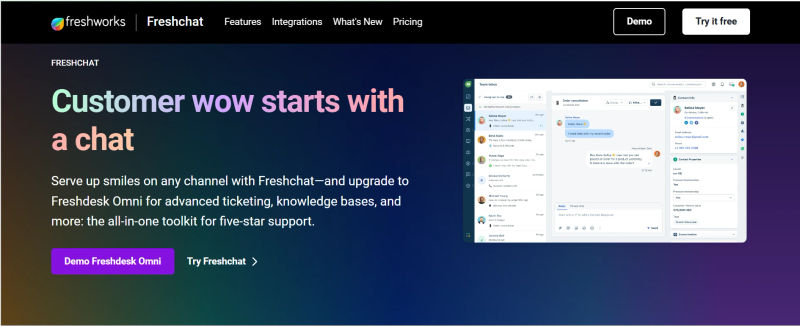
Self-Service & Knowledge Base Freshchat integrates tightly with Freshdesk (also offering a free tier) to provide a robust FAQ and Knowledge Base solution. You can convert chat conversations into FAQs with a few clicks, slowly building a library of answers that deflect future tickets.
Best Feature: The "Campaigns" feature allows you to send proactive messages to users based on their behavior, effectively functioning as a mini-marketing automation tool within your CS platform.
Find Perfect Software for Your Business
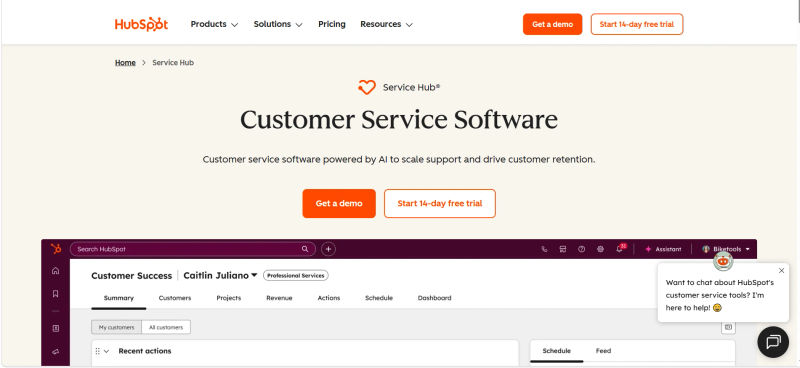
3. HubSpot Service Hub: Best for Integrated CRM Workflows
Overview HubSpot remains the titan of inbound methodology. The Service Hub is built on top of their free CRM, which means your customer success data lives in the exact same place as your sales and marketing data. For a holistic view of the customer journey, HubSpot is unrivaled.
Why It Works for Solo Reps The integration is the selling point. When a customer emails you, you can see if they opened your last marketing newsletter or if they have a pending deal with sales. This context is invaluable for retention. The "Free Forever" tools include ticketing, live chat, and a team email, which is essentially everything a solo rep needs to professionalize their workflow.
The Free Tier Advantage HubSpot gives you a free ticketing system that rivals paid enterprise tools. You can create ticket pipelines (e.g., New > Waiting on Customer > Resolved) to track the status of every issue. Additionally, the free meeting scheduler is a massive time-saver, allowing customers to book onboarding calls directly on your calendar without the back-and-forth email tag. Expect HubSpot branding on the free chat widget and meeting links.
Self-Service & Knowledge Base HubSpot’s free tier is limited regarding a public-facing Knowledge Base (this is usually a Starter/Pro feature). However, you can use "Snippets" and "Templates" to rapidly deploy answers to common questions via email or chat, functioning as an internal knowledge base for the rep.
Best Feature: The Universal Inbox combined with the CRM. Seeing a contact's full lifecycle timeline next to their support ticket empowers you to provide hyper-personalized service.
4. Crisp: Best for Simple Shared Inboxes and Team Collaboration
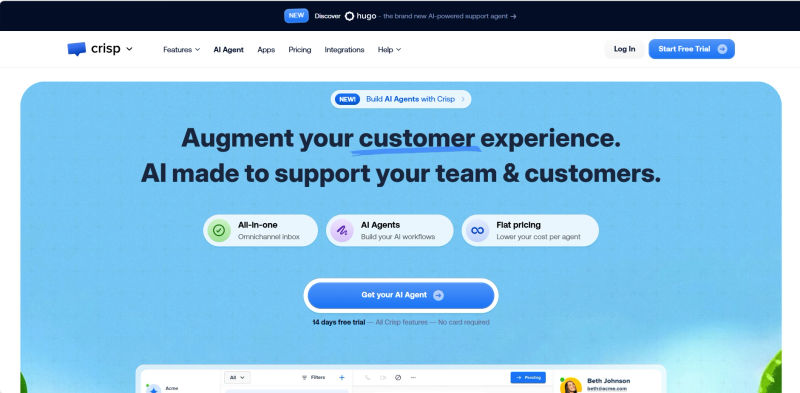
Overview Crisp is an "all-in-one business messaging platform" known for being lightweight and fast. It lacks the bloat of older enterprise software, making it a favorite for tech-forward startups.
Why It Works for B2B SaaS Crisp ranks among the best shared inbox tools for B2B SaaS customer success onboarding 2025 or 2026. Solo reps need immediate context during software rollouts. Crisp's "MagicBrowse" (paid tier) allows co-browsing to see exactly what users see. Even on the free tier, the shared inbox is highly efficient, feeling like a modern messenger app rather than a clunky helpdesk.
Ease of Use Comparison When analyzing HubSpot vs Crisp vs Freshchat ease of use user reviews, Crisp consistently wins for its zero-learning-curve setup. Furthermore, HubSpot vs Crisp vs Freshchat ease of use reviews highlight that while HubSpot excels in CRM depth and Freshchat in multi-channel routing, Crisp is the top choice for teams wanting a frictionless, immediate chat interface.
The Free Tier Advantage The "Basic" plan is free forever with 2 seats—perfect for a founder and a solo rep. It covers the chat widget, mobile apps, and contact form. The free chatbox displays "Powered by Crisp."
Self-Service & Knowledge Base Crisp's Knowledge Base is a paid feature. Free users handling high volume might need to pair Crisp with a separate tool like Notion for documentation.
Best Feature: "Live Translate" (paid) and arguably the fastest-loading chat widget on the market.
5. ChurnZero: Best for Proactive Retention Management
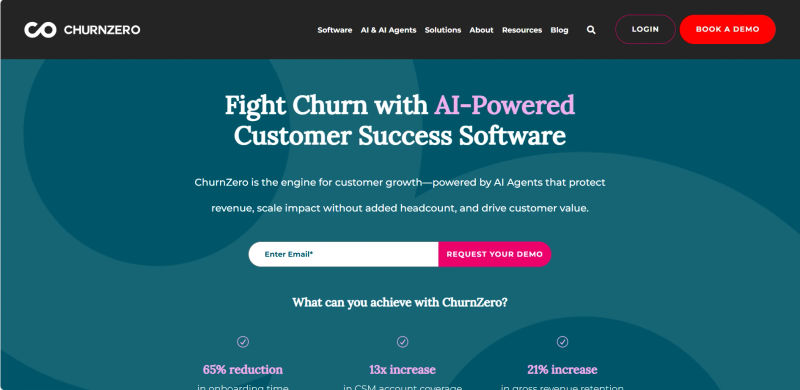
Overview: ChurnZero is an enterprise-grade platform designed to fight churn aggressively. It integrates with your product to reveal how customers use your software, beyond just what they say in support tickets.
Best Feature: Customer Health Scores. If you are looking for the best customer health scoring tools for startups with limited cs resources, ChurnZero excels. You can configure algorithms to grade every customer from 0-100, giving small teams an automated, at-a-glance view of portfolio risk without manual data crunching.
Why It Works for Scaling Teams: ChurnZero lets you build automated "Plays." If a customer's usage drops by 50% in a week, ChurnZero can automatically trigger a task for the CS rep to call them or send a re-engagement email. This shifts CS from reactive support to proactive revenue protection.
The Investment: When evaluating ChurnZero pricing vs competitors to find what’s the most cost‑effective customer success product for startups, note that ChurnZero uses custom, quote-based pricing. It is a premium tool compared to flat-rate options like Crisp. However, for businesses ready to reduce churn systematically, the ROI of saving high-value accounts justifies the cost, marking the graduation from "survival mode" to "scaling mode."
6. Planhat: Best for Visualizing Customer Health
Overview Planhat is designed for the modern customer success organization that wants to merge customer data with revenue data. It is visually stunning and highly customizable. In 2026, Planhat is often the choice for B2B SaaS companies that have complex onboarding processes and need to manage renewals rigorously.
Mobile-First In-App Tracking For mobile-first teams, is Planhat the strongest option for tracking in-app events compared with other CS tools? No. While Planhat excels at aggregating data for web-based SaaS platforms, it lacks the deep native mobile SDKs required for granular mobile event tracking. Mobile-first teams are better off integrating dedicated product analytics tools into their CS stack or choosing platforms with stronger native mobile event capabilities.
Why It Works for Scaling Teams Planhat offers "Customer Portals," allowing you to share success plans, documents, and dashboards directly with your clients. This transparency builds massive trust. For a scaling team, Planhat serves as the operating system for the entire post-sales journey, handling everything from onboarding checklists to renewal forecasting.
The Investment Like ChurnZero, Planhat is a paid solution targeting established teams. However, they are listed here because understanding their feature set helps you utilize your free tools better. You should try to mimic Planhat's "Customer Portal" concept using free tools (like Notion or Google Docs) until you can afford the real deal.
Best Feature: The "Revenue Management" module. It connects CS efforts directly to dollar figures, helping you prove the ROI of your department to investors or stakeholders.
Transitioning from Free to Premium CS Tools: When to Graduate
There comes a point in every successful small business's journey where "free" tools become a bottleneck. Perhaps you need deeper analytics, automated health scoring, or the ability to manage thousands of customers with complex segmentation. This is when you graduate to dedicated Customer Success Platforms (CSPs).
The following two tools, ChurnZero and Planhat, are not free. In fact, they represent a significant monthly investment (often starting around $1,500 - $2,000/month). However, they are included here as your "North Star." Understanding what these tools do helps you understand what you are aiming to build manually with your free stack today.
2026 Comparison Table: Plans, Pricing, and Top Features
To help you visualize the landscape of affordable customer success platforms 2026, we have compiled the key data points below. This table contrasts the entry-level capabilities of the free tools against the advanced power of the premium platforms.
Plan | Price | Best For | Features |
Tidio | Starts at $24/mo | Automated Engagement | Lyro AI Intro, 50 conversations/mo, Ticketing, Desktop & Mobile Apps, 3rd Party Integrations, Visual Flow Builder, Visitor List |
Freshchat | Starts at $15/mo | Multi-Channel Support | Up to 10 Agents, Team Inbox, Mobile SDK, WordPress Integration, Basic Chatbot, Bulk Actions, Visitor Intel |
HubSpot Service Free | Starts at $6/mo | CRM Integration | Free CRM, Ticketing Pipelines, Shared Inbox, Meeting Scheduler, Live Chat, Email Templates, Calling SDK |
Crisp Basic | Starts at $45/mo | Simple Startups | 2 Seats Included, Unified Inbox, Mobile Apps, Contact Form, File Sharing, Notifications, Status Page |
ChurnZero | Custom | Proactive Retention | Health Scores, Segmentation, Automated Plays, Real-time Alerts, NPS Surveys, Account Insights, Journey Mapping |
Planhat | Custom | Revenue Management | Customer Portals, Playbooks, Revenue Forecasting, Usage Analytics, Onboarding Guides, Automations, API Access |
*Note: All prices shown reflect typical monthly billing. Vendors often offer lower pricing for annual commitments, but those discounts are excluded here for easier comparison. Actual costs may vary depending on your requirements, usage volumes, and negotiated terms.
Take the guesswork out of finding top software for your growth stage using AuthenCIO.
How to Choose the Right Tool for Your Solo CS Workflow
Selecting the right software is not about finding the one with the most features; it is about finding the one that fits your current operational reality. Here is a step-by-step guide to making the decision in 2026.
Step 1: Audit Your Communication Channels
Where do your customers currently contact you? If 90% of your requests come via email, HubSpot Service Hub is the logical choice because of its strong email ticketing backbone. If you are an e-commerce business driving traffic to a storefront, Tidio or Freshchat are superior because their live chat widgets are designed to capture impulse questions.
Step 2: Assess Your Technical Comfort
As a solo rep, you do not have time to be a systems administrator. If you want something you can install in 5 minutes and never worry about again, Crisp is the winner. If you are comfortable configuring workflows and want to build a robust infrastructure for the future, investing time in HubSpot now will pay dividends later.
Step 3: Define Your "Must-Have" Automation
Do you need a bot to answer FAQs while you sleep? Then you need Tidio or Freshchat. Do you need a system that reminds you to call a customer 3 days after they sign up? HubSpot’s task management is better suited for that. Write down the top 3 repetitive tasks you hate doing, and pick the tool that automates them best.
Step 4: The Data Portability Check
Before committing to a free tool, ensure you can get your data out. All the free tools listed above allow for CSV exports of contacts and conversation history. This is crucial because, eventually, you will want to upgrade to a platform like ChurnZero or Planhat. If your data is locked in a proprietary format, that migration will be a nightmare.
Step 5: The Mobile Test
Download the mobile app for your top two choices. As a small business owner, the mobile experience is often more important than the desktop one. Send a test message to your widget and try to reply from your phone. If the app is laggy or confusing, discard the tool. You cannot afford to be tethered to your laptop.
Step 6: The Integration Check
Finally, verify the ecosystem. Does the tool connect with your existing stack? For example, if you run your store on Shopify, Tidio and Freshchat have native plugins that pull customer order history into the chat window. If you use Slack for internal communication, ensure your chosen tool can push notifications there. If native integrations don't exist, check for Zapier or Make.com compatibility. These "connector" tools are vital for solo reps, allowing you to automate data transfer between apps without hiring a developer.
A Note on Security and "Free" vs. "Trial"
When selecting a free tool, always verify that it is a "Forever Free" plan, not a 14-day trial that converts to a paid subscription. The tools listed in this guide (Tidio, Freshchat, HubSpot, Crisp) all offer genuine free tiers. Additionally, even on free plans, reputable vendors like these maintain high security standards (GDPR compliance, encryption), ensuring your customer data remains safe—a critical consideration for any business owner.
Try AuthenCIO
Move to faster, smarter software evaluation with AI
Conclusion: Building a Scalable CS Strategy on a Budget
In 2026, "free" does not mean "low quality." The tools highlighted in this guide—Tidio, Freshchat, HubSpot, and Crisp—offer enterprise-grade capabilities that were inaccessible to small businesses just a decade ago. By leveraging these platforms, a solo customer success representative can automate the mundane, centralize the chaotic, and focus on what truly matters: building meaningful relationships with customers.
The key is to start simple. Do not try to build a complex retention engine on day one. Start with a unified inbox to stop the bleeding of missed messages. Then, layer on basic automation to handle FAQs. As your revenue grows, you can look toward the power of ChurnZero or Planhat to take your retention strategy to the next level.
Your technology stack is the foundation of your customer experience. Choose wisely, and you will turn your support function from a cost center into a growth engine.