.webp&w=64&q=75)
Introduction
When evaluating the best crm for sales teams 2026, the focus has fundamentally shifted away from the high-volume, "spray and pray" tactics that dominated the early 2020s. In an era where AI agents can automate thousands of outreach emails in seconds, the value of generic communication has plummeted to near zero. For high-touch industries—specifically Private Equity, Wealth Management, Enterprise Consulting, and Commercial Real Estate—the competitive advantage no longer lies in the size of the pipeline, but in the depth of the relationship.
Streamline your software evaluation process
Traditional Customer Relationship Management (CRM) systems, historically designed as "Systems of Record," are failing modern professionals. These legacy platforms were built to track transactions, log activities, and generate reports for management. They treat contacts as rows in a database rather than dynamic nodes in a network. For a relationship-driven team, this architectural flaw creates significant friction. Sales professionals spend hours on manual data entry—what we call the "Administrative Burden"—instead of nurturing the high-value connections that drive Lifetime Value (LTV).
Today's market demands "Systems of Action." Organizations upgrading to the best crm platforms for sales teams 2026 are prioritizing "Relationship Intelligence" and context over clicks. The goal is no longer just to store data; it is to enrich it automatically and surface actionable insights that prevent "deal fatigue." The best crm for sales teams 2025 2026 must leverage AI for passive data collection, ensuring that the software works for the seller, not just the sales manager.
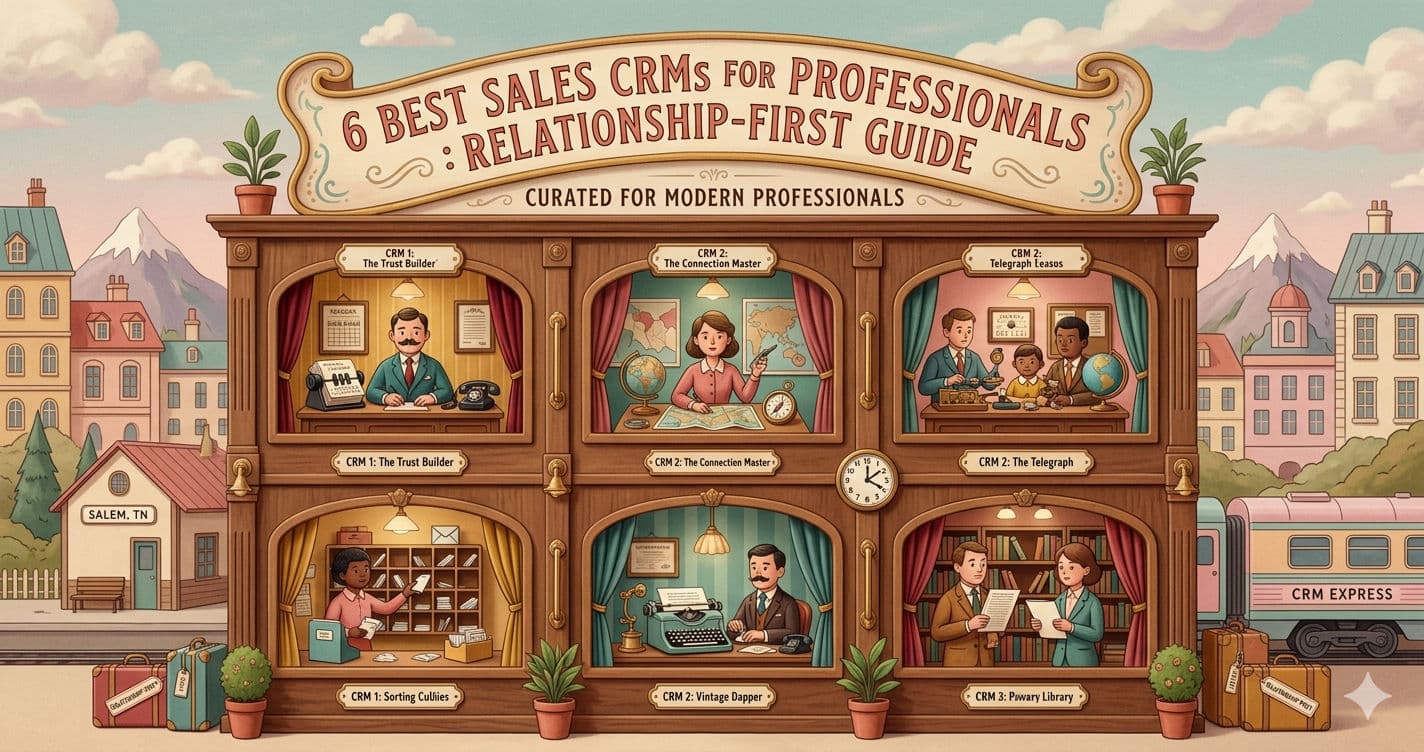
In this guide, we analyze the top CRMs for 2026 that cater specifically to relationship-driven workflows. We move beyond generic "Top 10" lists to evaluate how tools like Attio, Folk, Capsule, HubSpot, Zoho, and Nutshell actually perform when the goal is trust, not just turnover.
Key Takeaways
Top Platforms: The best crm for sales teams 2026 includes Attio, Folk, Capsule, HubSpot, Zoho, and Nutshell, moving beyond legacy systems to relationship-first workflows.
Shift to Systems of Action: Modern sales professionals are abandoning legacy "Systems of Record" in favor of the best crm tools for sales teams 2025 2026 that actively surface relationship insights and automate data entry.
Context Over Clicks: The primary metric for 2026 is "Relationship Health," not just activity volume. Tools must support multi-threading and warm introduction mapping.
Privacy is Paramount: For high-trust industries like Wealth Management and Private Equity, SOC2 compliance and granular permissioning are now non-negotiable selection criteria.
Mobile-First Reality: The best CRMs for 2026 offer robust mobile experiences that allow field professionals to access context and dictation features instantly.
Top Software Picks
1️⃣ Attio — AI‑powered, relationship‑first CRM with automation and deep client insights.
2️⃣ Folk — Collaborative CRM built for networking, partnerships, and team workflows.
3️⃣ Capsule — Lightweight, intuitive CRM ideal for relationship‑driven professionals.
4️⃣ HubSpot CRM — Scalable all‑in‑one platform for sales, marketing, and customer success.
5️⃣ Zoho CRM — Affordable, customizable CRM with strong automation for SMBs and enterprises.
6️⃣ Nutshell — Easy‑to‑use CRM with built‑in email, pipeline, and reporting tools.
Software covered in this article
For learning and reference, this listicle presents a selective overview of the best sales crm for professionals in relationship management:






Key Selection Criteria for Relationship-Driven CRMs
When evaluating a CRM for a high-trust business model, the standard metrics of "calls per day" or "email open rates" are often irrelevant. Instead, buyers in 2026 must focus on five critical pillars: Relationship Intelligence, Passive Data Collection, Flexible Interfaces, Security, and Mobile Workflows.
1. Relationship Intelligence and Health Scoring
Modern relationship management requires software that understands the nuance of human connection. Does the platform know who knows whom? Can it map the strength of a relationship based on email frequency and sentiment analysis? Tools like Attio and Folk have pioneered features that visualize stakeholder influence within a client organization.
This is crucial for "multi-threading" accounts—a strategy where sales reps engage multiple stakeholders to secure a deal. If your CRM cannot flag that a key champion at a client account has gone silent (indicating potential relationship cooling), it is failing its primary purpose. We need tools that calculate a "Health Score" based on recency and sentiment, alerting you before a relationship degrades.
2. Passive Data Collection and Enrichment
The era of manual data entry is ending. In 2026, a robust CRM must offer autonomous data enrichment. When you add a contact, the system should automatically pull their LinkedIn profile, company firmographics, and recent news mentions without the rep lifting a finger. This "Passive Data Collection" capability is what separates modern relationship-driven sales tools from legacy databases.
It reduces the administrative tax on your team, allowing them to focus on high-leverage activities like strategic consulting and negotiation. For example, Attio and HubSpot now leverage AI to scan email signatures and calendar invites to auto-populate job titles and phone numbers, ensuring your data remains pristine without manual intervention.
3. UI Fluidity and the Flexible Interface
Adoption is the silent killer of CRM implementations. Relationship-based professionals—often VCs or senior partners—will not use a clunky, rigid interface. The best tools in 2026 offer a flexible, user-configurable interface, allowing teams to build views, pipelines, and dashboards that mirror their unique mental models.
Whether it is a spreadsheet-like view for rapid editing or a Kanban board for deal flow, the UI must adapt to the user, not the other way around. We are moving away from the term "No-Code" towards "User-Configurable," emphasizing that you don't need to be a developer to make the tool work for your specific GTM stack.
4. Security, Compliance, and Data Privacy
For industries like Private Banking and Legal Services, trust is the currency. In 2026, data privacy regulations have tightened globally. A relationship-based CRM must offer enterprise-grade security, including SOC2 Type II compliance and granular permissioning. It is not enough to secure the database; you must be able to secure specific notes.
If a partner at a VC firm logs a sensitive note about a founder's cap table in Attio or Zoho, they need the confidence that only specific team members can view it. "Open by default" is no longer an acceptable standard for high-stakes relationship management. The ability to partition data while still maintaining a firm-wide view of "who knows who" is the delicate balance modern tools must strike.
5. Mobile-First Relationship Management
The modern relationship seller is rarely at their desk. They are at coffees, board meetings, and industry conferences. A CRM that only works well on a desktop is a non-starter. The top contenders for 2026 prioritize a mobile-first experience that goes beyond a basic rolodex.
We are looking for features like AI voice-to-text for logging meeting notes immediately after a lunch, geo-fencing to show which clients are nearby, and instant access to interaction history. When a consultant walks into a meeting, they should be able to pull up Capsule or HubSpot on their phone and see the last three emails exchanged by anyone in their firm with that client, ensuring they never walk into a room unprepared.
Build long-term relationships with the right CRM via Authencio.com
Top 6 CRMs for Relationship-Driven Sales Professionals
1. Attio: The Next-Generation Data-Driven CRM
Attio has solidified its position as a market frontrunner in 2026 for teams that view their network as their most valuable asset. Unlike rigid legacy systems, Attio is built on a flexible data object model that allows for unprecedented customization. It is particularly favored by venture capital firms, startups, and agencies where relationships are fluid and multifaceted.
The Power of Data Objects The defining feature of Attio is its ability to treat any data point as a first-class citizen. You are not limited to standard "Leads" and "Opportunities." You can create objects for "Investments," "Partnerships," or "Talent Candidates" and link them dynamically. This architecture supports complex, multi-threaded relationships where a single contact might be an investor in one context and a customer in another.
Deep Dive: Warm Intros and Passive Enrichment Attio excels at syncing with email and calendar data to build a "relationship graph" automatically. It analyzes communication patterns to provide a relationship strength score. This is the "Warm Intro" mechanic that firms crave: a partner can instantly see who on their team has the strongest connection to a prospective client.
Instead of sending a firm-wide email asking "Does anyone know X?", the software identifies the path of least resistance. Furthermore, its passive enrichment constantly updates contact details, solving the data decay problem that plagues static databases.
Migration Difficulty and Alternatives: Medium Because Attio is so flexible, setting it up requires a clear understanding of your own data model. It is less "plug-and-play" than a simple contact book but offers significantly higher ROI for teams willing to configure their workspace. If you are searching for the best Attio alternatives 2025 or 2026 because you need a simpler setup or a different pricing structure, Folk is an excellent choice for lightweight, collaborative list management, while HubSpot is better suited for traditional, high-volume inbound sales pipelines.

2. Folk: The Collaborative Tool for Modern Teams
If Attio is the customizable powerhouse, Folk is the lightweight, ultra-modern network manager. Often described as the "Notion of CRMs," Folk prioritizes design and ease of use, making it a top choice for creators, boutique agencies, and community-led growth teams.
The "Magic Field" and Browser Extension Folk’s standout feature is its browser extension, which allows users to scrape lists of contacts from LinkedIn, Twitter, or Instagram in a single click. Once in the system, Folk’s "Magic Field" uses AI to generate personalized icebreakers or summarize context based on the scraped data. This feature is a game-changer for high-touch prospecting where context is everything.
Solving Data Hygiene and Duplication One common concern with scraping tools is the creation of messy data. Folk addresses this with intelligent deduplication logic. When you import a profile from LinkedIn that already exists in your database (perhaps imported previously from Gmail), Folk flags the potential duplicate and suggests a merge, preserving the history while updating the firmographics. This ensures that your "System of Action" doesn't become a swamp of repeated entries.
Migration Difficulty: Low Folk is incredibly easy to adopt. Its simplicity is its strength, though enterprise teams with complex compliance needs might find it lacks the granular permission settings of a Salesforce or HubSpot.

3. Capsule: Simple, Effective Client Management
Capsule stands out as the best crm for professional services firms 2025 2026, offering a reliable platform for architects, accountants, and consultants. Recognized as top-tier best crm and sales software for professional services firms 2025 2026, it avoids feature bloat in favor of a clean experience tailored for high-touch environments.
Workflow Automation** for Retention** Capsule excels as the best crm for client relationship nurturing and onboarding 2025 2026. Its "Tracks" feature defines standardized processes. For example, a "New Client Onboarding" track automatically generates task checklists—send welcome packets, schedule 30-day check-ins—ensuring a consistent experience. This cements its status among the best crm platforms for high-touch b2b sales professional services 2025 2026, preventing churn caused by perceived neglect.
Integration Ecosystem As one of the best crm and sales tools for professional services firms 2025 2026, Capsule integrates robustly with Xero, QuickBooks, and Mailchimp. It acts as an ideal hub for small to mid-sized firms needing CRM-accounting sync, providing a 360-view of client value without complex enterprise resource planning (ERP) overhead.

Migration Difficulty: Low Capsule guarantees quick implementation. Teams can migrate data and become fully operational in days, making it a low-risk upgrade from spreadsheets.
Find Perfect Software for Your Business
4. HubSpot: Scaling Relationship Management at Scale
HubSpot is often associated with inbound marketing, but its evolution into a full-suite customer platform makes it a formidable contender for relationship-driven enterprises. It stands out as the best crm for mid-size sales teams 2025 2026 and the best crm for large sales teams 2025 2026 due to its unmatched scalability and deep ecosystem. In 2026, HubSpot’s Service Hub and Operations Hub have matured to support complex, long-term account management across growing organizations.
Addressing the Seller vs. Manager Friction A common critique of HubSpot in high-touch sales is that it feels designed for the manager's reporting needs rather than the seller's workflow. However, the 2026 updates have addressed this by allowing highly customized "Seller Views." Sales professionals can now strip away the noise of marketing metrics and focus solely on their relationship feeds. To make HubSpot work for relationship sales, teams must invest time in configuring these views to prioritize "Last Touch" and "Notes" over generic pipeline stages.
Ideal for Sales Leadership and Coaching HubSpot has established itself as the best crm for sales directors 2025 2026 and the best crm for sales team coaching 2025 2026. Directors can leverage advanced call tracking, conversation intelligence, and granular reporting to coach reps on relationship-building techniques rather than just pipeline volume.
AI-Driven Relationship Intelligence HubSpot’s "Breeze" AI features (as of late 2025/2026) have begun to predict deal fatigue and suggest proactive outreach. By analyzing the vast amount of data stored in the ecosystem, HubSpot can flag when a high-value account hasn't been touched in 60 days or when engagement metrics are trending downward, prompting the relationship manager to intervene.
Migration Difficulty: High Moving to HubSpot is a commitment. It is a powerful ecosystem, but setting up custom objects, workflows, and reporting requires dedicated admin resources. However, for scaling teams, the ROI on this centralization is often unmatched.

5. Zoho: Advanced Customization for Power Users
Zoho CRM remains the champion of value and customization. Widely recognized as one of the best crm platforms for account executives opportunity management 2025 2026, it provides enterprise-grade features without the enterprise price tag. Zoho offers a highly adaptable platform that can be molded to fit complex sales cycles, making it a top contender for the best crm software for deal management 2026.
Advanced Deal Management Zoho equips account executives with robust pipeline tools. Its AI assistant, Zia, offers predictive deal scoring and trend analysis, helping reps prioritize high-value opportunities. Combined with automated workflows for stage transitions, Zoho ensures no deal stalls due to manual oversight.
Canvas Design Studio One of Zoho’s most unique features for 2026 is the Canvas design studio, allowing organizations to completely redesign the CRM interface. You can strip away standard database clutter and create a visual interface that highlights only the metrics that matter for relationships and opportunity management—such as "Last Meeting Date," "Deal Stage Velocity," or "Next Action." This UI customization drives adoption among non-technical sales reps who need a streamlined view of their pipeline.
Omnichannel Communication Zoho unifies WhatsApp, social media, email, and telephony into a single timeline. For account executives communicating via text or WhatsApp (common in real estate and international markets), having these conversations automatically logged is critical for institutional memory and keeping deals moving forward.
Migration Difficulty: Medium-High Zoho is feature-dense. The learning curve can be steep due to the sheer volume of settings and options. It is best suited for teams that have a tech-savvy manager or are willing to hire a consultant for initial setup.

6. Nutshell: Streamlined Pipelines for Sales Success
Nutshell bridges the gap between simple contact management and sophisticated sales automation. It stands out as the best crm for high-velocity b2c sales teams 2025 2026, helping teams align sales and marketing without buying separate expensive tools. For organizations seeking the best crm for b2c companies 2025 2026, Nutshell delivers essential speed and simplicity.
Deal Tracking and Customer Interactions Nutshell ranks highly among the best crm tools for sales representatives 2026 tracking deals customer interactions. Its intuitive pipelines help reps monitor fast-moving B2C sales effortlessly. For organizations needing the best crm tools for sales teams 2026 deal tracking customer interactions, Nutshell provides centralized timelines logging every call, meeting, and email. This comprehensive visibility makes it one of the best crm tools for sales representatives 2025 2026 tracking deals customer interactions, preventing the "silo effect" and preserving relationship context institutionally.
Automated Personal Email Sequences Unlike mass marketing tools, Nutshell’s email automation is designed to look and feel personal. You can trigger sequences based on pipeline stages to maintain the relationship's pulse without daily manual intervention. This efficiency solidifies it as one of the best crm tools for sales representatives 2026 deal tracking customer interactions.
Migration Difficulty: Low-Medium Nutshell offers a user-friendly import tool and excellent support, making the switch relatively painless for high-velocity teams.

Comparing the Best Relationship-Driven CRMs
When seeking a best crm for sales teams 2026 comparison, your choice depends on scale and agility. For those researching the best crm for smes 2026 hubspot attio folk dynamics, the breakdown is straightforward: HubSpot scales all-in-one operations, Attio offers unmatched data flexibility, and Folk provides lightweight collaboration. If you are looking for the best crm for sales 2026 hubspot dynamics attio, note that Microsoft Dynamics serves as the complex enterprise alternative to these agile SME platforms.
Platform | Best For | Intelligence Score | Migration Difficulty | Features |
Attio | VCs, Startups, Tech-Forward Teams | High (Auto-Enrichment) | Medium | Flexible Data Objects & Network Graph |
Folk | Creators, Agencies, Networkers | High (Magic Fields) | Low | Browser Extension & Notion-style UI |
Capsule | Consultants, Professional Services | Medium | Low | "Tracks" for Process Standardization |
HubSpot | Scaling Enterprises | High (AI Insights) | High | Custom Objects & Ecosystem Scale |
Zoho | Budget-Conscious Power Users | Medium-High | Medium-High | Canvas UI Customization |
Nutshell | Sales & Marketing Alignment | Medium | Low-Medium | Collaborative Team Selling Features |
How to Implement a Relationship-First Sales Strategy
Selecting the software is only the first step. Implementing a relationship-first CRM strategy in 2026 requires a cultural shift within the organization. Here is how to ensure your new tool actually drives growth rather than just collecting dust.
1. Audit Your "Passive" Data Sources
Before importing data, evaluate where your relationship data currently lives. Is it in Outlook, Gmail, LinkedIn DMs, or Excel? Choose a CRM like Attio or HubSpot that can connect to these sources and perform an initial historical sync. This immediately populates the CRM with interaction history, solving the "empty room" problem that discourages new users.
You need to map out every digital touchpoint your team uses and ensure the CRM has a connector for it. If your team relies heavily on WhatsApp, ensure your chosen tool (like Zoho) supports that integration natively.
2. Define "Relationship Health" Metrics
Don't just track "Closed Won" deals. Configure your CRM to track leading indicators of relationship health. For example, in Zoho or Nutshell, set up a custom field for "Days Since Last Contact." If this number exceeds 30 for a Tier-1 client, trigger an automated task for the account manager.
This operationalizes the concept of "staying in touch." You should also look at "Response Time" and "Multi-threading Depth" (how many contacts at the account are engaged) as key health indicators. A healthy relationship isn't just one where the client buys; it's one where the client engages.
3. Automate the Mundane to Humanize the Critical
Use the automation features in tools like Capsule or Folk to handle low-value tasks. Automate meeting confirmations, data entry, and birthday reminders. This frees up mental bandwidth for the high-value interactions—the strategy lunches, the crisis management calls, and the creative brainstorming sessions—that actually build trust.
The goal of automation in a relationship context is not to replace the human, but to remove the robot from the human. If your sales rep is manually typing in a phone number in 2026, your process is broken.
4. Train on Context, Not Just Clicks
When training your team, focus on why they are entering data. Explain that logging a meeting note in HubSpot isn't for compliance; it's so that if they are out sick, a colleague can pick up the phone and know exactly what was discussed last week. Frame the CRM as a tool for collective memory and professional reputation management.
Move the conversation away from "Did you update the CRM?" to "What does the CRM tell us about this client's current sentiment?" This shift in framing is essential for adoption among senior professionals.
Try AuthenCIO
Move to faster, smarter software evaluation with AI
Conclusion: Choosing the Right CRM for Your 2026 Growth
The "Best" CRM for your team ultimately depends on your specific workflow and the complexity of your relationships. If you are a venture capital firm needing to map complex webs of influence, Attio is likely your best bet. If you are a boutique agency valuing speed and design, Folk will feel like a breath of fresh air. For scaling enterprises needing robust reporting, HubSpot remains the gold standard, while Zoho and Nutshell offer powerful alternatives for specific budget and collaboration needs.
In 2026, the technology exists to make relationship management seamless. The days of clunky, data-entry-heavy systems are behind us. The winners in the next decade will be the teams that adopt these "Systems of Action" to maintain genuine, high-trust connections at scale. Don't let your valuable network decay in a spreadsheet; invest in a CRM for relationship management that treats your connections with the importance they deserve.
Quick Start: 5-Step Relationship Audit
Map the Network: Identify the top 50 relationships that drive 80% of your revenue.
Check the Data: Look at your current system. Do you have accurate phone numbers, emails, and context (last meeting notes) for these 50 people?
Test the "Bus Factor": If your lead relationship manager left tomorrow, would the relationship survive? If the data is only in their head, the answer is no.
Audit the Friction: Ask your team: "What is the most annoying thing about our current CRM?" If the answer is "Data Entry," you need a tool with better passive enrichment.
Mobile Check: Try to find a client's phone number on your mobile CRM while walking to your car. If it takes more than 15 seconds, it's time to switch.