
Introduction
In 2027's hyper-competitive landscape, founders and product managers lose an estimated 20% of their strategic time to manual, low-value tasks. Spending hours resizing text boxes, aligning graphics, and formatting slides is a massive drain on productivity. As the maturity of generative AI has become a business standard, the alternative—relying on early-generation AI tools that produce generic, uninspired slide decks—is equally dangerous when you are pitching sophisticated venture capitalists or aligning cross-functional product teams. Is Gamma the best AI presentation software for founders looking to reclaim that time?
Streamline your software evaluation process
Enter Gamma. Over the past few years, Gamma has positioned itself not just as a slide generator, but as a "fluid document" builder designed for a mobile-first, fast-paced business environment. But as AI capabilities have become commoditized, decision-makers are left asking a critical question: Is Gamma actually worth the investment in 2027, or is it just another layer of AI hype?
In this comprehensive review, we will evaluate Gamma's 2027 capabilities, analyze its effectiveness for founders and product managers, and compare it directly against legacy giants and modern alternatives. If you are a decision-maker looking to streamline your team's visual communication and eliminate the friction of presentation design, this guide will help you determine if Gamma is the right tool for your organization.
Key Takeaways
Gamma's biggest advantage is turning documents and ideas into structured presentations with minimal manual formatting.
Its web-native format makes presentations responsive and convenient to share with investors, clients, and remote teams.
AI-generated layouts and content help reduce presentation preparation time, although human review remains important.
Viewer analytics provide useful engagement insights, particularly for founders sharing investor decks and sales proposals.
Real-time collaboration and integrations support teams working with product documents and business information.
Overall, Gamma is best suited to businesses that prioritize presentation speed, modern design, and easy sharing over traditional slide-by-slide control.
Pros and Cons: The Honest Truth About Gamma
No tool is perfect. Making a pressure-free software decision requires acknowledging Gamma's limitations alongside its strengths.
The Pros:
Unmatched Time-to-Completion: Studies in 2027 show creating a 10-slide deck in Gamma takes an average of 12 minutes, versus 45 minutes in PowerPoint.
Web-Native Sharing: Bypassing PDFs for responsive, trackable web links provides a massive advantage in investor communications.
Document-to-Deck Pipeline: The ability to paste a 5-page Notion document and have Gamma instantly structure it into a presentation is a game-changer.
Viewer Analytics: Real-time data on engagement metrics allows founders to follow up with investors based on exactly what they read.
The Cons:
Customization Limitations: If you need granular pixel-perfect control, Gamma's auto-layout engine will frustrate you.
Learning Curve for Stakeholders: Some stakeholders accustomed to traditional slide decks may find the "fluid document" scrolling experience disorienting initially.
Niche Data Privacy Concerns: While SOC 2 compliant, highly regulated industries may still require offline, on-premise solutions.
Export Fidelity: Exporting a fluid document to a static PDF or PPTX can result in awkward page breaks, as the content is designed to be viewed on the web.
Verdict: Gamma is a powerful AI presentation builder that helps founders and teams turn complex information into polished, shareable presentations quickly.
Best For: Startup founders, product managers, and business teams that need fast presentation creation, document conversion, and collaborative sharing.
Software Covered in this Article
To help you understand Gamma in the right context, this overview highlights its key features, capabilities, and use cases.







Gamma Pricing vs. Alternatives
Gamma’s pricing is competitive for founders and small teams, but the best choice depends on your design needs, collaboration requirements, and budget. Here’s how it compares with popular alternatives.
Tool | Best For | Pricing | Key Features | Use Cases |
Gamma | Rapid, web-based fluid documents | Starts from $12/mo | AI text-to-deck, Auto-Layout engine, web publishing | Pitch decks, PRD conversions, roadmaps |
Beautiful.ai | Strict brand compliance | Starts from $12/mo | Smart templates, brand guardrails, auto-formatting | Corporate reporting, sales enablement |
Pitch | Collaborative startup teams | Starts from $12/mo | Real-time collaboration, advanced analytics | Collaborative deck building, agency pitches |
Canva | All-in-one visual design | Starts from $18/mo | Massive asset library, Magic Design AI | Marketing collateral, social media, basic slides |
Microsoft PowerPoint | Enterprise offline control | $6.99/mo (Microsoft 365) | Copilot AI, granular pixel control, offline access | Complex financial models, legacy enterprise use |
Prezi | Non-linear presentations | Starts from $2/mo | Zooming canvas, dynamic motion paths | Keynote speeches, educational modules |
SlidesAI | Quick Google Slides text-to-slide | Starts from $12/mo | Google Workspace integration, basic text parsing | Internal team updates, quick meeting summaries |
*Note: All prices shown reflect typical monthly billing. Vendors often offer lower pricing for annual commitments, but those discounts are excluded here for easier comparison. Actual costs may vary depending on your requirements, usage volumes, and negotiated terms.
What is Gamma and Who is it Best For?
Gamma is an AI-powered presentation and document builder that fundamentally rejects the traditional constraints of standard slide dimensions. Instead of forcing content into rigid 16:9 boxes, this app utilizes a "fluid document" format. This means the content you generate acts more like an interactive, scrollable web page that can be presented like a slide deck when needed, but read like a document on a mobile device.
For decision-makers in 2027, the value proposition is clear: speed and modern aesthetics. Gamma is built specifically for users who need to communicate complex ideas visually but lack the time or technical design skills to build assets from scratch.
The Ideal User Profile:
Startup Founders: Needing to iterate on pitch decks rapidly based on investor feedback without waiting for a freelance designer's turnaround time.
Product Managers: Tasked with converting dense Product Requirements Documents (PRDs) into engaging, digestible sprint kick-off presentations for engineering and marketing teams.
Go-to-Market Leaders: Requiring fast, trackable web pages to share product updates or sales collateral with prospects.
Gamma is not designed for graphic designers who need granular, pixel-perfect control over every element. It is a tool built for leaders who prioritize high-level narrative, speed to market, and seamless cross-functional sharing.
Deep Dive: Gamma's Core Features and AI Capabilities in 2027
To determine if Gamma is worth the investment, we must look past the marketing jargon and evaluate how its 2027 feature set actually performs in high-stakes business environments.
1. AI-Powered Deck Generation: Speed vs. Design Quality
Gamma's core engine relies on advanced natural language processing to convert text prompts, outlines, or pasted documents into fully formatted visual cards. In 2027, the AI has evolved significantly. The "Auto-Layout" engine is now highly adept at interpreting complex technical charts and structuring text-heavy inputs into scannable visual hierarchies.
However, a common concern is the "AI-look." The 2027 update introduced highly customizable prompt engineering templates. For example, a prompt like /generate deck from [document link] using theme: 'Monochrome Minimalist' with tone: 'B2B Enterprise SaaS' and visual style: 'Data-visualization heavy' yields a remarkably bespoke output. While manual cleanup is still required—usually around 10% to 15% to adjust specific image placements—the time saved is substantial.
2. The "Fluid Document" Format and Mobile-First Stakeholders
One of Gamma's most significant advantages is its native web architecture. Traditional PDFs are notoriously difficult to read on mobile devices. Gamma's fluid cards are inherently responsive, automatically reformatting for vertical scrolling. This drastically improves engagement metrics with mobile-first stakeholders like VCs. Furthermore, sending a web link allows founders to update the deck in real-time, ensuring viewers always see the most accurate information without managing multiple version-controlled PDF files.
3. Live Data Integrations for Product Teams
For Product Managers, a presentation is only as good as the data it holds. Gamma's 2027 integration suite allows users to pull live data directly from tools like Jira, Mixpanel, and Notion into Gamma cards. This means your interactive roadmap presentation is always synced with your actual engineering backlog. You no longer have to manually take screenshots of Jira boards to paste into a static slide; the Gamma card updates dynamically as tickets are moved.
Find Perfect Software For Your Business
4. Collaboration and Version Control
Unlike the friction of emailing PowerPoint files, Gamma's 2027 platform is built for real-time, Google Docs-style collaboration. Multiple founders can edit the same deck simultaneously, with cursors visible to all parties. Comments can be left on specific cards or text blocks, and a detailed version history allows for easy rollbacks. This centralized approach eliminates the risk of presenting an outdated version and keeps cross-functional teams perfectly aligned.
5. Enterprise Security and Compliance
For PMs in mid-to-large organizations, security is non-negotiable. Gamma's Pro tier now includes enterprise-grade security features, including SOC 2 Type II compliance and options for data residency to meet GDPR requirements. While highly regulated industries may still require on-premise solutions, these additions make Gamma a viable and secure option for the vast majority of tech companies handling sensitive product strategy documents.
6. AI Reality Check: Managing Hallucination Risks
No AI is perfect. When parsing dense, technical PRDs, Gamma's AI can occasionally "hallucinate" or misinterpret nuanced data, potentially oversimplifying a critical technical constraint into a generic marketing bullet point. It is crucial to implement a human-in-the-loop review process, especially for data-sensitive slides, to ensure the AI's interpretation aligns perfectly with the source material's intent.
Gamma Pricing 2027: Value Analysis for Decision-Makers
Software bloat is a real concern for scaling startups. Evaluating Gamma's pricing requires a direct ROI calculation based on time saved and resources reallocated.
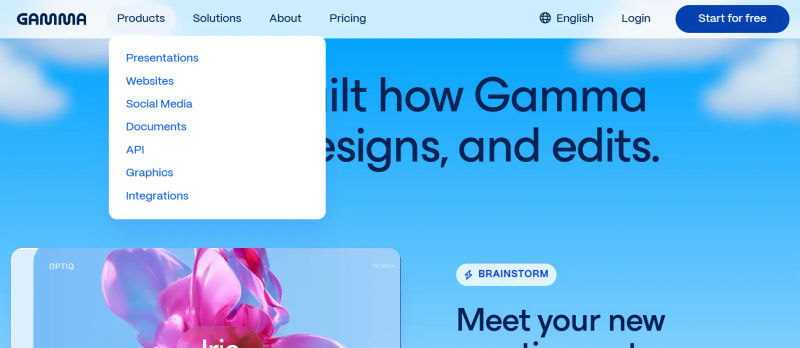
2027 Pricing Tiers:
Free Tier: Offers basic AI generation with limited credits and a Gamma watermark. Best for individual testing.
Plus Tier ($12/user/month): Removes the watermark, provides PDF exports, and offers substantial AI credits. Ideal for early-stage founders.
Pro Tier ($25/user/month): Unlimited AI creation, advanced analytics (viewer tracking), custom fonts, and enterprise-grade security. This tier also offers volume discounts for teams of 20 or more, reducing the per-seat cost.
The ROI Calculation: Consider a 20-person product team. A PM typically spends 4-5 hours a week formatting slides. At an average PM hourly rate of $75, that is $300+ per week wasted on design tasks. Alternatively, hiring a freelance designer for an internal comms deck can cost anywhere from $500 to $2,000. At $15/month for the Pro tier, Gamma pays for itself if it saves a PM just 15 minutes a month. The ability to track viewer analytics—knowing exactly which slide an investor lingered on—adds unquantifiable value.
Gamma vs. The Competition: 2027 Alternatives
To make an informed decision, you must evaluate Gamma against both legacy software and its direct AI competitors. Here is how Gamma stacks up in the 2027 landscape.
1. Gamma vs. Beautiful.ai: The Battle for Design Automation
Beautiful.ai focuses heavily on strict brand guardrails; it literally prevents users from making "ugly" slides.
The Verdict: If you need absolute brand compliance for a large sales team, Beautiful.ai is superior. However, Gamma wins for founders and PMs who need structural flexibility and deeper AI text-to-deck generation. Beautiful.ai is a slide formatter; Gamma is a document synthesizer.
2. Gamma vs. Pitch: Which Scaling Startup Tool Wins?
Pitch is built for flawless real-time collaboration and traditional slide control.
The Verdict: Pitch remains a strong choice for teams seeking a modern, collaboration-friendly alternative to PowerPoint. However, Gamma’s AI generation is faster and more capable, making it the better option for quickly creating polished presentations.
3. Gamma vs. Legacy Tools: Microsoft PowerPoint & Canva
Microsoft PowerPoint, bolstered by Copilot AI, remains the king of enterprise offline control. Canva is a design behemoth, offering a massive asset library and "Magic Design" for marketing collateral.
The Verdict: PowerPoint is too slow for rapid startup iteration. Its "blank page" friction is exactly what Gamma solves. Canva, while powerful, is a generalist; its presentation maker lacks the specific structural intelligence of Gamma's auto-layout engine for converting documents to decks.
4. Gamma vs. Prezi & SlidesAI
Prezi's zooming canvas is highly engaging for keynotes but can be disorienting in boardrooms. SlidesAI is a convenient Google Slides add-on but is limited by Google's dated interface.
The Verdict: Gamma offers a more professional, linear reading experience than Prezi and infinitely better design outputs than SlidesAI.
Use Cases: Founders vs. Product Managers
To truly understand Gamma's value, we must look at how it solves specific pain points for our target personas.
1. The Founder: Creating a Series B Pitch Deck in Under 15 Minutes
Founders raising a Series B need to iterate constantly. Here is how Gamma accelerates this workflow:
Brainstorm: Paste the raw executive summary, financial projections, and market analysis into Gamma.
AI Generation: Gamma generates a 15-card deck, automatically categorizing text into "Problem," "Solution," and "Traction" cards.
Brand Audit: Apply a custom brand theme with one click.
Refinement: Spend 10 minutes swapping AI-suggested images for product screenshots and adjusting phrasing.
Distribution: Send a tracked Gamma link. When a VC opens it, the founder gets an alert and can see the VC spent 3 minutes on the "Traction" slide, providing context for the follow-up.
2. The Product Manager: Automated PRD-to-Deck Conversions
Product Managers suffer from keeping cross-functional teams aligned with scattered presentation versions.
Input: A PM imports a dense, text-heavy PRD from Notion.
Conversion: Gamma's AI parses the technical jargon and creates a visually engaging sprint kick-off deck.
Live Integration: The PM embeds live Jira tickets directly into the Gamma cards.
Presentation: During the all-hands meeting, the PM presents the fluid document. As engineering updates ticket statuses in Jira, the presentation updates live, ensuring a single source of truth.
3. The Go-to-Market Leader: Rapid Sales Proposal Generation
Sales leaders need to create customized, high-impact proposals quickly to close deals.
Template: Start with a pre-approved sales proposal template in Gamma.
AI Customization: Paste notes from a discovery call and prompt Gamma to
/personalize this deck for [Company Name] focusing on their pain point of [X] and our solution [Y].Interactive Elements: Embed a Calendly link for booking a follow-up and a Loom video with a personal message directly into the Gamma page.
Track & Close: Send the unique link and use viewer analytics to see when the prospect viewed the pricing page, signaling the perfect time for a follow-up call.
Try AuthenCIO
Move to faster, smarter software evaluation with AI
Final Verdict: Should You Choose Gamma in 2027?
The presentation landscape has fundamentally shifted. The high cost and slow turnaround of design agencies for internal comms and initial investor pitches are no longer justifiable.
If your primary goal is to maintain absolute, pixel-perfect control over traditional 16:9 slides, or if you operate in a highly regulated offline environment, Microsoft PowerPoint remains your best option. If you require strict, unbreakable brand templates for a massive global sales team, Beautiful.ai is the safer choice.
However, if you are a Founder or Product Manager who values speed, modern web-native aesthetics, and the ability to seamlessly turn dense documents into engaging visual narratives, Gamma is arguably the most powerful tool on the market in 2027. It effectively cures the "blank page syndrome" and allows leaders to focus on what actually matters: the strategy and the story.
By embracing the fluid document format and leveraging advanced AI structuring, Gamma doesn't just help you build slides faster—it changes the way your team communicates ideas.