
Introduction
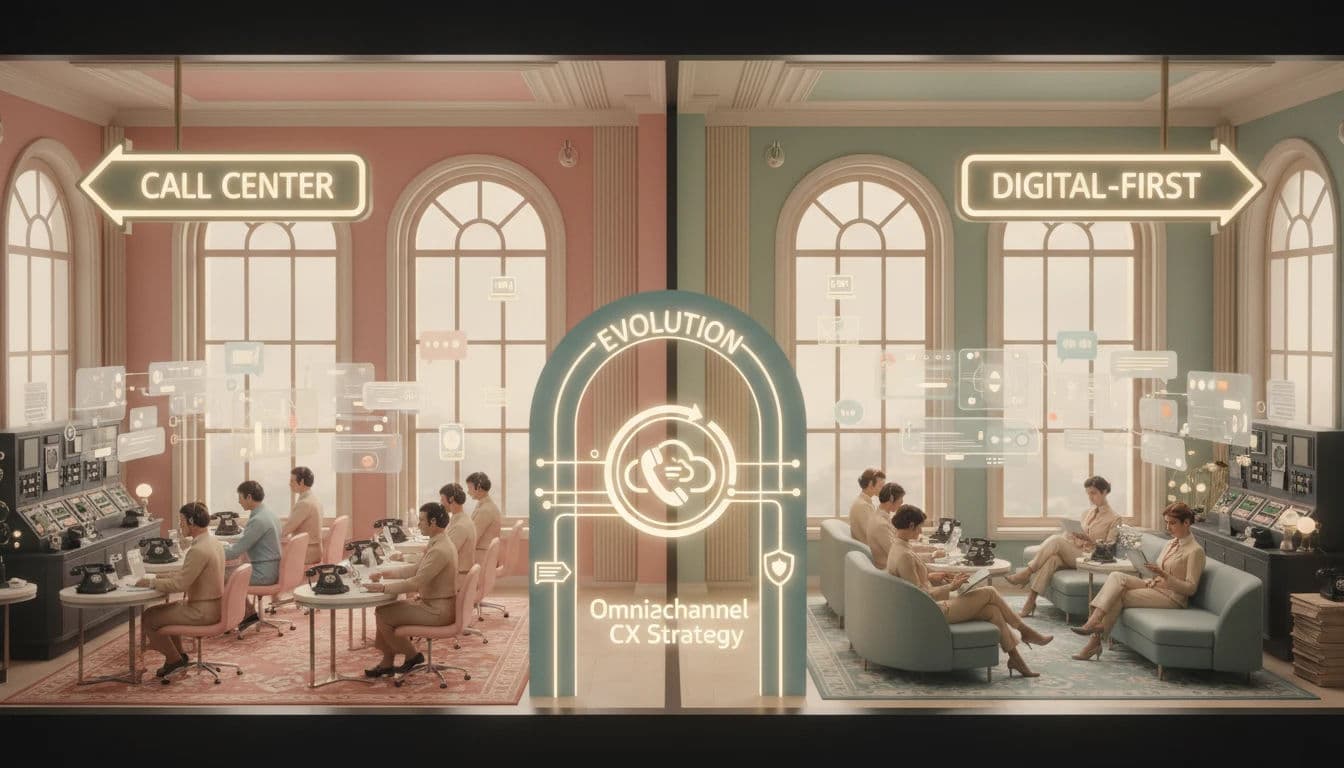
For decades, customer service was physically and operationally confined to the "call center"—a reactive, high-volume environment where success was measured by how quickly an agent could terminate a conversation. Today, that model is obsolete. We have entered the era of the Digital Engagement Hub, where support is proactive, asynchronous, and deeply integrated into the revenue engine of the enterprise.
Streamline your software evaluation process
For Customer Support Leaders, VPs, and Directors, this shift represents a fundamental restructuring of the customer relationship. The modern mandate is no longer to simply resolve complaints but to reduce friction across the entire customer journey, leveraging data to transform support from a cost center into a strategic value driver. This requires a robust omnichannel customer service strategy that unifies voice, chat, email, and social interactions into a single source of truth.
With 73% of consumers willing to switch to a competitor after multiple bad experiences, the stakes for operationalizing this strategy have never been higher. The transition is not merely technical; it is financial. It links directly to Customer Lifetime Value (CLV) and retention rates. This article traces that historical trajectory, analyzes the technological enablers, and provides a tactical roadmap for leaders navigating this complex transformation.
Key Takeaways
Digital-first is a strategic necessity: Customer expectations have permanently shifted from reactive, phone-based support to proactive, asynchronous digital engagement.
Beware the 'integration tax': Moving from legacy systems to modern platforms (such as Zendesk or Salesforce) often exposes hidden costs when connecting siloed multichannel environments.
KPIs must evolve with your channels: Traditional call center metrics like Average Handle Time (AHT) are rapidly being replaced by Customer Effort Score (CES) and omnichannel First Contact Resolution (FCR).
AI requires strict guardrails: While autonomous service is shaping the future of customer experience, mitigating risks like AI hallucinations is critical to protecting your brand voice.
Software covered in this article
To help you understand Customer Support in the right context, this article refers to a carefully curated set of key players:









The Strategic Reorientation of Customer Expectations
The transition from traditional support models to digital-first engagement is driven primarily by the digital customer evolution—a fundamental shift in consumer behavior where control has inverted from the business to the buyer. In the legacy model, the customer was forced to adapt to the business's constraints, such as operating hours, queue times, and limited channel availability. Today, as a direct result of this digital customer evolution, the business must adapt to the customer's lifestyle, which is increasingly mobile, immediate, and asynchronous.
Modern consumers view support interactions not as isolated events but as a continuous conversation. They expect context to travel with them. If a customer initiates a query via a chatbot on a mobile app and escalates to an email, they expect the agent to have full visibility into the previous interaction. The failure to provide this—forcing the customer to repeat themselves—is the primary driver of high Customer Effort Scores (CES) and churn.
Furthermore, the definition of "resolution" has expanded. It is no longer sufficient to fix a broken product; support leaders must now engineer experiences that reinforce brand loyalty. This requires a tech stack capable of unifying data silos and a workforce trained not just in troubleshooting, but in empathy and relationship management. As we dissect the eras of support evolution, it becomes clear that technology has always been the catalyst for these rising expectations.
Learn actionable ways to shift from reactive service to proactive, AI‑powered support.
Era 1: The Legacy Era and Contact Center Digital Transformation
When examining past customer service tools before 2020, the landscape was dominated by traditional call centers and Interactive Voice Response (IVR) systems. This legacy era was defined by synchronous, voice-centric communication where agents relied on hardware-heavy, on-premise PBX systems. The primary objective was logistical efficiency, driven by metrics like Average Handle Time (AHT) and Calls Per Hour.
These legacy tools presented distinct pros and cons for businesses and consumers:
Pros:
Immediate Human Connection: Direct voice communication provided a personalized touch and empathy for complex or sensitive issues.
Basic Triage: Early IVR systems successfully routed high volumes of calls to specific departments, establishing a foundation for automated routing.
Cons:
High Technical Debt: On-premise hardware was expensive to maintain and difficult to scale during peak volume.
Customer Friction: Rigid IVR menus often trapped callers in endless loops, causing high frustration and abandonment rates.
Data Silos: Data was ephemeral; customer history was rarely retained across interactions once the phone disconnected.
The rigidity of this model created a "factory floor" mentality, incentivizing agents to rush calls and viewing support strictly as a cost center. Today, **contact center **digital transformation is largely about dismantling these legacy constraints and migrating from on-premise hardware to cloud-based agility.
Era 2: Multichannel Silos and the Integration Tax
The late 1990s and 2000s ushered in the era of Multichannel Support. The internet introduced email as a viable support channel, followed rapidly by web forms and early live chat tools. This period was marked by the adoption of ticketing systems designed to bring order to the chaos of digital inquiries. Tools emerged to democratize access to enterprise-grade ticketing, allowing businesses to track and assign customer issues that arrived via email.
However, the defining characteristic—and flaw—of the Multichannel era was the existence of silos. A business might offer phone, email, and chat support, but these channels rarely communicated with one another. A customer who emailed in the morning and called in the afternoon was treated as two completely different people. This fragmentation resulted in a heavy "Integration Tax"—the hidden cost of manual data reconciliation and disjointed reporting that VPs still struggle with today.
Era 3: The Digital-First & Omnichannel Revolution
We are currently navigating the Digital-First and Omnichannel Revolution. This era is distinguished not just by the number of channels available, but by the seamless integration of those channels into a single, continuous experience. The focus has shifted from "managing tickets" to "managing conversations."
In this environment, asynchronous communication is king. Modern platforms blend automation, chatbots, and human support into messenger-based interfaces that mimic consumer apps like WhatsApp. This allows businesses to engage customers proactively based on user behavior (e.g., a customer lingering on a pricing page), effectively blurring the line between sales, marketing, and support.
Managing Channel Bloat
With the explosion of available touchpoints—from TikTok to WhatsApp to in-app messaging—leaders face the challenge of "Channel Bloat." It is a strategic error to assume every business needs to be on every channel. A successful digital-first strategy involves auditing customer demographics and preferences to select high-impact channels rather than diluting resources across too many fronts. Leaders must establish a framework for retiring obsolete channels as aggressively as they adopt new ones to maintain operational hygiene.
Comparative Analysis: Traditional Metrics vs. Digital KPIs
The shift in operational models has necessitated a complete overhaul of the scorecard used to evaluate success. In the legacy call center, efficiency metrics reigned supreme. In the digital-first world, experience metrics and outcome-based KPIs take precedence.
Modern leaders must balance operational efficiency with customer sentiment. Below is a comparative look at how success metrics have evolved, including the complexity of reporting on them.
Metric Category | Legacy Call Center Focus | Digital-First / Omnichannel Focus | Strategic Implication | Reporting Complexity |
Efficiency | Average Handle Time (AHT) | First Contact Resolution (FCR) | Speed matters less than solving the issue completely to prevent callbacks. | Medium: Requires linking multiple interactions to one "case." |
Volume | Calls Per Hour / Occupancy | Active Conversations / Concurrency | Digital agents can handle 3-4 chats simultaneously, increasing throughput. | High: Measuring "active" time in asynchronous chat is difficult. |
Customer Sentiment | CSAT (Post-call survey) | Customer Effort Score (CES) & NPS | Reducing friction is a better predictor of loyalty than simplified satisfaction. | Low: Automated surveys are easily integrated. |
Cost | Cost Per Call | Cost Per Conversation / Deflection Rate | Self-service and automation significantly lower the marginal cost of support. | High: Requires attributing savings to specific automation flows. |
Agent Performance | Adherence to Schedule | Quality Assurance (QA) Score | Focus shifts from "being at the desk" to the quality and empathy of the output. | Medium: AI-driven QA can automate scoring. |
Find Perfect Software For Your Business
The ROI of Digital Transformation: Justifying the Budget
One of the most significant hurdles for Support VPs is securing the budget for a full-scale digital migration. CFOs often view support technology as a cost center. To secure buy-in, leaders must frame the transformation in terms of ROI, focusing on two main levers: Cost-Per-Interaction (CPI) reduction and Customer Lifetime Value (CLV) protection.
Digital-first environments drastically reduce CPI. While a traditional voice call might cost between $6 and $12 depending on geography, an automated or semi-automated digital interaction can cost pennies. By deflecting 30-40% of Tier 1 inquiries to self-service or chatbots, leaders can demonstrate immediate operational savings that offset the cost of new software licenses.
Furthermore, the "Integration Tax" of legacy systems bleeds revenue through churn. When agents lack context, customers get frustrated and leave. By quantifying the churn rate attributed to poor service (using exit survey data) and projecting a conservative 10% reduction in churn through better CX, the long-term revenue impact often dwarfs the initial implementation costs. This moves the conversation from "buying software" to "protecting revenue."
The Tech Stack: Enablers of Modern Engagement
The execution of a digital-first strategy is impossible without a robust technology stack. The market offers specialized solutions for different scales and needs.
1. Salesforce Service Cloud
Salesforce Service Cloud stands as the titan of the enterprise space, connecting support, sales, and marketing data for a 360-degree customer view with granular SLA reporting.
When you evaluate the support platform company Salesforce Service Cloud on Front vs Pylon, channel strategy is key. Salesforce dominates complex, traditional CRM ecosystems. Front offers a lighter, collaborative email-first inbox alternative. Meanwhile, Pylon targets modern B2B support, outperforming Salesforce in native Slack integration and conversational ticketing for chat-based client engagement.

2. Zendesk
Zendesk acts as a cornerstone of the modern CX landscape. Originally a pioneer in user-friendly help desks, it has evolved into a comprehensive suite. Its open API architecture allows for seamless integration with hundreds of third-party apps. Zendesk excels in scalability, allowing teams to grow from five agents to five hundred without migrating platforms.
3. Freshdesk and Zoho Desk
For mid-market organizations, Freshdesk and Zoho Desk democratize features like ticket deflection. Freshdesk reduces training time with its intuitive interface, while Zoho Desk offers cost-effective integration for the Zoho ecosystem.
When evaluating the support platform company Zoho Desk against Front and Pylon, the distinction is architectural. Zoho Desk excels in traditional, structured ticketing. In contrast, Front optimizes collaborative shared inboxes for email-heavy teams, while Pylon focuses on B2B conversational support through native Slack and Microsoft Teams integrations.
4. Intercom and Help Scout
These platforms define the conversational and knowledge-centric approach. Intercom revolutionized the market by blending automation, chatbots, and human support into a messenger-based interface. It is ideal for SaaS companies looking to drive engagement. Help Scout, conversely, focuses on "invisible" support, treating emails like personal conversations and prioritizing Knowledge Base (Docs) integration to drive self-service.
5. Front and LiveAgent
Front redefines high-stakes communication by transforming individual email inboxes into shared collaborative workspaces, essential for B2B teams where engineers or product managers must collaborate on tickets. LiveAgent offers a unique hybrid solution, integrating robust call center functionality directly into its help desk, ensuring that voice interactions are recorded and analyzed alongside digital channels.
6. The Integration Tax
Regardless of the tool selected, leaders must account for the "Integration Tax." No software works perfectly out of the box. Budgeting for middleware, API development, or professional services to ensure these tools talk to your CRM and ERP systems is critical to avoiding the data silos of Era 2.
Change Management: Transitioning the Workforce
Implementing new technology is often easier than changing human behavior. Moving from a synchronous, voice-first model to an asynchronous, digital-first model requires a significant cultural shift. Agents who excel at verbal de-escalation may struggle with the precision and tone required for written chat or email support.
To navigate this, leaders must invest in specific upskilling frameworks. Training should focus on "Business Writing for Empathy"—teaching agents how to convey warmth without the aid of vocal intonation. Furthermore, the shift to concurrent chat handling requires agents to multitask in ways voice support never demanded.
Morale management is equally critical. Automation often removes the "easy" tickets, leaving agents with only the complex, emotionally draining issues. This can lead to faster burnout. Successful change management involves redefining the agent role from "transaction handler" to "problem solver," accompanied by career pathing that rewards deep product knowledge and technical expertise rather than just speed.
Future Outlook: AI, Automation, and Modern Customer Experience Trends
Looking ahead, modern customer experience trends point toward an era of "Autonomous Service." Industry data shows that as of 2026, 85% of customer interactions are handled without a human agent. AI agents now manage the majority of transactional interactions, elevating the human role to handling emotionally charged or technically complex scenarios.
1. The Rise of Autonomous Service
Hyper-personalization will become the standard. Support platforms will utilize predictive analytics to anticipate issues before the customer is even aware of them. For example, a system might detect a failed payment and proactively send a secure update link via WhatsApp, resolving the churn risk before the service is interrupted.
2. Risk Mitigation: AI Hallucinations and Brand Voice
However, VPs must remain vigilant regarding "AI Hallucinations"—instances where generative AI confidently provides incorrect information. As automation scales, maintaining a consistent brand voice becomes a challenge. Strategic implementation requires strict "human-in-the-loop" protocols during the early phases of AI deployment to ensure that the automated voice aligns with the company’s values and accuracy standards.
Try AuthenCIO
Move to faster, smarter software evaluation with AI
Conclusion: The Cost of Inaction
The evolution from the call center to the digital engagement hub is a journey of increasing complexity but also increasing value. For Customer Support Leaders, the challenge is to navigate this transition without losing the human element that builds trust.
Success requires a three-pronged approach: investing in a unified tech stack, redefining KPIs to prioritize customer effort, and upskilling the workforce. The cost of inaction is not just operational inefficiency; it is irrelevance. In a market where experience is the primary differentiator, sticking to legacy models is a guaranteed path to attrition. By breaking down silos and embracing an omnichannel mindset, support organizations can transform themselves from cost centers into the primary drivers of business growth.