

Introduction
As a medical or dental practice manager in 2027, you are likely all too familiar with the inefficiency of using four different software systems just to handle phones, scheduling, reminders, and payments. High no-show rates disrupt your daily production schedule, while front-desk burnout continues to rise due to repetitive manual tasks like appointment confirmations and insurance verification. This cloud communications software review, based on a hands-on evaluation of the 2027 feature set, addresses the shift toward AI-driven practice automation and whether Weave truly delivers on its promises.
Streamline your software evaluation process
Weave has positioned itself as a premier cloud communications software and all-in-one practice platform, promising to consolidate your tech stack into a single, unified interface. But with premium pricing and a crowded market of specialized competitors, is Weave truly the best choice for your clinic this year? In this comprehensive 2027 review, we will bypass the promotional sales pitches and evaluate Weave's actual ROI, system reliability, and core features. We will also compare it directly against top alternatives so you can make an informed, data-driven decision for your medical office or dental practice.
Tool | Best For | Pricing (USD $) | Key Features | Use Cases |
Weave | All-in-one practice consolidation | Starting at $199+/mo per location | VoIP, 2-way texting, payments, AI scheduling | Dental & medical clinics needing unified comms |
RevenueWell | Dental-specific marketing | Starting at $350/mo per location | Deep PMS integration, patient portals, campaigns | High-volume dental practices focused on retention |
Solutionreach | High-volume medical messaging | Starting at $300/mo per location | Automated recalls, intake forms, newsletters | Large clinics needing robust patient outreach |
Podium | Reputation & review management | Starting at $289/mo per location | Webchat, review generation, text marketing | Practices prioritizing local SEO and online reviews |
Nextiva | Enterprise-grade VoIP telephony | Starting at $25/user/mo | Advanced call routing, CRM integrations, analytics | Clinics needing highly reliable, complex phone trees |
RingCentral | Scalable medical communication | Starting at $30/user/mo | Video telehealth, secure fax, team messaging | Multi-location medical facilities needing robust VoIP |
Textline | Standalone SMS communication | Starting at $60/mo | HIPAA-compliant SMS, automated templates | Small clinics adding texting to legacy phone systems |
WestFax | Secure healthcare faxing | Starting at $15/mo | HIPAA-compliant cloud fax, API integrations | Practices heavily reliant on secure document transfer |
*Note: All prices shown reflect typical monthly billing. Vendors often offer lower pricing for annual commitments, but those discounts are excluded here for easier comparison. Actual costs may vary depending on your requirements, usage volumes, and negotiated terms.
Key Takeaways
The Verdict: Weave remains a top-tier, all-in-one patient communication and practice management platform in 2027, best suited for growing dental, optometry, and medical clinics that need to consolidate their software stack.
Pros: It offers robust HIPAA-compliant VoIP and two-way texting, AI-driven patient triage, automated scheduling, and seamless payment processing—all within a single interface.
Cons: The premium price tag and reliance on proprietary hardware can be a barrier for solo practitioners or brand-new clinics with low patient volume.
Pricing: While custom quotes are required, expect base plans to start around $400 per month, with setup fees often applying depending on your specific hardware and location needs.
Ideal User: Multi-location practices, doctors handling frequent after-hours emergency calls, and clinics prioritizing family account management and streamlined billing.
Weave Pros and Cons
Pros
Unified platform combining VoIP, two-way texting, scheduling, payments, and patient communication in a single interface.
Deep integration with major PMS platforms such as Dentrix, Eaglesoft, and Open Dental, enabling patient screen pops and workflow automation.
AI-driven scheduling and patient triage reduce manual front-desk work and help lower no-show rates.
Text-to-Pay functionality improves patient payment collection and streamlines billing operations.
Strong support for multi-location practices and remote staff, including mobile access and centralized communication management.
Cons
Premium pricing can be expensive, with costs often reaching $399-$599+ per month per location plus setup, hardware, and processing fees.
Reliance on proprietary hardware means many practices must purchase or lease Weave-compatible phones.
VoIP performance depends heavily on internet quality; poor connectivity can lead to call issues or service disruptions.

Software Covered in this Article
The following articles break down the key aspects of Cloud Communications Software, featuring a carefully curated set of key players:








Is Weave the Best Practice Management Platform in 2027?
In 2027, Weave is best evaluated not just as a generic practice management tool, but as a comprehensive cloud communications software. It replaces legacy PBX and basic VoIP systems with a unified, HIPAA-compliant cloud infrastructure. For decision-makers, the appeal of Weave lies in its ability to eliminate disparate communication silos. Instead of paying separately for a traditional phone provider, a standalone texting application, a dedicated patient reminder tool, and a disjointed payment gateway, Weave brings these channels under one roof.
As a cloud communications platform, Weave’s core strength is its deep integration with major Practice Management Systems (PMS) like Eaglesoft, Dentrix, and Open Dental. When a patient calls, the cloud-based VoIP system immediately displays their profile, upcoming appointments, and outstanding balances, allowing staff to handle multiple needs in a single interaction. The primary question practice managers must answer is whether the operational efficiency gained by consolidating these communication tools outweighs the premium monthly subscription cost.
The Staff Learning Curve
A common concern when adopting new cloud communications software is the learning curve for staff migrating from traditional landlines. Weave’s interface is designed to be intuitive, but practice managers should budget for at least a full day of dedicated onboarding. Most front desk teams become proficient with core functions—VoIP phones, two-way texting, and automated scheduling—within the first week. However, mastering advanced features like the Recall & Reactivation tools or custom broadcast messaging can take up to a month of consistent use.
For many clinics, Weave ranks at the top of any cloud communications software review. The reduction in front-desk burnout caused by repetitive manual calls and texts is a massive qualitative benefit. Yet, for practices that already have a rock-solid enterprise VoIP system and only need a simple texting add-on, migrating the entire communications infrastructure to Weave might be an unnecessary disruption.
Deep Dive: Weave Core Features and Capabilities
To understand if Weave is the right fit, we must evaluate how its core features solve daily operational bottlenecks in a modern healthcare environment.
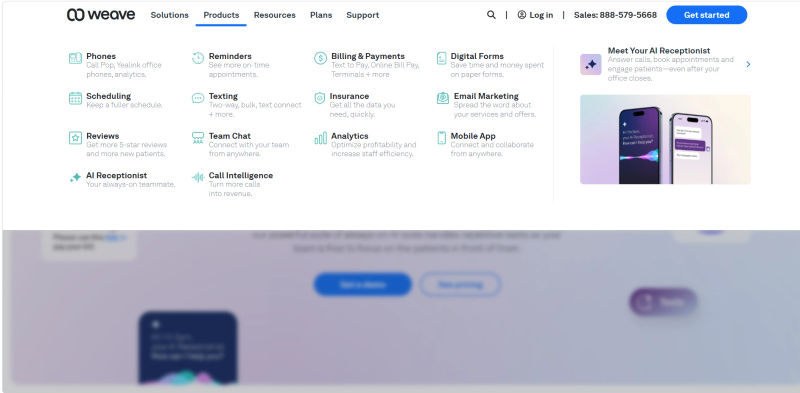
1. Unified Communication: HIPAA-Compliant Phones and Texting
Weave's foundation is its Voice over Internet Protocol (VoIP) phone system. In 2027, Weave has improved its uptime, but honest reporting shows that high-volume practices can still experience occasional downtime issues if they lack a robust, high-speed fiber internet connection. System stability is entirely dependent on your local network. When functioning optimally, the phone system is brilliant. The desktop application provides screen pops with patient data, reducing call times significantly.
VoIP Redundancy: What Happens if the Internet Goes Down?
This is a major anxiety for any practice manager considering a switch to VoIP. Weave’s 2027 failover capabilities address this directly. If your office internet goes down, Weave can automatically forward all incoming calls to a designated cell phone or landline number. This ensures you never miss a patient call, even during a local outage. While desktop features won't be available, patient connectivity is maintained, which is a critical redundancy for any clinic.
HIPAA-Compliant Two-Way Texting
Patient response times when using Weave's 2027 two-way texting are significantly faster than traditional phone calls. Recent data indicates that 85% of patients respond to a text within three minutes, compared to a 15% answer rate for unknown incoming phone calls. Weave ensures that all SMS communications, including the latest AI-generated transcriptions and cloud storage backups, undergo rigorous security audits to maintain strict HIPAA compliance.
2. Automated Scheduling and AI Patient Triage
High no-show rates disrupt daily production schedules and strangle revenue. Weave combats this with automated, customizable patient reminders. The 2027 AI features take this a step further by utilizing natural language processing to handle automated patient triage. If a patient replies to a reminder text with "I need to reschedule for next week," the AI can parse this intent and offer available slots directly from your integrated Eaglesoft, Dentrix, or Open Dental calendar without front-desk intervention. While complex procedures still require human oversight, this automation drastically reduces manual scheduling tasks.
3. Seamless Payment Processing and Billing
Difficulty in collecting patient balances is a universal pain point. Weave's "Text-to-Pay" feature dramatically improves immediate collection rates by allowing patients to pay their post-visit balances via a secure mobile link. Statistics show practices using this feature collect up to 35% more of their outstanding balances within the first week of billing.
Step-by-Step Text-to-Pay Setup:
Navigate to the Billing Dashboard: Open the Weave desktop app and click on the 'Payments' icon.
Select the Patient Balance: Search for the patient and verify the outstanding balance synced from your PMS.
Customize the Payment Message: Use a pre-built template (e.g., "Hi [Name], your balance from your recent visit is [Amount]. Tap here to pay securely.").
Dispatch and Monitor: Click send. The dashboard will update in real-time once the transaction is completed, and the payment will write back to the patient's ledger in supported PMS platforms.
Weave Pricing 2027: Are You Getting Your Money's Worth?
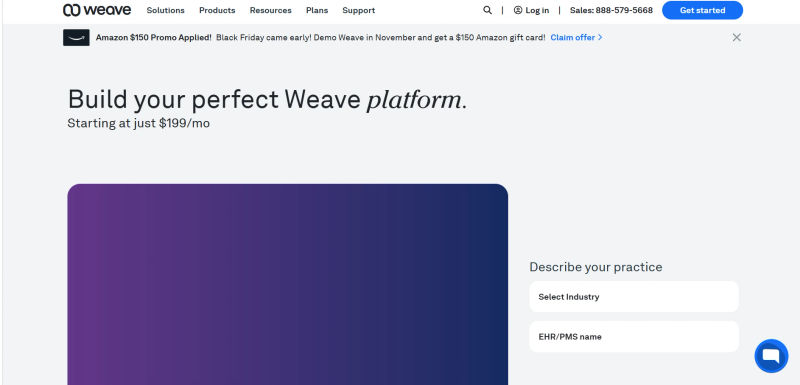
The Weave pricing 2027 model is not publicly listed, which can be frustrating for decision-makers. A transparent breakdown reveals that most standard clinics will pay between $199 and $599 per month per location, depending on the feature package. This base subscription covers the software, but practice managers must also account for hardware costs (leasing or buying IP phones) and merchant processing fees. Additionally, expect a one-time implementation fee ranging from $500 to $2,000, depending on the complexity of your PMS integration.
When evaluating the cost, you must calculate the true Return on Investment (ROI) based on reduced no-show rates and staff hours saved.
Template for Calculating Weave ROI:
Current No-Show Cost: Multiply your average daily no-shows by your average revenue per appointment, then multiply by days open per month.
Projected No-Show Savings: Multiply the Current No-Show Cost by 0.30 (Weave's automated reminders typically reduce no-shows by at least 30%).
Staff Time Savings: Multiply the hours spent on manual confirmation calls and paper billing per week by your average hourly staff wage, then multiply by four weeks.
Consolidation Savings: Add up your current monthly costs for legacy phone systems, standalone texting apps, and separate billing software that Weave will replace.
Total Estimated Monthly ROI: Add Projected No-Show Savings, Staff Time Savings, and Consolidation Savings. Subtract the Weave Monthly Subscription and Hardware Costs. If the number is positive, Weave is a profitable investment.
To ensure you are getting the best deal and to avoid unexpected expenses during onboarding, you must interrogate the sales process.
5 Questions to Ask a Weave Sales Representative:
Are there any mandatory hardware leasing fees, or can we purchase our VoIP phones outright?
What is the exact, finalized merchant processing rate for the Text-to-Pay and physical terminal transactions?
How does the "Pro" tier support differ in terms of guaranteed response times compared to the standard support tier?
What are the specific Service Level Agreement (SLA) terms regarding uptime, and how are we compensated during an outage?
Is there a hidden implementation, onboarding, or PMS integration fee not included in the monthly subscription quote?
Find Perfect Software for Your Business
Who Should Use Weave? Top Medical and Dental Use Cases
Weave is not a one-size-fits-all solution. Its value proposition changes depending on the size, specialty, and operational workflow of the practice.
1. Multi-Location Practices
Case studies from multi-location practices highlight the ease of centralized scheduling and inter-office communication. Weave allows a centralized call center or front desk team to manage communications for three or four different clinic locations from a single dashboard. Staff can see which location a patient is calling about and route the call or text accordingly, eliminating the need for redundant front-desk staff at every physical site.
2. Doctors Handling Emergency After-Hours Calls
A critical comparison for clinical decision-makers is the mobile app's functionality versus the desktop office version. For doctors handling emergency after-hours calls, the Weave mobile app is a game-changer. It allows providers to call or text patients from their personal smartphones while masking their private number with the clinic's caller ID. In 2027, the mobile app has achieved near-parity with the desktop version, allowing doctors to view the patient's schedule and clinical notes remotely before answering an emergency triage call.
3. Family Account Management
For pediatric or family-focused practices, managing linked patient profiles is a daily necessity. Weave’s interface handles this by associating multiple family members under a single guarantor or head of household. When a parent texts the practice, the screen pop displays all linked children, allowing the front desk to ask, "Is this regarding appointment for Amy, Ben, or Chris?" This prevents confusion and streamlines scheduling for multiple family members in a single conversation.
4. Practices Focused on Post-Pandemic Growth
User experience reports regarding Weave's "Recall" and "Reactivation" tools show immense effectiveness for long-term practice growth and patient retention in 2027. Practices looking to re-engage their patient base can use Weave to filter their Practice Management System (PMS) for individuals who are overdue for hygiene or routine checkups by 18 months or more. Weave then deploys targeted, automated text campaigns to reactivate these dormant patients, directly driving new revenue without requiring staff to make hundreds of manual phone calls.
Is Weave the best unified billing and telephony fit for your practice? Find out on AuthenCIO.
Weave Hardware Durability and Customer Support
A software platform is only as reliable as its hardware and the support team behind it. The 2027 models of Weave's proprietary desk phones are robust, with a solid build quality designed to withstand the heavy use of a busy front desk. The touchscreens are responsive, and the audio quality is consistently clear, provided you have a stable internet connection.
Regarding customer support, user reports indicate a notable difference between tiers. Standard support can have wait times of 15-30 minutes during peak clinic hours, which can be frustrating during a system glitch. The 'Pro' tier support, however, offers significantly faster response times and access to more experienced technicians. For high-volume practices where any downtime directly translates to lost revenue, the additional cost for Pro support is a worthwhile investment.
Weave Alternatives: 2027 Comparison
To make a definitive choice, you must look at a side-by-side comparison with key 2027 competitors. Consolidating your tech stack is only valuable if the replacement software performs as well as the tools you are retiring.
1. Weave vs. RevenueWell and Solutionreach (Dental Focus)
When comparing Weave vs RevenueWell, the distinction lies in marketing versus communication. RevenueWell is deeply entrenched in the dental space and offers superior patient portal features and complex, multi-touch email marketing campaigns. If your primary goal is aggressive patient acquisition, RevenueWell holds an edge and is often cited as having one of the smoothest data migration processes from legacy systems. Similarly, Weave vs Solutionreach is a common debate. Solutionreach excels in high-volume medical messaging for massive clinics. However, Weave's integrated VoIP telephony is vastly superior to both, as they often require you to maintain a separate phone provider.
2. Weave vs. Podium and Textline (Patient Engagement)
Podium is a powerhouse for reputation management and local SEO. If your clinic's primary pain point is a lack of Google reviews, Podium's automated review generation is best-in-class. Comparing Weave vs Podium for clinics reveals that while Podium handles text marketing beautifully, it lacks the deep, two-way PMS write-back capabilities and native VoIP phone system that Weave offers. Textline is a great, affordable alternative for standalone SMS communication. If you are locked into a legacy phone contract and only want to add HIPAA-compliant patient texting, Textline is a much cheaper, less invasive option.
3. Weave vs. Nextiva, RingCentral, and WestFax (VoIP and Communication)
For medical office phone systems 2027, Nextiva and RingCentral are the enterprise heavyweights. Weave vs RingCentral for medical practices comes down to scale. RingCentral and Nextiva offer advanced call routing and complex phone trees suitable for massive hospitals or 50-location DSOs. Weave's phone system is designed specifically for the workflow of a small to medium-sized private practice. It prioritizes the "screen pop" of patient data over enterprise-grade call center analytics. Additionally, if your practice relies heavily on secure document transfer, integrating a dedicated service like WestFax might be necessary, as Weave's native faxing capabilities are not as robust.
Try AuthenCIO
Move to faster, smarter software evaluation with AI
Final Verdict: Should Your Practice Invest in Weave?
Deciding whether to invest in Weave in 2027 comes down to your clinic's appetite for technological consolidation. If your front desk is suffering from burnout due to toggling between a disjointed phone system, a separate texting app, and a clunky payment terminal, Weave will revolutionize your daily workflow. The platform's ability to unify HIPAA-compliant phones, AI-driven scheduling, and text-to-pay billing into a single interface provides a measurable ROI in staff time saved and reduced no-show rates.
However, Weave is a premium product. If your practice already utilizes a highly functional VoIP system like Nextiva and you simply need a basic texting tool, the cost and operational disruption of migrating to Weave may not be justified. Furthermore, clinics with highly specialized marketing needs might find dedicated tools like RevenueWell or Podium more aligned with their growth strategies.
Ultimately, Weave remains a top-tier choice for medical and dental practice managers who want a cohesive, all-in-one patient engagement platform. As a next step, audit your current software contracts to determine your potential consolidation savings. By utilizing the ROI templates, asking the right questions during the sales process, and preparing your infrastructure for VoIP, you can ensure that Weave delivers on its promise of an optimized, modern healthcare practice.