
Introduction
If you are looking for the best cloud communications software in 2027, Nextiva, RingCentral, and Dialpad lead the market for small businesses. Whether you are upgrading from a traditional PBX or seeking cloud communications software alternatives to an overpriced legacy provider, modern platforms now combine voice, SMS, video, and AI into a single, cost-effective Unified Communications as a Service (UCaaS) solution.
Streamline your software evaluation process
Business interconnected VoIP subscriptions have soared past 44 million as the migration to cloud communications accelerates. The frustration of complex pricing, poor call quality, and disjointed tools can severely impact your professional image and team productivity. Fortunately, modern migration tools make transitioning to top-rated cloud communications software nearly instantaneous, eliminating downtime.
Because the market is flooded with options, finding the perfect alternative requires cutting through the marketing noise. Buyers now expect a full suite of team messaging and AI-driven workflows rather than just a standard VoIP phone system.
This guide delivers a direct comparison of the top-rated business phone systems to help you choose the best solution for your operations. We've analyzed 12 leading cloud communications software alternatives based on total cost of ownership (TCO), practical 2027 AI capabilities, mobile app performance, and reliability.
Here is a quick cloud phone system comparison to help you start your evaluation.
Key Takeaways
Top Software Picks: Nextiva and RingCentral lead the market for unified communications and global scalability, while Dialpad and Zoom Phone offer specialized AI and video-first capabilities.
Pricing Expectations: Standard VoIP plans in 2027 range from $15 to $30 per user per month. Always calculate the Total Cost of Ownership (TCO) rather than relying on advertised base rates, factoring in hardware, premium CRM integrations, and international calling fees.
Key Buying Advice: Prioritize cloud platforms that support hybrid work through robust mobile apps. Look for practical AI capabilities like automated call summaries, and verify the provider meets your industry's security and compliance requirements such as HIPAA or PCI.
Top Software Picks
Nextiva — best for growing businesses needing an all-in-one UCaaS platform
Quo — best for small teams seeking simple cloud calling and number management
Calilio — best for startups wanting affordable AI-powered business telephony
Unitel Voice — best for solopreneurs and small businesses needing a virtual phone system
KrispCall — best for sales and support teams managing global virtual numbers
CloudTalk — best for high-volume call centers and customer support operations
CallHippo — best for remote sales teams requiring quick international deployment
800.com — best for businesses focused on toll-free numbers and call tracking
RingCentral — best for large organizations needing enterprise-grade communications
Dialpad — best for AI-driven communications, transcription, and coaching
Zoom Phone — best for companies already invested in the Zoom ecosystem
Ooma — best for small businesses looking for easy setup and value pricing
Software Covered in this Article
The following articles break down the key aspects of Cloud Communications Software, featuring a carefully curated set of key players:







At a Glance: 2027 VoIP Comparison Table
Tool | Best For | Pricing ($) | Key Features | Support Type | Setup Time |
Nextiva | Unified Communications | Starts at $21/user/mo | Native CRM, multi-channel inbox, AI summaries | 24/7 Phone & Chat | 1-3 Days |
RingCentral | Global Scalability | Starts at $20/user/mo | 99.999% uptime, global PBX, advanced analytics | 24/7 Phone & Chat | 1-5 Days |
Dialpad | AI-Driven Insights | Starts at $15/user/mo | Real-time transcription, sentiment analysis, coaching | 24/5 Phone, 24/7 Chat | < 1 Hour |
Ooma | Ease of Setup | Starts at $19.95/user/mo | Plug-and-play hardware, virtual receptionist, analog fax | 24/7 Phone & Chat | < 1 Hour |
Zoom Phone | Video-First Teams | Starts at $10/user/mo | Seamless Zoom integration, elevate call to video | 24/7 Web & Chat | < 1 Hour |
CloudTalk | Sales Teams | Starts at $25/user/mo | Power dialer, smart routing, Salesforce integration | Email, Phone (Tiered) | 1-2 Days |
CallHippo | International Calling | Starts at $16/user/mo | Global virtual numbers, low latency, local presence | 24/7 Email & Chat | < 1 Hour |
KrispCall | Remote Collaboration | Starts at $15/user/mo | Unified callbox, shared numbers, lightweight UI | 24/7 Chat & Email | Instant |
Unitel Voice | Solopreneurs | Starts at $9.99/mo | Professional greetings, affordable entry, auto-attendant | Phone & Email | < 1 Hour |
Calilio | Advanced Call Routing | Starts at $12/user/mo | Complex ring groups, custom call flows, deep analytics | 24/7 Chat & Email | 1-3 Days |
800.com | Toll-Free Branding | Starts at $29/mo | Vanity numbers, SMS marketing, brand presence | Phone & Email | < 1 Day |
Quo | Modern Startup Agility | Starts at $14/user/mo | Quick deployment, Slack integration, agile interface | 24/7 Chat | Instant |
*Note: All prices shown reflect typical monthly billing. Vendors often offer lower pricing for annual commitments, but those discounts are excluded here for easier comparison. Actual costs may vary depending on your requirements, usage volumes, and negotiated terms.
Find Perfect Software for Your Business
How to Choose the Right VoIP System for Your Operations
Choosing the right cloud communications software requires understanding the driving forces behind its mass adoption. As of late 2026, the global Unified Communications as a Service (UCaaS) market has surpassed $120 billion and is projected to reach over $404 billion by 2033.
This explosive growth among small and medium-sized businesses is fueled by distinct advantages over traditional phone lines. When evaluating cloud communications software alternatives, prioritize platforms that offer pay-as-you-go pricing, minimal infrastructure requirements, and seamless support for hybrid work environments.
Industry projections anticipate that 90% of organizations will use cloud communications software for their telephony by 2028, a massive leap from the 30% adoption rate seen in 2025. Choosing the right system isn't just about saving money; it's about gaining operational agility, integrating communications directly into your daily workflows, and leveraging AI to enhance team productivity.
1. Nextiva: Best for Unified Communications
Who is this best for? Nextiva is the ideal choice for small to medium-sized businesses aiming to consolidate customer communications, sales, and support into a single, cohesive platform.
Nextiva has evolved beyond a standard VoIP provider into a comprehensive UCaaS powerhouse. It perfectly bridges the gap between your phone system and customer data by combining voice, video, and CRM functionalities into one interface.
This eliminates the need for your team to constantly toggle between disjointed applications, making it a premier alternative to siloed legacy systems.
Pricing (TCO Perspective): Plans start around $21/user/month. The TCO is transparent, with no hidden regulatory surcharges, but unlocking the platform's full potential with premium AI and integrations requires higher-tier plans.
Key Advantages: Its threaded conversations unify voice, email, and SMS into a single contact inbox. It boasts high reliability and a built-in CRM, reducing the need for separate software.
Time to Deploy: Expect a 1-3 day setup for full configuration and number porting.

2. RingCentral: Best for Global Scalability
Who is this best for? RingCentral is built for growing small businesses and mid-market companies that require enterprise-grade reliability and plan to scale operations internationally.
As a titan in the UCaaS space, RingCentral offers a robust global PBX system that scales effortlessly, making it the ideal alternative for decision-makers who fear outgrowing their communication tools.
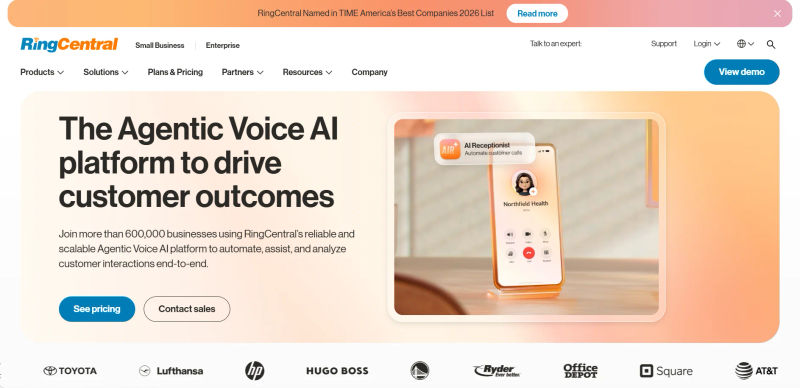
In 2027, its deep integrations with platforms like Microsoft Teams and Google Workspace make it a highly versatile choice for hybrid work environments.
Pricing (TCO Perspective): Starting at $20/user/month, RingCentral is competitive. However, be aware of potential add-on costs for international toll-free numbers and high-volume SMS packages that can inflate the monthly bill.
Key Advantages: It provides an enterprise-grade 99.999% uptime SLA, a massive library of integrations with tools like Slack and Zendesk, and sophisticated call management features out of the box.
Time to Deploy: Full implementation can take between 1-5 days, depending on complexity.
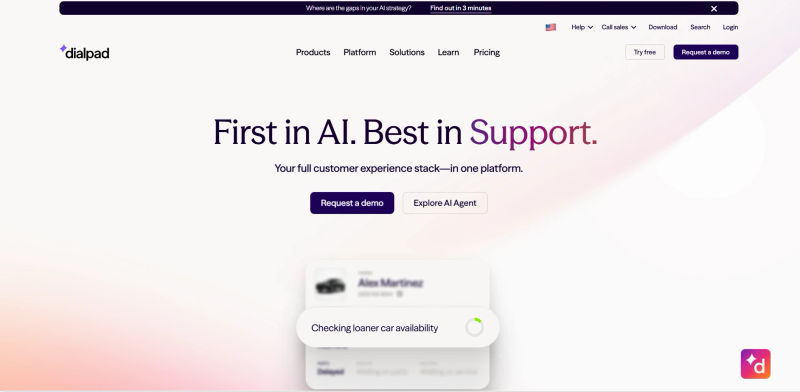
3. Dialpad: Best for AI-Driven Insights
Who is this best for? Dialpad serves sales and support teams that want to leverage real-time AI to coach agents, transcribe calls, and analyze customer sentiment.
AI is no longer a buzzword; it's an expected feature in 2027. Dialpad was built with AI at its core, providing real-time language transcription, automated meeting summaries, and live sentiment analysis.
This allows managers to coach representatives while they're still on the phone, making it a standout alternative to traditional VoIP systems that only route calls.
Pricing (TCO Perspective): At $15/user/month for the standard plan, the TCO remains low because many advanced AI features are included natively, eliminating the need for separate transcription services.
Key Advantages: Its proprietary Voice Intelligence (Vi) offers unmatched real-time transcription and post-call summaries. Live coaching and a modern, intuitive app with excellent mobile parity are major strengths.
Time to Deploy: Setup is fast, often taking less than an hour for small teams.
4. Ooma: Best for Ease of Setup
Who is this best for? Ooma is perfect for brick-and-mortar small businesses or offices without a dedicated IT department that need a reliable, plug-and-play phone system.
For retail stores, dental offices, or manufacturing floors that still rely on physical desk phones, Ooma is the perfect alternative.
Ooma Office balances modern VoIP capabilities with traditional hardware support and is incredibly easy to set up, often requiring nothing more than plugging a pre-configured phone into an ethernet port.
Pricing (TCO Perspective): Starting at $19.95/user/month, the TCO calculation must include the upfront cost of Ooma's proprietary IP phones if you choose not to use their solid mobile app or bring your own device.
Key Advantages: The setup process requires zero IT expertise. It includes a powerful virtual receptionist for call routing and uniquely supports legacy devices like analog fax machines.
Time to Deploy: Basic setup can be completed in under an hour.

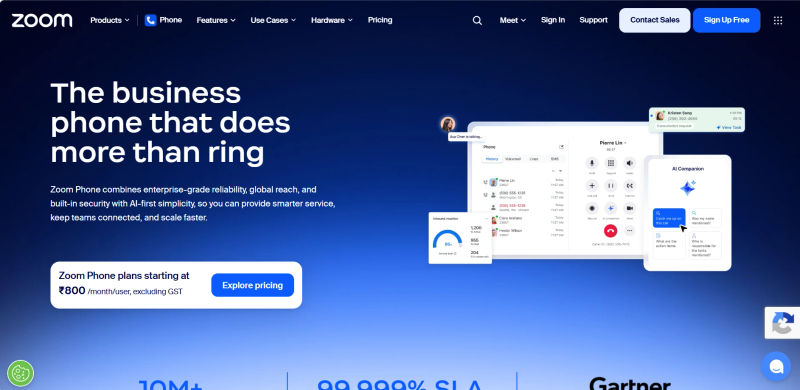
5. Zoom Phone: Best for Video-First Teams
Who is this best for? Zoom Phone is designed for teams already entrenched in the Zoom ecosystem for video conferencing who want to add a native enterprise telephony solution.
If your team already lives in Zoom for meetings, adding Zoom Phone is the most logical alternative to purchasing a separate VoIP system.
It allows users to seamlessly elevate a standard phone call into a video meeting with a single click, perfectly illustrating the trend of consolidating communication into existing collaboration platforms.
Pricing (TCO Perspective): Starting as low as $10/user/month for metered plans, Zoom Phone is aggressive on price. However, TCO can rise if you require unlimited international calling or need to port many numbers.
Key Advantages: It offers flawless integration with Zoom Meetings and Team Chat, the ability to instantly elevate a voice call to a video conference, and localized calling plans in dozens of countries.
Time to Deploy: Can be deployed and ready for use in less than one hour.
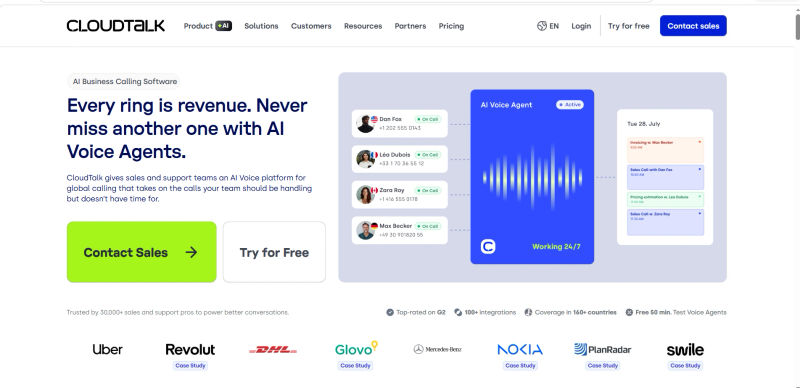
6. CloudTalk: Best for Sales Teams
Who is this best for? CloudTalk is engineered for high-volume outbound sales and support teams that need advanced dialing features and deep CRM synchronization.

CloudTalk serves as a powerful alternative to generic VoIP tools by offering features like power dialers, smart drop voicemail, and automated post-call workflows.
It ensures that your sales representatives spend more time talking to prospects and less time navigating software or performing manual data entry.
Pricing (TCO Perspective): Starting at $25/user/month, the higher upfront cost is justified by the immediate ROI gained through increased agent productivity and native integrations with CRMs like Pipedrive, HubSpot, and Salesforce.
Key Advantages: The power dialer drastically increases daily call volume. Skills-based routing connects callers to the most qualified agent, and deep CRM sync automatically logs all call activity.
Time to Deploy: Setup and CRM integration typically take 1-2 business days.
7. CallHippo: Best for International Calling
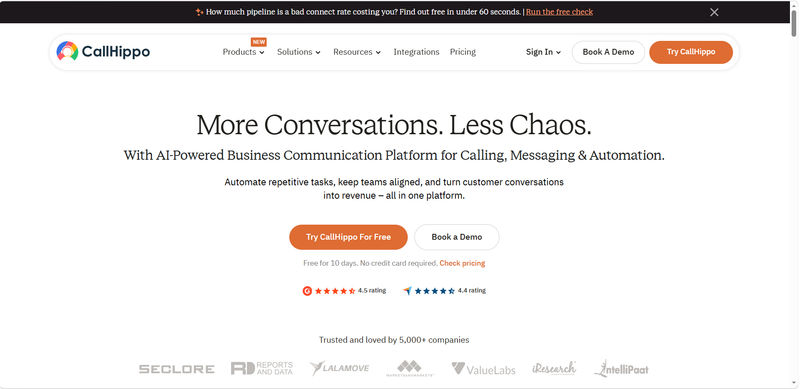
Who is this best for? CallHippo is the top choice for small businesses with an international client base that need to establish a local presence in multiple countries affordably.

International calling rates can quickly destroy a communications budget. CallHippo is the premier alternative for this use case, allowing you to instantly purchase local phone numbers in over 50 countries.
This means your clients can call a local number, which routes seamlessly to your team, reducing friction and building trust.
Join 10,000+ businesses that made successful, data-driven telephony choices using AuthenCIO.
Pricing (TCO Perspective): The basic plan starts around $16/user/month. The true TCO benefit comes from their highly competitive international calling rates, which help avoid exorbitant long-distance charges.
Key Advantages: It provides instant access to global numbers, low-latency servers for high call quality, and time-zone-based routing to ensure calls are always answered.
Time to Deploy: You can get a new international number and start making calls in under an hour.
8. KrispCall: Best for Remote Collaboration
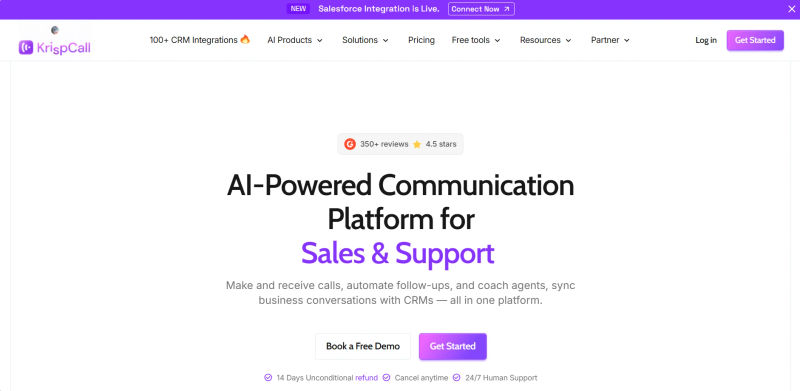
Who is this best for? KrispCall is built for fully remote or hybrid teams that need to share phone numbers and collaborate on client communications in real-time.
KrispCall approaches VoIP with a "unified callbox" concept. Instead of every employee having an isolated line, teams can share numbers, making it an excellent alternative for remote support or sales teams.
You can tag team members, leave internal notes on call logs, and ensure no client inquiry slips through the cracks.
Pricing (TCO Perspective): Starting at $15/user/month, the TCO is kept low because you don't need to purchase individual numbers for every employee; a small team can operate from one or two shared numbers.
Key Advantages: The unified callbox creates a shared workspace for calls, SMS, and voicemails. Number sharing is a core feature, and the lightweight app doesn't drain device resources.
Time to Deploy: Deployment is instant upon signup.
9. Unitel Voice: Best for Solopreneurs
Who is this best for? Unitel Voice is the best option for solopreneurs, freelancers, and micro-businesses that need to project a professional image and ensure reliability on a tight budget.
When you're a team of one, you need to sound professional when a client calls. Unitel Voice is the perfect alternative to giving out your personal cell phone number.
It focuses on core reliability, providing professional greetings, custom auto-attendants, and dependable call forwarding to your existing mobile device.
Pricing (TCO Perspective): At just $9.99/month (often covering multiple extensions), Unitel Voice offers the lowest TCO on this list. It is a pure operational expense with zero hardware requirements.
Key Advantages: It offers access to professional voice talent for your company greetings, is highly affordable, and provides simple, reliable call forwarding that keeps your business and personal lines separate.
Time to Deploy: Setup is simple and can be completed in under an hour.

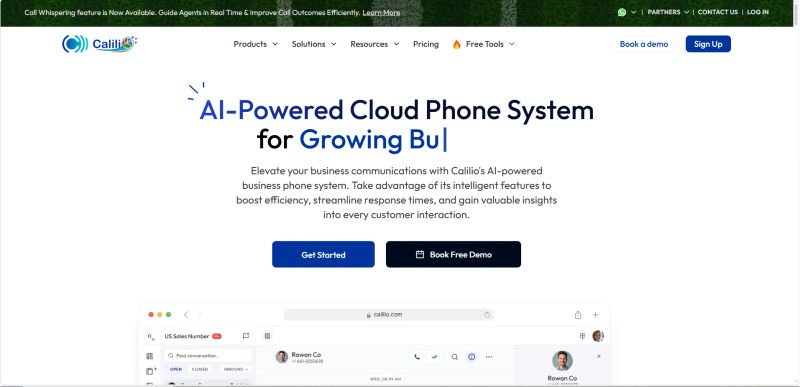
10. Calilio: Best for Advanced Call Routing
Who is this best for? Calilio is designed for operations managers who need granular control over how incoming calls are distributed across various departments and locations.
For businesses with complex operational structures, like a logistics company or a multi-location medical practice, simple call forwarding isn't enough. Calilio stands out as a powerful alternative by offering highly customizable call flows.
You can set up complex ring groups, sequential dialing, and conditional routing based on business hours or caller ID.
Pricing (TCO Perspective): Plans start around $12/user/month. The TCO is highly predictable, and the value is derived from the time saved by automating call distribution and reducing the need for a dedicated receptionist.
Key Advantages: A visual drag-and-drop call flow designer makes setup intuitive. It also provides deep analytics on call queues and agent performance, and is highly customizable to unique workflows.
Time to Deploy: More complex routing setups may take 1-3 days to perfect.
11. 800.com: Best for Toll-Free Branding
Who is this best for? 800.com is the best fit for marketing-driven small businesses that want to establish nationwide credibility with a memorable vanity toll-free number.

Sometimes, your phone number is a core part of your brand identity. If you run national ad campaigns, having a memorable 1-800 vanity number is crucial.
800.com pairs these premium numbers with solid VoIP routing and SMS marketing capabilities, making it a specialized alternative to traditional UCaaS platforms.
Pricing (TCO Perspective): Starting at $29/month, pricing is based more on minute usage and the number's premium nature rather than per-user seats. TCO can fluctuate based on inbound call volume.
Key Advantages: It has an unmatched inventory of premium vanity numbers, built-in SMS marketing tools, and excellent call tracking analytics to measure the ROI of marketing campaigns.
Time to Deploy: A number can be secured and configured in less than a day.

12. Quo: Best for Modern Startup Agility
Who is this best for? Quo is the perfect choice for fast-moving tech startups and modern agencies that demand a fast, beautiful user interface and instant deployment.
Quo is a new breed of VoIP, built for the 2027 workplace. It strips away legacy bloat to deliver a lightning-fast, intuitive application.
It's the perfect alternative for decision-makers frustrated by clunky software, integrating seamlessly with modern tools like Slack, Notion, and Linear.
Pricing (TCO Perspective): At $14/user/month, Quo offers a transparent, flat-rate model. The TCO is excellent due to its zero hidden fees, no hardware requirements, and instant self-serve implementation.
Key Advantages: It boasts arguably the most beautiful and responsive interface on the market. You can purchase a number and start calling within 60 seconds, and it connects flawlessly with the modern SaaS stack.
Time to Deploy: Deployment is instant.

Key Features to Look for in a 2027 VoIP Provider
Selecting the right VoIP system requires looking beyond marketing copy and evaluating how the technology aligns with your operations. Focus on these critical factors to avoid being locked into a contract that hinders your growth.
1. Total Cost of Ownership (TCO) vs. Advertised Price
The most common mistake is budgeting based on the advertised "per user" price. To calculate the true TCO, account for regulatory surcharges, taxes, and number porting fees.
Furthermore, determine if you need proprietary hardware. Always look for transparent, pay-as-you-go pricing models.
2. Practical AI Capabilities
In 2027, AI is an operational necessity. Distinguish between generic claims and practical tools.
Look for systems offering real-time language translation, automated meeting summaries, and searchable call transcriptions. These features reduce administrative burden and allow your staff to focus on the customer.
3. Mobile App Parity for Hybrid Work
With hybrid work, your team's ability to communicate from a smartphone is paramount. Test the provider's mobile app to ensure it offers "parity" with the desktop version.
Can employees easily transfer calls, access the company directory, and manage their status from their phones? Poor mobile performance leads to unprofessional client interactions.
4. Essential Integrations
Your phone system should not exist in a vacuum. Verify specific integration capabilities with tools your business already uses, like Slack, Shopify, or Salesforce.
Native integrations that automatically log call data prevent manual data entry and improve efficiency.
5. Security and Compliance (HIPAA/PCI)
For businesses in healthcare, finance, or retail, security is non-negotiable. Verify that the provider offers end-to-end encryption and can sign a Business Associate Agreement (BAA) for HIPAA compliance.
Look for features like biometric authentication, role-based access controls, and detailed audit logs to ensure data privacy and meet industry standards like PCI DSS.
Frequently Asked Questions About Cloud Communications Software
What are the best cloud communications software alternatives to traditional landlines? The best alternatives are VoIP and UCaaS platforms like Nextiva, RingCentral, and Dialpad. They replace aging copper wires with cloud-based routing, offering lower costs, remote accessibility, and advanced features like AI transcription.
Are there free cloud communications software alternatives for small businesses? While completely free options are rare for professional use, Google Voice offers a basic free tier for single users. Growing teams typically outgrow free tools quickly, making entry-level paid alternatives like Ooma or Zoom Phone a better long-term investment.
Can I keep my current business phone number if I switch to a VoIP alternative? Yes. You can port your existing local or toll-free numbers to a new cloud communications provider. The porting process usually takes between one to four weeks, during which your old service remains active to prevent any downtime.
Try AuthenCIO
Move to faster, smarter software evaluation with AI
Final Verdict: Which VoIP System Wins for Your Business?
There is no single "best" VoIP phone system; there is only the best system for your specific needs. Transitioning to a cloud-based VoIP system in 2027 is a strategic move that will reduce infrastructure costs, scale with your staffing needs, and improve your professional image.
By mapping your primary use case and evaluating the total cost of ownership, you can select one of these reliable virtual phone systems with confidence.
Strategist's Top 3 Picks:
Best Overall: Nextiva offers the most balanced package of unified communications, reliability, and support for a growing small business.
Best for Budget: Unitel Voice provides the essential professional features for solopreneurs and micro-businesses at an unbeatable price point.
Best for Growth: RingCentral delivers the enterprise-grade scalability and global reach necessary for businesses with ambitious expansion plans.