
Introduction
If you're grappling with fragmented systems, payroll accuracy anxiety, or the constant struggle to produce reliable headcount reports, you're not alone. The 2025–2026 landscape has accelerated the HR tech stack evolution from transactional systems to intelligent platforms. Today, a modern Core HR function is the strategic foundation for operational efficiency, unwavering compliance, and a superior employee experience. With recent data showing that 85% of organizations use advanced HR technology to manage people operations, a thoughtful HR software evaluation is no longer optional; it's a critical competitive advantage.
Streamline your software evaluation process
However, the market is saturated with solutions. Finding the best HCM platforms to modernize a fragmented HR technology stack requires navigating everything from comprehensive Human Capital Management (HCM) suites like UKG and Rippling to specialized tools for global teams like Deel and Multiplier.
This guide provides a clear, strategic blueprint for HR leaders and software buyers. We will dissect the essential building blocks of a modern Core HR function, helping you assess your current state, understand the technology landscape, and build a powerful, future-proof HR ecosystem, whether you're a 50-person startup or a 1,000-employee global enterprise.
Key Takeaways
Core HR is the foundation: It encompasses employee master data, payroll, benefits, and compliance, serving as the single source of truth for your entire HR ecosystem.
Integration is non-negotiable: A modern tech stack relies on seamless data flow via APIs, SSO, and SCIM provisioning to connect foundational systems with strategic tools like ATS and performance management.
Data governance drives outcomes: Strict role-based access control (RBAC) and adherence to privacy frameworks (GDPR, SOC 2) are critical for maintaining compliance and reducing organizational risk.
Scalability dictates the model: Choosing between building, buying, or outsourcing (EOR/PEO) depends on your company's growth stage, global footprint, and internal IT capabilities.
Implementation requires phased execution: Successful rollouts prioritize clean data migration, rigorous testing, and structured change management to ensure high user adoption and ROI.
Software Covered in this Article
To help you understand HR software in the right context, this article refers to a carefully curated set of key players:



What Is Core HR Today? Definition, Scope, and Outcomes
At its heart, Core HR comprises the fundamental functions required to manage employees from hire to retire. It is the system of record orchestrating the critical processes that ensure people are paid correctly and managed compliantly.
Rather than a static database, modern Core HR is an intelligent platform serving as the single source of truth for people data. The essential features of an all-in-one HR platform in 2025 and 2026 prioritize API interoperability, automated workflows, and self-service. To support complex workforces, the core modules of a scalable HCM solution for large organizations must include centralized employee master data, global payroll, benefits administration, time and attendance, and automated compliance management.
Core HR vs. HCM vs. HRIS: How the Layers Fit
These terms are often used interchangeably, but they represent distinct layers of HR technology:
HRIS (Human Resources Information System): This is the foundational technology. Think of it as the central database that stores and manages employee master data—names, roles, addresses, compensation, and organizational structure. Platforms like BambooHR and Keka are excellent examples of systems built around a strong, user-friendly HRIS core.
Core HR: This refers to the essential functions powered by the HRIS. This includes payroll, benefits administration, time and attendance, and basic compliance management. It's the operational engine.
HCM (Human Capital Management): This is the broadest term, encompassing Core HR functions plus strategic talent management modules. HCM suites often include recruiting (ATS), performance management, learning and development (L&D), and workforce analytics. The goal of HCM is to optimize the entire employee lifecycle.
Outcomes That Matter: Accuracy, Compliance, EX, and Cost-to-Serve
Investing in a modern Core HR foundation is not just about new software; it's about driving tangible business outcomes. A well-architected system delivers:
Accuracy: Eliminates data silos and manual entry errors, ensuring payroll accuracy and trustworthy headcount reporting for finance.
Compliance: Automates adherence to complex global and local labor laws, tax regulations, and data privacy mandates like GDPR, mitigating significant financial and reputational risk.
Employee Experience (EX): Empowers employees and managers with intuitive, mobile-first self-service tools, accessible design (WCAG), and transparent workflows, reducing frustration and administrative friction.
Cost-to-Serve: Reduces the administrative burden on the HR team through automation, allowing them to shift focus from transactional tasks to strategic, value-adding initiatives.
Not sure what fits your team? Let AI match you with top HRIS platforms — start your search!
The Modern Core HR Operating Model
A robust tech stack is only as effective as the operating model that governs it. A modern approach requires clear ownership, robust security protocols, and a seamless integration strategy to function effectively.
1. HR Service Delivery, Shared Services, and RACI
To avoid chaos, you need a clear governance framework. This often involves a tiered support model (Tier 0 for self-service, Tier 1 for HR coordinators, Tier 2 for specialists) and defined roles for HR Business Partners (HRBPs) and Centers of Excellence (COEs) for functions like payroll or talent.
A RACI (Responsible, Accountable, Consulted, Informed) chart is essential for defining who can initiate, approve, and execute changes within the HRIS. For example, a manager might be Responsible for initiating a promotion, the HRBP is Accountable for ensuring it's correct, and the Payroll team is Informed. This structured approach ensures consistency, control, and clear audit trails.
2. Data Governance and Privacy: RBAC, GDPR, SOC 2, ISO 27001
HR data is highly sensitive. A modern Core HR function requires a foundation of security, privacy by design, and robust data platform scalability.
Architecture & Scalability: Architecture trends across 2024 and 2025 emphasize HR data platform scalability designed internal to business needs. Scalable data models ensure the system handles growing headcounts and complex hierarchies without degrading performance.
Access Control & Self-Service: Role-Based Access Control (RBAC) is non-negotiable, ensuring users only see relevant data. It is often supplemented by Attribute-Based Access Control (ABAC) for granular rules (e.g., restricting cross-border salary visibility). A secure self-service access architecture empowers employees to update records independently while maintaining strict governance.
Compliance Standards: Vendors must demonstrate adherence to standards like SOC 2 and ISO 27001. For global operations, compliance with GDPR and regional data residency laws is critical. Ensure vendors provide clear Data Processing Agreements (DPAs) and support Business Associate Agreements (BAAs) for protected health information (PHI).
3. Integration Strategy: APIs, SSO/SAML, SCIM, and Webhooks
Your Core HR system must communicate seamlessly with other business systems. A modern integration strategy relies on robust architecture and the essential integration skills required to manage data and talent processes across a modern HR platform. Key components include:
APIs (Application Programming Interfaces): An API-first approach allows for real-time, two-way data exchange between your HRIS and other platforms (e.g., finance/ERP, IT, learning). Ask vendors about rate limits, versioning, and sandbox availability. Managing this requires skills in data mapping and API troubleshooting.
Identity Management (SSO/SCIM): Single Sign-On (SSO) using protocols like SAML provides a secure, frictionless user experience. SCIM (System for Cross-domain Identity Management) automates user provisioning and de-provisioning, creating and disabling accounts in downstream apps as employees join or leave.
iPaaS (Integration Platform as a Service): For complex ecosystems, tools like Workato or MuleSoft can help orchestrate workflows between multiple systems. Building these connections requires workflow automation skills to ensure talent processes sync seamlessly without heavy IT involvement.
👉 See how seamless integrations and secure HR workflows look in action. Try AuthenCIO today!
The Core HR Tech Stack Landscape
Designing your HR department software architecture requires aligning tools with best-in-class HR technology stacks 2025 2026 operational strategic goals. A standard HR tech stack diagram illustrates this modern HR technology architecture: a central HRIS hub seamlessly connecting to specialized point solutions. This ensures scalable, compliant operations across diverse geographic footprints.
Example Tools Across Categories
All-in-One Platforms: Rippling, UKG, Workday, SAP SuccessFactors, and BambooHR provide comprehensive, integrated suites.
Core HR & Operational Excellence: When you evaluate the HR software (human resources technology) company HRworks on core HR & operational excellence, its automation of travel, time, and absence tracking stands out.
Integration & Tech Stack Focus: If you evaluate the HR software company Access on integration & tech stack, its ecosystem features robust APIs and SSO. Similarly, when you evaluate the HR software company Karbon on integration & tech stack, its open APIs enable seamless workflow automation.
Small Business Focused: Gusto provides user-friendly payroll and benefits tailored to US small businesses.
Modular & Flexible: Zoho People and HROne allow you to build custom solutions by adding functions as you grow.
Time & Attendance Specialists: Atto (geofencing) and Hubstaff (remote tracking) provide robust capabilities for distributed teams.
Global Employment Platforms: When you evaluate the HR software (human resources technology) company Deel on core HR & operational excellence, it excels at global payroll and EOR compliance without local entities. Other options include Multiplier, Papaya Global, and Remote.
Build vs. Buy vs. Outsource (EOR/PEO): When Each Fits
Buy (SaaS): The most common approach. Subscribing to a cloud-based solution is fast to implement, scalable, and cost-effective.
Build (Custom): Only feasible for very large enterprises with unique needs. It's expensive, slow, and requires significant ongoing maintenance.
Outsource (EOR/PEO): An Employer of Record (EOR) or Professional Employer Organization (PEO) is ideal for small businesses wanting to offload HR administration or for companies expanding globally. The EOR/PEO becomes the legal employer, managing all HR compliance, payroll, and benefits on your behalf. Note the co-employment risks and have a plan for transitioning off an EOR as you scale.
🧐 Decide faster—Find out whether SaaS, custom build, or outsourcing works for your HR needs.
HR Tech Stack Examples by Company Size (2025-2026)
Designing an HR tech stack requires matching system complexity to your headcount, geographic footprint, and budget. The best way to scale an HR tech stack in 2025–2026 is to start with a unified core and layer on specialized point solutions via API as organizational needs mature.
50-Person Startup: To build an integrated HR tech stack for a 50-person company, focus on an all-in-one HRIS platform to minimize administrative overhead. A typical stack includes Rippling or Gusto (Core HR, Payroll, IT provisioning), Ashby (ATS), and Notion (Policy/Wiki).
Midmarket (250–1,000 Employees): The best way for midmarket companies to scale their HR tech stack is by separating core HR from specialized talent modules. Affordable tech stacks for mid-sized companies aligning finance, HR, and IT in 2026 often feature HiBob or BambooHR (Core HRIS), Lattice (Performance), Lever (ATS), seamlessly integrated with NetSuite (Finance) and Okta (IT/Identity).
International Remote Teams: When determining how you should design a tech stack for hiring and paying employees and contractors worldwide, rely heavily on Employer of Record (EOR) platforms. The best HR tech stack for international remote teams in 2025–2026 combines Deel or Remote (Global Payroll/Compliance/Benefits) with Slack (Culture) and Workable (Global ATS).
Enterprise: Large organizations require robust, highly customized HCM systems. For example, the Ford workforce operations HR payroll tech stack update in February 2026 highlighted a strategic shift toward consolidating legacy fragmented systems into a unified Workday HCM environment, supplemented by specialized tools like Eightfold AI for talent intelligence and ServiceNow for HR service delivery.
Find Perfect Software For Your Business
Foundational HR Building Blocks
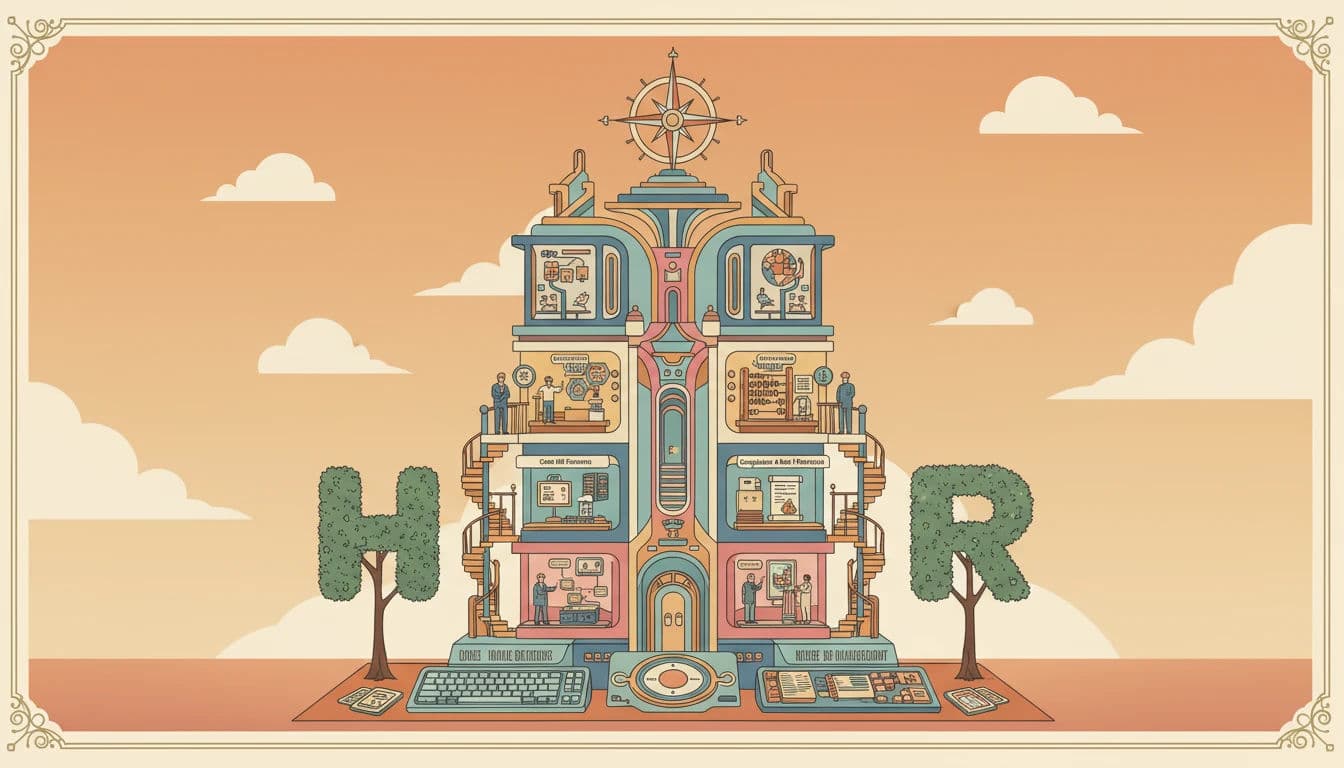
A modern, strategic Core HR function is constructed from several interconnected building blocks. We'll start with the non-negotiable foundation.
1. Employee Master Data and HRIS
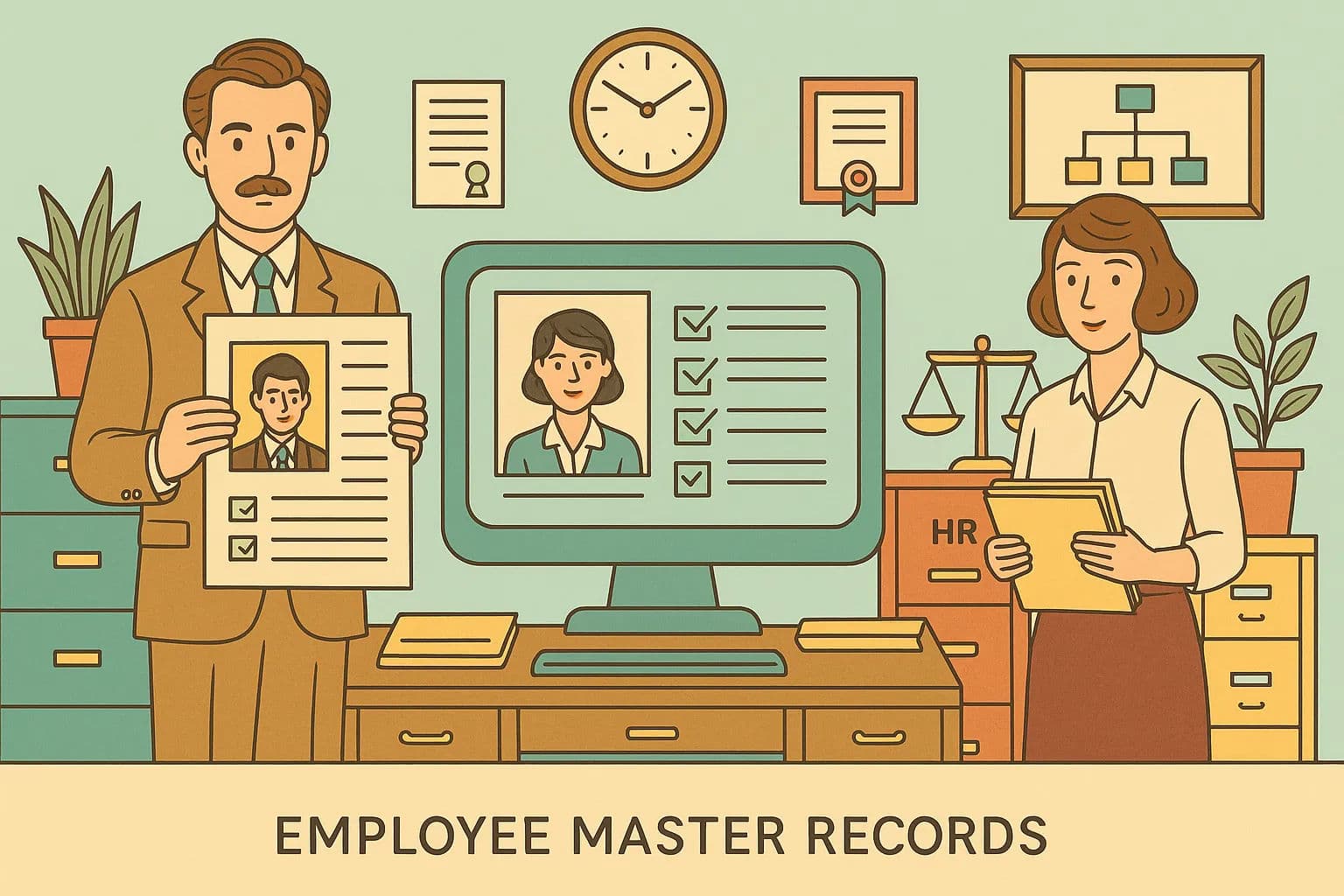
This is the bedrock. A centralized HRIS provides a single source of truth for all employee information—from personal details and compensation history to job roles and reporting lines. It must be governed by strict RBAC and feature immutable audit logs that track every single data change for compliance and security.
2. Payroll and Benefits Administration
This is a zero-failure-tolerance function. The system must flawlessly calculate gross-to-net pay, handle all tax withholdings, and manage benefits enrollment and deductions. For global companies, this extends to multi-country payroll complexities, including country-specific filings (e.g., RTI in the UK, STP in Australia) and international payment methods (SEPA/IBAN).
3. Time, Attendance, and Scheduling
Accurate time tracking is crucial for payroll and labor law compliance. Modern systems offer mobile clock-in/out, geofencing to ensure employees are on-site, automated overtime calculations based on complex rules, and manager dashboards for scheduling and approvals.
4. Absence and Leave Management
This goes beyond simple vacation tracking. A robust system must manage complex, overlapping leave types, from statutory requirements like FMLA in the US to local sick leave policies and company-specific sabbaticals, all while handling accruals and balances accurately.
5. Policy Management and Compliance
This block automates the distribution and acknowledgment of company policies, such as employee handbooks and codes of conduct. It captures digital attestations for audit purposes and manages document retention schedules according to legal requirements, protecting the business from risk.
Strategic HR Building Blocks
Once the foundation is solid, these strategic blocks transform HR from an administrative function into a value-driving partner.
1. Talent Acquisition (ATS)
This block ensures a seamless transition from candidate to employee. It includes an Applicant Tracking System (ATS) that hands off data cleanly to the HRIS, eliminating manual re-entry and reducing errors.
2. Compliant Onboarding & Provisioning
The work begins after the offer is signed. This function automates workflows for e-signatures, compliant document collection (like I-9/E-Verify in the US or Right to Work in the UK), and IT provisioning. Core HR software integrates with IT to orchestrate role-specific asset allocation—such as provisioning specialized human resources equipment for developers—ensuring new hires are productive from day one.
3. Performance and Engagement
Moving beyond the annual review, this block supports continuous performance management through goal-setting frameworks (like OKRs), 360-degree feedback, and 1:1 agendas. It also includes tools for engagement surveys, peer recognition, and managing Employee Resource Groups (ERGs) to foster an inclusive culture.
4. Compensation and Workforce Planning
Here, HR partners with finance to manage compensation bands, conduct pay equity analysis, and model future headcount scenarios. This enables strategic workforce planning aligned with business goals, turning people data into a predictive asset.
5. HR Case Management and Service Delivery
To scale HR support, a case management system tracks employee inquiries and ensures they are resolved within defined Service Level Agreements (SLAs). A self-service portal with a searchable knowledge base empowers employees to find answers on their own, reducing HR ticket volume.
6. People Analytics and Reporting
This is where data becomes insight. This block provides dashboards with key people analytics KPIs (e.g., headcount, attrition, diversity metrics). The ability to generate trusted, timely reports is a key outcome of a modern Core HR system.
7. Security, Privacy, and Risk
Finally, this block ensures the entire system is secure. It includes Multi-Factor Authentication (MFA), encryption at rest and in transit, and periodic user access reviews to enforce the principle of least privilege. It also covers processes like conducting Data Protection Impact Assessments (DPIAs) for new features.
How to Evaluate Core HR Software
Choosing the right technology is a high-stakes decision. A structured vendor evaluation checklist and process are critical to finding a platform that meets your unique needs.
1. Non-Negotiable Capabilities Checklist
Define your modern HR platform requirements using a MoSCoW framework. Essential must-haves include a centralized HRIS, integrated payroll, open APIs, automated workflows, employee self-service, strong RBAC, and comprehensive audit trails.
2. Integration and Data Architecture Questions to Ask
Do you have a public, well-documented API? What are the rate limits?
How is customer data segregated and secured in your multi-tenant architecture?
Can you guarantee data residency in a specific region (e.g., the EU)?
Describe your process for a full data export if we choose to leave your platform.
3. TCO, ROI, Scalability, and Reference Checks
Look beyond the sticker price. Calculate the Total Cost of Ownership (TCO), including implementation fees, training, and internal admin costs. Build a Return on Investment (ROI) case based on efficiency gains (e.g., hours saved on manual data entry) and risk reduction (e.g., avoiding compliance fines). Finally, always conduct thorough reference checks with companies of a similar size and complexity.
Metrics and KPIs That Matter
The success of your Core HR function should be measured with clear, quantifiable metrics.
KPI/Metric | Definition/Goal |
Data Accuracy | % of employee records with no errors or missing fields |
Payroll First-Time-Right Rate | % of pay runs completed without errors (Target: 99.5%+) |
HR Case Time-to-Resolution | Avg. time to resolve employee inquiry |
Self-Service Adoption Rate | % of employees/managers using self-service features |
Provisioning Time to Day-One Readiness | % of new hires set up with all system access and equipment on first day |
Integration Failure Rate | Number of failed automated syncs/month between HRIS and other systems |
Implementation and Change Management
Even the best software will fail without a thoughtful implementation and change management plan. A successful change management HRIS implementation requires a structured approach.
1. Phased Rollout, Data Migration, and Testing
Phased Rollout: Start with the core HRIS and payroll first, then roll out other modules like performance or time tracking later. A typical timeline for a mid-size company is 90-180 days.
Data Migration: This is often the hardest part. Plan for extensive data cleansing and mapping from your old systems to the new one.
Parallel Payroll Testing: This is non-negotiable. Run your old and new payroll systems in parallel for at least two cycles to validate that every employee's pay is 100% correct before going live.
UAT (User Acceptance Testing): Have actual end-users test the system to ensure it meets business requirements before go-live.
2. Post-Go-Live Governance and Hypercare
Hypercare: Provide intensive, dedicated support for the first 30-60 days after go-live to quickly address issues and build user confidence.
Governance: Establish a committee to manage future system changes and enhancements. Implement a continuous improvement cadence to regularly review system performance, user feedback, and new feature releases from your vendor.
📊 See how the right HRIS can help you hit key metrics—get personalized recommendations now!
Templates and Resources
To help you get started, here are some practical tools to guide your selection and implementation process.
1. Vendor Demo Script Snippet
Don't let vendors lead the demo. Provide them with a script of specific scenarios. For example:
"Show us the end-to-end process for a manager in our UK office promoting a direct report. The workflow must require approval from the department head and HRBP before notifying payroll. The promotion includes a base salary change and a new bonus target. Please highlight the audit trail for this change."
2. Vendor Scoring Matrix Example
Use a weighted scoring matrix to objectively evaluate each vendor's performance against your key criteria.
Capability Category | Weight | Vendor A Score (1-5) | Vendor B Score (1-5) |
Core HRIS & Data Mgmt | 25% | 4 | 5 |
Payroll & Benefits (US/UK) | 30% | 5 | 3 |
Integration (API/SCIM) | 20% | 4 | 4 |
User Experience (UX) | 15% | 3 | 5 |
Reporting & Analytics | 10% | 4 | 4 |
Total Weighted Score | 100% | 4.2 | 4.0 |
Try AuthenCIO
Move to faster, smarter software evaluation with AI
Conclusion and Next Steps
Building a modern Core HR function is a strategic imperative. By assembling these critical building blocks—from the foundational HRIS to strategic people analytics—you transform HR from an administrative cost center into a powerful engine for efficiency, compliance, and growth. The key is not just to have these functions, but to ensure they are seamlessly integrated, automated, and governed by a clear operating model.
Navigating the crowded HR technology market to find the right tools to build your stack is a significant challenge. It requires a structured approach, deep market knowledge, and an unbiased evaluation process. Resources like analyst reports from Gartner or Forrester, peer communities, and review sites can provide valuable insights.
For a more structured comparison, a vendor-neutral platform can be an invaluable tool.