

Introduction
It’s 8 AM on a Monday, and Sarah, an HR Director, is already juggling three disconnected spreadsheets. One tracks new hire onboarding, another manages leave requests, and a third is a manually updated list for the upcoming payroll run. An urgent request comes in from the CFO for a headcount report, and she knows it will take hours to reconcile the data. This scenario of fragmented systems, manual data entry, and reactive fire-fighting is all too common. It’s a clear sign that the absence of a strategic plan is holding HR—and the business—back.
Streamline your software evaluation process
To escape this cycle, HR leaders need more than just new software; they need a strategic blueprint. This is where a future-ready HR operations roadmap becomes indispensable. It’s not just about buying technology; it’s a comprehensive plan that aligns your people, processes, and technology with long-term business objectives.
This guide will walk you through, step-by-step, how to build a roadmap that transforms HR from a cost center into a value-creation engine, driving HR operational efficiency and creating scalable HR operations for future growth.
Key Takeaways
Building a future-ready HR operations roadmap requires a strategic, phased approach to align human resources with broader business objectives. Before diving into the comprehensive guide, here are the core actionable steps to guide your transformation:
Assess and Define: Audit your current HR processes to identify inefficiencies, then establish a clear, data-driven vision for your future-state operations.
Design the Future State: Restructure your HR framework to prioritize workflow streamlining, employee experience, and the automation of routine administrative tasks.
Align Technology with Strategy: Build an HR technology roadmap that maps specific software solutions to your defined business needs, ensuring seamless integration and scalability.
Prioritize Change Management: Execute a phased rollout supported by robust change management strategies to drive user adoption and minimize disruption.
Measure and Iterate: Establish clear KPIs to track operational excellence, remaining agile enough to adapt your roadmap as organizational needs and technologies evolve.
Software Covered in this Article
To help you understand Core HR Software in the right context, this article refers to a carefully curated set of players:




Understanding the Imperative for a Future-Ready HR Operations Roadmap
An HR roadmap is a strategic blueprint that charts the exact steps required to move from your current human resources framework to a modernized, highly efficient service delivery model. As the foundation of your broader HR strategy, an HR strategy roadmap details the specific initiatives, technology implementations, and process improvements needed to build a scalable, future-proof function.
Effective HR roadmap planning directly aligns HR capabilities with overarching business objectives. Without a structured roadmap HR approach, organizations risk making disjointed software investments and creating restrictive data silos. Navigating the future of HR operations demands this level of strategic foresight, enabling teams to transition from reactive administrative tasks to proactive, data-driven workforce management that delivers measurable ROI to the business.
1. Why an HR Transformation Blueprint is Critical
An HR transformation roadmap is a strategic plan that outlines how human resources will evolve its processes, technology, and operating model to support broader business objectives. With 87% of organizations planning to increase their HR technology investments, operating without a structured roadmap risks fragmented systems and wasted resources. A well-defined HR transformation roadmap is critical because it helps you:
Align HR with Business Goals: Ensure every HR initiative—from implementing a new core HRIS to refining the onboarding process—directly supports overarching company objectives like revenue growth, innovation, or global market expansion.
Justify Technology Investments: Build a compelling business case for new HR software by clearly demonstrating the expected ROI through increased operational efficiency, reduced administrative overhead, and improved employee retention.
Enhance Employee Experience (EX): Design a seamless and integrated technology ecosystem that empowers employees and managers, reducing friction in their daily interactions with HR services.
Future-Proof Your Operations: Proactively plan for future workforce challenges, such as scaling for rapid growth, navigating complex compliance regulations, or adapting to hybrid and remote work models.
2. Key Drivers for HR Digital Transformation
Several powerful trends are accelerating the need for a digital HR transformation. The rise of hybrid and remote work models, embraced by 61% of companies as a permanent policy, demands technology that can support a distributed workforce. Furthermore, the integration of AI is revolutionizing HR. Today, 73% of HR professionals use AI-powered tools for at least one function, leveraging predictive analytics to improve workforce planning and talent acquisition. Organizations that fail to adapt will face the high cost of inaction—wasted tech spend, compliance risks, and top talent lost to competitors with a superior employee experience.
Phase 1: Assess Your Current HR Landscape and Define Vision
Before you can chart a course to the future, you must have a crystal-clear understanding of where you are today. This assessment phase is about conducting a thorough audit of your existing HR ecosystem to identify what’s working, what isn’t, and where the critical gaps lie.
1. Evaluating Existing HR Processes and Technologies
Map out every key process across the employee lifecycle to visualize workflows. Conduct stakeholder interviews to gather qualitative feedback. Performing a SWOT analysis on your existing HR tech stack provides immense clarity when evaluating current tools.
For example, evaluating Hubstaff strengths weaknesses opportunities threats might reveal:
Strengths: Robust time tracking, automated payroll integrations, and detailed remote productivity metrics.
Weaknesses: Perceived intrusiveness of screen monitoring; lacks full-suite HRIS capabilities like benefits administration.
Opportunities: Leveraging API integrations to connect time data with broader performance management systems.
Threats: Evolving global data privacy regulations and shifting workplace cultures resisting employee monitoring.

Current State Assessment Checklist:
Checklist item | What to capture | Examples / Description |
Technology inventory | List all current HR software categorized by function. | HRIS: Zoho; Time tracking: Atto, Hubstaff; Payroll: Rippling |
Process mapping | Document key workflows across the employee lifecycle end to end. | Capture workflows like hiring, onboarding, performance reviews, offboarding, leave management. |
Stakeholder feedback | Collect qualitative input from HR, managers, and employees on pain points and satisfaction with current tools. | Surveys, interviews, feedback sessions focused on usability, gaps, and workarounds. |
Data flow analysis | Map where HR data lives and how it moves between systems. | Identify manual handoffs between HRIS and payroll, duplicate data entry, and any exports/imports required. |
2. Identifying Gaps and Inefficiencies
Your audit will inevitably uncover pain points. For example, a mid-sized tech company discovered their HRIS and Learning Management System (LMS) didn't sync. This data silo meant that managers conducting performance reviews in the HRIS had no visibility into recently completed employee training in the LMS, leading to incomplete and inaccurate assessments. Common issues include:
Data Silos: Disconnected systems forcing manual data entry between your HRIS and payroll system.
Manual, Repetitive Tasks: HR professionals spending excessive time on administrative work instead of strategic initiatives.
Poor User Experience: Clunky, unintuitive software that frustrates employees and leads to low adoption rates.
Lack of Actionable Insights: An inability to generate meaningful reports and analytics from your HR data.
3. Defining Your Future HR Vision and Strategic Objectives
With a clear picture of your current state, you can define your future vision. This isn't just about technology; it's about envisioning the role HR will play in the organization's future. Align your HR objectives with the company's strategic goals.** **
Global Expansion -> - HR Objective: Build a scalable global HR operations strategy, capable of managing international payroll and compliance with platforms like Deel, Multiplier, or Papaya Global.
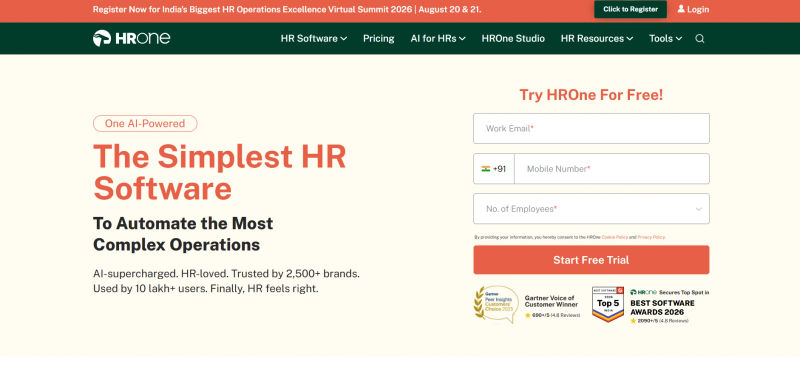
Improve Innovation -> - HR Objective: Foster a culture of continuous learning, supported by a modern LMS integrated with a performance management system like HROne.
Increase Profitability -> - HR Objective: Enhance HR operational efficiency by automating manual tasks using an all-in-one platform like Rippling.

Phase 2: Design Your Future-State HR Operations Model
Once your vision is defined, the next step is to design the operational model that will bring it to life. This involves architecting a cohesive framework of processes and technologies that work in harmony to deliver a superior employee experience and drive business value.
1. Core Components of a Modern HR Operations Framework
A future-ready HR framework is built on several key pillars:
A Single Source of Truth (SSoT): A central HRIS like Zoho People should serve as the core repository for all employee data. Deciding between an all-in-one suite and a best-of-breed approach depends on your needs. All-in-one solutions offer simplicity, while best-of-breed provides specialized functionality but requires robust integration.

Automation of the Employee Lifecycle: Identify every opportunity to automate routine, rules-based tasks.
Self-Service Capabilities: Empower employees and managers with intuitive self-service portals to manage their own data.
Data & Analytics Engine: Integrate an analytics layer to track key metrics and generate insightful dashboards.
👉 Ready to turn your gaps into a concrete HR tech plan? Compare leading HR platforms side‑by‑side in one place.
2. Streamlining Workflows and Automating Routine Tasks
To build a resilient HR automation roadmap, organizations must systematically digitize manual operations. Executing effective HR process automation roadmap steps ensures your core HR software maximizes efficiency and reduces administrative overhead.
Process Mapping: Document existing workflows to pinpoint bottlenecks, manual handoffs, and compliance risks.
Task Triage: Identify repetitive, high-volume tasks (e.g., data entry, leave requests, document routing) prone to human error.
Workflow Redesign: Map out optimized future-state workflows, eliminating redundant steps before applying technology.
Trigger Configuration: Leverage core HR software to automatically initiate downstream actions and notifications across departments.
Example: Onboarding Workflow Transformation
Before: A new hire signs an offer. HR manually emails IT to set up a laptop, emails Finance to add them to payroll, and sends a welcome packet. The process takes 3 days with multiple follow-ups.
After: A new hire signs an offer in the ATS. This automatically triggers a workflow in the core HRIS. IT and Finance receive automated tasks, the welcome packet is sent, and the hiring manager gets a notification to schedule meetings. The process is completed in hours with zero manual HR intervention.
Phase 3: Crafting Your HR Technology Roadmap and Vendor Selection
Effective HR tech roadmap development translates your operational design into a phased action plan. To build a strategic HR technology roadmap, map specific software capabilities directly to business needs and prioritize deployments by ROI. Whether you are creating a targeted HRIS roadmap for core employee data or a comprehensive HR tech roadmap for broader talent management, this phase requires rigorous vendor evaluation to select partners that align with your long-term system architecture.
1. Mapping Technology Solutions to Business Needs
Create a matrix that links your defined HR objectives and process gaps to specific technology solutions. For example:
Need: Centralize employee data and automate core HR. -> Solution: Implement a modern HRIS (BambooHR, Zoho People).
Need: Efficiently hire and pay employees globally. -> Solution: Partner with a global employment platform (Deel, Multiplier).
Need: Simplify payroll and benefits for a US-based workforce. -> Solution: Adopt an integrated payroll system (Gusto, Rippling).
To map solutions effectively, evaluate how leading HR, IT, and spend companies perform across specific core HR modules:
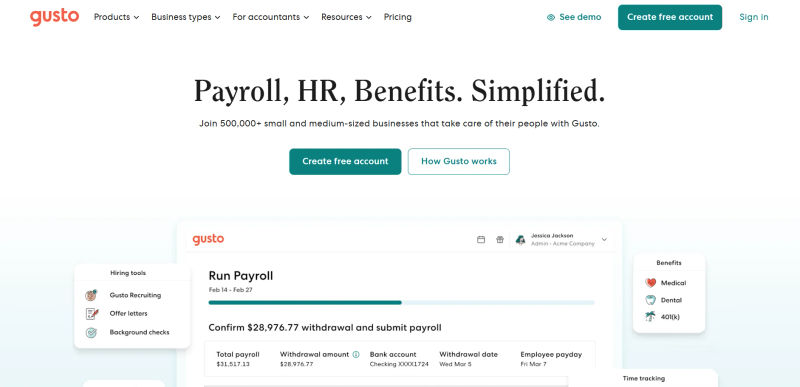
Gusto: When evaluating Gusto on core HR functions like onboarding, leave management, and time & attendance, it excels as an intuitive, all-in-one platform for US-based SMBs. However, if you evaluate Gusto on core LMS or specific LMS features, it relies entirely on third-party integrations rather than native tools.
ADP: Evaluating ADP on leave management reveals a highly customizable system built to handle complex, enterprise-level accrual policies and multi-state compliance.

Deel: For global teams, evaluating Deel on leave management highlights its strength in localized statutory compliance and time-off tracking. When evaluating Deel on LMS capabilities, it leverages partner integrations to deliver international training programs.

BambooHR: If you evaluate BambooHR on core LMS functionality, it provides basic training tracking and compliance reporting suitable for mid-sized teams, though it lacks advanced course authoring.

2. Evaluating Leading HR Software Providers
The HR software market is crowded. To navigate this, develop a clear set of evaluation criteria. Consider if your priority is a comprehensive, all-in-one platform like ADP or if your growth requires a specialized best-of-breed solution for global payroll like Papaya Global. Always ask vendors for their product roadmap to ensure their future plans align with your long-term strategy.
Vendor Evaluation Checklist:
Functionality: Does it meet your core requirements?
Integration Capabilities: How well does it connect with existing systems like your accounting software or identity management?
Scalability: Can the platform grow with your company?
User Experience (UX): Is the interface intuitive for all user types?
Customer Support: What level of support does the vendor provide?
Navigating this process can be overwhelming. Using a vendor-neutral platform to compare features, pricing, and user reviews can significantly streamline your selection process and help you make a more informed decision.
3. Considerations for Implementation and Integration
What implementation timelines are realistic for enterprise HR technology? A standard core HRIS deployment typically takes 6 to 12 months, while complex, full-suite global rollouts across multiple geographies require 18 to 24 months.
To meet these targets, your roadmap must prioritize:
Data Migration: Execute a rigorous data cleansing strategy before moving legacy records.
Phased Deployment: Launch core HR modules first to establish a foundation, followed by secondary functionalities.
System Integration: Develop a robust API strategy to connect the new HR platform with existing business-critical systems like ERPs.
You’ve mapped needs to solutions—now quickly find vendors that match your requirements, budget, and scale.
Phase 4: Implementation, Change Management, and Continuous Improvement
A great plan is only as good as its execution. This final phase is about bringing your roadmap to life through a structured rollout, effective change management, and a commitment to ongoing optimization.
1. Establishing Roadmap Governance
Before implementation, define who owns the roadmap. Establish a cross-functional steering committee (including HR, IT, Finance, and key business leaders) to oversee the project. This committee will be responsible for making key decisions, resolving conflicts, and ensuring the project stays aligned with business objectives. The HR leader typically acts as the project sponsor, championing the vision and securing resources.
2. Developing a Phased Rollout Plan
Avoid a "big bang" approach; a phased rollout minimizes disruption. When structuring your HR transformation implementation steps roadmap 2026, establish clear timelines, milestones, and resource allocation. Divide the rollout into manageable stages:
Pilot Testing: Validate core HR software with a small user group.
Core Deployment: Roll out essential modules company-wide.
Advanced Integration: Deploy complex features and third-party connections.
Identify the internal teams and external consultants required for execution.
3. Strategies for Effective Change Management and User Adoption
Technology implementation relies entirely on workforce buy-in. A proactive change management strategy is crucial for maximizing ROI. When evaluating how to drive user adoption of new HR software platform tools, 2024, 2025, and 2026 best practices emphasize a shift from passive training to active, integrated enablement:
Executive Modeling: Secure visible support from senior leaders who actively use and promote the new system in daily operations.
Contextual In-App Guidance: Deploy AI-driven Digital Adoption Platforms (DAPs) to provide real-time, personalized tooltips and walkthroughs directly within the workflow.
Hyper-Personalized Training: Replace generic manuals with role-specific microlearning modules and hands-on workshops tailored to distinct user groups.
Transparent Communication: Clearly communicate the 'why' behind the transition, highlighting specific time-saving benefits for employees rather than just organizational gains.
Continuous Feedback Loops: Empower designated 'super users' or HR tech ambassadors to gather user feedback, address friction points, and iterate on the rollout process.
4. Measuring Success: KPIs for HR Operations Excellence
To demonstrate the value of your HR transformation, you must track its impact. Define a set of Key Performance Indicators (KPIs) that align with your initial objectives.
Efficiency Metrics: Time to hire, cost per hire, time to process payroll.
Effectiveness Metrics: Employee turnover rate, employee engagement scores, new hire satisfaction.
Strategic Metrics: HR-to-employee ratio, ROI of HR technology.
5. Iteration and Agility: Evolving Your Roadmap
Your HR operations roadmap is not a static document. Schedule regular reviews (e.g., quarterly) to assess progress, re-evaluate priorities, and incorporate new technologies or business needs. This culture of continuous improvement is the essence of a future-ready HR function.
💡 Not sure if you need all‑in‑one or best‑of‑breed? Let AI walk you through options tailored to your HR model.
Overcoming Common Challenges in HR Operations Transformation
Embarking on a digital HR transformation journey is not without its hurdles. Being aware of potential challenges allows you to plan for them proactively.
1. Data Security and Compliance in a Global Context
As you digitize employee data, security and compliance become paramount. Go beyond basic compliance with regulations like GDPR. Conduct thorough security audits of potential vendors, implement robust role-based access controls, and ensure data is encrypted both in transit and at rest. For companies like Multiplier that operate globally, this complexity multiplies, making a partnership with a compliant provider essential.

2. Budgeting and ROI Justification for HR Tech Investments
Securing budget for HR technology requires a solid business case. Frame your proposal in the language of business outcomes. Instead of focusing on software features, emphasize how the investment will reduce costs (e.g., through automation), mitigate risk (e.g., through improved compliance), or drive revenue (e.g., through better talent acquisition and retention).
3. Cultivating a Culture of Innovation within HR
Finally, a future-ready HR operation requires a future-ready HR team. Use the transformation as an opportunity to upskill your HR professionals. Foster a culture of continuous learning by encouraging attendance at industry webinars, organizing 'lunch and learns' on new tech, and shifting their focus from transactional tasks to strategic advisory.
Try AuthenCIO
Move to faster, smarter software evaluation with AI
Conclusion:
Building a future-ready HR operations roadmap is a strategic imperative for any organization that wants to thrive. It is a journey that transforms HR from a reactive, administrative function into a proactive, strategic partner that drives efficiency, enhances the employee experience, and delivers measurable business value. By systematically assessing your current state, defining a clear vision, selecting the right technology, and managing the implementation process effectively, you can build an HR function that is not only prepared for the future but is actively shaping it.
Your roadmap is a living document, a commitment to agility and continuous improvement. As you embark on this journey, remember that the right tools and resources are critical to your success.