

Introduction
Why Enterprise Senders Need Dedicated IPs in 2026
For enterprise IT directors and infrastructure managers, managing high-volume email delivery in 2026 demands precision, technical isolation, and absolute reputational control. As mailbox providers like Gmail, Apple, and Yahoo increasingly rely on AI-driven filtering algorithms and strict authentication protocols—such as DMARC, SPF, DKIM, BIMI, and MTA-STS—the margin for error has vanished. Bulk senders are now required to maintain complaint rates below the strict 0.3% threshold. Failing to meet these ongoing requirements can result in immediate domain throttling or permanent blacklisting.
Streamline your software evaluation process
Furthermore, the rapid shift toward dual-stack (IPv4/IPv6) infrastructure in 2026 means enterprise email delivery solutions must seamlessly support IPv6 routing. Major mailbox providers are increasingly favoring the enhanced security, traceability, and expanded address space of IPv6, making it a critical component of modern deliverability architectures.
Dedicated IP vs Shared IP for Large Scale
The fundamental difference between shared and dedicated IPs is reputation control. Shared IP pools expose large-scale senders to "noisy neighbors"—where another company's poor practices degrade the shared IP's reputation. A dedicated IP, often deployed alongside a dedicated email server, ensures your deliverability is dictated solely by your own sending practices and engagement metrics.
When determining which email service offers shared vs dedicated ip with clear pricing and reputation tools, infrastructure teams must evaluate total cost of ownership. While shared IPs cost less upfront, dedicated email plans require clear pricing considerations regarding volume tiers and IP warmup fees. Top providers offset these costs by including advanced reputation tools to monitor blocklists and sender scores in real-time.
Dedicated IP pools allow enterprises to implement sophisticated separation strategies. By routing transactional traffic through one dedicated IP and marketing broadcasts through another, you protect critical communications from volume spikes. Because email marketing delivers a $40–$45 ROI per dollar spent, securing your infrastructure with a dedicated IP is a strict requirement for revenue protection.
Key Takeaways
Top Overall Providers: Twilio SendGrid and Mailgun (Sinch) remain the industry standards in 2026 for enterprises requiring robust API infrastructure, dedicated IP pooling, and advanced deliverability analytics.
Best for Cost-Effective Scaling: Amazon SES offers the most competitive pricing for high-volume senders, though it requires more in-house developer resources to manage IP warming and reputation monitoring.
Security and Compliance: Enterprise buyers should prioritize platforms like SparkPost (MessageBird) and Postmark for their strict adherence to SOC 2 Type II, GDPR compliance, and seamless integration with modern enterprise security stacks (SAML/SSO).
Crucial Buying Criteria: When selecting a dedicated IP service, evaluate the provider's IP warming automation, global server distribution for low latency, and real-time webhook capabilities to ensure maximum inbox placement.
🔝 Top Software Picks (Alternatives)
Twilio SendGrid — best for enterprise‑grade email delivery, scalability, and API reliability.
Mailgun — best for developers needing flexible APIs and advanced deliverability analytics.
Amazon SES — best for cost‑efficient, high‑volume transactional email sending.
Postmark — best for ultra‑fast transactional delivery and detailed message tracking.
Bird — best for predictive analytics and enterprise‑level deliverability insights.
SMTP2GO — best for reliable global SMTP relay and uptime monitoring.
SocketLabs — best for managed email infrastructure and personalized support.
Elastic Email — best for budget‑friendly bulk sending and automation tools.
MailerSend — best for modern API design and intuitive dashboard for developers.
Netcore Cloud — best for AI‑driven engagement and omnichannel marketing automation.
Inboxroad — best for dedicated IPs and deliverability monitoring for high‑volume senders.
SMTP.com — best for long‑standing reliability and enterprise‑grade compliance.
Software covered in this article
To help you understand Email Infrastructure software in the right context, this article refers to a carefully curated set of key players:







.webp?tr=w-112%2Cq-80%2Cf-auto%2Cc-at_max)
.webp?tr=w-112%2Cq-80%2Cf-auto%2Cc-at_max)
.webp?tr=w-112%2Cq-80%2Cf-auto%2Cc-at_max)
.webp?tr=w-112%2Cq-80%2Cf-auto%2Cc-at_max)

Comparison of the Top 12 Dedicated IP Providers
If you need us to recommend an email sending service with dedicated IP options, this dedicated IP email hosting providers comparison breaks down the market leaders. The best dedicated IP email services 2025 2026 offer reflect recent trends toward automated IP warmup and stricter DMARC authentication requirements.
This matrix evaluates the top dedicated IP email delivery services providers based on enterprise plans, pricing, ideal use cases, and compliance certifications critical for data residency.
Plan | Price ($) | Best For | Features |
SMTP.com Enterprise | $500/month | High-Volume Reliability | 1. 1M+ monthly volume, 2. Dedicated IP included, 3. Reputation Defender add-on, 4. 24/7 NOC monitoring, 5. Custom DKIM/SPF setup, 6. SOC2 Compliant |
SMTP2GO Premier 3M | Customized | Global Infrastructure Monitoring | 1. 3M monthly volume, 2. Dedicated IP included, 3. Global edge routing, 4. Real-time blacklist monitoring, 5. Advanced analytics dashboard, 6. ISO 27001 Certified |
Twilio SendGrid Pro 1M | $900/month | Scalable API Integration | 1. 1M monthly volume, 2. 1 Dedicated IP, 3. Event webhook integration, 4. Subuser management, 5. Delivery insights, 6. SOC2 Type II Compliant |
Mailgun Scale 1M | $700/month | Developer-Centric Deliverability | 1. 1M monthly volume, 2. 1 Dedicated IP, 3. Send time optimization, 4. SAML SSO, 5. 30-day log retention, 6. GDPR & HIPAA Ready |
Postmark Enterprise | $930/month | Transactional Speed and Isolation | 1. 1.5M monthly volume, 2. Dedicated IP included, 3. 10-second delivery SLA, 4. Message Streams (isolation), 5. Custom data retention, 6. Priority support |
Amazon SES Dedicated IP (Standard) | $24.95/month per IP + $0.10/1k emails | Cost-Effective Cloud Scaling | 1. Pay-as-you-go volume, 2. Dedicated IP pool management, 3. AWS IAM integration, 4. Reputation dashboard, 5. Bring Your Own IP (BYOIP), 6. Mailbox simulator |
Bird Enterprise | Custom Volume pricing | Real-Time Predictive Analytics | 1. 1M+ monthly volume, 2. Dedicated IPs included, 3. Predictive inbox placement, 4. Real-time bounce classification, 5. Cross-account reporting, 6. Dedicated technical account manager |
SocketLabs Enterprise | Custom package | 1. 1M monthly volume, 2. Dedicated IP included, 3. StreamScore analytics, 4. Custom MTA configuration, 5. White-labeling options, 6. Advanced routing rules | |
Elastic Email Pro 1M | $349/month | Flexible Resource Allocation | 1. 1M monthly volume, 2. Dedicated IP included, 3. Webhook integrations, 4. A/B testing engine, 5. Unlimited sub-accounts, 6. Detailed delivery tracking |
MailerSend Professional | $1000/month | Intuitive Enterprise Workflows | 1. 1M monthly volume, 2. Dedicated IP included, 3. Inbound routing, 4. SMS integration, 5. Comprehensive audit logs, 6. ISO 27001 Certified |
Netcore Cloud Enterprise | 75/25 Partnership model | AI-Driven Delivery Optimization | 1. Dedicated IP included, 2. AI send-time optimization, 3. Predictive churn analysis, 4. Advanced segmentation, 5. Dedicated deliverability expert |
Inboxroad Email Pro | $2044/month | Personalized Deliverability Management | 1. 1M monthly volume, 2. Dedicated IP included, 3. Custom IP warming schedules, 4. ISP feedback loops, 5. API & SMTP relay, 6. Dedicated account manager |
Note: All prices shown reflect typical monthly billing. Vendors often offer lower pricing for annual commitments, but those discounts are excluded here for easier comparison. Actual costs may vary depending on your requirements, usage volumes, and negotiated terms.
Find Perfect Software For Your Business
Top Dedicated IP Services for Developer-First Infrastructure
To compare top email delivery services for engineering teams, evaluate programmable infrastructure. Developer-centric platforms provide the necessary API throughput and control for custom applications. If you are asking who offers the most secure email api for enterprises, the following dedicated IP providers lead the market with advanced encryption and compliance.
Transactional Email Services 2026: Built for Scale
1. Twilio SendGrid
When evaluating the enterprise communications company Twilio on its email provider capabilities, Twilio SendGrid remains a dominant force in 2026 for highly scalable API integrations. If you need us to recommend an email sending service that supports dedicated IPs and webhooks, SendGrid is a top choice. Their Pro plan is engineered for technical isolation, offering robust subuser management to separate transactional and marketing traffic into distinct dedicated IP pools. SendGrid's Event Webhook is a standout feature, pushing real-time delivery data directly into enterprise ERP and CRM systems. When you compare email services with real-time event webhooks plus built-in spam trap detection, SendGrid excels by actively monitoring and flagging spam traps to protect your sender reputation. With strict SOC2 Type II compliance and global edge network coverage, SendGrid minimizes latency and ensures secure delivery for volumes exceeding 100M+ monthly.
2. Mailgun
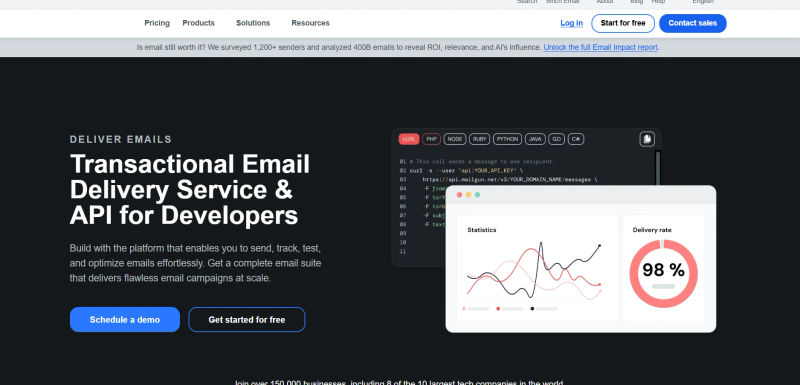
Mailgun is built explicitly for developers, offering unparalleled control over the email sending and receiving lifecycle. To help you choose between email APIs that support dedicated IPs, managed warmup, and automatic throttling, Mailgun stands out as a premier option. Their Scale plan includes automated IP warming protocols for managed warmup, which are critical for safely ramping up reputation on new dedicated IPs without triggering AI-based spam filters. Additionally, Mailgun's automatic throttling dynamically adjusts send rates based on ISP feedback to prevent bounces. Mailgun excels in logging and diagnostics, offering 30-day log retention for deep visibility into why specific emails are deferred. Their SAML SSO integration ensures enterprise security standards are strictly enforced across distributed engineering teams.
3. Postmark
Postmark takes a unique approach to technical isolation through its "Message Streams" architecture, strictly separating transactional emails from bulk broadcasts. This guarantees that marketing volume spikes never impact the delivery speed of critical transactional messages like password resets or two-factor authentication codes. Postmark is renowned for infrastructure reliability, backing its service with an industry-leading 10-second delivery SLA. For IT Directors prioritizing speed and reputational protection, a Postmark dedicated IP provides a highly controlled, single-tenant-like experience. For Postmark dedicated IP pricing 2026, the provider charges a flat $50 per month per dedicated IP address, which is added directly on top of your standard monthly volume subscription.

4. Amazon SES
Amazon Simple Email Service (SES) offers the most cost-effective cloud scaling for teams with the engineering resources to manage their own infrastructure. Rather than a flat monthly fee, SES charges a base rate for the dedicated IP plus a micro-transactional fee per thousand emails. A key enterprise feature in 2026 is their Bring Your Own IP (BYOIP) capability, allowing large-scale senders to migrate existing, highly-reputable IP addresses directly into the AWS ecosystem.
However, infrastructure managers must note that this involves significant DNS and networking complexities. The BYOIP process requires substantial technical overhead, including configuring Border Gateway Protocol (BGP) routing, establishing Route Origin Authorizations (ROA) via RPKI to validate IP ownership, and managing complex DNS delegations. While SES requires significant technical bandwidth to configure MTA-STS and bounce handling, its deep integration with AWS IAM makes it highly secure.
Best Providers for High-Volume Deliverability and Analytics
When you compare email providers with dedicated IPs and deliverability support, visibility and proactive intervention are just as critical as the underlying infrastructure. For global organizations—especially those seeking an "email platform mit dedicated IP und Reputationsmanagement für Enterprise" to handle European compliance alongside global inbox placement—these providers excel in offering deep analytics, real-time monitoring, and expert deliverability consulting.
5. Bird
Bird’s dedicated IP service combines affordable entry pricing with enterprise‑grade analytics and automation. Native SDKs in Node.js, Python, PHP, Ruby, Java, and .NET make integration seamless for developers. Its infrastructure supports tens of thousands of monthly emails, backed by TLS encryption, suppression management, and API key rotation for security. Real‑time dashboards provide deliverability insights, bounce tracking, and campaign performance metrics, helping enterprises maintain compliance and a pristine sender reputation while scaling reliably.

6. SocketLabs
SocketLabs is engineered for complex email infrastructure, utilizing their proprietary Hurricane MTA to deliver massive volumes with minimal latency. Their standout feature is the StreamScore analytics dashboard, which provides a real-time, aggregate grade of your sender reputation, factoring in complaints, bounces, and spam trap hits. For enterprises transitioning from on-premise servers to cloud infrastructure, SocketLabs offers highly customizable MTA configurations, advanced routing rules, and dedicated deliverability support teams, allowing IT directors to dictate exactly how traffic flows across their dedicated IP pools to protect their sender score.
7. SMTP.com
With over two decades of established ISP relationships, SMTP.com is a powerhouse for high-volume reliability. Their Enterprise plan includes the Reputation Defender add-on, an automated tool that proactively suppresses invalid email addresses and serial complainers before they can damage your dedicated IP's reputation. This significantly reduces the administrative overhead of manual list hygiene. SMTP.com's 24/7 Network Operations Center (NOC) monitoring ensures that any deliverability issues caused by noisy networks or temporary ISP blocks are addressed immediately, ensuring consistent throughput and expert reputation management.
8. SMTP2GO
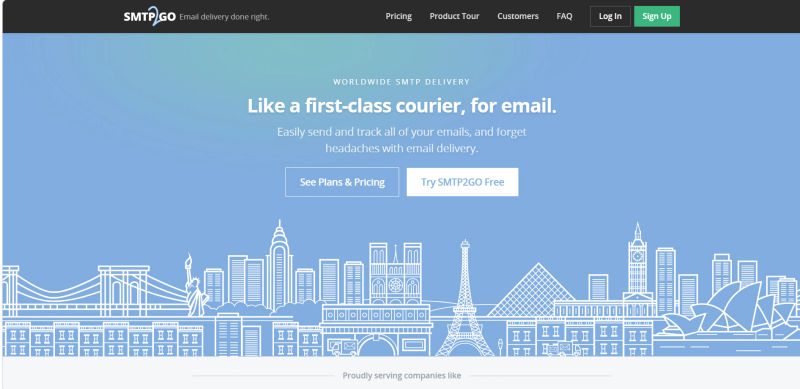
SMTP2GO offers an incredibly resilient global edge network, routing emails through servers closest to the recipient to drastically reduce latency benchmarks across different global regions. Their Premier plans include dedicated IPs backed by intensive real-time blacklist monitoring and hands-on deliverability support. If your dedicated IP is flagged by a major blocklist, SMTP2GO's infrastructure alerts your team instantly, providing actionable steps for mitigation. Their sub-account architecture also makes it easy to isolate different departments or regional offices, ensuring that a localized deliverability issue does not cascade across the entire enterprise.
Integrating with Enterprise Security Stacks
For enterprise security operations, managing high-volume email infrastructure requires more than just internal vendor dashboards. Leading providers in this category offer robust integration capabilities with external Security Information and Event Management (SIEM) and Security Orchestration, Automation, and Response (SOAR) tools. By pushing real-time SMTP logs, bounce classifications, and deferral data directly into centralized monitoring platforms like Splunk or Datadog, infrastructure teams can correlate email delivery anomalies with broader network security events, ensuring total visibility across the tech stack.
Ready for full control of your reputation? Compare top-tier IP providers on AuthenCIO today.
Leading Solutions for Scalability and Global Reach
For enterprises experiencing rapid growth or seasonal demand spikes, these providers offer flexible resource allocation, global compliance, and AI-ready infrastructure. When evaluating which vendors offer enterprise grade deliverability and compliance features, IT leaders prioritize platforms that combine robust DMARC support with dedicated account management.
9. Elastic Email
Elastic Email provides a highly flexible resource allocation model, making it an excellent choice for enterprises that experience massive seasonal volume spikes (such as retail during Q4). Their Pro plan includes a dedicated IP, strict DMARC support, and unlimited sub-accounts, allowing IT teams to spin up isolated sending environments for temporary campaigns or new product launches without risking the primary domain's reputation. Elastic Email also offers robust webhook integrations and delivery tracking, ensuring that infrastructure teams maintain clear visibility into delivery metrics and compliance standards even as volume scales exponentially.

10. MailerSend
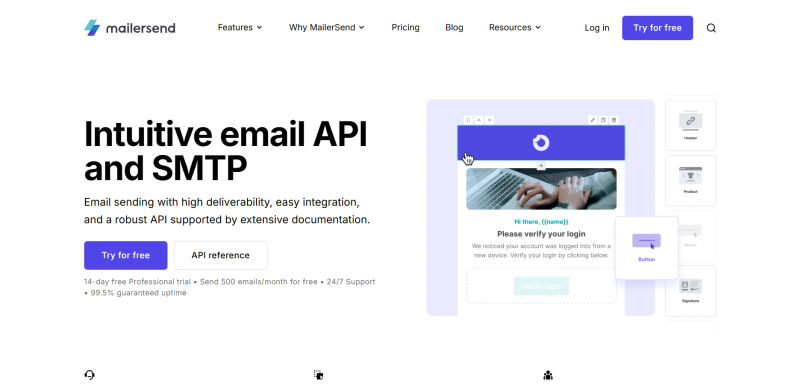
MailerSend bridges the gap between complex infrastructure and intuitive enterprise workflows. While it offers the dedicated IPs, inbound routing, and comprehensive audit logs required by IT directors, it also provides a drag-and-drop builder and SMS integration that marketing teams appreciate. This dual focus makes it easier to integrate the email service with enterprise CRM and ERP systems without requiring constant developer intervention. Their strict adherence to ISO 27001 and SOC2 Type II certifications, alongside built-in DMARC reporting, ensures that global data privacy and enterprise-grade compliance features are strictly met.
11. Netcore Cloud
As mailbox providers lean heavily into AI to filter incoming mail, Netcore Cloud has built its infrastructure to anticipate these algorithms. Their Enterprise plan utilizes AI-driven send-time optimization and predictive churn analysis to ensure emails are delivered exactly when a user is most likely to engage. Because modern spam filters heavily weigh user engagement (opens, replies, scroll depth), Netcore's ability to maximize these metrics directly protects the reputation of your dedicated IP and ensures enterprise grade deliverability. They also provide a dedicated deliverability expert to assist with complex IP warming cycles and compliance audits.

12. Inboxroad
Inboxroad specializes in highly personalized deliverability management, standing out as an enterprise dmarc vendor with white-glove service. Recognizing that automated IP warming protocols aren't always sufficient for massive enterprise migrations, Inboxroad provides custom warming schedules tailored to your specific list quality and industry vertical. Their Pro plan includes direct ISP feedback loops, DMARC alignment monitoring, and a dedicated account manager who acts as an extension of your IT team. For enterprises that have previously struggled with persistent deliverability issues or lack the internal bandwidth to manage manual warming cycles, Inboxroad offers a highly consultative, white-glove infrastructure solution.

How to Choose Your Next Infrastructure Partner
Selecting the right dedicated IP email services in 2026 requires moving beyond superficial marketing copy and evaluating providers based on technical depth, infrastructure specifics, and Total Cost of Ownership (TCO). Enterprise IT Directors should utilize a structured decision-tree framework to evaluate their needs.
1. Assess Architecture and Volume Requirements
First, evaluate your enterprise email infrastructure to determine if your volume justifies a single-tenant architecture or if a multi-tenant environment with dedicated IP pools is sufficient. If you send over 10 million emails monthly, you need a provider that supports sub-account segmentation to isolate transactional traffic from marketing traffic. This isolation prevents a poorly performing marketing campaign from delaying critical system alerts or password resets.
2. Determine the Need for a Dedicated Email Gateway
Assess whether your compliance and security requirements necessitate a dedicated email gateway. Unlike standard SMTP relays, a dedicated email gateway acts as an isolated, highly secure checkpoint for all outbound traffic. It provides advanced Data Loss Prevention (DLP), policy-based routing, and deep content inspection before messages hit your dedicated IPs, ensuring sensitive enterprise data never leaks and regulatory compliance is strictly enforced.
3. Conduct a Total Cost of Ownership (TCO) Analysis
Do not evaluate providers solely on their base monthly fee. A true enterprise TCO analysis must account for:
Hidden Overage Fees: What is the exact cost per thousand emails once you exceed your plan's limit?
Dedicated Support Costs: Do SLAs, 24/7 phone support, or dedicated technical account managers require an additional premium?
Add-on Features: Are tools like predictive analytics, advanced log retention, and dedicated IP warming automated, or do they incur extra charges?
4. Evaluate Contractual Flexibility and Auto-Scaling
Enterprises require agility and strongly prefer to avoid being locked into rigid volume tiers when business needs fluctuate. Assess whether the provider allows for seamless auto-scaling or "bursting" capabilities during seasonal peaks without imposing punitive overage penalties or requiring manual contract renegotiations. Contractual flexibility is a major differentiator among top-tier providers.
5. Formulate Specific RFP Questions
When issuing Requests for Proposals (RFPs) to these vendors, demand specific, documented answers regarding their 2026 capabilities:
"How does your infrastructure specifically adapt to the AI-driven spam filtering algorithms deployed by Gmail and Yahoo this year?"
"Can you provide latency benchmarks showing delivery speeds across North America, EMEA, and APAC regions?"
"What is your exact protocol and timeline for mitigating a massive blacklisting event on a dedicated IP?"
"Do you fully support and assist with the implementation of BIMI and VMC (Verified Mark Certificates) for brand protection?"
6. Execute a Zero-Downtime Migration Checklist
Transitioning from shared to dedicated infrastructure requires meticulous planning. Ensure your chosen partner supports a seamless migration checklist:
Phase 1: Authenticate the new sending domain (SPF, DKIM, DMARC) and ensure IPv6 readiness.
Phase 2: Establish ISP feedback loops and configure custom bounce domains.
Phase 3: Initiate a strict, automated IP warming protocol, starting with your most highly engaged recipients.
Phase 4: Gradually shift volume from the legacy shared IPs to the new dedicated IPs over a 30-to-45-day period, monitoring deferral rates daily.
Try AuthenCIO
Move to faster, smarter software evaluation with AI
Take Control of Your Sender Reputation
In 2026, relying on shared IP infrastructure is a vulnerability that large-scale enterprise senders can no longer afford. The transition to dedicated IP pools is a mandatory step for achieving technical isolation, ensuring compliance with strict mailbox provider regulations, and maintaining absolute control over your sender reputation. By carefully evaluating API throughput limits, global edge network coverage, and automated IP warming capabilities, infrastructure managers can select a partner that not only delivers mail but actively protects the brand's digital footprint.
The 12 providers reviewed in this guide represent the pinnacle of enterprise email infrastructure. However, the right choice depends entirely on your specific volume, developer resources, and global reach requirements. Take the time to conduct a thorough TCO analysis, demand transparency regarding deliverability metrics, and prioritize platforms that integrate seamlessly with your existing security stack.