
Introduction: The Cost of Creative Friction in 2027
In 2026, video is no longer just a supporting format within a broader content strategy; it is the primary language of corporate communication, digital marketing, and product education. From bite-sized social media clips to comprehensive interactive webinars, organizations rely on video to capture attention in an increasingly noisy digital landscape. However, as AI-assisted editing and generative tools have dramatically increased the volume of content teams are expected to produce, the operational processes behind the scenes have struggled to keep pace. Implementing proven video collaboration best practices is essential for survival, yet the process of creating video content remains a significant bottleneck for many organizations.
Streamline your software evaluation process
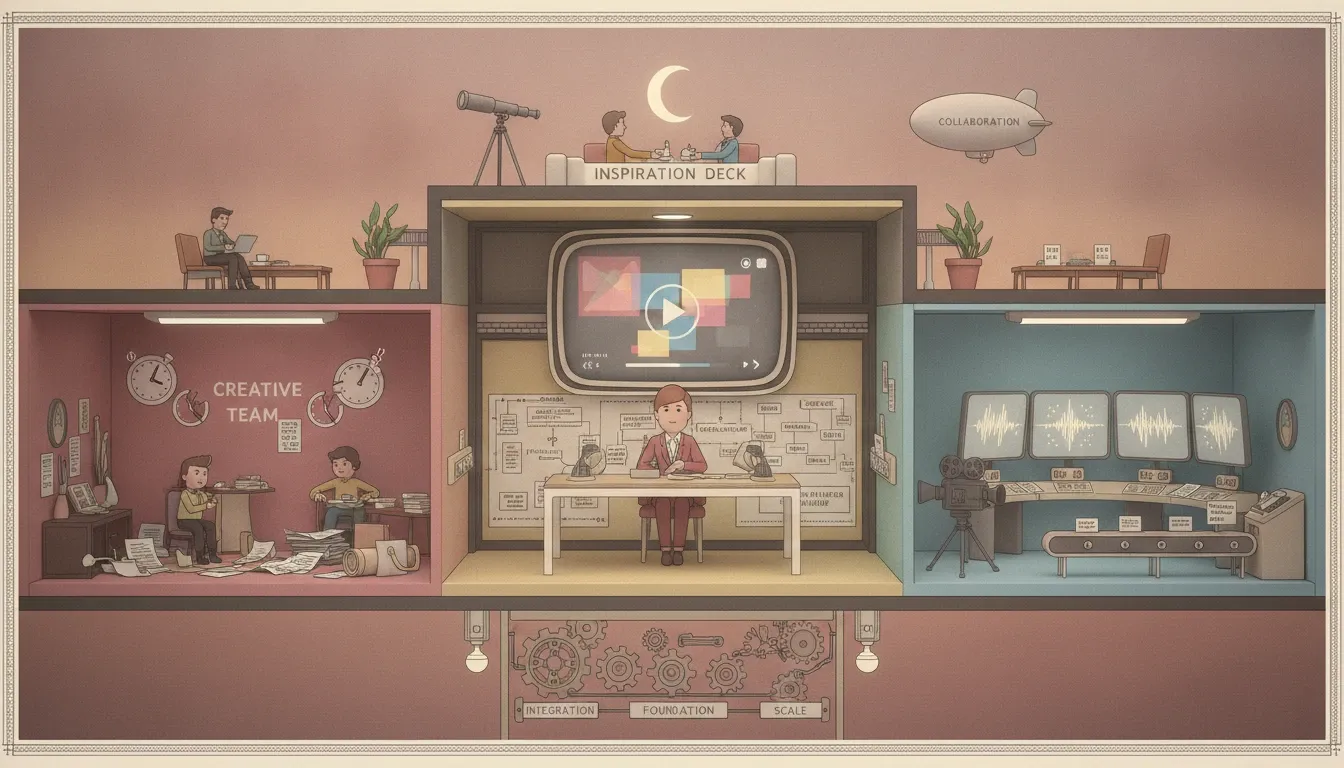
This inefficiency rarely lies in a lack of creative talent or marketing vision. Instead, it stems from a profound "creative divide" between the marketing operations managers who orchestrate campaigns and the video producers who bring them to life. As we navigate established hybrid work models where mixed-presence teams are the standard, cross-functional collaboration is more crucial than ever. Recent industry data shows that 93% of executives view cross-functional alignment as a top priority. However, only 28% of surveyed employees strongly agree that their cross-functional collaboration is actually effective.
For marketing operations managers, the primary goals are speed, scale, and measurable ROI. For video producers, the goals are quality, narrative flow, and brand integrity. When these two worlds collide without a structured workflow, the result is delayed launches, burned-out teams, and compromised content. Bridging this divide requires actionable best practices and a fundamental rethinking of how we manage feedback, deploy technology, and respect the distinct languages spoken by creative and non-creative professionals. This guide provides a step-by-step approach to standardizing your tech stack, establishing asynchronous feedback loops, and scaling content creation without friction.
Key Takeaways
Organizations in 2027 can eliminate video collaboration friction by standardizing workflows and adopting a shared feedback language between creative and non-creative teams.
Unify the Tech Stack: Bridge the divide by pairing heavy-lifting tools like Adobe Premiere Pro for editors with accessible platforms like Descript and Loom for cross-functional partners.
Adopt Asynchronous Reviews: Replace bottlenecked live meetings with frame-accurate asynchronous feedback using Frame.io, ensuring global teams stay aligned without scheduling conflicts.
Standardize Feedback: Implement a strict feedback taxonomy and a 5-point reviewer checklist so non-creatives provide actionable, precise notes rather than vague opinions.
Scale with Modularity: Intentionally choose between live, asynchronous, or hybrid video modalities based on project scope, and use Wistia for seamless marketing handoffs and analytics.
Software Covered in this Article
The following articles break down the key aspects of Video and Design Software, featuring a carefully curated set of key players:








Why Cross-Functional Video Workflows Break Down
The breakdown of a cross-functional video workflow is rarely intentional. It typically occurs because teams lack a shared vocabulary and a unified system of record. Without implementing clear design and marketing alignment strategies early in the creative process, friction is inevitable. Unlike static design assets—such as a PDF or a social media graphic—which can be reviewed at a glance, video is a temporal and multi-sensory medium. It involves pacing, audio mixing, color grading, motion graphics, and narrative structure. When non-creative stakeholders attempt to review these complex elements using tools built for text or static images, the process immediately fractures.
One of the most common catalysts for this breakdown is the "vague feedback" trap. Because non-creatives often lack the technical vocabulary to describe what they want to change, they resort to subjective, unhelpful directives. Phrases like "make it pop," "change the vibe," or "it feels a bit slow" are notoriously frustrating for video producers. These comments do not provide actionable direction; instead, they force the editor to guess the stakeholder's intent, leading to multiple rounds of revisions and a significant waste of resources.
Compounding this issue is the severe cost of context switching. Video editing is deep, focused work. When a video producer deep in a complex timeline must pause, open their email, decipher a vague stakeholder message, and try to manually map that feedback to a specific timecode, they lose 30 to 45 minutes of cognitive focus per interruption. This continuous cycle of guesswork and context switching not only inflates production costs but also severely damages team morale and psychological safety.
Finally, the reliance on synchronous meetings for video review exacerbates these issues. Gathering five different stakeholders on a live video call to watch a rough cut often results in "design by committee." Live meetings encourage immediate, reactive opinions rather than thoughtful, strategic critique, ultimately stifling the video producer's creative vision and slowing down the entire operational pipeline.
Establishing a Seamless Asynchronous Feedback Loop
To eliminate the friction of cross-functional video reviews, top-performing teams have abandoned the synchronous review meeting in favor of a seamless asynchronous feedback loop. Asynchronous communication is the gold standard for deep, focused creative collaboration. By decoupling the review process from real-time meetings, teams give stakeholders the time to provide thoughtful, context-rich feedback while allowing video producers to process that feedback without the pressure of an audience.
To establish this workflow and transition "meeting-heavy" stakeholders, take the following actionable steps:
Implement a pilot program: Start with a small, cross-functional team to test the asynchronous review process before rolling it out company-wide.
Enforce a "pre-watch" rule: Require stakeholders to review the video and leave asynchronous comments before scheduling any live meetings.
Reserve live meetings for conflict resolution: Only use synchronous time to resolve conflicting feedback or brainstorm complex creative pivots, rather than gathering initial reactions.
Set clear feedback deadlines: Define exact timeframes for stakeholders to complete their asynchronous reviews to keep production on schedule.
1. Precision Feedback with Frame.io
Establishing this loop requires purpose-built technology that anchors feedback directly to the video timeline. Industry leaders utilize platforms such as Frame.io for this exact purpose. By allowing marketing operations managers and other non-creative stakeholders to leave frame-accurate, timestamped comments directly on the video file, Frame.io eliminates the ambiguity of traditional feedback. Instead of an email saying, "Around the middle, the text is hard to read," a stakeholder can click directly on the frame at 01:24:15, highlight the specific text box, and leave a precise comment. This level of granularity transforms subjective opinions into objective, actionable tasks.
2. Contextual Clarity via Loom
However, written feedback, even when timestamped, can sometimes lack the necessary nuance or tone. This is where tools in the category of Loom step in to bridge the communication gap. When a piece of feedback is too complex to type out, or when a marketing manager needs to explain the strategic reasoning behind a requested change without sounding overly critical, they can record a quick Loom video. By sharing their screen and walking through the Frame.io timeline while explaining their thought process verbally, the stakeholder provides rich, empathetic context. This combination creates an asynchronous loop that is faster, kinder, and infinitely more effective.

Standardizing the Tech Stack: Tools that Speak Both Languages
A primary driver of cross-functional friction is tool sprawl. Going into 2027, enterprise teams average 14 different applications for video production and distribution, leading to a 62% increase in misaligned deliverables when systems lack native integration. When video producers operate exclusively in complex editing suites and marketing managers rely on separate dashboards, the disconnect creates a massive operational blind spot. Standardizing the tech stack requires adopting platforms that cater to both the technical demands of creatives and the accessibility requirements of marketers.
Best practices for standardizing your video tech stack include:
Prioritizing Native Integrations: Select tools with robust APIs that connect video editing software directly to project management platforms.
Implementing a Centralized DAM: A robust Digital Asset Management (DAM) system acts as a single source of truth. It ensures approved assets are securely stored and easily searchable, eliminating the chaos of "Final_Final_V2" files.
Establishing Role-Based Access: Standardize permissions so non-creatives can view, comment, and distribute assets without altering source files.
1. Adobe Premiere Pro for Heavy Lifting
The foundation of any professional video workflow remains Adobe Premiere Pro. For video producers, this is the non-negotiable heavy lifter required for complex color grading, multi-cam editing, and advanced audio mixing. However, forcing non-creatives to open a Premiere project file to review a timeline is a recipe for disaster. The interface is intimidating, and the risk of accidentally altering the project or breaking file linkages is incredibly high.
2. Descript for Non-Creative Empowerment
To bridge this gap, modern teams integrate Descript into their workflows. Descript has revolutionized how non-creatives interact with video by turning the editing process into a text-based experience. A marketing operations manager can drop a rough cut into Descript, read the automatically generated transcript, and edit the video simply by deleting text. If an executive rambled during an interview, the marketing manager can easily highlight the text, delete it, and the video is instantly cut. This empowers non-creatives to handle basic structural edits, create social media snippets, or remove filler words without ever having to bother the lead video producer or learn a traditional timeline editor.
3. Wistia for Marketing Analytics and Handoff
Once the video is finalized, the handoff to marketing must be equally seamless. This is where Wistia serves as the ultimate bridge. Wistia is not just a hosting platform; it is a collaborative hub tailored for marketing teams. Video producers can push final assets directly to Wistia, where marketing ops can seamlessly manage embedding, A/B testing, and lead generation integrations.
Wistia's intuitive interface allows non-creatives to gather deep viewer analytics, proving the ROI of the video without needing the creative team to pull data reports.
Find Perfect Software For Your Business
Live, Asynchronous, and Hybrid Video: Choosing the Modality
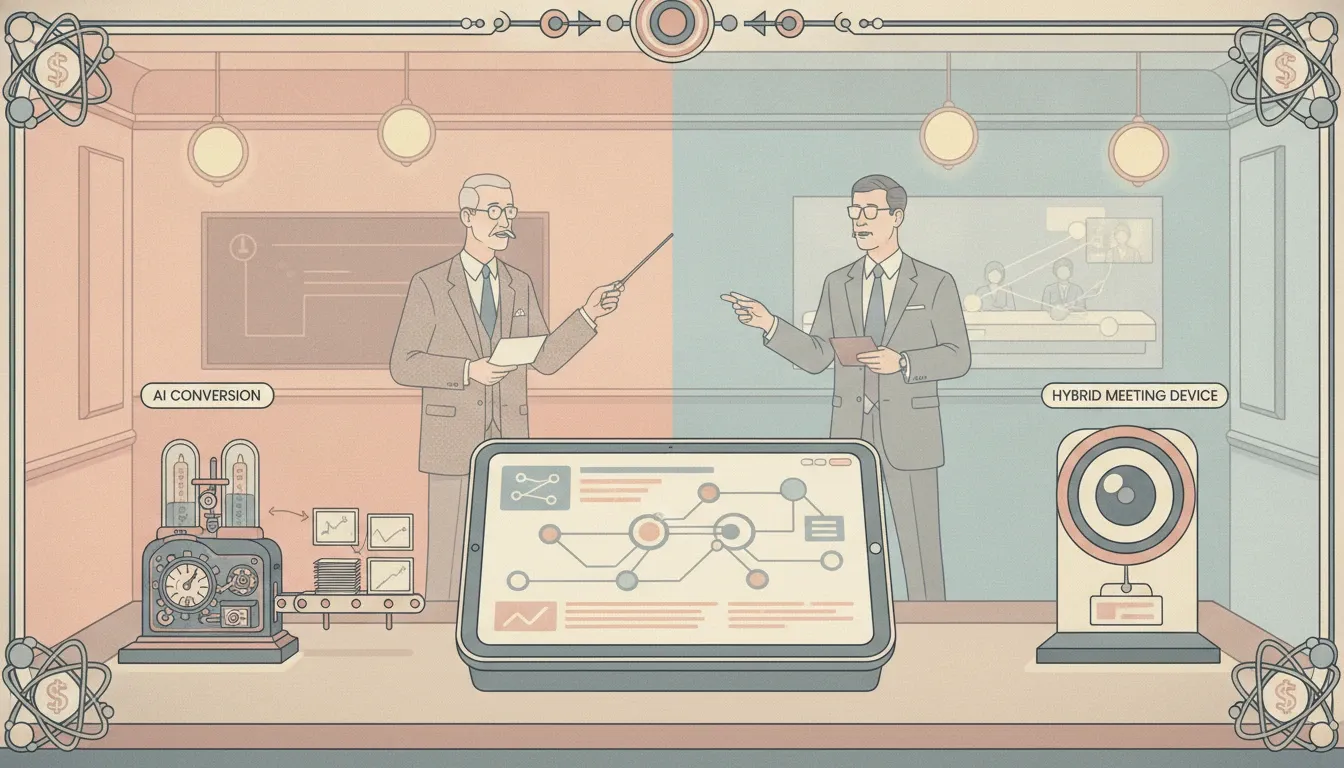
While asynchronous workflows are the backbone of efficient video production, specific scenarios require live, synchronous video or hybrid models (where live events are immediately repurposed for async distribution). To choose the right modality, assess your primary goal: use live video for real-time audience interaction and urgency, asynchronous video for polished, evergreen content requiring precise review, and hybrid approaches to maximize the lifespan of live events. Misallocating these modalities diminishes audience engagement and wastes production resources.
The table below outlines the primary differences and ideal use cases for live, asynchronous, and hybrid video collaboration and production.
Feature | Live Video Production | Asynchronous Video Production | Hybrid Video Production |
Primary Goal | Real-time engagement, community building, immediate interactivity. | Polished storytelling, evergreen education, precise messaging. | Live engagement paired with immediate evergreen scale. |
Stakeholder Involvement | High during the event; requires real-time moderation and technical support. | High during planning and review; low during actual execution. | High during planning; moderate during live execution. |
Room for Error | Low. Mistakes happen live and must be managed in real-time. | High. Mistakes are edited out before the final version is published. | Moderate. Live errors occur but can be edited out for the async replay. |
Ideal Use Cases | Product launches, interactive Q&As, live event coverage, town halls. | Case studies, onboarding tutorials, brand anthems, social ads. | Webinars, keynote speeches, podcast recordings with live audiences. |
Key Performance Metrics | Peak concurrent viewers, live chat engagement, real-time poll responses. | Total play rate, average engagement time, conversion rate over time. | Combined live attendance and 30-day async replay views. |
When live video is the right choice, the tech stack must shift to support real-time broadcasting without sacrificing professional quality. Restream is essential for marketing operations teams looking to maximize their reach. It allows producers to broadcast a single live feed simultaneously across multiple platforms—such as LinkedIn, YouTube, and custom landing pages—eliminating the need to choose one audience over another.
For teams producing live content on the go or outside of a traditional studio, Switcher Studio provides a powerful solution. It allows creative teams to link multiple iOS devices together to create a multi-camera live broadcast, complete with lower thirds and branding, all controlled from a single iPad. This bridges the gap between high-end production and agile marketing needs.
Finally, for internal live communications—such as a marketing ops manager presenting the quarterly video strategy to the executive team—Prezi offers a dynamic alternative to static slide decks. Prezi Video integrates the presenter directly alongside their graphics in real-time, keeping remote stakeholders engaged and focused during synchronous alignment meetings.
Scaling Content Creation with External Partners
As organizations grow, internal creative teams often reach capacity. The demand for video content frequently outpaces what a single in-house team can produce. To bridge this gap, marketing operations managers must scale content creation by seamlessly integrating external partners, freelancers, and specialized agencies into their established workflows. However, bringing external partners into the fold introduces new layers of complexity regarding brand guidelines, file security, and communication.
The key to scaling successfully is ensuring that external partners integrate flawlessly into your existing ecosystem. Best practices for managing external video production include:
Enforcing Tool Adoption: External agencies must be onboarded to your exact asynchronous review platforms. Allowing an external partner to revert to email feedback or un-tracked file sharing immediately reintroduces the friction you worked to eliminate.
Securing Intellectual Property: Operations managers must establish strict legal and security protocols for onboarding external agencies. Utilize Single Sign-On (SSO) restrictions, NDA gates, and role-based permissions to protect pre-launch assets.
Centralizing Brand Assets: Provide external teams with a single, updated repository for brand guidelines, motion graphics templates, and approved b-roll to prevent off-brand deliverables.
Platforms like soona have become invaluable for marketing operations teams needing to scale high-quality content rapidly. soona operates as a fast-casual content creation platform, allowing brands to ship their products to a studio and join a virtual, real-time video shoot. This model perfectly bridges the gap between creative execution and marketing oversight. A marketing manager can sit at their desk, watch the video being shot live via the platform, and provide immediate, collaborative direction to the external crew. This approach ensures that brand guidelines are met without bottlenecking the internal video producers.
Best Practices for Non-Creatives Giving Video Feedback
Technology can only facilitate collaboration; it cannot fix poor communication habits. The most sophisticated tech stack in the world will fail if non-creative stakeholders do not know how to provide constructive, actionable feedback. Establishing a culture of seamless collaboration requires marketing operations managers to implement and enforce strict Standard Operating Procedures (SOPs) alongside standardized feedback frameworks.
The Feedback Taxonomy
A Feedback Taxonomy categorizes critiques to help non-creatives separate their subjective feelings from objective business requirements. When reviewing a video, stakeholders should be trained to categorize their feedback into one of three distinct buckets:
Objective/Technical Errors: These are undeniable mistakes that must be fixed. Examples include misspelled graphics, audio clipping, incorrect brand colors, or a missing call-to-action. This feedback is non-negotiable and easy for the editor to execute.
Strategic/Business Misalignments: This feedback addresses how the video serves the marketing goal. For example, "The product value proposition isn't mentioned until the two-minute mark, which is too late for our social audience." This feedback respects the editor's craft while enforcing the marketing operations strategy.
Subjective/Creative Preferences: This is where friction typically lives. Comments like "I don't like this music track" or "Can we make the transitions flashier?" fall into this bucket. Best practices dictate that subjective feedback should be framed as a question or a suggestion, yielding the final decision to the video producer's expertise. For example: "Does this music track feel a bit too energetic for the serious tone of the script?"
The 5-Point Reviewer Checklist
To operationalize this taxonomy, marketing operations managers should integrate a standardized "Reviewer Checklist" directly into their project management tools (such as Asana, Monday.com, or Jira). Stakeholders must complete this checklist before submitting their review:
Point 1: Timecode Precision: Have I anchored every piece of feedback to a specific timestamp or frame range?
Point 2: Taxonomy Alignment: Have I clearly labeled my feedback as Objective, Strategic, or Subjective?
Point 3: Actionable Language: Is my request clear enough that the editor knows exactly what to change without guessing?
Point 4: Strategic Focus: Does my feedback align with the original creative brief and the target audience's needs?
Point 5: Consolidated Submission: Have I reviewed the entire video and consolidated all my feedback into a single submission to prevent piecemeal revisions?
By requiring all stakeholders to adhere to these structured feedback guidelines, organizations create a psychologically safe environment where video producers feel respected as experts, and marketing managers feel confident that their strategic goals are being met.
Try AuthenCIO
Move to faster, smarter software evaluation with AI
Conclusion: Building a Culture of Collaborative Creation
Bridging the creative divide between marketing operations and video production requires an ongoing commitment to operational excellence. Organizations that win actively eliminate cross-functional friction. By replacing chaotic synchronous meetings with a structured, asynchronous feedback loop, teams reclaim lost productivity and safeguard the mental energy of their creative staff.
To build a truly collaborative culture, marketing operations managers should take immediate action on these core best practices:
Audit and standardize the tech stack: Eliminate redundancies and implement interoperable tools alongside a centralized Digital Asset Management (DAM) system.
Pilot asynchronous reviews: Test structured, asynchronous feedback on a mid-tier video project to reduce meeting fatigue and prove the workflow's value.
Enforce a feedback taxonomy: Train non-creatives to provide clear, objective, and actionable feedback that empowers video producers rather than stifling them.
Optimize communication modalities: Establish clear guidelines for when to use live, asynchronous, or hybrid communication based on project complexity.
Empower your creative and marketing teams to collaborate seamlessly. Explore top video and design software on AuthenCIO now.