
Introduction
Why do companies need a CRM? At its core, a CRM centralizes customer data, automates revenue workflows, and aligns marketing, sales, and support to drive measurable growth. In the high-stakes arena of enterprise software, selecting this platform is a foundational architectural decision that dictates your organization’s data velocity and long-term scalability. Building on the global CRM market projected to surpass $112 billion by 2025, current 2026 market intelligence shows the industry accelerating past $135 billion. Yet, the cost of error remains steep; CRM implementation failure rates hover dangerously between 30% and 60%, often resulting in expensive "shelfware" that drains budgets without delivering insight.
Streamline your software evaluation process
To avoid these failures, leaders must immediately compare their alternatives: the expansive, infinite potential of Horizontal CRM platforms versus the specialized, pre-configured precision of Vertical-Specific CRM solutions.
For executives conducting a CRM comparison for decision makers, this architectural dilemma is acute. Do you invest in a robust, agnostic ecosystem like Salesforce or Microsoft Dynamics, accepting the heavy lifting of customization in exchange for limitless extensibility? Or do you pivot toward a niche specialist like Thryv or Highlevel, which promises rapid time-to-value and industry-native workflows but potentially imposes a "feature ceiling"?
This article dissects the technical trade-offs, Total Cost of Ownership (TCO), and strategic implications of both architectures. We will move beyond marketing buzzwords to analyze data schemas, compliance frameworks, and integration capabilities, helping you avoid the costly trap of architectural misalignment.
Key Takeaways
Horizontal CRMs (The Generalists): Platforms like Salesforce or HubSpot provide unparalleled flexibility, vast app ecosystems, and deep integration capabilities. However, they require significant upfront investment in customization and development to fit niche workflows.
Vertical CRMs (The Specialists): Purpose-built for specific industries (e.g., healthcare, real estate), these platforms offer faster time-to-value, native regulatory compliance, and out-of-the-box workflow alignment. The trade-off is often a feature ceiling and fewer third-party integrations.
Total Cost of Ownership (TCO): Horizontal systems carry a steeper initial cost curve due to implementation and customization. Vertical systems offer predictable early costs but can become expensive if your business outgrows their rigid frameworks.
The "Industry Cloud" Middle Ground: Major horizontal vendors are increasingly releasing pre-configured, industry-specific versions of their software, offering a hybrid solution that balances specialist workflows with generalist scalability.
Software Covered in this Article
To help you understand CRM in the right context, this article refers to a carefully curated set of key players:


The Architectural Dilemma: Generalist vs. Specialist
Are vertical CRM solutions better than standard ones? The answer depends entirely on an organization's operational complexity and IT resources. Vertical CRMs are better for companies requiring out-of-the-box industry compliance and immediate workflow alignment, whereas standard (horizontal) CRMs are superior for enterprises with highly unique processes demanding deep customization.
At its core, this conflict is a battle between breadth and depth. Horizontal platforms are engineered as broad canvases, providing the underlying database architecture, security protocols, and API connectivity to build virtually any business process. However, they are fundamentally agnostic; they do not "know" the difference between a patient, a retail lead, or a supply chain partner until a developer defines those relationships via custom objects.
Conversely, vertical solutions are purpose-built. They come pre-loaded with the data schema, terminology, and regulatory compliance logic inherent to sectors like healthcare, legal, or real estate.
The architectural dilemma arises when stakeholders misjudge their process complexity. A common failure mode involves purchasing a horizontal giant for its brand reputation, only to realize replicating industry-standard workflows requires months of expensive consulting. Conversely, a vertical CRM becomes a liability if a company's use cases evolve beyond the vendor's rigid, specialized roadmap.
Data Residency and Security Nuances
Beyond the user interface, the "specialist" advantage often lies in the backend infrastructure regarding data residency and security. In highly regulated sectors like financial services or life sciences, generic cloud storage may not meet strict compliance standards (such as GDPR, HIPAA, or localized banking regulations) without extensive configuration.
Vertical solutions often host data in pre-certified environments designed specifically for that industry's audit trails. For example, a vertical CRM for banking will inherently understand Know Your Customer (KYC) document retention policies, whereas a horizontal platform requires you to build those retention rules manually.
Defining the Contenders: Taxonomy and Scope
To navigate this decision matrix effectively, we must first define the taxonomy of the contenders. The market is bifurcated by the philosophy of the data model, ranging from SMB-focused tools to massive enterprise infrastructure.
1. Horizontal CRM: The Generalist Approach
Horizontal CRMs are designed to serve every industry by providing a flexible foundation. Titans like Salesforce, Microsoft Dynamics, and SAP dominate this space. Their value proposition is universality. These platforms excel in environments where the sales process is complex, multi-faceted, or crosses several divergent business lines. For example, a conglomerate with divisions in both manufacturing and direct-to-consumer retail would likely require the agnostic architecture of SAP or Salesforce to unify disparate data streams under one roof.
The defining characteristic of horizontal platforms is API extensibility and the reliance on custom objects. You are not buying a finished house; you are buying the lumber, the blueprints, and the land. The flexibility is unparalleled, but it demands a sophisticated internal IT team or external partners to mold the software to your reality.
2. Vertical CRM: The Specialist Advantage
A vertical CRM is a customer relationship management system designed specifically for the unique workflows, compliance requirements, and terminology of a single industry. Unlike generalist platforms, a vertical CRM provides out-of-the-box functionality tailored to specific niches. At the SMB and Mid-Market level, examples include Thryv, which targets service businesses like contractors and plumbers, or Highlevel, which is purpose-built for digital marketing agencies. These platforms do not just offer empty data fields; they offer pre-built "snapshots" of success.
However, vertical CRM is not limited to small businesses. In the enterprise space, platforms like Veeva (built for Life Sciences and Pharma) or nCino (built for Banking on top of the Salesforce platform) demonstrate that vertical specificity can scale to Fortune 500 levels. The primary advantages of a vertical CRM include faster implementation times, reduced customization costs, and built-in adherence to industry regulations. These enterprise-grade vertical solutions solve complex regulatory problems—such as clinical trial management or commercial loan origination—that generic platforms simply cannot handle out of the box.
The Case for Horizontal CRM Solutions
The enduring dominance of horizontal platforms is not accidental. For enterprise-level organizations, the primary currency is scalability and ecosystem integration. Platforms like Zoho and Salesforce have cultivated massive third-party marketplaces that allow businesses to plug in virtually any auxiliary tool—from e-signature to advanced analytics—without writing core code.
1. Customization as a Competitive Moat
For organizations with proprietary workflows that constitute a competitive advantage, horizontal CRMs are often the only viable choice. If your sales process involves a unique algorithmic lead scoring model or a complex approval chain that defies industry norms, a rigid vertical solution will fail.
Horizontal platforms allow you to build these proprietary workflows into the fabric of the CRM. Microsoft Dynamics, for instance, leverages the Power Platform to allow low-code customization that integrates deeply with the Office 365 stack, providing a seamless experience for users already entrenched in that ecosystem.
2. Ecosystem and App Marketplaces: The Talent Advantage
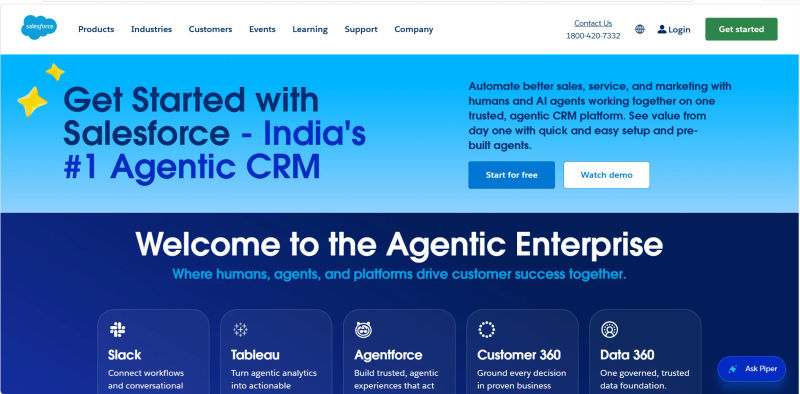
A frequently overlooked factor in TCO is the talent pool. Horizontal platforms like Salesforce and Microsoft Dynamics have created massive global ecosystems of certified administrators, developers, and architects. If your Salesforce Admin leaves, you can hire a replacement from a pool of thousands of certified professionals.
In contrast, finding an administrator who specializes in a niche vertical tool can be incredibly difficult. You may be forced to train someone from scratch, creating a single point of failure in your RevOps structure. The liquidity of the talent market for horizontal platforms provides a layer of operational security that niche verticals cannot match.
.webp?updatedAt=1783634317433&tr=w-800%2Cq-80%2Cf-auto%2Cc-at_max)
3. The Integration Advantage
Furthermore, horizontal giants like SAP are often non-negotiable for manufacturing or logistics firms where the CRM must talk natively to a complex ERP system. The data flow between inventory management, supply chain logistics, and customer service is often best handled by a unified horizontal stack that shares a common data language.
.webp?updatedAt=1783634317197&tr=w-800%2Cq-80%2Cf-auto%2Cc-at_max)
The Case for Vertical-Specific Solutions
Vertical solutions are surging in popularity because they attack the primary pain point of horizontal adoption: implementation fatigue. By restricting their focus to a single industry, vendors can solve 90% of the user's problems out of the box, drastically reducing the time between purchase and productivity.
1. Workflow Alignment and Terminology
In a vertical CRM, the User Interface (UI) reflects the mental model of the employee. In a healthcare-specific CRM, the system tracks "Patients" and "Referrals," not generic "Leads" and "Opportunities." In a legal CRM, it tracks "Matters" and "Billable Hours." This is not just cosmetic; it impacts User Adoption Rates. When a service technician logs into Thryv, they see a schedule and a payment request button—tools they need to do their job. They do not have to navigate through irrelevant tabs designed for enterprise B2B sales.
Highlevel provides a stark example of this advantage in the marketing space. An agency using a horizontal tool might spend weeks integrating a separate email sender, SMS platform, and landing page builder. Highlevel unifies these into a coherent "Agency Operating System," eliminating the "Frankenstein stack" problem where data is lost between loosely connected apps.
2. The Hybrid "Industry Cloud" Emergence
The line between horizontal and vertical categories is blurring as horizontal giants launch "Industry Clouds." Solutions like Salesforce Health Cloud and SAP Industry Cloud offer the robust architecture of a horizontal platform with the pre-configured data models of a vertical solution.
When evaluating the SaaS company SAP on industry and vertical CRM, its primary advantage is deep operational integration. SAP's industry-specific CRMs (e.g., SAP for Retail, SAP for Utilities) tightly couple front-office customer data with back-office ERP processes like supply chain and billing. This makes SAP's vertical approach highly effective for asset-heavy or complex manufacturing sectors.
For decision-makers, these hybrid options are more expensive than pure vertical SaaS like Thryv, but deliver enterprise-grade scalability. A large hospital network might choose Salesforce Health Cloud, while a global manufacturer might leverage SAP's industry cloud as a strategic compromise between a rigid niche tool and a heavily customized vanilla horizontal instance.
3. The Drawbacks: Feature Ceilings and Roadmap Dependency
The risk with vertical SaaS is the "Feature Ceiling." As your business grows, you may want to expand into a new product line or territory that the vertical vendor does not support. For example, a construction company using a specialized residential roofing CRM might struggle if they pivot to commercial solar installation, as the vertical tool lacks the fields for commercial tax credits or government contracts.
Unlike Salesforce, where you can simply build a new module, you are locked into a roadmap that moves slower than your ambition.
Find Perfect Software For Your Business
Comparative Analysis: TCO and ROI
Calculating the Total Cost of Ownership (TCO) requires looking beyond the monthly license fee. The pricing structures of these two models diverge significantly over a 3-to-5-year horizon.
1. The Horizontal Cost Curve
Horizontal platforms often appear affordable at the entry-level license tier. However, the TCO equation must include:
Implementation Costs: Often 3x to 5x the first year's licensing cost.
Maintenance: The salary of an internal administrator (e.g., a Salesforce Admin) or a retainer for an external agency.
Tech Stack Sprawl: The cost of third-party plugins needed to fill functionality gaps (e.g., buying a separate CPQ tool).
While the upfront cost is high, the ROI can be substantial for enterprises that leverage the platform to automate complex, high-volume processes that vertical tools cannot handle.
2. The Vertical Cost Curve
Vertical platforms like Thryv or Highlevel typically operate on a higher per-seat license fee or a tiered subscription model that bundles features. However, implementation costs are negligible. The TCO is predictable and "flat." The ROI is realized faster because the team starts using the tool effectively within days, not months.
3. Data Portability and Migration Risks
A critical, often hidden risk in vertical solutions is Data Portability. Horizontal platforms generally use standard SQL-based structures and offer robust tools for exporting data (Data Loaders, APIs). If you decide to leave Salesforce, you can get your data out relatively cleanly.
Vertical platforms, however, often use proprietary data structures to achieve their unique functionality. Migrating away from a niche vertical tool can be a technical nightmare if the vendor does not provide clean CSV exports or open API access. The cost of extracting data from a legacy vertical system can sometimes exceed the cost of the new software implementation itself. Decision-makers must audit the "Exit Strategy" before signing a contract with a vertical vendor.
Comparison of Key Metrics
Feature Category | Horizontal CRM (e.g., Salesforce, SAP, Zoho) | Vertical CRM(e.g., Thryv, Highlevel) |
Implementation Time | Months to Years | Days to Weeks |
Customization | Infinite (requires coding/dev) | Limited (configuration only) |
Initial Cost (CapEx) | High (Consultants + Licenses) | Low (Subscription only) |
Industry Logic | Blank Slate (Must be built) | Native / Out-of-the-Box |
Integration | Extensive Ecosystems & APIs | Focused / Curated Integrations |
Scalability | Enterprise / Global Scale | SMB to Mid-Market Focus |
Compliance | User Responsibility to Configure | Vendor Managed |
Talent Availability | High (Global certified pool) | Low (Requires training) |
Decision Matrix: When to Choose Which?
Making the final call requires an honest audit of your business complexity. Use this strategic framework to guide your selection.
1. Choose a Horizontal Platform (Salesforce, Microsoft Dynamics, SAP, Zoho) if:
You are an Enterprise: You have complex, multi-departmental workflows that span sales, service, marketing, and logistics.
You have a dedicated IT Team: You have the internal resources to manage, update, and secure a complex database.
Your Process is Unique: Your competitive advantage lies in a proprietary workflow that no off-the-shelf software can match.
You need Global ERP Integration: You are running SAP or Oracle for finance and need tight, bi-directional data synchronization.
2. Choose a Vertical Platform (Thryv, Highlevel, Veeva) if:
You are an SMB or Mid-Market Niche: You operate in a defined industry (Legal, Agency, HVAC, Real Estate) with standard operational procedures.
Speed is Critical: You need to be up and running in Q1, not next year.
You lack IT Resources: You need a vendor that acts as your CTO, pushing updates and new features that are immediately relevant to your business.
Compliance is a Burden: You want the vendor to handle the regulatory headaches of your specific sector.
3. Choose a Hybrid Strategy if:
You are a Diversified Conglomerate: You use SAP as the "Source of Truth" for finance and inventory but deploy Highlevel for your digital marketing agency division to ensure they have the speed they need without compromising the core ERP data.
You require Industry Cloud capabilities: You opt for Salesforce Health Cloud to get the security of Salesforce with the pre-built patient objects required for healthcare compliance.
Try AuthenCIO
Move to faster, smarter software evaluation with AI
Conclusion
The debate between Vertical-Specific and Horizontal CRM platforms is not about which software is "better" in a vacuum; it is about which architecture aligns with your business maturity and operational reality. Horizontal giants like Salesforce and Microsoft Dynamics offer the power to build empires, provided you have the resources to construct them. Vertical innovators like Thryv and Highlevel offer the agility to dominate niches, provided you are willing to work within their guardrails.
As Artificial Intelligence (AI) continues to permeate the stack, we are seeing a convergence. According to recent trends, the future is moving toward hyper-personalization. Horizontal platforms are using AI to generate industry-specific templates, while vertical platforms are opening their APIs to allow for broader integration.
However, the fundamental truth remains: the most expensive CRM is the one that nobody uses. Prioritize user adoption, respect your internal workflow complexity, and choose the tool that minimizes friction for your revenue-generating teams. Whether you choose the infinite canvas of the horizontal or the focused lens of the vertical, ensure your decision is driven by your business process, not just the software's feature list.