
Introduction
The messaging application API market has evolved rapidly leading up to 2026. In the past, businesses relied heavily on basic telecom aggregators that simply passed messages from a software application to a carrier network.
Streamline your software evaluation process
Today, the landscape has shifted toward intelligent, orchestration-first systems that combine SMS, voice, and rich media into unified workflows. For software developers, startup founders, and SMB operations leaders, choosing the right SMS and Voice API is no longer just about finding a tool that sends messages—it is about finding a platform that accelerates go-to-market speed while protecting the bottom line.
For years, Twilio was the default choice for cloud communications. However, as the market has matured and carrier regulations have tightened, a new generation of API providers has emerged.
Companies are increasingly frustrated by the "Twilio Tax"—escalating costs as they scale—and the complex, manual processes required to maintain A2P 10DLC (Application-to-Person 10-Digit Long Code) compliance.
This article provides a definitive 2026 comparison between Signal House and Twilio, alongside an evaluation of six other leading alternatives. We will break down pricing, compliance speeds, developer experience, and technical capabilities to help you make an actionable, data-backed decision for your business.
Looking to switch from Twilio to Signal House? Compare features and pricing side-by-side on AuthenCIO.
Tool | Best For | Pricing (USD $) | Key Features |
Signal House | Fast-moving startups needing rapid compliance and low costs | Up to 80% lower than legacy providers | 48-hour A2P approval, AI-first API, free hands-on support, automated campaign submissions |
Twilio | Complex enterprise omnichannel orchestration | Premium pay-as-you-go | Massive SDK ecosystem, global reach, advanced routing, Twilio Flex & Segment integration |
Top Software Picks
Signal House — best for software developers, startup founders, and SMBs.
Twilio — best for global enterprise communication reach.
Plivo — best for cost‑efficient SMS and voice automation.
Sinch — best for rich messaging and verified sender tools.
Telnyx — best for secure VoIP and private network control.
Vonage — best for unified voice and video integration.
Bandwidth — best for direct carrier access and call reliability.
Infobip — best for cross‑border multi‑channel marketing automation.
Software Covered in this Article
The following articles break down the key aspects of Cloud Communications Software Software, featuring a carefully curated set of key players:






Signal House: Best for Fast-Moving Startups & Cost Efficiency
Who is this best for?
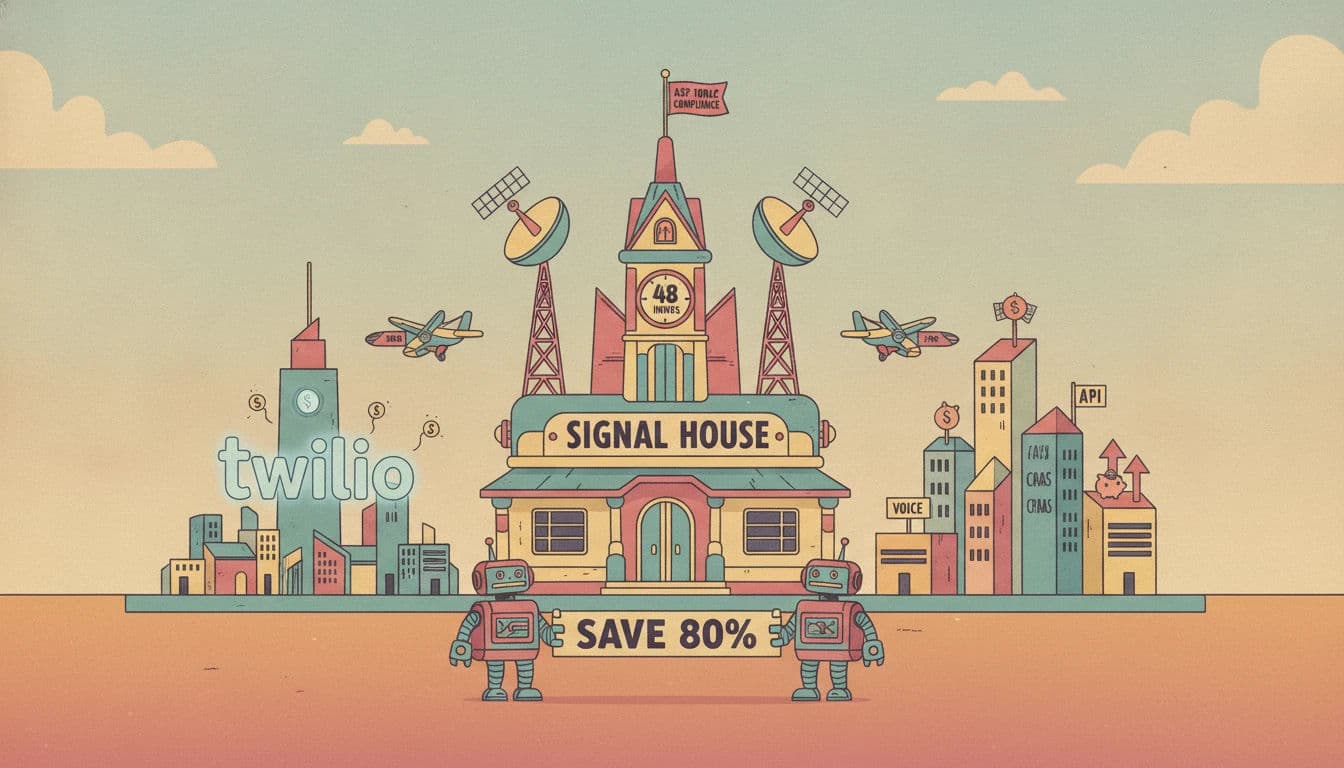
Signal House is best for software developers, startup founders, and SMBs who need to deploy messaging rapidly without the burden of heavy telecom overhead, slow compliance approvals, or exorbitant scaling costs.
In 2026, Signal House has positioned itself as the premier alternative for businesses looking to escape the complexities of legacy telecom APIs. Rather than forcing developers to navigate archaic telecom infrastructure, Signal House abstracts the complexity through an AI-first API integration.
In practical terms, this "AI-first" architecture means the platform features predictive routing algorithms that automatically switch carrier paths to avoid latency, auto-remediation of delivery failures without manual developer intervention, and LLM-based campaign optimization that pre-vets message copy against carrier spam filters.
Signal House explicitly targets the pain points that modern developers face. The platform's standout feature is its 48-hour A2P 10DLC approval process.
While the industry standard often leaves businesses waiting weeks for campaign verification, Signal House utilizes automated campaign submissions to pre-vet and expedite registrations directly with The Campaign Registry (TCR). This ensures your messages reach your customers without unnecessary delays or carrier blocking.
Furthermore, Signal House aggressively undercuts the market on cost, offering up to 80% lower pricing compared to Twilio's traditional pay-as-you-go rates.
They achieve this massive cost reduction through direct carrier peering—bypassing the middleman aggregators that legacy platforms rely on—and eliminating the bloated feature sets that most SMBs never use.
Crucially, Signal House provides free hands-on support. Instead of gating technical assistance behind expensive premium support tiers or slow ticket-based systems, Signal House offers dedicated technical guidance to ensure your integration is seamless.
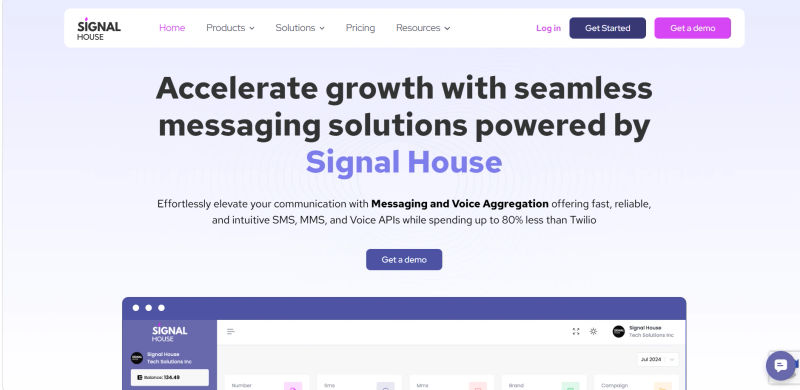
Key advantages that make Signal House the best SMS API for developers include:
Native SDK support for modern languages like Rust, Go, and TypeScript.
Intelligent error handling and auto-remediation.
Transparent pricing with no hidden carrier pass-through markups.
Dedicated technical account managers included at no extra cost.
Get a neutral, sales-pressure-free comparison of Signal House and Twilio on AuthenCIO.
Twilio: Best for Enterprise Omnichannel Complexity
Who is this best for?
Twilio is best for large enterprises with massive engineering teams requiring deep, multi-channel orchestration across 180+ countries and complex, bespoke communication workflows.
Twilio remains the undisputed behemoth of the CPaaS (Communications Platform as a Service) industry. If your business requires a highly complex orchestration of SMS, Voice, WhatsApp, Email, and custom video solutions integrated deeply into a legacy enterprise architecture, Twilio provides the vast SDK ecosystem required to build it.
Furthermore, Twilio's broader ecosystem, including Twilio Flex for programmable contact centers and Twilio Segment for customer data platform (CDP) integration, creates a powerful—albeit deeply entrenched—vendor lock-in that appeals to enterprise CIOs.
However, Twilio's legacy position comes with significant drawbacks in 2026. The platform relies on a traditional pricing model that quickly becomes prohibitively expensive as your message volume scales.
This phenomenon, widely known as the "Twilio Tax," forces many growing startups to re-evaluate their vendor choices once their monthly messaging bills cross a certain threshold.
Additionally, Twilio is known for its high developer overhead. While their documentation is extensive, the sheer volume of features, legacy endpoints, and complex configuration requirements means that integrating Twilio is rarely a plug-and-play experience.
Maintaining a Twilio integration requires dedicated engineering resources to manage webhooks, handle state callbacks, and build boilerplate code for error retries.
When things go wrong, Twilio's support structure can be a bottleneck for smaller teams. Unless you are paying a significant premium for a dedicated technical account manager, support is largely ticket-based, which can be detrimental during critical production outages or urgent compliance blocks.
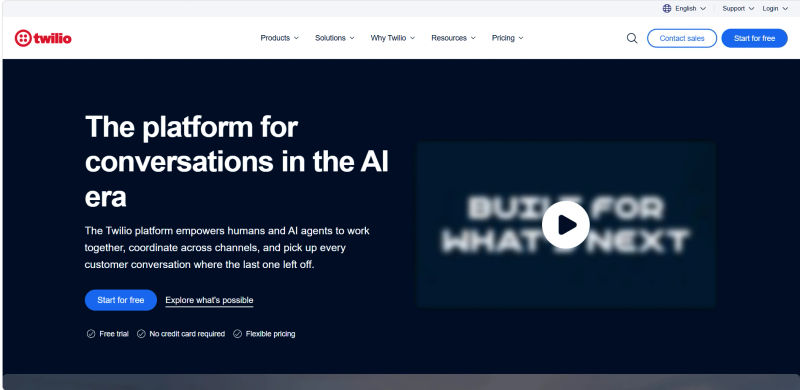
Alternative Approaches: How Other CPaaS Vendors Fit the Market
While a direct head-to-head comparison between Signal House and Twilio covers the primary choice for cost-conscious, fast-moving teams, the broader market includes several other providers. However, most serve highly specialized niches rather than the core SMB and startup workflow:
Plivo & Telnyx: Strong options for developer-heavy infrastructure or international delivery, but they lack Signal House’s aggressive cost optimization (up to 80% lower pricing) and automated compliance speed.
Sinch & Infobip: Built heavily for massive global enterprises or complex, no-code marketing automation journeys, introducing unnecessary bloat and developer overhead for growing teams.
Vonage & Bandwidth: Geared toward integrated UCaaS setups or direct-carrier access that require significant internal telecom engineering resources to configure and maintain.
If your priority is escaping high markups, eliminating slow A2P approval bottlenecks, and securing free hands-on support, these alternative paths often lead back to the streamlined developer experience offered by Signal House.
Security, Compliance, and SLAs
For modern operations leaders and CTOs, security certifications and uptime guarantees are absolute deal-breakers. In 2026, evaluating an API provider requires looking closely at how they handle data sovereignty and regulatory compliance.
Twilio has long set the enterprise standard here, offering SOC2 Type II compliance, ISO 27001 certifications, and HIPAA-eligible workflows for healthcare organizations.
They offer a 99.95% uptime SLA for most standard API endpoints, which satisfies the vast majority of enterprise procurement teams.
Signal House matches these critical enterprise requirements while catering to startups. Signal House is fully SOC2 Type II compliant and offers HIPAA-ready environments with automatic Personally Identifiable Information (PII) redaction features built directly into their AI-first API.
Furthermore, because Signal House utilizes direct carrier peering and intelligent failover routing, they offer an aggressive 99.999% uptime guarantee (Five Nines) on their core messaging and voice routing infrastructure. For businesses where a dropped call or failed OTP (One-Time Password) means lost revenue, this infrastructure reliability is a massive advantage.
A2P 10DLC Compliance & Campaign Submissions: The 48-Hour Advantage
In 2026, the single biggest bottleneck for businesses utilizing SMS is A2P 10DLC compliance. Carriers mandate strict registration processes to combat spam, requiring businesses to register their brand and specific messaging campaigns with The Campaign Registry (TCR).
Failing to navigate this correctly results in heavy carrier filtering, blocked messages, and significant fines.
With legacy providers like Twilio, A2P 10DLC registration is often a manual, opaque, and frustrating process. Developers are required to fill out complex forms, submit them through the Twilio console, and then wait.
Because Twilio processes millions of requests, their manual vetting and third-party bottlenecks frequently lead to approval times stretching from two to four weeks. If a campaign is rejected due to a minor formatting error in the privacy policy or opt-in language, the process starts over, severely delaying go-to-market timelines.
Signal House fundamentally changes this dynamic. Recognizing that compliance is a major pain point, Signal House engineered an automated campaign submission system.
By utilizing AI-driven pre-vetting, Signal House automatically audits your brand data, opt-in workflows, and sample messages against 2026 carrier requirements before submission.
This automation guarantees a 48-hour A2P approval turnaround, and yes, this explicitly includes the vetting time required by The Campaign Registry (TCR).
For a startup launching a new product or an SMB needing to immediately alert customers, the difference between waiting a month with Twilio and launching in two days with Signal House is a massive competitive advantage. You spend less time fighting telecom bureaucracy and more time engaging your audience.
Find Perfect Software for Your Business
Pricing Breakdown: How to Cut Your SMS & Voice Bill by 80%
Pricing in the SMS and Voice API market is notoriously complex. Vendors advertise a base rate, but the final bill is often inflated by carrier pass-through fees, premium support charges, and hidden surcharges for features like automatic number formatting or delivery receipts.
Twilio operates on a traditional, premium pay-as-you-go model. While their base rate for an outbound US SMS might hover around $0.0079 per message, this does not tell the whole story.
Once you add carrier surcharges (which can be $0.003 to $0.005 per message), the cost of dedicated short codes or registered local numbers, and the mandatory fees for their premium support tiers (which are necessary if you want timely help), the Total Cost of Ownership (TCO) skyrockets.
Signal House was built to dismantle the "Twilio Tax." By streamlining their infrastructure and focusing on high-efficiency routing, Signal House offers up to 80% lower pricing compared to Twilio.
Let us look at a practical TCO calculation for a business sending 500,000 SMS messages per month in the US:
SMS API Pricing: Monthly TCO Comparison (500,000 Messages)
Cost Component | Twilio (Estimated) | Signal House (Estimated) |
Base Messaging Costs | ~$3,950 | ~$790 |
Carrier Surcharges | ~$1,500 | Included / Minimized |
Premium Support Tier | ~$1,000 | $0 (Free Hands-on Support) |
A2P Campaign Fees | ~$15 | ~$15 |
Total Estimated Monthly Cost | ~$6,465 | ~$805 to $1,200 |
Over a 12-month period, switching from Twilio to Signal House can save a mid-sized business upwards of $50,000. This capital can be reinvested into product development rather than being lost to hidden telecom overhead.
Migration & Developer Experience: Which API is Easier to Integrate?
Choosing an API is not just about the business case; it is about the developer experience. If an API is difficult to integrate, the engineering hours spent building and maintaining it will quickly erase any cost savings.
Twilio is famous for its extensive documentation and massive SDK ecosystem. However, in 2026, this vastness has become a liability.
Twilio's API surface area is enormous, covering legacy products, deprecated endpoints, and deeply complex configuration options. For a developer tasked with simply sending a reliable SMS or setting up a basic voice IVR, navigating Twilio's documentation can be overwhelming.
Signal House takes a radically different approach with its AI-first API integration. Designed for modern development workflows, the Signal House API is intuitive and declarative.
The API documentation is highly praised for its interactive sandbox environments, allowing developers to test webhooks and delivery receipts before pushing to production.
Step-by-Step Migration Checklist (Twilio to Signal House)
If you are considering moving away from Twilio, the migration process is more straightforward than most teams assume.
Audit Current Usage: Document your current Twilio phone numbers, monthly message volume, and active A2P 10DLC campaigns. Identify any legacy endpoints in use.
Port Numbers: Initiate a porting request with Signal House. In 2026, number porting is highly automated and typically completes with zero downtime.
Automated Compliance Migration: Use Signal House's automated campaign submissions to instantly port your TCR trust scores and campaign data, ensuring you maintain your 48-hour A2P approval status.
Update SDKs: Swap the Twilio SDK for the Signal House SDK in your codebase. Signal House provides direct mapping documentation for Twilio endpoints to make this a copy-paste exercise for basic functions.
Test in Sandbox: Utilize Signal House's robust sandbox environment to test webhooks and delivery receipts before pushing to production.
Go Live: Route a small percentage of traffic to Signal House to verify latency and deliverability before fully deprecating the Twilio integration.
Crucially, during this entire migration process, Signal House provides free hands-on support. You are assigned a technical expert who guides your engineering team through the transition, a stark contrast to Twilio, where you are left to read the documentation or pay for a support ticket.
2026 Decision Matrix: Signal House vs Twilio vs Others
To simplify your evaluation, here is a high-level decision matrix comparing the top platforms across critical 2026 purchasing criteria:
Tool | Latency & Routing | Compliance Speed | Cost Profile | Developer Experience |
Signal House | Ultra-low (AI-routed) | 48 Hours (Guaranteed) | Very Low | Modern, Declarative |
Twilio | Low | 2-4 Weeks | Premium | Legacy, Complex |
Plivo | Low | 1-2 Weeks | Medium | Simple, Clean |
Sinch | Ultra-low (Tier 1) | 2-3 Weeks | High | Enterprise-focused |
Telnyx | Ultra-low (Private IP) | 1-2 Weeks | Medium-Low | Infrastructure-heavy |
Vonage | Medium | 2-3 Weeks | Medium-High | UCaaS integrated |
Bandwidth | Low (Direct Carrier) | 1-2 Weeks | Low (at scale) | Telecom-heavy |
Infobip | Medium | 2-3 Weeks | High | No-code / Low-code |
Try AuthenCIO
Move to faster, smarter software evaluation with AI
Final Verdict: Which Platform Should You Choose in 2026?
The decision between Signal House and Twilio ultimately comes down to your business's specific needs, engineering resources, and budget tolerance.
If you are a massive, multinational enterprise that requires deep, complex omnichannel orchestration across dozens of legacy systems, and you have the budget to absorb the "Twilio Tax" and pay for premium support, Twilio remains a powerful, albeit expensive, choice.
However, for software developers, startup founders, and SMB operations leaders, Signal House is the clear winner in 2026. By offering 48-hour A2P approval, automated campaign submissions, up to 80% lower pricing, free hands-on support, and an AI-first API integration, Signal House eliminates the friction of cloud communications.
It allows you to deploy faster, scale cheaper, and focus your engineering efforts on your core product rather than managing telecom infrastructure.
Ready to make the switch? Run your current Twilio bill through a calculator and see exactly how much you could save this year.