

Introduction
If you are searching for the best virtual phone app for your startup in 2027, the top alternatives to basic consumer apps like Google Voice and legacy carriers include Grasshopper (best for solopreneurs), KrispCall (best for growing remote teams), and Nextiva (best for scaling operations).
Streamline your software evaluation process
Relying on your personal mobile number during the seed stage is a massive operational and security liability. According to 2026 Federal Trade Commission (FTC) data, U.S. consumers face billions of robocalls monthly, and phone-based fraud now accounts for over 22% of all fraud reports. Sharing your personal cell phone number exposes you to this spam ecosystem, blurs work-life boundaries, and projects an unprofessional image to investors and early customers.
To scale effectively, you need a dedicated virtual business phone number. Today's best cloud communications software does much more than route calls. Top virtual phone apps offer AI-driven call summaries, native CRM integrations, shared team inboxes, and advanced anti-spam protocols to ensure your outbound calls aren't flagged as "Scam Likely."
Whether you are a bootstrapped solopreneur needing a lightweight mobile app or a Series A founder seeking robust alternatives to enterprise legacy systems, choosing the right infrastructure is critical.
Key Takeaways
Best for Solopreneurs: Grasshopper and Unitel Voice offer the most cost-effective, straightforward virtual numbers for founders needing basic call routing without complex features.
Best for Remote Teams: KrispCall and Calilio provide excellent shared inbox capabilities and international numbers, making them ideal for distributed teams managing high call volumes.
Best for Scaling Startups: Nextiva and Dialpad stand out as robust Unified Communications platforms, integrating advanced AI transcription, CRM syncing, and multi-channel support.
2027 Buying Advice: Prioritize apps with built-in spam mitigation (STIR/SHAKEN compliance) and reliable mobile app performance, as missed calls directly impact early-stage revenue.
Top Software Picks
800.com — best for toll-free numbers and small business call management
Unitel Voice — best for solopreneurs needing a professional business presence
Quo — best for startups seeking simple cloud-based business calling
KrispCall — best for global virtual numbers and omnichannel communication
Calilio — best for AI-powered calling and growing remote teams
Nextiva — best for unified communications and customer engagement
Weave — best for healthcare and service-based customer communication
Grasshopper — best for entrepreneurs needing a dedicated business number
Phone.com — best for budget-friendly customizable business phone systems
Dialpad — best for AI-driven business communications and analytics
Zoom Phone — best for organizations already using Zoom Meetings
Ooma — best for affordable small business VoIP solutions
Software Covered in this Article
The following articles break down the key aspects of Cloud Communications Software, featuring a carefully curated set of key players:









Startup Phone System Comparison: The 2027 Top Picks
When evaluating cloud communications software for your startup, the right choice depends on your team size, budget, and need for advanced features like AI or global routing. Below is a comparison of the top software alternatives for 2027 to help you quickly identify the best virtual phone app for your specific use case.
Tool | Best For | Starting Price (USD) | Key Cloud Communications Features |
Grasshopper | Solopreneurs on Mobile | $14.00 / user / mo | Unlimited domestic minutes, custom greetings, simple mobile app setup |
Unitel Voice | Simple Setup | $9.99 / user / mo | Toll-free numbers, non-technical onboarding, automated auto-attendant |
Quo | High-Growth Tech Teams | $15.00 / user / mo | Rapid deployment, modern API architecture, native Slack/Teams integration |
Phone.com | Budget-Conscious Founders | $12.74 / user / mo | Mix-and-match pricing, HIPAA compliance, basic video conferencing |
KrispCall | International Scalability | $15.00 / user / mo | Global numbers in 100+ countries, unified callbox, CRM integrations |
Calilio | Team Collaboration | $12.00 / user / mo | Shared workspaces, multi-user call routing, unified team inbox |
800.com | Toll-Free Branding | $29.00 / user / mo | Vanity numbers, SMS marketing campaigns, advanced call analytics |
Ooma | Cloud Phone Reliability | $19.95 / user / mo | High mobile app uptime, virtual receptionist, customizable ring groups |
Nextiva | All-in-One Enterprise Features | $21.00 / user / mo | Omnichannel tracking, advanced CRM synchronization, thread tracking |
Dialpad | AI-Powered Call Insights | $15.00 / user / mo | Real-time sentiment analysis, auto-summaries, live AI coaching |
Zoom Phone | Video-First Remote Teams | $10.00 / user / mo | Call-to-video escalation, Zoom ecosystem sync, global intelligent routing |
Weave | Client-Facing Service Startups | $20.00 / user / mo | SMS payment links, automated appointment scheduling, rich client profiles |
*Note: All prices shown reflect typical monthly billing. Vendors often offer lower pricing for annual commitments, but those discounts are excluded here for easier comparison. Actual costs may vary depending on your requirements, usage volumes, and negotiated terms.
Best Virtual Phone Apps for Solopreneurs and Early-Stage Startups
When you are just getting your startup off the ground, you don't need complex enterprise software with a steep learning curve. You need a reliable, budget-friendly virtual line that lives on your existing mobile device, allowing you to separate business from personal life instantly.
1. Grasshopper
Overview: For years, Grasshopper has been the go-to solution for solo founders, and in 2027, it remains the undisputed champion for solopreneurs who need a professional mobile business line without the bloat of unified communications platforms.
It transforms your existing smartphone into a fully functional business command center.
Who is this best for? Solopreneurs and independent consultants who need to separate personal and business calls on a single device.
Pricing: Starts at $14 per month.
Key Features for 2027:
Simultaneous Call Handling: Manage multiple incoming business calls without interrupting your personal line.
Custom Greetings: Project a corporate image with automated professional greetings and department extensions.
Trial & Support: 7-day free trial with 24/7 human phone support.
Ease of Porting: Free, self-service porting process with zero downtime.
Why it beats alternatives: When looking at Nextiva vs Grasshopper 2027 comparisons, Grasshopper wins for solo simplicity.
While Nextiva offers massive feature sets, it comes with a steep learning curve. Grasshopper’s flat rate includes unlimited domestic minutes, eliminating billing predictability concerns for solo operators.

2. Unitel Voice
Overview: Unitel Voice is designed specifically for small business owners who want to establish a professional presence quickly.
It focuses heavily on providing toll-free and local numbers with an intuitive, non-technical backend. If you don't have an IT department and just want your phone system to work out of the box, Unitel Voice delivers a frictionless experience.
Who is this best for? Non-technical founders and early-stage startups that need a simple setup process for acquiring a toll-free number.
Pricing: Starts at an accessible $9.99 per month.
Key Features for 2027:
Studio-Recorded Greetings: Access to professional voice talent to record your company's auto-attendant greetings.
Flexible Call Routing: Easily set up rules to forward calls to your cell phone based on business hours.
Trial & Support: 30-day money-back guarantee with US-based human support.
Ease of Porting: Dedicated porting team handles the entire transfer process for free.
Why it beats alternatives: Unitel Voice outshines competitors in its onboarding experience.
The platform is intentionally stripped of confusing telecom jargon, allowing founders to configure their entire phone tree visually in minutes.

3. Quo
Overview: Quo is a newer player that has rapidly gained traction among agile, tech-forward startups.
Built with modern APIs and integrations in mind, Quo bypasses the clunky interfaces of legacy telecom providers. It acts as a lightweight, highly responsive virtual number app that integrates seamlessly into the 2027 tech stack.
Who is this best for? High-growth tech teams and agile startups that need rapid deployment of virtual numbers that integrate natively with digital workspaces.
Pricing: Starts at roughly $15 per user per month.
Key Features for 2027:
Workspace Integrations: Answer calls and reply to SMS directly from Slack or Microsoft Teams.
WhatsApp Sync: Easily provision a virtual number for whatsapp business to manage international client chats.
Trial & Support: 14-day free trial with 24/7 in-app chat support.
Ease of Porting: Automated, self-service porting portal for instant number transfers.
Why it beats alternatives: Quo is built for speed.
Unlike traditional VoIP systems that require lengthy onboarding, Quo feels like a modern SaaS product. Its ability to centralize communications inside the apps your team already uses drastically reduces context switching.

4. Phone.com
Overview: Phone.com is a highly adaptable virtual phone system that caters to startups watching their burn rate.
It offers a unique mix-and-match pricing model, allowing founders to pay only for the features they actually use. Furthermore, it is one of the few entry-level virtual phone apps that offers robust compliance features out of the box.
Who is this best for? Budget-conscious founders and healthcare/fintech startups that require a low-cost entry point with HIPAA-compliant communications.
Pricing: Starts at $12.74 per user per month.
Key Features for 2027:
Mix-and-Match Users: Put high-volume sales reps on unlimited plans while keeping occasional users on cheap, metered plans.
HIPAA Compliance: Secure, encrypted voice and SMS messaging that meets strict regulatory standards.
Trial & Support: 30-day money-back guarantee with 24/7 live chat and phone support.
Ease of Porting: Free number porting with step-by-step guidance.
Why it beats alternatives: If you are looking for cheap virtual phone numbers for entrepreneurs, flexibility is Phone.com's superpower.
Most competitors force all users on an account into the same pricing tier. Phone.com's ability to mix metered and unlimited users can save a scaling startup thousands of dollars annually.

Best Virtual Phone Systems for Growing Remote Teams
As your startup moves from the seed stage to hiring a dedicated team, your communication needs evolve.
You no longer just need to separate personal and business calls; you need shared inboxes, global numbers for international hires, and team collaboration features to ensure no customer inquiry slips through the cracks.
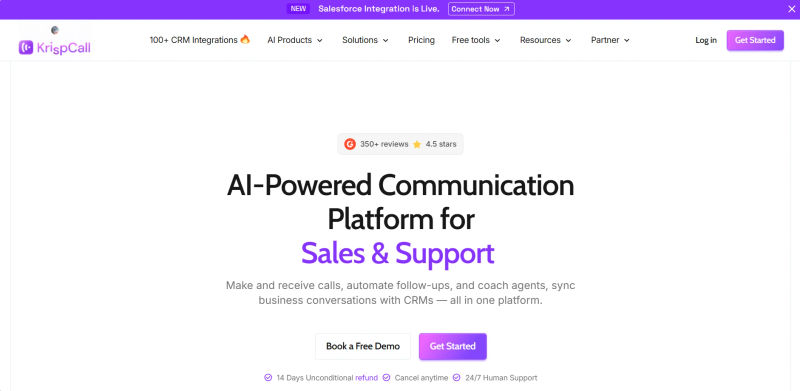
5. KrispCall
Overview: KrispCall is engineered for the modern, borderless startup.
If you are hiring developers in Eastern Europe, customer support in the Philippines, and sales reps in the US, managing local presence is a logistical nightmare. KrispCall solves this by offering virtual numbers in over 100 countries, managed from a single, unified dashboard.
Who is this best for? Internationally distributed startups that need to establish local caller ID presence in multiple countries.
Pricing: Starts at $15 per user per month.
Key Features for 2027:
Unified Callbox: A shared dashboard where team members can view, manage, and respond to calls collaboratively.
Global Number Porting: Seamlessly port existing numbers or purchase new local/mobile/toll-free numbers across 100+ countries.
Trial & Support: 14-day free trial with 24/7 global multilingual support.
Ease of Porting: Dedicated international porting specialist assigned to your account.
Why it beats alternatives: Many VoIP providers claim international support, but they often suffer from high latency or fail to provide SMS capabilities on foreign numbers.
KrispCall's infrastructure is optimized for global low-latency calling, ensuring crystal-clear audio regardless of where your remote team is located.
6. Calilio
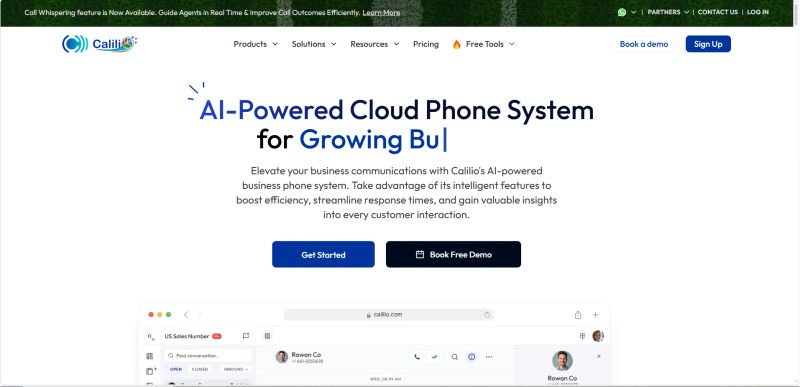
Overview: Calilio bridges the gap between a traditional phone system and a modern collaborative workspace.
It treats phone calls and SMS messages not as isolated events, but as collaborative tasks. With Calilio, a missed call isn't just a notification on one person's phone; it's an actionable item that the entire team can see, assign, and resolve.
Who is this best for? Collaborative remote teams and customer success departments that need shared inboxes and multi-user call routing.
Pricing: Starts at $12 per user per month.
Key Features for 2027:
Shared Workspaces: Create dedicated phone numbers for specific departments where multiple team members can answer.
Privacy Controls: Admins can restrict specific lines (like HR or Legal) to private access only, keeping sensitive calls out of the shared feed.
Trial & Support: 7-day free trial with 24/7 chat support.
Ease of Porting: Simple, in-app porting request system.
Why it beats alternatives: Calilio eliminates the siloed nature of traditional phone apps.
By turning voice communications into a shared workflow, it prevents the classic startup problem of a customer calling twice and having to repeat their issue to two different reps.
7. 800.com
Overview: While many startups focus on local presence, others want to project massive scale from day one.
800.com specializes in providing highly memorable toll-free and vanity numbers. Beyond just the number, 800.com includes a suite of marketing and analytics tools designed to track the ROI of outbound campaigns and inbound lead generation.
Who is this best for? Sales-driven startups and e-commerce brands that want to build national credibility with a toll-free vanity number.
Pricing: Starts at $29 per month.
Key Features for 2027:
Vanity Number Search: Easily find and secure memorable 1-800 or 1-888 numbers that align with your brand name.
SMS Marketing Campaigns: Send bulk SMS broadcasts to opted-in customers for promotions or alerts.
Trial & Support: 14-day free trial with business-hours phone and chat support.
Ease of Porting: Free porting for existing toll-free numbers.
Why it beats alternatives: If you are searching for 800.com alternatives, you'll find few that offer the same level of native SMS marketing.
800.com is less of a pure unified communications tool and more of a growth engine. The analytics and branding power far exceed standard virtual phone apps.

8. Ooma
Overview: Ooma provides a highly reliable mobile app for remote workers, built on a backend infrastructure famous for its uncompromising uptime.
While legacy systems rely on clunky hardware, Ooma has optimized its cloud architecture to ensure that remote teams experience zero packet loss, even when switching between Wi-Fi and 5G cellular data.
Who is this best for? Startups that prioritize absolute call quality and need an ultra-reliable mobile app for a distributed workforce.
Pricing: Starts at $19.95 per user per month.
Key Features for 2027:
Virtual Receptionist: A highly customizable auto-attendant that professionally greets callers and routes them to the correct remote employee.
Ring Groups: Ring multiple mobile apps simultaneously or sequentially to ensure important investor calls are never missed.
Trial & Support: 30-day money-back guarantee with 24/7 live human support.
Ease of Porting: White-glove porting service included at no extra cost.
Why it beats alternatives: When comparing cloud phone systems for small business, Ooma's primary advantage is its robust backend.
While some mobile-only apps struggle with dropped calls on cellular data, Ooma's infrastructure is incredibly stable, making it a safe bet for startups that cannot afford a dropped call.

Best Unified Communications Platforms for Scaling Startups
When your startup reaches Series A or B, basic call routing is no longer enough.
You need deep integrations with your CRM, omnichannel support, and AI-driven analytics to coach your sales team and monitor customer sentiment. These platforms are heavier, but they provide the infrastructure needed to scale to hundreds of employees.
9. Nextiva
Overview: Nextiva is a powerhouse in the unified communications space.
In 2027, it has evolved into a complete customer experience platform. It doesn't just handle calls; it aggregates voice, email, SMS, and social media interactions into a single, unified thread, giving your team total context on every customer interaction.
Who is this best for? Scaling startups with dedicated sales and support teams that need an all-in-one enterprise platform with deep CRM integrations.
Pricing: Starts at $21 per user per month.
Key Features for 2027:
Threaded Conversations: View a customer's entire history—calls, texts, emails, and support tickets—on one screen.
Advanced CRM Sync: Native, bi-directional syncing with Salesforce, HubSpot, and modern decentralized CRMs.
Trial & Support: 7-day free trial with 24/7 award-winning enterprise support.
Ease of Porting: Dedicated project manager assigned for complex, multi-number porting.
Why it beats alternatives: Nextiva's "Threaded Conversations" feature is a game-changer for customer context.
Note that the $21 price point requires an annual contract; month-to-month flexibility costs a premium. However, for preventing customer churn due to poor communication, it is unmatched.

10. Dialpad
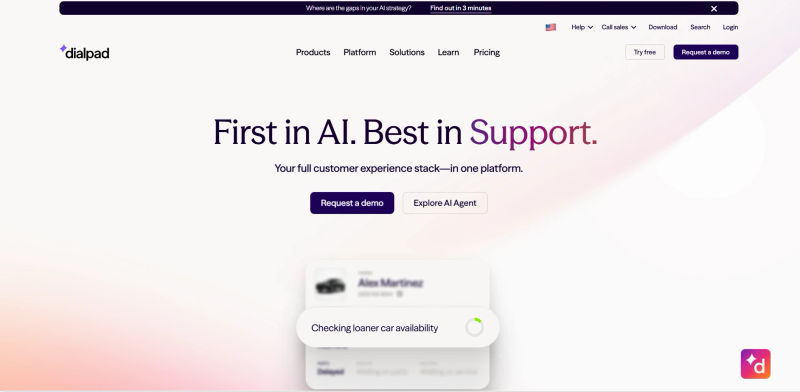
Overview: Dialpad was built from the ground up with Artificial Intelligence at its core.
While other telecom companies bolted AI onto legacy systems, Dialpad's proprietary speech recognition and natural language processing engines are deeply integrated. For a scaling startup, this means automating the administrative work of phone calls so your team can focus on closing deals.
Who is this best for? Data-driven sales teams and tech startups that want to leverage real-time AI features like auto-summaries and sentiment analysis.
Pricing: Starts at $15 per user per month.
Key Features for 2027:
Real-Time AI Transcriptions: Highly accurate, instant transcriptions of every call, allowing reps to search past conversations by keyword.
Live Sentiment Analysis: AI monitors the tone of the call in real-time, alerting managers if a customer call turns negative.
Trial & Support: 14-day free trial with 24/7 web and phone support.
Ease of Porting: Fast, automated porting directly from the admin dashboard.
Why it beats alternatives: Dialpad eliminates the need for manual note-taking.
By automating post-call administrative work, Dialpad can save a busy startup sales rep up to an hour a day, drastically increasing their outbound velocity and overall productivity.
11. Zoom Phone
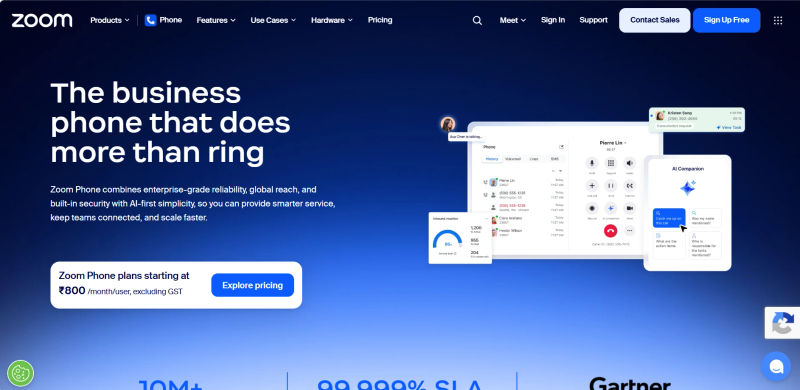
Overview: If your startup already lives in Zoom for internal meetings and investor pitches, adding Zoom Phone is the most logical step.
Zoom Phone takes the reliable, globally optimized infrastructure of Zoom Video and applies it to a cloud PBX system, creating a frictionless unified communications environment.
Who is this best for? Video-first remote teams that already rely heavily on the Zoom ecosystem and want to consolidate their software stack.
Pricing: Starts at $10 per user per month for a metered plan.
Key Features for 2027:
Call-to-Video Escalation: Seamlessly upgrade a one-on-one voice call to a full Zoom video meeting with a single click.
Ecosystem Consolidation: Manage chat, video meetings, and external phone calls from one unified mobile application.
Trial & Support: No free trial for the add-on, but offers flexible month-to-month terms and 24/7 support.
Ease of Porting: Bulk porting capabilities for large teams.
Why it beats alternatives: The primary advantage of Zoom Phone is adoption speed.
Since your team likely already knows how to use Zoom, the learning curve for Zoom Phone is virtually zero. It reduces software bloat and keeps your team in a familiar interface.
12. Weave
Overview: Weave is uniquely positioned for service-based startups—think mobile pet grooming, boutique consulting, or local health-tech services.
It focuses heavily on client-facing features that drive revenue and reduce no-shows, combining a virtual phone system with automated scheduling and payment processing.
Who is this best for? Client-facing service startups and local businesses that need to integrate their phone system with appointment reminders and SMS payment links.
Pricing: Starts around $20 per user per month (custom quotes required based on integrations).

Key Features for 2027:
Text-to-Pay: Generate and send secure payment links via SMS immediately after a service call.
Automated Scheduling: Send automated appointment reminders and allow clients to confirm or reschedule via text message.
Trial & Support: Demo required before purchase; includes 24/7 dedicated support.
Ease of Porting: Managed porting process handled entirely by the Weave onboarding team.
Why it beats alternatives: Weave is a revenue-generating tool.
While other apps focus on internal team collaboration, Weave focuses on the customer transaction. Its ability to handle a phone call, schedule a follow-up, and collect payment via SMS all in one workflow makes it indispensable for service startups.
Find Perfect Software for Your Business
How to Choose the Right Virtual Phone App for Your Startup in 2027
Choosing the best VoIP app for your startup requires looking beyond basic features like call forwarding. The 2027 telecom landscape is heavily regulated, AI-driven, and hyper-focused on security.
Before committing to a provider, evaluate how well they handle spam mitigation, mobile reliability, AI productivity tools, and hidden scalability costs. Here are the critical factors founders must review to make the right choice:
1. Deliverability, Trust, and Spam Mitigation
As noted earlier, the FTC's recent data highlighted the ongoing war against robocalls.
Because of this, major carriers aggressively filter and block suspicious numbers.
If you choose a cheap, low-tier provider with a poor IP reputation, your startup's outbound sales calls will likely show up as "Scam Likely" on your prospects' phones.
Ensure the provider is fully compliant with SHAKEN/STIR protocols (the industry standard for caller ID authentication).
Providers like Nextiva, Dialpad, and 800.com actively manage their number pools to ensure you receive clean, verified numbers that bypass aggressive spam filters.
2. Security and Account Protection
SMS security represents a massive portion of the business-communications security market, growing rapidly due to the reliance on two-factor authentication (2FA).
However, relying solely on SMS for authentication is increasingly viewed as a vulnerability due to SIM-swapping attacks.
Look for virtual phone apps that support modern security standards, including authenticator apps, passkeys, and role-based administrative controls.
If you are in fintech or health-tech, tools like Phone.com (which offers HIPAA compliance) or Nextiva (which offers enterprise-grade encryption) are non-negotiable.
3. Mobile App Performance and Reliability
Since this guide focuses on remote team leads managing calls on mobile, the performance of the iOS or Android app is paramount.
Many legacy VoIP providers have terrible mobile apps that drain battery life, drop calls when switching from Wi-Fi to 5G, or fail to deliver push notifications in the background.
Tools like Grasshopper and Quo are specifically optimized for mobile mobility, ensuring that your business line rings reliably without killing your smartphone's battery.
Artificial Intelligence as a Productivity Multiplier
By 2027, AI is no longer a gimmick; it is a standard differentiator.
If your startup handles high volumes of calls, you cannot afford to have your team wasting hours manually typing call notes into a CRM.
Platforms like Dialpad lead the charge here, offering automated call summaries, real-time sentiment analysis, and live coaching.
Distinguish between tools that offer true AI productivity features and those that just offer basic automated routing.
4. Hidden Costs and Scalability Traps
Scrutinize the pricing model.
Entry-level pricing can be deceiving.
Look out for hidden costs like international termination fees, SMS surcharges, per-minute overages, and mandatory per-user licensing minimums.
If you plan to scale internationally, ensure the provider offers transparent porting procedures and affordable global latency coverage, much like KrispCall.
5. Trial Period Red Flags
Founders should never commit to an annual contract without testing the software.
When utilizing a free trial, watch out for these red flags:
Delayed Porting Answers: If support cannot give you a clear timeline on how long it takes to port your existing number, walk away.
Background App Refresh Failures: If the app must be open on your screen to receive a call, it is not optimized for 2027 mobile standards.
Hidden "Premium" Support: If you experience a glitch during your trial and are told live human support costs extra, that provider is not startup-friendly.
Run a neutral side-by-side comparison of virtual phone number apps on AuthenCIO today.
Try AuthenCIO
Move to faster, smarter software evaluation with AI
Verdict: Which Virtual Phone App Should Your Startup Choose?
Choosing the right virtual phone app depends entirely on your startup's current growth stage and operational needs. Here is the summary of the best alternatives for 2027:
Solopreneurs & Bootstrapped Founders: Grasshopper is the most reliable, straightforward choice for separating business and personal calls without complex setups.
Early-Stage Tech Teams: Quo stands out for API-driven deployment and seamless Slack integration.
Growing International Remote Teams: KrispCall offers the best global latency and international local number availability.
Scaling Startups (Series A/B): Dialpad and Nextiva provide the necessary AI-driven insights, automated CRM logging, and omnichannel support for dedicated sales and support teams.
Aligning your virtual phone system with your current stage prevents overpaying for unused features while ensuring your team remains professional and ready to scale.