Introduction
If your emails are landing in the spam folder and tanking your open rates, you need robust email infrastructure software. While InboxAlly is a well-known tool for reputation repair, many senders are actively seeking inboxally alternatives to find better pricing, advanced diagnostics, or larger peer-to-peer warmup networks.
Finding the best inboxally alternative depends on your specific deliverability bottlenecks. Whether you are looking for alternatives to inboxally software for automated warmup, or evaluating alternatives to inboxally.com software for comprehensive blacklist monitoring, the market in 2026 offers highly specialized tools.
This guide breaks down the top 12 inbox ally alternatives (sometimes searched as bexorally) to help you repair your sender reputation. By comparing each inboxally alternative, you can quickly identify the exact platform required to bypass spam filters, fix your open rates, and restore your email ROI.
Solving the E-commerce Deliverability Crisis in 2026
For e-commerce deliverability specialists, finding reliable email reputation repair tools is the most critical mandate of 2026. The e-commerce email landscape is more unforgiving than ever following Google and Yahoo's sweeping bulk sender updates, which have evolved into aggressive AI filters designed to detect and penalize non-organic behavior.
Streamline your software evaluation process
While a good open rate ranges from 15-25%, dipping below this baseline is a technical reputation crisis. For brands on tight margins, the rising cost of deliverability maintenance is a major pain point. Traditionally, senders turn to tools like InboxAlly. To answer the question—how does inboxally repair and protect email sender reputation to improve inbox placement rates?—the platform uses a network of seed accounts to automatically open emails, click links, and rescue messages from the spam folder. This positive interaction signals to mailbox providers that your content is desired.
However, inboxally (inboxally.com) is criticised for artificial engagement, which puts some potential customers off. What are the reasons for this perception? To respond in English: The primary concern is that InboxAlly relies on manufactured interactions rather than organic subscriber interest. As ISP algorithms grow more sophisticated, deliverability experts worry these artificial patterns could trigger velocity filters and mask underlying content issues rather than solving them. Furthermore, inboxally pricing is a barrier for many, starting at $149/month for the New Sender plan (100 emails/day), scaling to $395/month (Professional), and $1,190/month (Agency).

To build a resilient 2026 tech stack, specialists are seeking budget-friendly alternatives. The market offers specialized tools—including Folderly, WarmupInbox, Lemwarm, Mailreach, Mail-Tester, GlockApps, Mailgenius, MXToolbox, Inboxroad, SenderScore, Spamhaus, and Barracuda—that cater to specific deliverability bottlenecks without relying solely on artificial clicks.
Key Takeaways:
AI Detection is the New Standard: 2026 ISP filters easily catch rudimentary bot engagement; modern tools must simulate genuine human behavior.
Categorize Your Approach: Do not confuse infrastructure monitoring with active engagement tools. Build a stack that addresses warmup, diagnostics, and monitoring separately.
Focus on CTOR: Click-to-open rates (CTOR) matter more to mailbox providers than raw open rates, making authentic engagement crucial.
This guide provides a granular comparison of the 12 best InboxAlly alternatives, helping you choose the exact tool to repair your sender reputation and maximize your cost-per-inbox-placement ROI.
Top InboxAlly Alternatives
Mail-Tester — best for quick spam score checks and email content testing
GlockApps — best for comprehensive inbox placement and deliverability monitoring
Folderly — best for improving sender reputation and fixing deliverability issues
Mailreach — best for automated email warm-up and cold email deliverability
Lemwarm — best for warming up outreach inboxes before cold campaigns
Mailgenius — best for spam filter analysis and email authentication checks
MXToolbox — best for DNS, blacklist, and email infrastructure diagnostics
SenderScore — best for monitoring sender reputation and IP health
Inboxroad — best for managed deliverability services and inbox placement support
WarmupInbox — best for affordable email warm-up automation
Spamhaus — best for blacklist monitoring and reputation verification
Barracuda — best for checking reputation within Barracuda's email security ecosystem
At a Glance: Top 12 Inbox Placement Software Alternatives
To avoid an "apples-to-oranges" comparison, we have categorized these 12 critical deliverability platforms into three distinct groups: Engagement & Warmup, Diagnostics & Testing, and Infrastructure & Monitoring.
Tool | Category | Best For | Price ($) | Key Features |
Folderly | Engagement & Warmup | AI-driven reputation recovery | Free, From $49/mo | API integrations, AI behavior simulation, spam trap detection |
WarmupInbox | Engagement & Warmup | High-volume sender recovery | From $19/mo | Rapid domain recovery, massive peer network, pacing controls |
Lemwarm | Engagement & Warmup | Automated peer-to-peer warmup | From $29/mo | Preventative maintenance, custom tracking domains, GDPR compliant |
Mailreach | Engagement & Warmup | Multi-provider deliverability audits | From $25/mo | Google Postmaster integration, spam testing, automated warming |
Mail-Tester | Diagnostics & Testing | Quick SPF/DKIM/DMARC checks | Free / $5 per 500 | Instant technical verification, BIMI checks, spam score analysis |
GlockApps | Diagnostics & Testing | Comprehensive inbox placement testing | Free, From $85/mo | Global ISP seed lists, DMARC analytics, CI/CD integration |
Mailgenius | Diagnostics & Testing | Identifying content-based spam triggers | From $29/month | HTML structure analysis, copy optimization, technical audits |
MXToolbox | Diagnostics & Testing | DNS and blacklist monitoring | Free, $129/mo | Continuous infrastructure checks, DNS lookups, blocklist alerts |
Inboxroad | Infrastructure & Monitoring | Custom SMTP and Dedicated IP support | From $68/mo | High-volume SMTP relays, dedicated IPs, expert deliverability support |
SenderScore | Infrastructure & Monitoring | Benchmarking IP reputation | Free | Monthly sender audits, reputation scoring, industry benchmarking |
Spamhaus | Infrastructure & Monitoring | Real-time blacklist verification | Free / Enterprise | Immediate threat detection, IP blocklist verification, strict compliance |
Barracuda | Infrastructure & Monitoring | Enterprise-grade security and filtering | Custom Pricing | Outbound filtering, advanced threat protection, brand security |
Note: All prices shown reflect typical monthly billing. Vendors often offer lower pricing for annual commitments, but those discounts are excluded here for easier comparison. Actual costs may vary depending on your requirements, usage volumes, and negotiated terms.
Looking for tools like InboxAlly? Use AuthenCIO to compare deliverability software for free.
Software covered in this article
To help you understand Email Infrastructure software in the right context, this article refers to a carefully curated set of key players:









InboxAlly vs. Warmy: Which is Better for Reputation Repair?
Warmy is generally better for automated, peer-to-peer email warmup and gradual sender reputation repair, while InboxAlly excels at rapid, seed-based inbox deliverability improvement for broadcast emails.
Warmy uses a fully automated, AI-driven peer-to-peer network to simulate real human interactions. It is the superior choice if you need to warm up a brand new domain or recover from a severe sender penalty. Its platform supports multiple languages, API integrations, and complex mailbox behaviors to naturally build trust with ISPs.
InboxAlly takes a different approach by utilizing a proprietary seed network. You broadcast your emails to their controlled list of seed addresses, which automatically open, read, and rescue your messages from the spam folder. This makes InboxAlly better for established senders who need an immediate deliverability boost for newsletters or high-volume promotional blasts.
Ultimately, choose Warmy for long-term, hands-off domain warmup, and InboxAlly for quick, campaign-specific inbox placement correction.
Best Alternatives for Automated Email Warmup and Reputation Repair
Finding the best email warm-up tool to recover reputation after an ESP migration for e-commerce requires prioritizing real-user engagement networks over basic seed lists. For brands looking to fix low open rates after switching providers, automated warmup tools provide a scalable, budget-friendly alternative to InboxAlly's premium model.
1. Folderly: Best for AI-Driven Reputation Recovery
Who is this best for: E-commerce brands needing AI-driven reputation management for high-volume B2B/B2C hybrid sending.
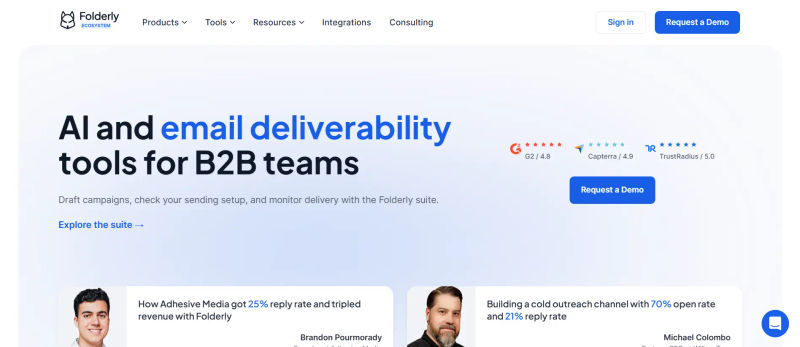
Folderly stands out as a premium alternative for specialists managing burned domains. Because 2026 AI filters easily detect rudimentary bot-driven warmup, Folderly utilizes advanced AI to simulate genuine human interactions—such as scrolling, reading, and replying—ensuring engagement patterns look organic to major mailbox providers.
When evaluating Folderly vs InboxAlly, the core difference is their methodology. While InboxAlly relies heavily on broadcasting to a controlled seed list for rapid engagement, Folderly provides a broader AI-driven diagnostic approach. Folderly excels at diagnosing whether low open rates are a content issue or a technical reputation issue, whereas InboxAlly functions primarily as an engagement engine.
For e-commerce tech stacks, Folderly offers robust integrations with platforms like Klaviyo, Sendlane, and Shopify. It actively pulls emails out of the Promotions and Spam folders, marking them as important. This directly impacts your click-to-open rates (CTOR), which mailbox providers now prioritize over raw open rates.
2. WarmupInbox: Best for High-Volume Sender Recovery
Who is this best for: High-volume senders requiring rapid domain recovery after Black Friday or Cyber Monday blacklisting.

When scaling holiday campaigns, the risk of domain blacklisting skyrockets. WarmupInbox is one of the most affordable email warmup software options for brands that need to rehabilitate a domain quickly. By leveraging a massive network of real user inboxes, it automates the process of sending, opening, and replying to emails.
What makes WarmupInbox highly actionable is its focus on engagement pacing. Triggering ISP velocity filters is a primary reason for silent filtering in 2026. WarmupInbox allows you to configure specific settings for engagement pacing, gradually increasing volume to rebuild trust safely. At just $19 per month, it provides exceptional ROI, making it easy to justify to e-commerce directors.
3. Lemwarm: Best for Automated Peer-to-Peer Warmup
Who is this best for: E-commerce brands focused on preventative maintenance for new transactional domains and subdomains.
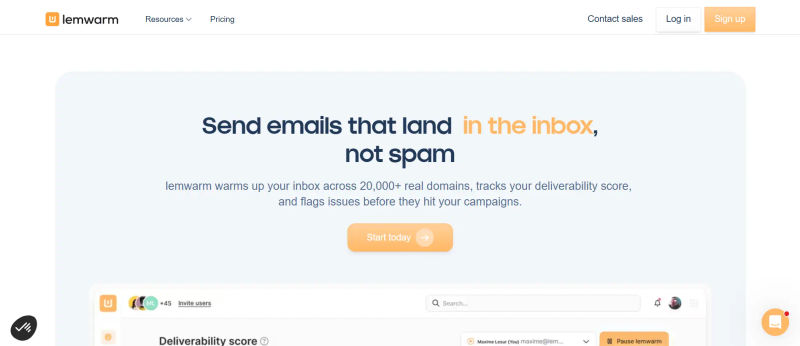
Managing deliverability across multiple subdomains for transactional versus marketing mail is a complex challenge. Lemwarm excels at preventative maintenance through its automated peer-to-peer network. Unlike tools that rely on artificial accounts, Lemwarm connects your inbox with other real users, ensuring authentic engagement signals.
Lemwarm simplifies the technical setup by providing step-by-step instructions on how to configure custom tracking domains—a strict necessity for bypassing modern AI filters. Furthermore, it navigates the legal nuances of automated engagement in the EU and UK (GDPR considerations) by ensuring its network operates within strict privacy guidelines.
4. Mailreach: Best for Multi-Provider Deliverability Audits
Who is this best for: Brands needing granular Google Postmaster Tools integration alongside automated warming.

Mailreach bridges the gap between automated warmup and deep analytical reporting. For deliverability specialists, dashboard analytics are crucial. Mailreach integrates directly with Google Postmaster Tools, giving you a unified view of your sender reputation, spam complaint rates, and domain health.
Mailreach is adept at handling the 'Promotions' tab versus 'Spam' folder placement dilemma. By utilizing a network of high-reputation inboxes, it trains ISP algorithms to categorize your emails as primary correspondence. If you are building a 30-day reputation recovery roadmap, Mailreach provides the exact data points needed to track the lift in revenue-per-email as campaigns move to the primary inbox.
Specialist's Note: The Reputation TreadmillIt is critical to understand that warmup tools are not magic bullets. Using engagement tools without fixing underlying list hygiene issues creates a "reputation treadmill." If you are not actively using list validation tools (like ZeroBounce or NeverBounce) to remove hard bounces and spam traps from your e-commerce database, automated warmup will only temporarily mask the problem before AI filters catch on and permanently blacklist your domain.
Find Perfect Software for Your Business
Best Alternatives for Deliverability Testing and Diagnostics
Before you send a single email to your customer base, you must verify your infrastructure. Diagnostic tools help you identify spam filter triggers and authentication failures before they damage your sender score.
5. Mail-Tester: Best for Quick SPF/DKIM/DMARC Checks
Who is this best for: Deliverability specialists needing instant technical verification before a major campaign launch.
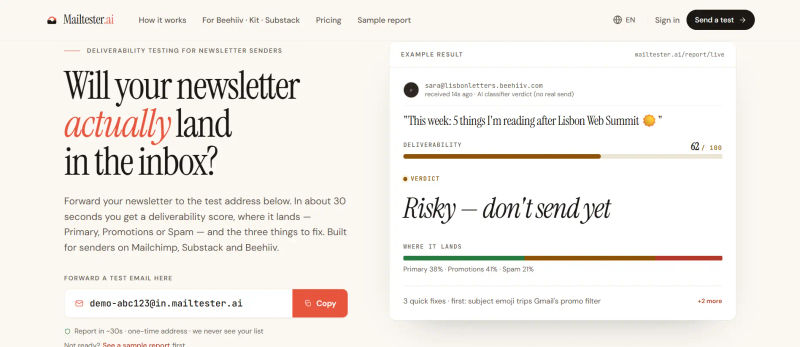
Mail-Tester is the ultimate budget-friendly tool for technical pre-flight checks. In 2026, failing to meet strict DMARC p=reject reporting standards or lacking BIMI (Brand Indicators for Message Identification) verification guarantees your emails will be blocked.
Mail-Tester provides a highly effective solution: send an email to a unique address, and receive a comprehensive score out of 10. It checks your SPF, DKIM, and DMARC records, analyzes your server configuration, and scans your content against major spam filters. While not a continuous monitoring tool, its free tier makes it an indispensable utility for ensuring technical compliance without overhead.
6. GlockApps: Best for Comprehensive Inbox Placement Testing
Who is this best for: E-commerce marketers requiring granular seed list testing across global ISPs to predict inbox placement.

When evaluating InboxAlly vs GlockApps, the core difference is active repair versus diagnostic testing. While InboxAlly generates positive engagement to fix reputation, GlockApps excels at inbox placement testing. It uses a sophisticated seed list network across global ISPs to show exactly where your email will land before you hit send.
For advanced deliverability specialists, GlockApps is best integrated into a regular CI/CD pipeline or weekly audit workflow. Running automated tests through their API before major flows go live provides a granular breakdown of which ISPs are ghosting your emails, helping you avoid regional velocity filters.
If you need the best GlockApps alternatives for different diagnostic features, consider other tools on this list: Mail-Tester for quick SPF/DKIM checks, Mailgenius for content-based spam triggers, or MXToolbox for DNS and blacklist monitoring.
7. Mailgenius: Best for Identifying Content-Based Spam Triggers
Who is this best for: E-commerce copywriters and marketers optimizing promotional copy to bypass content-based filters.

While technical infrastructure is critical, content still triggers filters. Mailgenius specializes in identifying content-based spam triggers that ruin open rates. It goes beyond generic, outdated advice like "avoid using the word FREE." Instead, it analyzes your HTML structure, link reputation, and text-to-image ratios.
Mailgenius helps diagnose whether your low open rates are a result of poor subject lines or underlying technical issues. By providing actionable recommendations to fix broken links, remove blacklisted domains from your body copy, and optimize your HTML code, Mailgenius ensures that your meticulously crafted campaigns are not derailed by easily avoidable content errors.
8. MXToolbox: Best for DNS and Blacklist Monitoring
Who is this best for: Technical specialists requiring continuous infrastructure health checks and DNS lookups.

MXToolbox is the industry standard for DNS and blacklist monitoring. Maintaining visibility over your domain's technical health is paramount, and MXToolbox offers a suite of tools that continuously monitor your MX records, DNS configurations, and SMTP server health.
More importantly, MXToolbox alerts you the moment your IP or domain is listed on over 100 different blacklists. When managing deliverability across multiple subdomains, this continuous monitoring acts as an early warning system. By catching configuration errors immediately, you can resolve issues before they cause a catastrophic drop in your e-commerce open rates.
Join thousands of marketers using AuthenCIO to eliminate guesswork from their tech stack.
Best Alternatives for Infrastructure and Blacklist Monitoring
For high-volume e-commerce brands sending millions of emails per month, automated warmup is not enough. You need robust infrastructure and authoritative blacklist monitoring to ensure your emails actually reach the receiving servers. Note that some entities listed here are not software tools you "buy" as an alternative, but critical monitoring entities you must integrate into your deliverability strategy.
9. Inboxroad: Best for Custom SMTP and Dedicated IP Support
Who is this best for: High-volume e-commerce senders needing dedicated infrastructure and custom SMTP relays.

Inboxroad is an infrastructure-first solution and a highly effective Postmastery alternative for brands outgrowing shared IP pools. If you are sending 1M+ emails per month, relying on shared infrastructure is a massive risk. Like Postmastery, Inboxroad specializes in custom SMTP relays and dedicated IPs, giving you complete control over your sender reputation without requiring complex on-premise server management.
Inboxroad integrates seamlessly with major e-commerce tech stacks, allowing you to route transactional emails through one dedicated IP and promotional emails through another. Their deliverability experts help you configure engagement pacing and manage ISP relationships, providing the dedicated bandwidth required to maintain high open rates during peak seasons.
10. SenderScore: Best for Benchmarking IP Reputation
Who is this best for: Deliverability specialists conducting monthly sender reputation audits and industry benchmarking.

Created by Validity, SenderScore is essentially a credit score for your email program. For teams seeking 250ok alternatives (following its integration into Validity's broader Everest platform) or the best alternative validity reputation monitoring solution, SenderScore provides an accessible entry point into Validity's data ecosystem. It evaluates your IP address and calculates a score from 0 to 100 based on your sending habits, bounce rates, and spam complaints.
SenderScore is critical for benchmarking data. Mailbox providers evaluate sender reputation based on ongoing engagement patterns rather than single campaigns. By monitoring your SenderScore monthly, you can track the effectiveness of your 30-day reputation recovery roadmap and ensure your engagement strategies are actually improving your standing with major ISPs.
11. Monitoring Spamhaus Status: Best for Real-Time Blacklist Verification
Who is this best for: Technical teams needing immediate threat detection and verification against the world's strictest IP blocklists.

Spamhaus is not a software tool you use for marketing; it is the global authority that dictates whether your marketing survives. Being listed on a Spamhaus blocklist (like the SBL or DBL) will instantly halt your e-commerce revenue.
Deliverability specialists must use Spamhaus's lookup tools to verify their IP and domain status regularly. If your warmup tool utilizes bot-driven networks that hit Spamhaus spam traps, your domain will be blacklisted. Monitoring Spamhaus for real-time verification ensures that your reputation repair efforts are not inadvertently triggering the most powerful anti-spam organization in the world.
12. Monitoring Barracuda Status: Best for Enterprise-Grade Security and Filtering
Who is this best for: Enterprise e-commerce brands requiring advanced threat protection and outbound filtering to protect brand reputation.
Similar to Spamhaus, the Barracuda Reputation Block List (BRBL) is a critical database that mailbox providers consult before accepting your mail. While Barracuda is known for enterprise security appliances, monitoring your status on their network is vital for high-volume senders.
For e-commerce brands, Barracuda's outbound filtering ensures that if a malicious actor compromises your network, spam is not blasted out from your domain—an event that would instantly destroy your sender score. Monitoring your BRBL status guarantees that your domain remains a trusted entity in the 2026 ISP landscape.

How to Choose the Right Deliverability Partner on a Budget
Selecting the right InboxAlly alternative requires a strategic approach. Do not simply buy the cheapest tool; instead, build a decision matrix based on your current deliverability bottlenecks, bounce rates, and sender score.
First, identify the root cause of your low open rates. If your emails are landing in the spam folder due to a burned domain, you need an automated warmup tool like Folderly or WarmupInbox to execute a 30-day reputation recovery roadmap.
Second, evaluate your technical infrastructure. If your open rates are low because your emails are being rejected outright, you need diagnostic tools like Mail-Tester and MXToolbox. Ensure your SPF, DKIM, and DMARC records are perfectly configured and that you have implemented BIMI to display your brand logo in the inbox.
Deliverability Specialist's Red Flag Checklist:
Lack of API Documentation: If a tool cannot integrate with your CI/CD pipeline or e-commerce stack (Klaviyo/Shopify), it will create manual bottlenecks.
Opaque Seed List Quality: If a diagnostic tool will not disclose the geographic or ISP makeup of its seed list, its inbox placement predictions are useless.
No Engagement Pacing Controls: Any warmup tool that blasts 500 emails on day one without gradual pacing controls will trigger velocity filters and burn your domain immediately.
Finally, calculate your cost-per-inbox-placement ROI. A tool that costs $200 per month but increases your primary inbox placement by 15% will generate significantly more e-commerce revenue than a $19 tool that only provides basic bot-driven warmup. Focus on downstream conversions to justify the tool spend to your leadership team.
Try AuthenCIO
Move to faster, smarter software evaluation with AI
Conclusion: Take the Guesswork Out of Your Tech Stack
Fixing low open rates in 2026 demands a proactive, highly technical approach to sender reputation management. While InboxAlly remains a powerful platform, the 12 budget-friendly alternatives detailed above offer specialized solutions to diagnose, repair, and protect your e-commerce deliverability.
Whether you are leveraging the AI-driven recovery of Folderly, the granular seed testing of GlockApps, or the infrastructure monitoring of MXToolbox, the key is to match the tool's primary use case to your specific bottleneck. By prioritizing technical authentication, list hygiene, and authentic engagement, you can bypass aggressive AI filters and ensure your campaigns land in the primary inbox.
Your next step? Do not wait for your open rates to drop further. Run a free Mail-Tester check today to establish your baseline technical health, and then select the right engagement or monitoring tool to scale your e-commerce revenue safely.