
Introduction
If you are a Sales Development Representative (SDR) in 2026, you already know the most frustrating statistic in B2B sales: roughly 98% of your website traffic is completely anonymous. Marketing teams spend thousands of dollars driving high-value prospects to your landing pages, only for those visitors to browse your pricing page, read a case study, and leave without ever filling out a form.
For outbound sales teams, this represents a massive leak in the revenue pipeline. You are left wasting hours on cold outreach to accounts with zero brand awareness, while companies actively researching your solution slip away unnoticed.
Streamline your software evaluation process
Website visitor identification software was built to solve this exact problem, deanonymizing traffic by matching IP addresses to company databases. When searching for the best software to identify anonymous website traffic, you will quickly find that the market is flooded with options.
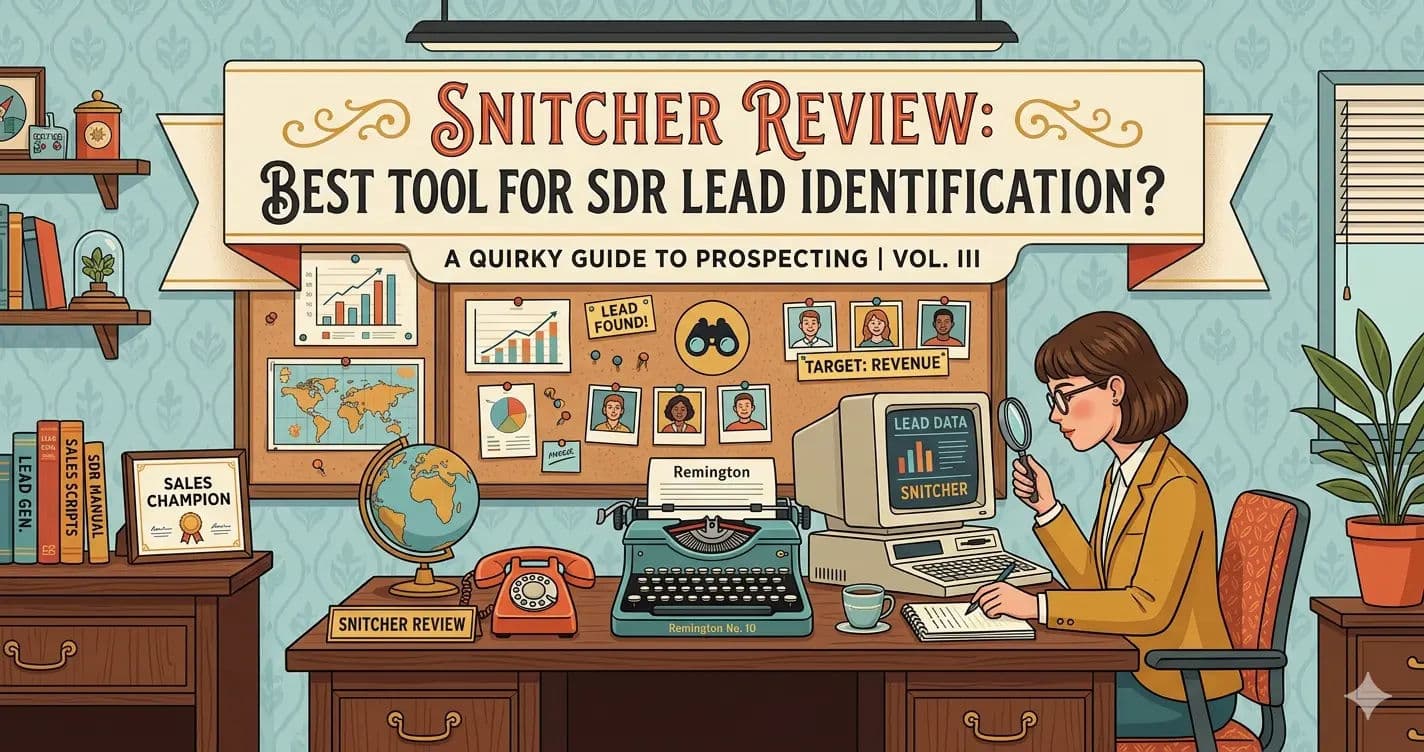
Among the top contenders in 2026 is Snitcher, a platform that promises to turn hidden traffic into actionable, sales-ready leads. But with tightening software budgets and a crowded market of intent-data providers, is Snitcher the right investment for your tech stack?
This comprehensive review will evaluate Snitcher's 2026 feature set, pricing ROI, and data accuracy. We will bypass the generic marketing fluff and focus strictly on what matters to decision-stage buyers and SDRs: pipeline velocity, CRM integration, and how Snitcher stacks up against heavyweights like Leadfeeder, Albacross, and Clearbit.
Key Takeaways
Best for SDRs: Snitcher offers the most intuitive UI and fastest setup for mid-market outbound teams.
High ROI: Transparent pricing and low cost-per-lead make it a highly favorable alternative to static cold lists.
Integration Power: Seamlessly pushes intent data into Salesforce, HubSpot, and Salesloft/Outreach workflows.
Limitations: Like all IP-tracking tools, it struggles with highly remote or VPN-heavy target audiences.
Tool | Best For | Pricing | Key Features |
Snitcher | Mid-market SDR teams needing quick CRM wins | Starts at $79 /month | Real-time Slack alerts, robust filtering, CRM syncing |
Leadfeeder | Established B2B sales teams needing deep data | Starts at $141/month | Custom behavioral feeds, advanced CRM routing |
Albacross | Teams aligning ads with outbound calls | Starts ay $84/month | GDPR-compliant data, account intent scoring |
Lead Forensics | Enterprise teams with large budgets | Custom Pricing | Massive proprietary IP database, dedicated support |
Clearbit | Revenue ops needing full-funnel enrichment | Custom Pricing | Deep data enrichment, API-first architecture |
HubSpot | Existing HubSpot CRM users | Starts at $10 /seat / month | Seamless native integration, basic tracking |
LeadInfo | Benelux and EU-centric sales teams | Starts at $49/month | Localized European database, easy UI |
*Note: All prices shown reflect typical monthly billing. Vendors often offer lower pricing for annual commitments, but those discounts are excluded here for easier comparison. Actual costs may vary depending on your requirements, usage volumes, and negotiated terms.
Software Covered in this Article
To help you evaluate Snitcher in the right context, this article compares it against a carefully curated set of competitors:






Snitcher Core Features: What SDRs Actually Care About
When evaluating website visitor identification software, SDRs do not need vanity metrics; they need actionable intelligence. Snitcher’s 2026 platform is designed to bridge the gap between marketing traffic and sales-ready leads. Let's break down the core features that directly impact an SDR's daily workflow and pipeline generation.
1. Real-Time Lead Alerts and Seamless CRM Integration
One of the biggest hurdles in outbound sales is timing. Reaching out to a prospect three days after they visited your site drastically reduces your chances of booking a meeting.
Snitcher addresses this with its real-time alert system. SDRs can configure the platform to send instant notifications via Slack or email the moment a target account visits a high-intent page, such as a "Pricing" or "Request a Demo" page.
Furthermore, Snitcher’s integration with major CRMs like Salesforce, HubSpot, and Pipedrive is highly refined in 2026. Instead of manually exporting CSV files, SDRs can push identified companies directly into their CRM as new accounts or link them to existing opportunities.
Snitcher populates specific, highly actionable CRM fields such as "Last Page Visited," "Visit Duration," and "Number of Unique Visitors." This means when an SDR logs into Salesforce in the morning, they do not just see a company name; they see exactly what the prospect was researching.
Beyond the CRM, Snitcher integrates beautifully with sales engagement platforms like Outreach and Salesloft. This is crucial because these platforms are where SDRs actually spend their time executing sequences.
You can automatically drop a newly identified contact into a specific Outreach sequence based on the page they viewed, ensuring your follow-up is both immediate and hyper-relevant.
2. Advanced Filtering: Separating High-Intent Leads from Noise
A common complaint with early visitor tracking tools was the sheer volume of useless data. Identifying that an internet service provider (ISP), a bot, or a university visited your site does not help you close deals. Snitcher has significantly upgraded its filtering capabilities to combat this.
The platform allows sales teams to set up strict Ideal Customer Profile (ICP) filters. You can automatically discard traffic from non-target industries, companies below a certain employee count, or specific geographical regions.
By doing so, the data fed to the SDR team is hyper-relevant. Instead of sifting through hundreds of useless pings, an SDR only sees the 15 companies that perfectly match their target persona and have spent more than three minutes on the product features page.
3. Data Enrichment Quality and Intent Scoring
Identifying the company is only half the battle; finding the "Right Person" within that organization is what actually leads to a booked meeting. Snitcher pairs its IP matching intelligence with built-in contact data enrichment.
While it cannot tell you exactly which employee visited the site (due to privacy laws), it provides a curated list of key decision-makers (e.g., VPs of Sales, Marketing Directors) complete with verified email addresses and LinkedIn profiles.
Additionally, Snitcher utilizes Intent Scoring. This feature ranks leads based on the duration of their visit, the frequency of their returns, and the specific pages they viewed.
A company that visits the blog once receives a low score, while a company that visits the pricing page three times in one week is flagged as a "Hot Lead," allowing SDRs to prioritize their daily outreach effectively.
Snitcher Pricing 2026: Is the ROI Worth It?
For decision-makers and SDR managers, software must justify its cost through clear Return on Investment (ROI). In 2026, the pricing model for visitor identification tools has shifted away from the "unlimited" legacy models of the past toward transparent, tiered quotas to better manage high-traffic sites.
1. Understanding the 2026 Pricing Structure
Snitcher operates on a dual-pricing structure. The base subscription ranges from $79 to $419 per month, depending on the volume of unique companies identified. On top of this, teams can purchase contact credits ranging from $50 to $350 per month to reveal the specific contact details of decision-makers within those identified companies.
A critical detail for budget-conscious teams: Snitcher's contact credits operate on a "use it or lose it" monthly basis, meaning they do not roll over. SDR managers must accurately forecast their monthly outreach volume to avoid overpaying for unused credits.
Additionally, when calculating the total cost of ownership, teams must consider the "hidden" cost of implementation time. Fortunately, Snitcher is exceptionally lightweight. Installing the tracking script via Google Tag Manager takes less than 15 minutes, and basic CRM mapping can be completed in a single afternoon, minimizing downtime.
2. Calculating the ROI for Small to Mid-Market Teams
To determine if the ROI is there, consider the cost of standard cold outbound. If an SDR spends 10 hours a week researching cold accounts with a 1% conversion rate, the labor cost is high, and the yield is low.
If a mid-tier Snitcher plan costs roughly $250/month (including contact credits) and successfully identifies 500 in-market companies, the cost per identified account is just $0.50.
If your SDR team can convert even 2% of those warm, high-intent accounts into booked meetings (10 meetings), the cost per meeting generated from hidden traffic is exceptionally low. For small to mid-market sales teams, this cost-to-value ratio is highly favorable, especially when compared to purchasing static, cold lead lists that quickly become outdated.
Find Perfect Software For Your Business
Snitcher vs. Leadfeeder: The Heavyweight Matchup
If you are evaluating Snitcher, you are almost certainly looking at Leadfeeder as well. In 2026, these two platforms are the most frequently compared tools for mid-market B2B visitor tracking. Both match IP intelligence against business databases to filter non-commercial traffic, but they cater to slightly different operational needs.
1. Data Match Rates and Regional Accuracy
Winner: Tie (Depends on Region)
Both tools boast impressive match rates, but their strengths vary by region. Snitcher has made massive strides in international SMB and mid-market traffic, particularly in the US and APAC regions.
Leadfeeder, with its strong European roots, often edges out competitors slightly when it comes to highly localized EU traffic and strict GDPR compliance nuances. However, for a standard US-based SaaS company, the match rates between the two are fiercely competitive, often differing by only a few percentage points depending on the specific industry.
2. User Interface and SDR Workflow
Winner: Snitcher (For SDRs), Leadfeeder (For RevOps)
Where Snitcher truly shines is its streamlined User Interface (UI). It is built specifically with the SDR in mind. The learning curve is practically non-existent; an SDR can log in, set up an alert for their assigned territory, and start working leads within 20 minutes. Snitcher’s dashboard is clean, focusing heavily on immediate action and contact revelation.
Leadfeeder, conversely, offers a slightly more complex interface that caters heavily to marketing and revenue operations teams. It provides deeper custom behavioral feeds and more granular CRM routing rules.
If your organization has a dedicated RevOps team managing complex Account-Based Marketing (ABM) campaigns, Leadfeeder’s depth might be necessary. But if you are an SDR manager who just wants your reps to quickly see who is on the site and email them, Snitcher’s agility and lower price point often make it the more attractive option.
Other Top Snitcher Alternatives to Consider
While Snitcher and Leadfeeder dominate the mid-market conversation, the 2026 landscape offers several other viable alternatives depending on your specific tech stack, budget, and company size.
1. Albacross: Aligning Ads with Outbound Calls
Albacross is a formidable alternative, particularly for teams looking to bridge the gap between marketing spend and SDR outreach. While Snitcher excels at feeding individual SDRs, Albacross is designed to align automated ads with your outbound calls.
It offers advanced ad retargeting features, allowing you to automatically serve ads to the anonymous companies visiting your site while your SDRs simultaneously dial them. If your goal is purely SDR outbound, Snitcher is more cost-effective. If your goal is surrounding an account with both ads and calls, Albacross warrants consideration.
2. Lead Forensics: Enterprise Power
Lead Forensics is the legacy giant in this space. They possess one of the largest proprietary IP databases in the world, which can sometimes result in higher match rates for obscure or enterprise-level accounts.
However, this comes at a steep premium, frequently exceeding $1,000/month with long-term contracts. For agile, modern SDR teams, Snitcher provides the vast majority of the value for a fraction of the price and without the restrictive vendor lock-in.
3. Clearbit (Reveal): The Data Ecosystem
Clearbit is less of a standalone visitor tracker and more of a comprehensive data enrichment ecosystem. Clearbit Reveal identifies anonymous traffic, but its true power lies in how it enriches your entire CRM and marketing automation platform.
If you are already using Clearbit for form shortening and CRM enrichment, adding Reveal makes logical sense. However, as a standalone tool just for SDRs to check daily traffic, it can be overly complex and expensive compared to Snitcher’s focused approach.
4. HubSpot: The Built-In Option
For teams already utilizing HubSpot Sales Hub, you have access to basic website visitor tracking natively. The advantage here is zero additional cost and perfect integration.
The downside is that HubSpot’s proprietary IP matching is generally not as robust as dedicated tools like Snitcher. It is a great starting point, but maturing sales teams often outgrow it and require a dedicated deanonymization engine.
5. LeadInfo: The European Specialist
LeadInfo has carved out a strong niche in the European market, particularly the Benelux region. If your target ICP consists entirely of European SMBs, LeadInfo’s localized database is highly accurate. For global or US-focused teams, Snitcher remains the more versatile choice.
Real-World Use Cases: Where Snitcher Shines (and Fails)
To make this review truly actionable, we must look beyond feature lists and evaluate how Snitcher performs in the trenches.
1. Where Snitcher Shines: The "First 30 Days" Outbound Sprint
Snitcher is incredibly effective for sales teams looking to implement a "First 30 Days" rapid pipeline generation strategy.
Imagine an SDR targeting the logistics software sector. Upon installing Snitcher, they set up a workflow: If a company in the 'Logistics' industry visits the 'Pricing' page for more than 60 seconds, send a Slack alert.
When the alert triggers, the SDR immediately logs into Snitcher, uses contact credits to unlock the VP of Operations' email, and drops them into a highly personalized outreach sequence in Outreach or Salesloft.
To avoid sounding "creepy" or overly invasive (e.g., "I saw you looking at our website"), the messaging shifts to a warm, relevant touchpoint based on the timing of their intent.
SDR Outreach Template for Website Visitors:Subject: Logistics platform evaluation / [Your Company]Hi [Name],Noticed [Company] might be exploring new ways to optimize routing right now. We recently helped [Competitor/Similar Company] reduce their shipping delays by 15% using our automated dispatch feature.Are you open to a brief chat later this week to see if we can do the same for your team?
This specific workflow, utilizing timely relevance rather than explicit tracking call-outs, consistently yields higher open and reply rates compared to standard cold outbound.
2. Where Snitcher Fails: The Remote Work and VPN Dilemma
No review is complete without an honest assessment of limitations. Like all IP-based tracking tools in 2026, Snitcher struggles with the realities of the modern, decentralized workforce.
If a prospect is working from a coffee shop, using a personal home network, or hiding behind a strict corporate VPN, Snitcher’s ability to identify the company drops significantly. The tool relies on commercial IP addresses.
While Snitcher has implemented advanced machine learning to better parse dynamic IPs, a highly remote target audience (such as freelance developers or remote-first startups) will result in a lower overall match rate. If your ICP consists entirely of remote workers, you may need to rely more heavily on intent data providers that track individual cookie behaviors rather than IP addresses.
Try AuthenCIO
Move to faster, smarter software evaluation with AI
Final Verdict: Should You Buy Snitcher in 2026?
Choosing the right website visitor identification software ultimately comes down to your team's size, technical maturity, and primary goals.
Buy Snitcher if:
You are a mid-market or growing SDR team looking for a highly intuitive, fast-to-deploy tool.
Your primary goal is to empower individual sales reps to uncover hidden pipeline and prioritize their daily outbound efforts.
You want transparent, scalable pricing without being locked into massive enterprise contracts.
You need seamless, real-time alerts pushed directly to Slack and standard CRMs.
Skip Snitcher if:
You are a massive enterprise requiring the absolute highest volume of global IP matching regardless of cost (look to Lead Forensics).
Your primary goal is complex, multi-channel ad retargeting and marketing alignment rather than direct sales outbound (look to Albacross).
Your target audience is entirely composed of remote, work-from-home employees where IP tracking is inherently flawed.
For the vast majority of B2B sales teams in 2026, Snitcher offers an exceptional balance of accuracy, usability, and cost. It strips away the complexity of bloated RevOps platforms and gives SDRs exactly what they need: the names of the companies actively interested in what they are selling, and the contact information required to close the deal.
Next Steps: If you fit the "Buy" criteria, we highly recommend starting a 14-day free trial of Snitcher. Install the tracking script, set up a Slack alert for your top 5 target accounts, and see firsthand how many hidden leads you can uncover before committing to a paid plan.