Introduction
Key Takeaways
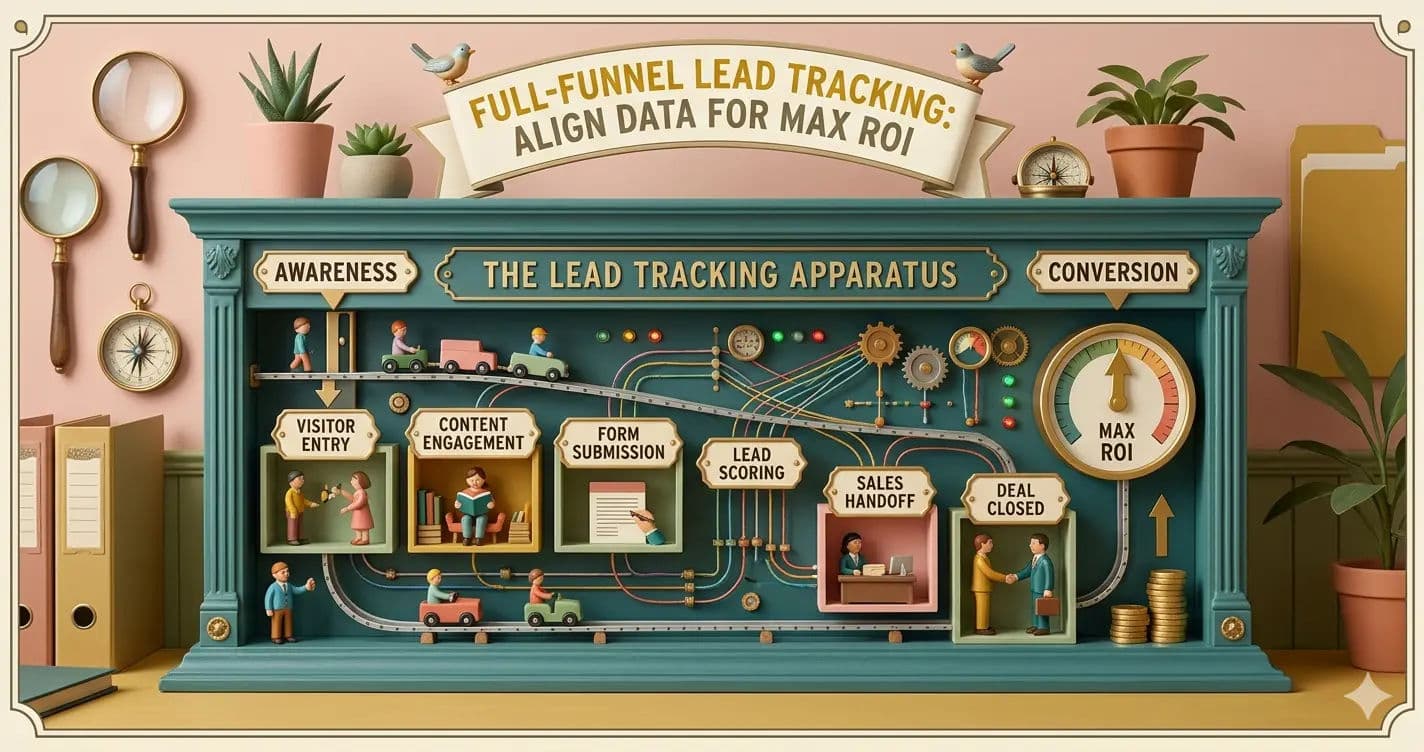
The Problem: In 2026, with third-party cookies fully deprecated, the gap between digital clicks and offline sales calls—the 'Black Hole'—is wider than ever, wasting ad spend and causing friction between marketing and sales.
The Cause: This disconnect is rooted in two core issues: technical data silos between ad platforms and CRMs, and psychological friction that causes user intent to decay before a call is made.
Streamline your software evaluation process
The Solution: Implementing a modern tech stack with lead tracking software (like CallRail or WhatConverts), visitor identification tools (like Snitcher or Leadfeeder), and multi-touch attribution platforms (like Ruler Analytics) is essential for closed-loop reporting.
The Strategy: Technology must be paired with strategic alignment, including a data-driven Service Level Agreement (SLA) between marketing and sales to ensure rapid lead response and a shared definition of lead quality.
Software Covered in this Article
To help you understand Lead Tracking Software in the right context, this article refers to a carefully curated set of key players:








The Leaky Funnel: Why Marketing Clicks Fail to Become Sales Conversations
Marketing teams are generating record engagement, yet sales calendars remain sparse. This is the central frustration for revenue leaders in 2026. High click-through rates are vanity metrics if they don't translate into high-value sales calls, the ultimate conversion point for most B2B and high-ticket service industries.
With the shift to an AI-first attribution model and the end of third-party cookies, the inability to connect online behavior to offline revenue is no longer a minor data gap; it's a critical business failure.
Industry benchmarks show that while channels like organic search can convert leads at around 16% and PPC near 15.73%, a huge portion of this traffic never makes it to the phone. This results in staggering budget waste and an inability to justify marketing spend.
The primary culprits are not poor products or salesmanship, but deeply rooted technical silos that break the data chain and psychological friction that deters prospects from taking the final step. To fix this, organizations must dismantle these barriers to finally bridge the gap between a digital click and a lucrative sales conversation.
Technical Barriers: Why Your Data is Failing You
The journey from an ad click to a sales call is fraught with technical pitfalls. A prospect clicks an ad, browses a website, then dials a phone number, and the data trail goes cold.
This happens because the 2026 tech stack is often a fragmented web of disconnected systems that lose the user the moment they move offline.
1. The Data Silo Dilemma
Data silos between advertising platforms, marketing automation tools, and CRMs are the most significant barrier. A Google Ad click is registered, but when the user calls a static phone number on your site, the ad platform has no idea a conversion occurred.
Even robust platforms like HubSpot struggle to natively attribute offline calls to specific digital campaigns without specialized third-party tools. This leaves marketing blind to which campaigns actually drive revenue.

2. Privacy-First Tracking and Server-Side Solutions
The technical landscape is now defined by privacy-first tracking. With cookie deprecation complete, relying on outdated, client-side tracking guarantees lost data.
The 2026 solution is server-side tracking, often implemented via Google Tag Manager (GTM). By sending data from your web server directly to analytics platforms, you create a more durable and accurate data stream that is less susceptible to browser restrictions, providing a clearer picture of the user journey.
3. The CRM Integration Checklist
To ensure a seamless CRM handoff, your tech stack must be tightly integrated. Use this checklist to audit your existing connections:
Bi-Directional Sync: Does marketing engagement data (e.g., page views) flow into the CRM, and do sales outcomes (e.g., call dispositions) flow back to marketing platforms?
Real-Time Data Transfer: Are new leads and their source data passed to sales instantly, or is there a delay that kills intent?
Custom Field Mapping: Can you map unique tracking parameters (like campaign ID or keyword) from your lead source directly to custom fields on the CRM contact record?
Automated Task Creation: Does a high-intent action, like a call from a pricing page, automatically create a follow-up task for the assigned sales rep?
Native vs. Third-Party: Are your core integrations native or reliant on a third-party connector like Zapier? Tools like Outfunnel create deep, reliable syncs between marketing tools and CRMs.
Call Tracking with CRM Handoff: Does the software instantly route caller ID and session data? Switch.monster handles call tracking with CRM handoff by automatically logging inbound calls and attaching marketing click data to the sales dashboard before reps answer.
Psychological Barriers: Understanding User Intent Decay
Even with a perfect tech stack, leads will vanish if you ignore buyer psychology. For effective lead conversion optimization in 2026, you must address the friction that stops a motivated prospect from picking up the phone.
1. The Concept of User Intent Decay
When a prospect clicks an ad, their intent to solve a problem is at its peak. Every confusing navigation element, slow-loading page, or unclear call-to-action rapidly degrades that intent.
If the path to a phone call isn't frictionless, they will abandon the journey. Statistics show mobile conversion rates (2.9%) still lag far behind desktop (4.8%) precisely because of this added cognitive load. Click-to-call buttons must be prominent and instantly functional.
2. Overcoming Friction with Technology
Modern lead tracking software can directly combat intent decay. For example, when a prospect calls from a high-value page, a tool like CallRail** **can trigger an instant SMS alert to the sales team with the caller's source data.
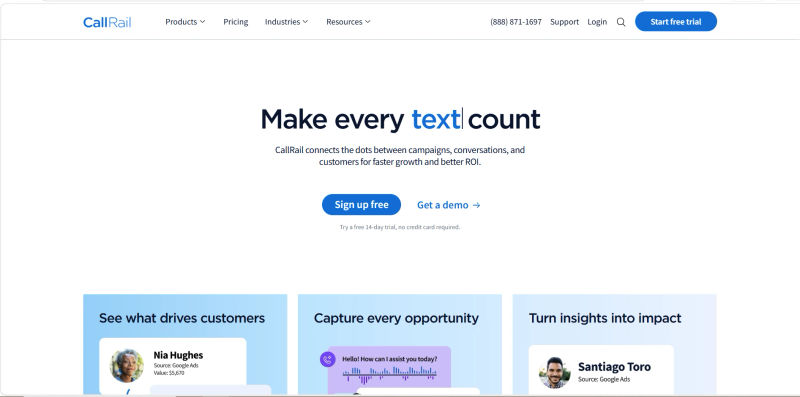
This allows the rep to answer the call with full context, reducing friction and dramatically improving the buyer's experience.
3. The Trust Deficit
Prospects hesitate to call because they fear a high-pressure sales pitch. To overcome this, focus on building trust at the point of conversion:
Transparent Messaging: Instead of a vague "Contact Us," use specific value propositions like "Get a 10-minute pricing consultation."
Social Proof: Place testimonials, case studies, and trust badges directly next to phone numbers.
Offer Alternatives: Provide live chat or asynchronous video messaging as lower-friction entry points to a conversation.
Find Perfect Software For Your Business
The 2026 Tech Stack for Seamless Lead Attribution
To dismantle both technical and psychological barriers, organizations need purpose-built lead tracking software. These platforms bridge the gap between digital marketing and offline sales, providing the granular attribution data required to optimize the entire revenue funnel.
1. The Power of Dynamic Number Insertion (DNI)
At the core of this technology is Dynamic Number Insertion (DNI). DNI automatically swaps the static phone number on your website with a unique tracking number based on the visitor's source, medium, campaign, or keyword. When a prospect dials, the software instantly connects the offline call to the exact digital touchpoint that initiated it. This is the foundation of true marketing attribution for sales calls.
If you are wondering, "¿cuáles son las mejores herramientas de inserción dinámica de números?" (which are the best DNI tools?), the top platforms in 2026 are CallRail, WhatConverts, and Invoca. These industry leaders provide the most reliable DNI capabilities and seamless CRM integrations.
2. AI-Powered Conversation Intelligence
In 2026, lead tracking software leverages AI to transcribe and analyze sales calls in real-time, creating an immediate feedback loop. Using switch.monster call analytics software, teams can automatically score conversations to identify high-intent prospects.
If an ad campaign drives high call volume but AI analysis reveals poor fit, marketing can instantly adjust targeting. By integrating switch.monster call tracking with lead quality metrics, businesses ensure sales reps only spend time on qualified buyers. When considering these tools, ask about their pricing models, which are often based on a cost-per-tracked-number or a per-minute usage fee.
Comparative Analysis of Lead Tracking Capabilities
The software market is diverse. Choosing the right mix of tools is critical for closing the marketing-sales gap.
Your evaluation should also include a review of compliance features to ensure adherence to regulations like GDPR, CCPA, or HIPAA, which is a deal-breaker in many industries.
1. Dedicated Call Tracking Platforms
To answer which call tracking tools are best for measuring marketing attribution from inbound phone calls, these platforms are non-negotiable. Evaluating the best call tracking software 2026 offers reveals four leaders:
CallRail: Best for high-volume SMBs. In the standard whatconverts vs callrail (and callrail vs whatconverts) matchup, CallRail excels in AI-powered conversation intelligence.
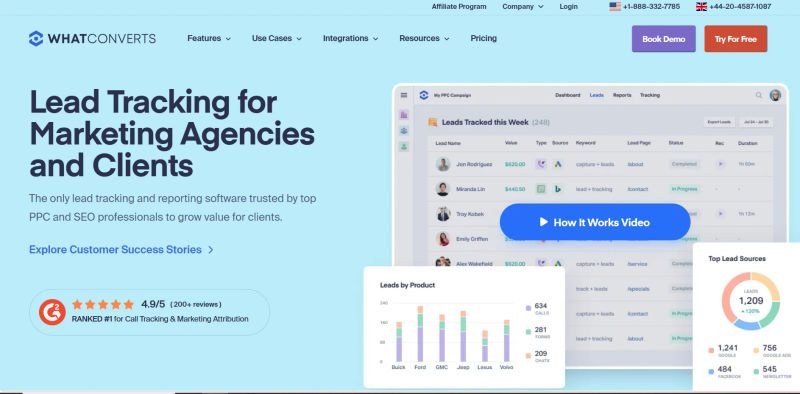
WhatConverts: Best for agencies aggregating calls, forms, and chats into a single dashboard.
Switch.monster: A leading whatconverts alternative. If choosing switch.monster or whatconverts, switch.monster phone lead attribution delivers superior granular session data. Utilizing switch.monster call attribution software (or call attribution software switch.monster) ensures precise keyword-level tracking.
Centerflow: When comparing whatconverts vs centerflow, Centerflow provides enterprise-grade routing, while WhatConverts remains agency-focused.
2. B2B Visitor Identification Tools
Not all prospects call on their first visit. These tools de-anonymize website traffic to fuel outbound sales.
Snitcher: Best for sales teams needing actionable, real-time alerts. Reverse-engineers visitor IP addresses to identify companies browsing your site.
Leadfeeder: Best for ABM strategies. Integrates deeply with CRMs to show which target accounts are demonstrating high engagement, allowing for proactive outreach.
3. Advanced Multi-Touch Attribution Platforms
For complex B2B sales cycles, these platforms map the entire customer journey.
Ruler Analytics: Best for complex enterprise attribution. Connects anonymous website sessions with closed revenue in the CRM, showing every touchpoint that influenced the deal.
Tie: Best for unifying disparate data streams. Focuses on providing a single source of truth for marketing performance and revenue attribution.
Call Tracking for Marketers: Affiliates, Agencies, and Franchises
When evaluating switch.monster call tracking for marketers, the primary advantage is adaptable attribution tailored to distinct business models. Whether managing local service ads or national directories, switch.monster call tracking for lead generation ensures every inbound phone call is accurately tied back to the exact click, keyword, or campaign that drove it. This level of granular data is exactly why call tracking for marketers switch.monster has become a staple in modern 2026 tech stacks.
Performance marketers require precise payout attribution to scale profitably. Switch.monster call tracking for affiliate marketers allows users to assign unique, dynamic tracking numbers to different partners or landing pages. This functionality makes switch.monster call tracking for affiliate campaigns and switch.monster call tracking for comparison websites highly effective. You can automatically route high-intent callers to premium buyers and calculate commissions based on call duration or conversion tags without manual auditing.
For client-facing teams, proving ROI is non-negotiable. Switch.monster lead tracking for marketing agencies provides multi-client dashboards to clearly demonstrate campaign value and justify retainers. Furthermore, switch.monster seo call tracking bridges the gap between organic search traffic and offline phone conversions, proving the exact monetary value of local SEO and content efforts.
Multi-location businesses and distributed teams require advanced, conditional routing. Switch.monster lead tracking for franchises uses geographic and time-based routing to send callers to the nearest open location instantly. Once the call connects, switch.monster call tracking for sales teams provides representatives with real-time caller data, AI-transcribed conversation intelligence, and CRM syncing, seamlessly turning raw marketing clicks into closed-won revenue.
Actionable Strategies to Increase Sales Call Volume from Existing Traffic
Software alone is not a silver bullet. It must be paired with strategic alignment between marketing and sales, built on a foundation of shared data and accountability.
1. The 2026 Lead Quality SLA Template
Replace friction with collaboration by implementing a formal Service Level Agreement (SLA). Use this template as a starting point:
Lead Definition: A Marketing Qualified Lead (MQL) is defined as [e.g., a website visitor from our ICP who requests a demo]. A Sales Qualified Lead (SQL) is an MQL that sales has confirmed meets [e.g., BANT criteria].
Marketing Commitment: Marketing will deliver [e.g., 150 MQLs] per month that meet the agreed-upon definition.
Sales Commitment: Sales will attempt to contact 100% of MQLs within [e.g., 10 minutes for a phone call, 1 hour for a form fill].
Lead Disposition: Sales will update the lead status in the CRM within [e.g., 24 hours] of the first contact attempt, providing specific reasons for disqualification.
Feedback Cadence: Marketing and Sales leadership will meet weekly to review the SQL-to-Opportunity rate and discuss lead quality based on CRM data.
Shared Goal: Both teams will be measured on a primary shared metric of [e.g., Pipeline Generated from Marketing Sources].
2. Creating Continuous Feedback Loops
This SLA creates the structure for closed-loop reporting. When a sales rep logs a call outcome in the CRM, that data must be fed back to marketing.
If a Google Ads campaign drives 50 calls but zero revenue, while another drives 10 calls that result in $100k in pipeline, marketing needs that feedback immediately to reallocate budget. This ensures marketing optimizes for sales outcomes, not just cheap clicks.
2026 Lead Tracking Software Comparison
To assist in evaluating these tools, the following table provides a high-level comparison of their primary capabilities.
Software Category | Primary Use Case | Key Features | Data Captured |
Call Tracking (e.g., CallRail, WhatConverts) | Attributing offline phone calls to digital marketing sources. | Dynamic Number Insertion (DNI), Call Recording, AI Call Scoring, Keyword-level attribution. | Caller ID, Call Duration, Marketing Source/Medium, Spoken Keywords. |
Visitor Identification (e.g., Snitcher, Leadfeeder) | De-anonymizing website traffic for outbound sales prospecting. | IP Reverse Engineering, Account-Based Marketing (ABM) scoring, CRM integration for alerts. | Company Name, Industry, Pages Visited, Time on Site, Employee Count. |
Multi-Touch Attribution (e.g., Ruler Analytics, Tie) | Mapping complex, multi-channel buyer journeys to closed revenue. | First-click, Last-click, and Linear attribution modeling, deep CRM syncing, ROAS calculation. | Entire touchpoint history, Revenue generated, Customer Acquisition Cost (CAC). |
Try AuthenCIO
Move to faster, smarter software evaluation with AI
Conclusion: Future-Proofing Your Lead Pipeline
Bridging the gap between clicks and calls requires a fundamental shift. It is no longer enough to optimize for top-of-funnel traffic and hope for the best.
Revenue leaders must dismantle the technical silos that obscure the buyer's journey and address the psychological friction that kills intent.
By implementing a robust stack of lead tracking software and fostering deep, data-driven alignment between marketing and sales, businesses can illuminate the 'Black Hole' in their funnel. The result is an efficient, closed-loop system where every ad dollar is accountable and sales teams are consistently supplied with high-intent conversations.
First 30 Days: Quick Wins
Install a Call Tracking Script: Implement DNI on your highest-traffic landing pages to get immediate source-level data.
Set Up Goal Conversions: Push call data as conversions back into Google Ads and Google Analytics to start optimizing for calls, not just clicks.
Review Your First Call Recordings: Listen to a handful of calls to identify common questions and objections that can be used to refine ad copy and landing page messaging.