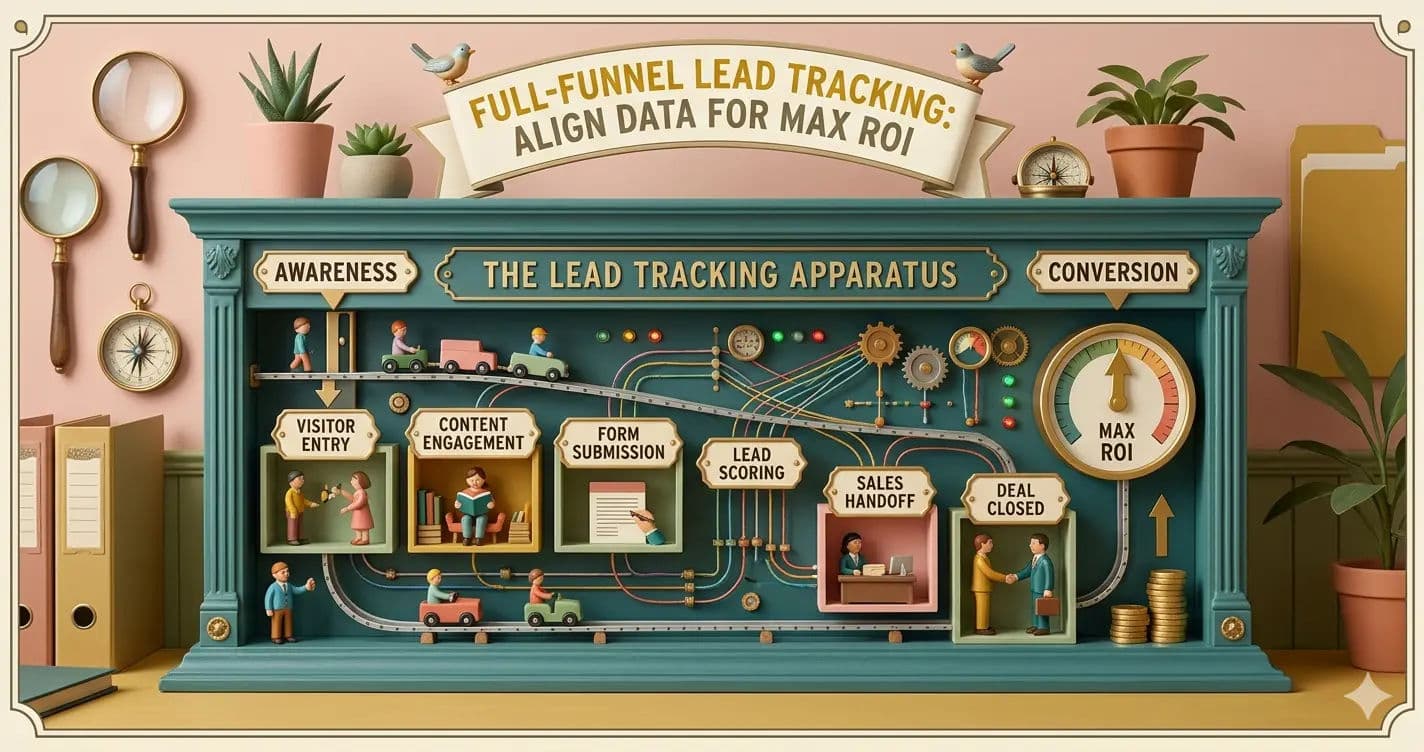

Introduction
Managing call tracking costs across dozens or hundreds of client accounts is one of the most complex financial balancing acts an agency owner faces in 2026. As marketing budgets increase and client retention windows shrink, proving ROI through accurate attribution is non-negotiable. However, selecting the wrong call tracking tier can rapidly destroy your agency's profit margins through hidden overage fees, expensive sub-account minimums, and costly AI add-ons. Understanding the true CallRail cost per month is critical before locking your agency into a long-term infrastructure commitment.
Streamline your software evaluation process
This guide bypasses the generic feature lists to provide a hard-hitting, bottom-line analysis of 2026 pricing structures. We will break down exactly where high-volume agencies bleed money, evaluate the true cost of scaling, and compare the platform against top competitors to ensure you are maximizing your software ROI.
Key Takeaways for Agency Owners:
Overage Fees Destroy Margins: The base $50/month plan includes only 250 minutes; high-volume agencies must negotiate bulk rates to survive.
AI is Bundled, Not Free: 2026 pricing heavily pushes Conversation Intelligence, which is a wasted expense if your clients do not utilize call transcripts.
Porting and White-Labeling Add Up: Hidden administrative costs of migrating numbers and removing third-party branding can negate the savings of a cheaper platform.
CRM Silos are Dangerous: Relying on built-in tools like HubSpot risks losing historical call data if you ever change your tech stack.
Stop losing 15% of your margin to overage fees.
2026 Call Tracking Pricing Comparison Table
Tool | Best For | Pricing | Limitations |
CallRail | Mid-volume agencies needing standard tracking & AI | $55 - $215+/mo (plus usage) | High per-minute overages; expensive premium integrations ($65/mo). |
WhatConverts | Lead-gen agencies focused on full attribution | $30 - $160+/mo | Complex UI for basic users; lacks advanced enterprise routing. |
Ruler Analytics | B2B agencies needing revenue-based attribution | From $400 - $2,000+/mo | High entry cost; overkill for standard local service clients. |
HubSpot | Inbound agencies using the full CRM ecosystem | $10 - $3,600+/mo | Weak standalone tracking; lacks deep native dynamic number insertion (DNI). |
Invoca | Enterprise agencies needing complex AI routing | Custom Pricing | Massive implementation fees; long deployment timelines. |
Ringba | Performance marketers running pay-per-call | $147 - $297+/mo | Not built for local SEO reporting; strict compliance fees. |
*Note: All prices shown reflect typical monthly billing. Vendors often offer lower pricing for annual commitments, but those discounts are excluded here for easier comparison. Actual costs may vary depending on your requirements, usage volumes, and negotiated terms.
Software Covered in this Article
To help you evaluate CallRail in the right context, this article compares it against a carefully curated set of competitors:





Deep Dive: CallRail Pricing Plans and Hidden Costs
CallRail remains a dominant force in the agency space, but its 2026 pricing structure requires careful navigation. The provider has shifted heavily toward bundling AI features, meaning agencies must be hyper-vigilant about what they are actually paying for.
Core 2026 Pricing Tiers:
Call Tracking Base ($55/month): Includes 5 local numbers and 250 local minutes. This is a starter tier that most agencies will immediately outgrow.
Call Conversationm($165/month): Includes AI transcripts and sentiment analysis.
Conversion Complete ($215/month): Bundles tracking, AI, form tracking, and basic integrations.
Who is this best for? The platform is best for mid-to-high-volume marketing agencies managing local service businesses (home services, legal, dental) that need a reliable mix of dynamic number insertion (DNI) and automated call scoring without enterprise-level complexity.
The True Cost of Scaling and Hidden Expenses:
While the base subscription seems manageable, high-volume agencies rarely pay the sticker price. The real financial impact lies in usage fees and add-ons:
The Overage Surprise: Base plans come with strict minute limits. Once you exceed 250 minutes, you are hit with per-minute overages ranging from $0.015 to $0.025 per minute. For an agency managing 100 clients, a sudden spike in campaign performance can result in hundreds of dollars in unexpected monthly overages.
Premium Integrations: Connecting to advanced CRM systems or custom data warehouses often requires the Premium Integrations add-on, costing an additional $65/month.
Advanced Call Flows: If your clients require complex IVR (Interactive Voice Response) setups or multi-step routing, expect to pay an extra $15/month for the Advanced Call Flow feature.
The 2026 Agency Partner Program:
To mitigate these costs, high-volume agencies must leverage the Agency Partner Program. In 2026, the provider offers bulk-discount tiers and dedicated support for accounts managing over a certain threshold of sub-accounts. Negotiating a custom bulk-minute bucket (e.g., 10,000 pooled minutes across all clients) is the only way to protect your margins from variable overage spikes.
White-Labeling and API Costs: The Hidden Agency Overhead
When evaluating high-volume call tracking pricing, agencies often overlook the logistical costs of branding and data extraction. Clients want to see their agency's logo on reports, not a third-party vendor's branding.
White-labeling is rarely free. While some platforms include basic logo swapping in their mid-tier plans, fully removing the provider's domain from client-facing dashboards or email alerts often requires upgrading to a premium agency tier.
Furthermore, if your agency builds custom internal dashboards using tools like Looker Studio or Tableau, you need robust API access. In 2026, many call tracking vendors have started metering their API calls. Pulling thousands of call records daily across 150 sub-accounts can trigger API rate limits or require purchasing an expensive "Developer" or "Premium Data" add-on. Before committing to a platform, audit your internal reporting infrastructure to ensure API access is included in your base monthly fee, not treated as a luxury upgrade.
The Porting Headache: Hidden Costs of Switching Providers
One of the most significant barriers to optimizing your call tracking budget is the administrative nightmare of porting numbers. If you find a cheaper alternative, moving your agency's infrastructure is not as simple as flipping a switch.
Porting hundreds of legacy numbers from one provider to another can take anywhere from two to six weeks. During this transition, your agency assumes a massive administrative burden. You must track the porting status of every single number, ensure zero downtime for your clients, and manage the inevitable rejections from underlying telecom carriers.
More importantly, if a tracking number changes or a port fails, your team must manually update Google Business Profiles, local directory citations, and landing pages. The labor hours spent managing a messy migration can easily cost more than the annual savings generated by switching to a cheaper platform. When evaluating a move, factor in at least 20 to 30 hours of non-billable administrative overhead for your operations team.
WhatConverts & Ruler Analytics: Best for Marketing Attribution
For agencies that need to prove pipeline revenue rather than just count phone calls, WhatConverts and Ruler Analytics offer compelling alternatives.
1. WhatConverts: Best for Full-Spectrum Lead Attribution
WhatConverts positions itself as a complete lead tracking ecosystem, capturing calls, forms, and chats under one unified dashboard.
Pricing Structure:
Plus Plan ($60/month): Basic tracking with lower limits.
Pro Plan ($100/month): The standard agency entry point, offering robust reporting and higher usage caps.
Agency Plan: Tiered based on total lead volume rather than just minutes.
Who is this best for? Lead-generation agencies that need to show clients exactly which keyword, ad, and landing page generated a specific lead.
Limitations and Hidden Costs: WhatConverts is highly cost-effective because it relies on a per-lead pricing model rather than strict per-minute billing. However, white-labeling requires the higher-tier Agency plan. Furthermore, the user interface is notoriously complex. Training your agency staff to navigate the backend incurs hidden operational costs in lost time.
Find Perfect Software For Your Business
2. Ruler Analytics: Best for Revenue-Based Multi-Touch Attribution
Ruler Analytics is built for complex, long-cycle B2B sales where a single phone call is just one touchpoint in a multi-month buyer journey.
Pricing Structure:
Pricing typically starts around $400/month for basic implementations but scales quickly to $2000+ for agency tiers managing multiple high-volume accounts.
Who is this best for? B2B marketing agencies and high-ticket service marketers who need to tie closed-won CRM revenue back to the original marketing touchpoint across a 6-to-12-month sales cycle.
Limitations and Hidden Costs: Ruler Analytics is expensive and absolute overkill for an agency managing local plumbers. The critical hidden costs lie in data retention limits. Because B2B sales cycles can last 18 months, agencies must pay premium fees to retain historical touchpoint data beyond the standard 12-month window.
Invoca: Best for Enterprise & Conversational Intelligence
When managing enterprise clients, franchises, or massive healthcare networks, standard call tracking breaks down. This is where Invoca and DialogTech enter the conversation.
1. Invoca: Best for Enterprise AI and Complex Routing
Invoca is the heavyweight champion of conversational intelligence in 2026, utilizing advanced AI to analyze call intent, predict sales outcomes, and automatically QA agent performance.
Pricing Structure:
Custom pricing. Agencies should expect minimum commitments starting at $1,000 to $2,000+ per month, heavily dependent on AI transcription minutes and routing complexity.
Who is this best for? Enterprise agencies managing national brands, automotive groups, or healthcare providers where call compliance (HIPAA) and deep AI conversation analysis are mandatory.
Limitations and Hidden Costs: The barrier to entry is massive. Implementation fees can range from $2,000 to $5,000+, and deployment timelines can stretch for months. Additionally, AI transcription is highly resource-intensive; exceeding your allotted AI minutes will result in severe financial penalties.
Ringba: Best for High-Volume Pay-Per-Call Campaigns
For performance marketing agencies and affiliate networks, traditional attribution is irrelevant. These agencies need raw routing power, ping trees, and real-time bidding capabilities.
Pricing Structure:
Basic Plan ($0/month): Pay-as-you-go model with higher per-minute rates.
Business Plan ($147/month): Unlocks advanced routing, lower per-minute rates, and deeper integrations.
Enterprise (Custom): For massive arbitrage operations.
Who is this best for? Performance agencies, affiliate marketers, and pay-per-call arbitrageurs who buy and sell phone calls in real-time. If you are routing a call from a Facebook ad to a buyer network based on who pays the highest bounty, Ringba is your tool.
Limitations and Hidden Costs: Ringba is not built for local SEO reporting. You will not find easy Google Business Profile integrations or elegant client-facing dashboards for standard local businesses. Hidden costs include premium routing node fees, strict compliance auditing fees, and charges for complex ping-tree setups.
Compare CallRail's pricing vs alternatives on AuthenCIO's vendor-neutral platform today.
HubSpot: Best for All-in-One CRM Call Tracking
Many agencies attempt to consolidate their tech stack by relying entirely on HubSpot's native calling features.
Pricing Structure:
Call tracking is bundled within HubSpot Sales Hub and Service Hub.
Professional Tier: Starts at roughly $890 /month.
Enterprise Tier: Starts at roughly $3600 /month, requiring multiple seats.
Who is this best for? Inbound marketing agencies that already use HubSpot as their single source of truth and want to keep all client data, email marketing, and call logs in one unified ecosystem.
Limitations and Hidden Costs: HubSpot's native call tracking is notoriously weak compared to dedicated tools. It lacks deep, session-level Dynamic Number Insertion (DNI) capabilities for granular keyword attribution. The hidden costs are astronomical at scale: because HubSpot charges per seat, giving 20 agency employees access to call data requires purchasing 20 expensive CRM licenses.
More importantly, relying on HubSpot creates a dangerous data silo risk. If your agency or client ever decides to migrate away from HubSpot to Salesforce or another CRM, exporting years of historical call recordings and attribution data is incredibly difficult, effectively locking you into their ecosystem.
How to Audit Your Call Tracking Spend for 2026
To ensure your agency is not bleeding profit through inefficient setups, you must implement a rigorous auditing process. The difference between a profitable agency account and a loss-leader often comes down to proactive plan optimization.
1. Conduct a Tracking Number Audit:
Agencies frequently provision dozens of phone numbers for a client campaign and forget to release them when the campaign ends. At $2 to $3 per number per month, 100 unused numbers across your agency portfolio equals $3,600 in wasted annual spend.
2. Analyze the Break-Even Point for Volume Upgrades:
Do not rely on guesswork when upgrading tiers. Use this simple Rule of Thumb formula to determine when to move from a per-minute model to a bulk commitment:
(Total Monthly Minutes - Base Plan Minutes) × Overage Rate > Cost of Next Tier Upgrade
If you are on a $55/month plan (250 minutes) and consistently use 2,000 minutes at a $0.02 overage rate, you are paying $35 in overages. If the next tier costs $95 and includes those minutes, upgrading is mathematically required.
3. Implement Value-Based Rebilling:
Never pass call tracking costs to your clients at cost. Implement a value-based rebilling framework. If the software costs your agency $15 per client sub-account, bundle it into a "Lead Intelligence Package" and charge the client $99/month. You are not selling phone numbers; you are selling the attribution data that proves your marketing works.
4. Evaluate AI Utilization:
Are your clients actually reading the AI-generated call transcripts? If you are paying for the Complete Suite ($215/mo) or enterprise AI, but your team only uses basic call counting, immediately downgrade your plans. Do not pay for 2026 AI features if your operational maturity does not require them.
Try AuthenCIO
Move to faster, smarter software evaluation with AI
Conclusion: Choosing the Best Plan for Your Agency
Selecting the right infrastructure in 2026 comes down to aligning the tool's core strength with your agency's operational model.
If you manage high volumes of local service clients and need a reliable, user-friendly platform, CallRail remains a top contender—provided you aggressively manage your minute overages, leverage the Agency Partner Program for bulk discounts, and avoid paying for unused AI features. If your agency focuses on deep, multi-touch pipeline revenue, WhatConverts or Ruler Analytics will provide better attribution data. For performance marketers running arbitrage, Ringba is the only logical choice, while enterprise agencies must look toward Invoca or DialogTech for heavy-duty AI and routing.
Do not let hidden fees, unused tracking numbers, and per-minute overages dictate your agency's profit margins. Schedule a quarterly audit of your current usage, define your exact attribution needs, and choose the best call tracking software for agencies that scales with your growth, not against it.