
Introduction
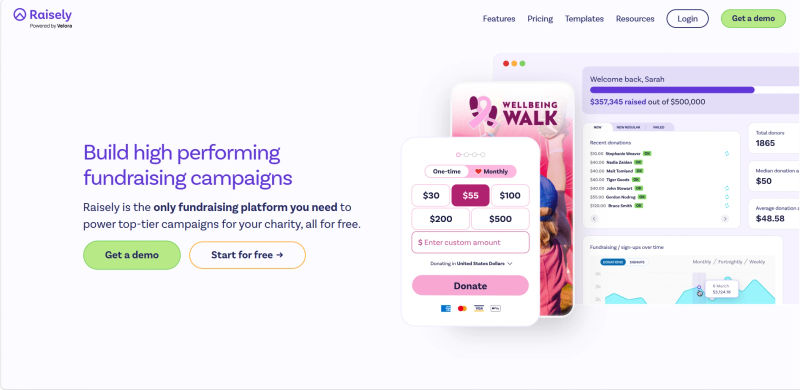
What is Raisely? Raisely is a comprehensive online fundraising platform designed to help nonprofits build custom donation campaigns, manage peer-to-peer fundraising, and nurture donor relationships. You can find the official platform at https://www.raisely.com/.
Streamline your software evaluation process
In the rapidly evolving landscape of digital philanthropy, selecting the right nonprofit fundraising software is no longer just about processing payments; it is about building an ecosystem that nurtures relationships. As we navigate 2026, the pressure on the Nonprofit Marketing & Fundraising Coordinator is immense. You are tasked with launching high-converting campaigns, managing donor data, and ensuring retention—often with limited resources and tight timelines. Raisely has emerged as a dominant player in this space, promising a sophisticated blend of design freedom and donor engagement tools without the hefty price tag of legacy enterprise systems.
If you are looking for in-depth Raisely reviews to evaluate your Raisely fundraising options—even if you've searched for common misspellings like raisley, raisly, or raiseley—this guide will establish exactly what the platform offers today.
This comprehensive review dissects Raisely’s capabilities, evaluating whether its "free" model is a sustainable strategy for your organization or if specialized competitors like Aplos, Keela, Zeffy, and Care2 offer a better fit. We will explore the nuances of its 2026 feature set, including the latest AI-driven design tools, peer-to-peer advancements, and security protocols.
Raisely distinguishes itself by democratizing access to high-end fundraising tech. Features that were once the domain of custom-coded websites—such as multi-currency support, automated donor journeys, and gamified peer-to-peer pages—are now accessible via a drag-and-drop interface. However, the platform's reliance on a "tipping" model (optional platform fees paid by donors) requires a strategic calculation regarding Donor Lifetime Value (LTV) and the potential for checkout friction.
The Bottom Line: Raisely is the premier choice in 2026 for ambitious nonprofits that prioritize brand aesthetics and peer-to-peer scalability but lack a large technical budget. It bridges the gap between simple donation forms and complex CRMs, though organizations requiring deep fund accounting or predictive AI modeling may find it serves better as a front-end complement rather than a total replacement.
Key Takeaways
Raisely remains a top-tier, highly customizable fundraising platform for nonprofits in 2026, standing out for its robust peer-to-peer campaign tools and zero-fee pricing structure. It is best suited for organizations looking to scale their digital fundraising without heavy upfront software costs.
Pricing: Raisely is free to use, relying on an optional donor tipping model to cover platform costs. Standard payment processing fees (like Stripe or PayPal) still apply.
Top Pros: Offers extensive customization (including custom code and APIs), excellent mobile-first donor experiences, and powerful built-in gamification for peer-to-peer campaigns.
Top Cons: The donor tipping model can sometimes frustrate supporters, and while it has basic CRM features, it lacks the deep accounting and advanced donor management tools found in dedicated platforms like Aplos or Keela.
Best For: Growing nonprofits focused on peer-to-peer fundraising, event registration, and highly branded donation pages.
Pros and Cons of Using Raisely
While industry experts praise its customization, fundraising platform critics often debate its reliance on the donor tipping model. Here is a balanced technical analysis of where Raisely excels and where it introduces friction for nonprofits.
Pros
High Customizability: The hybrid approach of a visual builder plus code access (HTML/CSS) offers the best of both worlds. You are not locked into a rigid template structure.
Cost-Effectiveness: The zero-fee model allows nonprofits to keep 100% of the donation (minus gateway fees). This is a massive advantage for ROI and allows small organizations to punch above their weight.
Integrated P2P & AI: Peer-to-peer fundraising is native, not an expensive add-on. The new AI coaching tools significantly reduce the workload on coordinators managing fundraisers.
Scalability: Nonprofits using Raisely have collectively raised over $1 billion globally, proving the platform can handle volume and scale with your organization.
Global Reach: With support for over 130 currencies and localized payment methods, it is ideal for international campaigns.
Cons
Learning Curve: The extensive customization options can be overwhelming for a novice user. It is not as "plug-and-play" as simpler, more restrictive alternatives.
CRM Limitations: While the CRM is excellent for fundraising data, it is not a full-blown constituent relationship management system like Salesforce. Complex donor hierarchies and grant tracking are missing.
Tipping Model Friction: Some organizations find the "tip the platform" ask at checkout to be distracting or unprofessional for high-dollar donors, necessitating a move to the paid plan.
Reporting Granularity: Creating deeply complex custom reports across multiple campaigns can sometimes require exporting data to Excel or BI tools rather than viewing it natively.
Best for: Global nonprofits running multi‑language donation campaigns
Verdict: Raisely 2026 stands out for transparent, free fundraising and inclusive global reach.
Raisely & Leading Non-Profit Alternatives
While this guide focuses on Raisely, it’s helpful to compare it against the most recognized Non-profit solutions.




Core Features: The Fundraising Campaign Builder
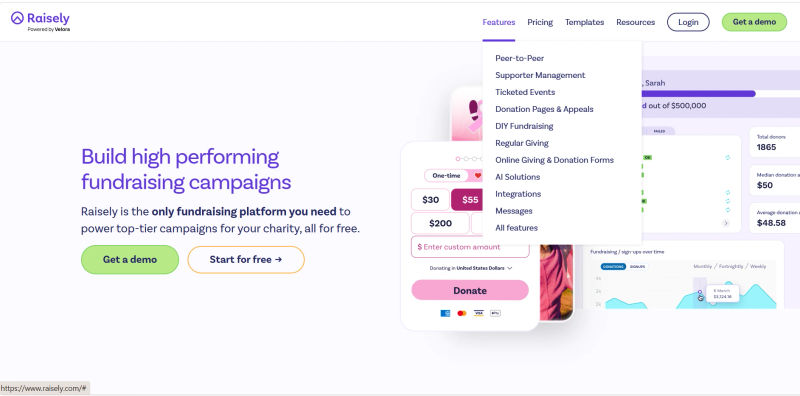
At the core of the Raisely fundraising platform is its campaign builder, significantly upgraded for 2026. Unlike generic systems requiring complex plugins, the Raisely platform leads modern low-code fundraising platforms by letting nonprofits build custom campaigns without developers. It operates as a dedicated high-conversion fundraising platform, purpose-built to maximize donor checkout rates. By leveraging built-in high-conversion fundraising tools—like seamless payment routing and optimized donation forms—marketing coordinators can quickly deploy a bespoke Raisely site that eliminates technical barriers and drives immediate impact.
1. Visual Design and AI-Driven UX
When evaluating the best AI tools for nonprofit fundraising 2025 2026, Raisely stands out for its intelligent campaign builder. For a fundraising coordinator, the ability to launch a professionally designed page is paramount. Raisely’s theme editor allows for granular control over brand assets, moving far beyond simple color swaps. You can manipulate layout grids, typography hierarchies, and mobile responsiveness settings with precision. This is critical because, as reported by industry analysis, online fundraising is growing at 10%–15% per year industry-wide, and donor expectations for a seamless digital experience are at an all-time high.
New for 2026, Raisely has deepened its AI-driven design suggestions. The builder now analyzes your uploaded assets and uses machine learning to suggest layout adjustments that maximize visual impact. Furthermore, the platform includes automated, AI-powered A/B testing capabilities for donation forms. You can run two variations of your ask string or button color, and the system will automatically route traffic to the higher-converting version. This feature directly addresses the need to optimize donation page conversion rates without manual data crunching, making it a top-tier AI fundraising solution.
2. Mobile-First Donor Experience
The UX design focuses heavily on reducing donor fatigue and checkout friction. The donation form can be embedded directly into the hero section of any landing page, reducing the clicks required to complete a gift. Raisely supports digital wallets like Apple Pay and Google Pay natively, which is essential for capturing impulse donations on mobile devices. By minimizing the steps between "intent" and "transaction," Raisely helps nonprofits lower their cart abandonment rates significantly.
3. Power User Features: Custom Code and APIs
While marketed as a no-code solution, Raisely offers a significant advantage for organizations that want to push boundaries: full CSS and HTML control. This "low-code" capability means that if a template doesn't do exactly what you need, you aren't stuck. You can inject custom scripts for tracking pixels, advanced analytics, or unique interactive elements. This level of openness is rare in the "all-in-one" fundraising platform market, where walled gardens are typically the norm. It ensures that as your organization grows, the software can scale in complexity alongside you.
Peer-to-Peer Fundraising Tools
Peer-to-peer (P2P) fundraising is where Raisely truly outperforms many of its competitors. In 2026, the platform has evolved its P2P suite to turn your supporters into highly effective fundraisers, leveraging social proof to amplify your reach.
1. Gamification and Engagement
The P2P templates now include advanced gamification elements such as digital badges, fundraising milestones, and dynamic leaderboards. These features are designed to trigger dopamine loops that encourage fundraisers to share their pages more frequently. For example, a fundraiser might unlock a "Super Star" badge upon reaching 50% of their goal, which automatically triggers a celebratory email they can forward to their network.
2. AI Coaching and Social Kits
A standout addition for 2026 is the AI Coaching feature for fundraisers. The platform analyzes a fundraiser's activity and sends automated, personalized tips. If a fundraiser hasn't posted in a week, the system might suggest: "Fundraisers who post a video update raise 40% more—click here to record a quick message." Additionally, Raisely auto-generates social media kits for your supporters, creating branded images with their specific progress bars pre-overlayed, making it effortless for them to share visually compelling updates on Instagram or TikTok.
Deep Dive: Donor Engagement & CRM Capabilities
Collecting a donation is only the first step; the real challenge is donor retention. Recognized among the top fundraising automation systems 2026 offers, Raisely functions as integrated software for donor management. Its built-in tools utilize marketing automation to streamline stewardship and prevent churn. By establishing automated communication journeys and donor feedback loops, Raisely ensures no supporter feels like a mere transaction number.
1. Marketing Automation and Journeys
Raisely’s "Messages" feature is a robust marketing automation tool that rivals standalone email platforms. It allows you to set up sophisticated email journeys triggered by specific behaviors. You can create a workflow that sends a thank-you email immediately after a donation, followed by an impact story three days later, and a prompt to become a recurring donor two weeks after that. This segmentation capability is vital for increasing the average gift size and upgrading one-time donors to monthly sustainers.
2. Lapsed Donor Re-engagement
A critical feature for the modern coordinator is the Lapsed Donor Workflow. Raisely can automatically identify donors who haven't given in 6, 12, or 24 months and trigger a specific re-engagement sequence. These automated "we miss you" campaigns can be personalized with the donor's last gift amount and impact area, significantly reducing the manual administrative burden of trying to win back lost supporters.
3. CRM Synchronization and Data Management
While Raisely includes a built-in CRM to manage donor profiles and transaction history, many mid-to-large nonprofits rely on external databases. Raisely addresses this through native integrations and Zapier connectivity. Data flows in near real-time, ensuring your central database is always up to date. The platform tracks soft credits (for P2P fundraisers) and manages recurring giving tokens securely. However, for large institutions, Raisely acts best as the fundraising front-end that feeds data into a more specialized backend system like Salesforce or HubSpot.
Find Perfect Software for Your Business
Raisely Pricing & Cost Analysis (2026)
Understanding the cost of fundraising software is complex. Raisely disrupts this with a zero-platform-fee structure. Instead of monthly subscriptions, Raisely fees rely on an optional donor tipping model at checkout, though standard payment processing rates still apply.
Because the software is free, campaigns display "powered by Raisely" branding by default. Nonprofits can remove this watermark by paying a flat fee. This opt-in model allows organizations to use premium tools without upfront costs, provided they accept the native branding.
The Real Cost of the "Tipping" Model
Raisely primarily operates on a model where the platform fee is optional for the donor. If a donor chooses not to tip Raisely, the platform is effectively free for the nonprofit, aside from standard payment processing fees (Stripe/PayPal).
For budgeting purposes, it is important to note the effective cost. Data from 2026 suggests that while the platform is free for the org, the presence of the tip jar can sometimes confuse older donors. However, for most modern audiences, it is an accepted practice. If you choose to disable the tip jar (the "Prepaid" model), you will pay a platform fee, typically ranging from 3% to 5% depending on your volume. This allows you to maintain a strictly branded experience without asking your donors to subsidize the software.
Security, Compliance, and Support Standards
In 2026, data privacy is not just a regulatory requirement; it is a trust signal to your donors. Raisely has fortified its infrastructure to meet the stringent demands of global nonprofits.
1. Data Privacy and Security
Raisely adheres to SOC2 Type II compliance standards, ensuring that their security controls are audited and effective. For organizations operating in Europe or dealing with EU citizens, the platform is fully GDPR compliant, offering tools to manage data deletion requests and consent tracking easily. All payment data is handled via PCI-DSS Level 1 compliant processors (Stripe/PayPal), meaning sensitive credit card information never touches Raisely’s own servers, reducing your liability.
2. Customer Support Benchmarks
One of the frequent pain points with "free" software is the lack of support. Raisely counters this with a reputation for responsiveness. User sentiment analysis from nonprofit forums indicates a high satisfaction rate, with average response times for standard tickets hovering around 2-4 hours during business days. Their support team is known for being "fundraiser-literate," meaning they understand the context of your campaigns, not just the technical code.
Top Raisely Alternatives & Competitors
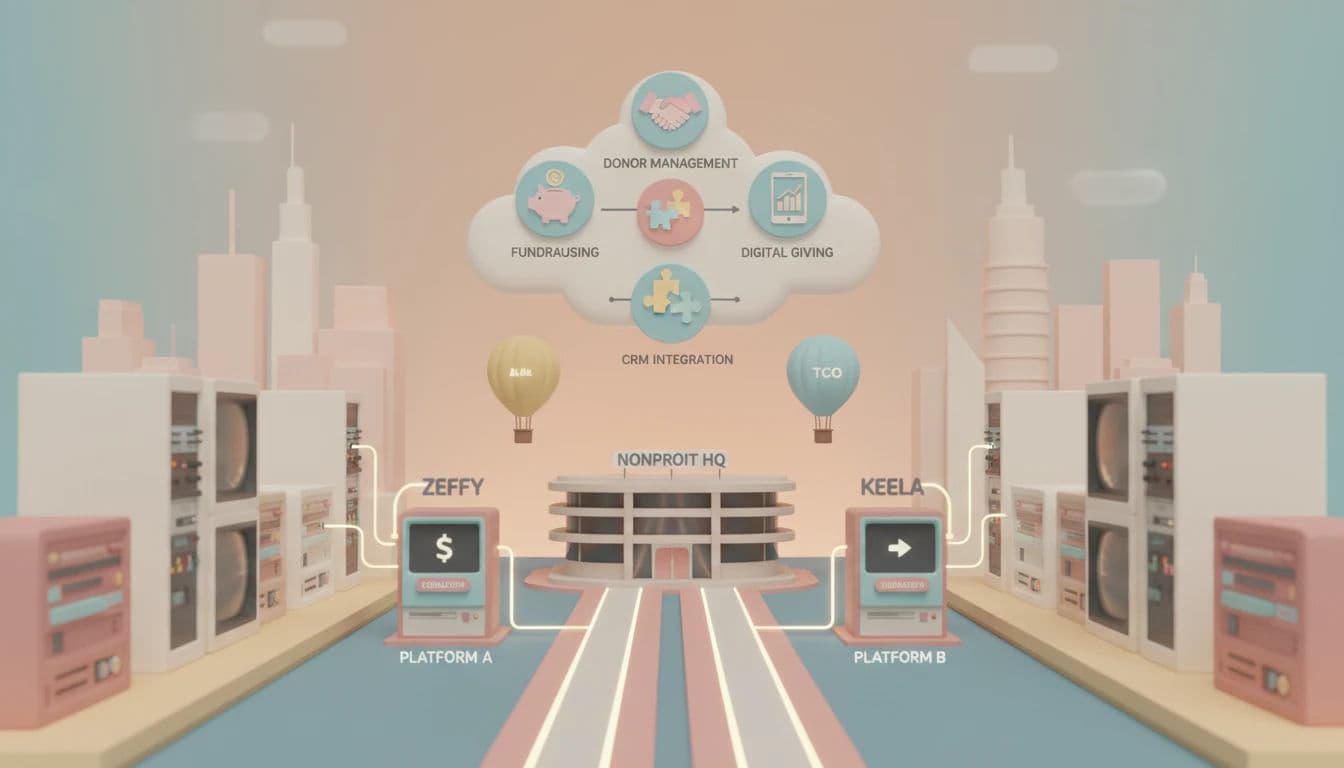
A thorough fundraising software review requires comparing Raisely against the specific strengths of its top competitors. Based on comprehensive fundraising software reviews, we selected Aplos, Keela, Zeffy, and Care2 for this comparison. These platforms represent distinct approaches to the nonprofit software stack, ranging from zero-fee models to deep CRM and accounting-first features.
1. Raisely vs. Aplos: Accounting vs. Fundraising
Aplos is fundamentally different from Raisely because its core DNA is fund accounting. While Aplos does offer fundraising tools and donation pages, they are often secondary to its robust financial management suite.
For a nonprofit where the primary bottleneck is bookkeeping, 990 preparation, and fund tracking, Aplos is the superior choice. It ensures that every dollar donated is automatically categorized in the general ledger, reducing the workload for your finance team. However, from a fundraising coordinator's perspective, Aplos’s campaign builder lacks the design flexibility and modern UX of Raisely. You won't find the same level of P2P gamification or advanced CSS control in Aplos.
Choose Aplos if: You need an all-in-one system that combines fundraising with true fund accounting.
Choose Raisely if: Your priority is high-converting, beautiful campaign pages and you are happy to integrate with separate accounting software.
2. Raisely vs. Keela: Intelligence and CRM Depth
Keela positions itself as an "Intelligent" CRM. Its standout feature is predictive analytics and AI-driven donor scores. Keela analyzes your data to tell you who to ask, when to ask, and how much to ask for.
In 2026, Keela’s ability to predict donor churn and suggest "smart asks" gives it a distinct edge for data-driven development directors. While Raisely has automation, Keela has intelligence. Keela’s CRM is also more robust for managing offline donations, grants, and volunteer data. However, Raisely still holds the crown for the actual visual building of campaign pages. Keela’s forms are functional and clean, but they don't offer the immersive, branded web experiences that Raisely’s site builder can produce.
Choose Keela if: You want a CRM-first platform that uses AI to optimize your fundraising strategy and donor management.
Choose Raisely if: You need a powerful frontend builder to run dynamic, visually stunning campaigns and P2P events.
3. Raisely vs. Zeffy: The Battle of Zero-Fee Platforms
In the Raisely vs. Zeffy comparison, Zeffy is the only platform that is 100% free—covering even credit card processing fees (which Raisely does not). Zeffy relies entirely on voluntary donor tips to sustain its business.
How do development directors rate Zeffy's donation form and donor CRM tools for small nonprofits maximizing revenue by eliminating transaction fees? They generally rate them highly for immediate ROI and straightforward utility. The forms are clean, and the basic CRM tracks donor history efficiently without overhead. However, the trade-off is advanced functionality. Zeffy is excellent for simple ticketing, memberships, and standard donation forms, but it lacks the deep customization capabilities, complex automated journeys, and extensive P2P features that Raisely offers. Raisely is a "platform" for building websites; Zeffy is a "tool" for processing transactions.
Choose Zeffy if: You need to eliminate all costs, including credit card fees, and have relatively simple fundraising needs.
Choose Raisely if: You are willing to pay standard processing fees in exchange for a much more powerful, customizable, and scalable campaign builder.
4. Raisely vs. Care2: Lead Generation and Advocacy
Care2 operates in a different sphere. It is primarily a network for advocacy and petition capabilities. Nonprofits use Care2 to generate leads by tapping into their massive community of activists.
It is important to view Care2 not as a direct software competitor to Raisely, but as an Acquisition and Advocacy Partner. You might use Care2 to find supporters through a petition and then funnel them into a Raisely campaign page for the actual donation. They serve different stages of the funnel. Raisely does not have an inherent audience of millions of activists; you have to bring your own traffic. Care2 provides that traffic.
Choose Care2 if: Your primary goal is acquiring new leads through advocacy and social justice petitions.
Choose Raisely if: You need a dedicated platform to convert your existing audience and network into donors through branded campaigns.
Try AuthenCIO
Move to faster, smarter software evaluation with AI
Final Verdict: Choosing the Right Platform for Your Mission
As we conclude this Raisely Review 2026, it is clear that the platform has matured into a sophisticated solution for nonprofits that value design, brand control, and donor experience. Its strength lies in its hybrid nature: accessible enough for a small team to launch a campaign in an afternoon, yet powerful enough for a global NGO to build a multi-currency, custom-coded fundraising ecosystem.
Raisely is the ideal choice for the Nonprofit Marketing & Fundraising Coordinator who feels limited by the rigid templates of older platforms and wants to bring a modern, digital-first aesthetic to their campaigns. The "free" entry point minimizes risk, allowing you to test its capabilities without a heavy contract commitment.
Migration & Next Steps Checklist
If you decide Raisely is the right move, follow this quick checklist to ensure a smooth transition:
Audit Your Data: Clean your current donor lists to ensure email addresses and names are accurate before import.
Map Your Journeys: Sketch out your "Thank You" and "Welcome" email sequences on paper before building them in the Messages tool.
Test the Tipping Model: Run a small, low-stakes campaign first to gauge your specific donor base's reaction to the optional platform fee.
Connect Your Gateway: Ensure your Stripe or PayPal account is verified and ready to accept multi-currency payments.
Summary: Is it Right for You?
Best for: Online fundraising campaign builders who need design freedom and peer-to-peer fundraising tools.
Key Advantage: High-end features with a $0 upfront cost.
Main Alternative: Zeffy for absolute zero cost; Keela for deep CRM intelligence.
Ultimately, the best software is the one that aligns with your specific bottleneck. If your bottleneck is "our donation pages look outdated and don't convert," Raisely is the solution. If your bottleneck is "we don't know who to ask for money," look toward a CRM with intelligence features.