
Introduction
The landscape of digital advocacy has matured significantly over the last decade. By 2026, the distinction between passive "clicktivism" and high-intent advocacy has become the defining metric for nonprofit success. For advocacy group organizers and nonprofit directors, the challenge is no longer just about gathering signatures; it is about supporter mobilization and converting viral moments into sustained, long-term movement building. In this ecosystem, online petition platforms for nonprofits must offer more than just a form—they must provide a pathway to engagement.
Streamline your software evaluation process
However, a shadow hangs over the industry: petition fatigue. After years of being bombarded with "Sign This" emails, the average digital citizen in 2026 is more skeptical and less likely to engage with generic calls to action. This shift has forced platforms to evolve. It is no longer enough to have a catchy headline; organizations need sophisticated targeting, psychological triggers, and frictionless mobile experiences to cut through the noise.
In this context, Care2 (sometimes searched as Care 2 or Cares2) occupies a unique position as a hybrid entity—part social network, part petition engine, and part supporter acquisition utility. Accessible via the Care2 official website at Care2.com, the platform distinguishes itself from competitors like Change.org that focus on broad, often unverified reach. Instead, Care2 has doubled down on building a community of "high-intent" activists. But for an organization facing increasing pressure to demonstrate Return on Investment (ROI), does Care2 still hold up? The era of vanity metrics is over. Today, a platform must offer seamless CRM integration, robust analytics, and compliant data handling practices to be considered a viable part of the tech stack.
This article provides an authoritative product overview of the Care2 platform as it stands in 2026. We will dissect its core functionalities, analyze its pricing structure, and evaluate its efficacy compared to functional alternatives like Aplos, Raisely, Keela, and Zeffy. Whether you are looking to launch a viral petition or integrate a new source of donor leads, understanding these nuances is critical for your strategic planning.
Key Takeaways
Top-of-Funnel Powerhouse: In 2026, Care2 remains the premier social network for activists, specializing in high-intent supporter acquisition and rapid petition mobilization rather than backend donor management.
Unique Engagement Metrics: The platform's proprietary 2026 "Engagement Score" and "Butterfly Effect" viral tools make it highly effective for organic reach and identifying long-term advocates.
Seamless Ecosystem Integration: While it lacks native CRM capabilities, Care2 offers robust API integrations to sync newly acquired leads directly into platforms like Keela, Aplos, or Raisely.
Best Use Case: Ideal for advocacy groups, environmental nonprofits, and political campaigns focused on list-building and awareness. Organizations seeking an all-in-one fundraising or zero-fee platform should look toward alternatives like Zeffy.
Pros and Cons of Care2 Platform
Based on aggregated care2 reviews from non-profit organizers in 2026, the platform offers a powerful hybrid of social networking and campaign mobilization. Users consistently highlight its massive built-in audience of activists as a major advantage for rapid scaling. Specifically, care2 petitions reviews praise the high conversion rates of its petition tools and the quality of high-intent supporter acquisition. Conversely, critical evaluations note that premium acquisition costs can be steep for smaller charities, and standing out among thousands of active campaigns requires strategic investment.
Pros
High‑intent supporter mobilization for advocacy campaigns
Ethical data collection and transparent engagement metrics
Strong community‑building tools for cause‑based outreach
Scalable platform for global advocacy and petition growth
Cons
Limited customization for complex campaign workflows
Requires consistent content updates to maintain engagement
Advanced analytics may need external integration for full insight
Best for: Advocacy groups seeking scalable supporter engagement and campaign growth
Verdict: Care2 2026 empowers nonprofits with transparent, data‑driven advocacy tools for measurable impact
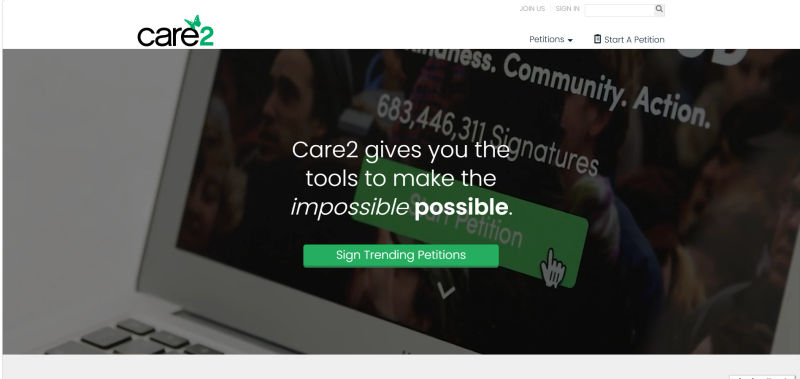
Care2 & Leading Non-Profit Alternatives
While this guide focuses on Care2, it’s helpful to compare it against the most recognized Non-profit solutions.




What is Care2? Defining the Social Network for Activists
Care2 (often searched as Care 2) is a social network and mobilization platform built specifically for activists and nonprofits. When organizations ask "what is Care2" or "who is Care2," the answer is a community ecosystem of over 65 million members who create petitions and organize campaigns around human rights, animal welfare, and environmental justice.
Empower Your Advocacy → Mobilize high‑intent supporters with Care2’s ethical engagement tools.
While recognized for its petition engine, Care2 functions primarily as a high-intent supporter acquisition network. Note: Care2 is a mobilization platform and is entirely distinct from unrelated corporate software like care2comply.
1. The Hybrid Model: Community Meets Mobilization
Unlike a standard CRM or a standalone donation page, Care2 operates on a community-first model. Users create profiles, follow specific causes, and receive curated content feeds based on their interests. For an advocacy group organizer, this means access to a pre-qualified audience. When you launch a campaign on Care2, you aren't just putting a form on a landing page; you are injecting content into a living stream of engaged users.
2. Demystifying the 2026 "Engagement Score"
In 2026, Care2 has refined its algorithm to assign a dynamic "Engagement Score" to every user. This is not a black-box metric but a predictive model based on historical platform behavior. The score aggregates data points such as:
Cross-Campaign Consistency: Does the user only sign petitions about whales, or do they support broader ocean conservation efforts?
Action Depth: Has the user previously written a letter to an editor, shared a campaign, or only clicked "sign"?
Recency: How active has the user been in the last 30 days?
This scoring system allows organizations to target individuals who are statistically more likely to take offline actions, such as attending rallies or contacting legislators. This addresses the long-standing criticism of digital petitions—that they rarely translate to real-world impact. By filtering for high scores, organizers can focus their movement building efforts on people ready to do more than just click.
3. Demographics and Reach
For nonprofits targeting specific sectors, Care2’s demographic data is a goldmine. The platform leans heavily toward progressive causes, with a user base that is highly active in environmental and animal rights sectors. According to recent platform data, the network facilitates millions of signatures monthly. However, for organizations seeking to reach conservative or apolitical audiences, the platform's strong brand identity as a progressive hub may present limitations. If your goal is broad, bipartisan awareness, Care2 might be niche. But if your goal is deep grassroots mobilization within the progressive sphere, the platform's density of active users is unmatched.
Key Features of Care2 for Campaign Mobilization
To evaluate Care2 in 2026, we must examine its tools for bridging digital signatures and donor conversion. Care2 is widely recognized as the best petition site that promotes your campaign to relevant users automatically. If you are researching which petition platform helps new campaigns get discovered by existing supporters, which petition platform recommends my campaign to people who care about similar issues, or which petition website sends my campaign to engaged supporters automatically, Care2 provides the solution. Its algorithmic matching engine automatically routes new petitions into the feeds and email digests of active members based on their historical advocacy data.
1. The Petition Creation Engine & Mobile Optimization
Creating Care2 petitions remains the platform's core mobilization feature. In 2026, this petition engine is fully optimized for mobile-first supporters, capturing the 75% of advocacy actions now happening on smartphones. Non-profits rely on Care2 petitions to rapidly gather signatures and acquire supporters. The builder includes dynamic content insertion, allowing organizers to A/B test headlines and images to maximize signature conversion rates.
2. The "Butterfly Effect" Viral Tools: A Step-by-Step Guide
One of the most touted features in 2026 is the "Butterfly Effect" toolset, designed to trigger algorithmic sharing. Here is how an organizer can leverage this for maximum reach:
Seed the Campaign: Upon launch, the organizer selects a "seed audience" from Care2’s existing high-engagement users (based on the Engagement Score).
Incentivized Sharing: After signing, the user is presented with a "Butterfly" prompt—a gamified sharing option that tracks how many secondary signatures their share generates.
Social Graph Optimization: The tool automatically formats the share preview for the specific platform the user selects (e.g., generating a vertical video snippet for TikTok or a threaded summary for X/Twitter) rather than a generic link.
Feedback Loop: The organizer receives real-time data on which "super-sharers" are driving traffic, allowing them to reach out personally to these key influencers.
3. High-Intent Supporter Acquisition
The most valuable feature for nonprofits is Care2’s paid acquisition services. Unlike organic social media, Care2 offers guaranteed supporter acquisition campaigns tailored to specific Care2 causes, including environmental protection, animal welfare, and human rights. Organizations pay to promote petitions to users matching precise behavioral profiles.
These are "high-intent" leads who have already engaged with similar issues. A major driver of this readiness is the Care2 click to donate program, which conditions users to take immediate, low-friction action. Additionally, targeted Care2 email outreach delivers campaigns directly to active members' inboxes. This ecosystem is critical for donor conversion, yielding significantly higher open rates for follow-up fundraising emails than cold lists bought from data brokers.
4. API Integrations and Data Sync
One of the historical pain points of petition sites was data silos. In 2026, Care2 offers improved API integrations with major CRMs like Salesforce, EveryAction, and Blackbaud.
Directionality: It is crucial to note that for most standard plans, this is a one-way push. Data flows from Care2 into your CRM when a supporter opts in. It does not typically pull data back from your CRM to update the Care2 profile.
Utility: This allows for immediate welcome series automation. As soon as a user signs a petition and opts into updates, their data is pushed to your CRM, triggering your welcome email journey. This speed is essential for donor retention rates.
5. Community Moderation and Safety
In an era of rampant online harassment, Care2 maintains strict moderation policies. This is a significant feature for organizations working on sensitive or controversial topics. The platform actively filters hate speech and counter-protest harassment, providing a "safe harbor" for vulnerable populations to engage in advocacy without fear of trolling. This brand safety is a "soft feature" that many corporate sponsors and large NGOs value highly.
Find Perfect Software For Your Business
Data Privacy, Security, and Ethics in 2026
Data privacy is a safety requirement. Users ask: is Care2 legit and is Care2 petitions safe? Yes. Advanced encryption prevents breaches. Is the Care2 petition site legit? Yes, transparent policies prove it. For those asking are Care2 petitions legit, ethical data practices confirm the answer to is Care2 petitions legit is definitively yes.
1. Compliance and Encryption
Care2 has updated its infrastructure to meet the stringent requirements of 2026 privacy laws, including the evolved GDPR (Europe) and CCPA (California). All data transmission is secured via TLS 1.3 encryption, ensuring that supporter information is protected from interception during the "sign" process. For organizations operating globally, Care2 provides regional data storage options to comply with data residency laws, ensuring that EU supporter data remains within EU servers.
2. The Ethics of Data Monetization
A common question from grassroots organizers is: "Does Care2 sell my supporters' data?" The answer requires nuance. Care2 operates largely on a permission-based model.
Organic Signatures: If a user signs your petition organically, you (the petition creator) can communicate with them through the platform, but you do not own their email address unless they explicitly opt-in to your specific newsletter list.
Paid Acquisition: When you pay for a recruitment campaign, you are essentially buying the "opt-in." Care2 facilitates the transfer of that consent to your organization.
However, Care2 does use aggregate user data to fuel its advertising algorithms. While they do not sell raw email lists to third parties without consent, they do monetize the access to those users. This is the trade-off of using a "free" social network. Activists should be transparent with their base about this: signing a petition on Care2 contributes to a profile that helps the platform target future causes.
3. Exportability and Ownership
For paid clients, data ownership is absolute. You can export your supporter lists in CSV format or sync them via API at any time. For free users, however, data ownership remains with Care2. This distinction is vital for grassroots mobilization groups who may eventually want to migrate off the platform. If you build a massive following on the free tier, you are renting your audience, not owning it.
Tired of sales pressure for advocacy software? Discover unbiased choices with AuthenCIO – it's free!
Care2 Pricing Plans: A Detailed Breakdown
Pricing transparency is often a hurdle in the enterprise software space. Care2 operates on a dual model: a free tier for individuals and grassroots organizers, and a paid tier for professional nonprofits seeking data ownership and promotion. In 2026, the pricing structure reflects the value of data and supporter acquisition.
While basic petition creation is free, the real power for organizations lies in the paid recruitment campaigns. These are typically priced on a Cost Per Lead (CPL) basis. For grassroots groups unable to meet the minimum spend of the "Nonprofit Growth" tier, Care2 occasionally opens up "micro-campaign" slots, though these are limited and seasonal.
Comparative Analysis: Care2 vs. Industry Leading Software
In 2026, the nonprofit technology ecosystem is crowded. While Care2 dominates the "social network" niche, several other platforms offer overlapping functionalities for fundraising, CRM, and mobilization. It is essential to compare these to understand where Care2 fits in your stack.
1. Care2 vs. Aplos: Backend vs. Frontend
Aplos is fundamentally different from Care2. While Care2 is a front-end mobilization tool designed to shout your message to the world, Aplos is a comprehensive fund accounting and nonprofit management suite.
The Difference: You wouldn't use Aplos to launch a viral petition to millions of strangers. You use Aplos to manage the money and relationships after you have acquired the donors. Aplos excels at IRS compliance, fund accounting, and tax statements.
Verdict: Aplos is a complement to Care2, not a direct substitute. Use Care2 for supporter acquisition and Aplos for retention and financial management.
2. Care2 vs. Raisely: Mobilization vs. Fundraising
Raisely focuses on empowering supporters to raise money on your behalf through peer-to-peer campaigns.
The Difference: Care2 focuses on advocacy actions (signatures, letters to editors), while Raisely focuses on financial actions (peer-to-peer fundraising pages). Raisely offers incredible customization for branded donation pages and allows you to build entire campaign microsites, whereas Care2 restricts you to their template.
Verdict: If your primary "call to action" is "Donate Now" rather than "Sign Now," Raisely is the superior choice. If you need 100,000 signatures to pressure a senator, Care2 is the winner.
3. Care2 vs. Keela: Intelligence-Driven Retention vs. Acquisition
Keela is a CRM known for its "donor intelligence" features.
The Difference: Keela uses AI to tell you when to ask a donor for money and how much to ask for. It is a tool for maximizing the lifetime value of current supporters. Care2 is a tool for finding new supporters. Keela does not have a public marketplace of users you can tap into; it manages the data you already have.
Verdict: Keela is the perfect destination for the data you export from Care2. They work well in tandem: Care2 fills the funnel, and Keela nurtures the lead.
4. Care2 vs. Zeffy: The Zero-Fee Model vs. Paid Reach
Zeffy has made waves by offering a 100% free fundraising platform for nonprofits, covering even credit card processing fees.
Care2 vs. Zeffy: Zeffy is purely a transactional tool. It lacks a social network or petition engine, relying entirely on your existing traffic. Care2 focuses on paid reach and audience acquisition.
EveryAction vs. Zeffy: Zeffy offers a streamlined, zero-fee solution for basic transactions. In contrast, EveryAction is a comprehensive CRM built for complex advocacy and deep donor management.
Verdict: For zero-budget fundraising efficiency, Zeffy wins. However, Care2 provides the new audience that Zeffy cannot generate, while CRMs like EveryAction handle the robust backend data management neither platform provides natively.
Strategic Implementation: Maximizing ROI on Care2
Selecting the right software requires a clear understanding of your organizational goals. The "Decision Matrix" for 2026 involves analyzing your primary bottleneck. Here is how to decide:
Choose Care2 if: - Your primary goal is Awareness and List Growth.
You need to reach a progressive audience outside of your current email list.
You have a budget for CPL (Cost Per Lead) acquisition and want guaranteed results.
You need a viral mechanism (petitions) to start a conversation before asking for money.
Look elsewhere if: - Your primary goal is Donor Management (Look at Keela or Aplos).
You need 100% control over your branding and page design (Look at Raisely).
You are a conservative organization (Care2's audience may not align).
You have zero budget and need to keep every dollar raised (Look at Zeffy).
A Note on Integration: For budget-conscious organizers, the interplay between Zeffy and Care2 is interesting. One could theoretically use Care2's free petition tools to generate excitement and link out to a Zeffy donation page to capture funds fee-free. However, be warned: this adds friction to the user journey, which can lower conversion rates. The most robust strategy is usually to use Care2 for the initial signature, sync the data to a CRM, and then use a dedicated fundraising tool for the follow-up ask.
First Step for Organizers: Before committing to a $2,500 campaign, test the waters. Launch a free petition on Care2 using the "Grassroots Starter" features. Use the "Butterfly Effect" tools to gauge organic resonance. If you see a high Engagement Score among signers, you have proof of concept to justify a paid acquisition budget.
Try AuthenCIO
Move to faster, smarter software evaluation with AI
Conclusion: Final Verdict for Organizers
In 2026, Care2 remains a vital tool in the digital activist’s arsenal, primarily due to its massive, engaged user base. It is not a "do-it-all" platform, nor should it be. Its strength lies in its identity as a social network for good—a place where momentum is built and new supporters are discovered.
For the Advocacy Group Organizer, the verdict is clear: Use Care2 for what it does best—grassroots mobilization and high-volume supporter acquisition. But do not rely on it as your sole database. To build a resilient organization, you must integrate Care2’s top-of-funnel power with the backend stability of platforms like Aplos or Keela.
Care2 is the megaphone; your CRM is the memory. In the fast-paced advocacy environment of 2026, you need both to win. By understanding the distinct role of each tool, you can move beyond vanity metrics and drive genuine, measurable social change.