
Introduction
Why Global Companies Are Hiring Talent in India
In 2026, India remains a leading global hub for talent acquisition. Moving far beyond its legacy as a traditional business process outsourcing (BPO) destination, India has transformed into a sophisticated epicenter for Global Capability Centers (GCCs), engineering innovation, and specialized IT services.
Streamline your software evaluation process
Global employers are actively targeting Tier 1 cities like Bangalore, Hyderabad, and Pune. However, an intense "war for talent" and high attrition rates in these primary markets have increasingly driven companies to tap into emerging Tier 2 talent hubs, such as Jaipur, Indore, and Ahmedabad, to scale their operations efficiently and sustainably.
Hiring remote employees in India
The transition from identifying top-tier Indian talent to successfully onboarding them is fraught with administrative friction, particularly when building distributed teams.
When hiring remote employees in India, global HR managers must navigate a highly complex, multi-layered regulatory environment that includes state-specific labor laws, stringent tax withholding requirements, and mandatory social security contributions.
According to recent industry data, 57% of global payroll professionals cite local compliance as their single biggest challenge. Furthermore, 42% of organizations report having no formalized global payroll strategy, leaving them exposed to severe audit risks and financial penalties.
Without a localized entity or a deep understanding of the regulatory landscape, international employers risk misclassifying workers, miscalculating payroll, and violating statutory benefit mandates. To scale successfully, companies need a comprehensive strategy that prioritizes compliance from the very first offer letter.
Software Covered in this Article
To help you understand HRMS in the right context, this article refers to a key player:

Navigating India's Evolving Employment Laws and Hiring Regulations
Understanding India employment laws in 2026 requires a fundamental grasp of the newly implemented Labour Codes.
Effective late 2025, the Indian government consolidated 29 archaic central labor laws into four unified frameworks: the Code on Wages, the Code on Social Security, the Industrial Relations Code, and the Occupational Safety, Health and Working Conditions (OSHWC) Code.
For global employers, these codes introduce sweeping changes to how compensation is structured and how compliance is reported. One of the most critical updates is the new definition of "wages."
Under the 2026 framework, an employee's basic pay must constitute at least 50% of their total remuneration. If allowances exceed 50% of the total salary, the excess amount is treated as wages for the purpose of calculating statutory benefits like Provident Fund (PF) and Gratuity. This completely alters how companies must design their Cost to Company (CTC) structures.
Additionally, the new codes introduce a simplified "single registration, single license, and single return" system, aimed at reducing the bureaucratic burden on employers. However, workplace safety and employee welfare regulations have become more stringent.
For example, the OSHWC Code now mandates free annual health check-ups for employees over the age of 40 and requires the formation of safety committees in establishments with 500 or more workers.
The Prevention of Sexual Harassment (PoSH) Act
Beyond the Labour Codes, compliance with the Prevention of Sexual Harassment (PoSH) Act is a non-negotiable pillar for any employer in India. Any organization with 10 or more employees must constitute an Internal Committee (IC) to address workplace harassment complaints.
Global employers must ensure mandatory PoSH training is conducted annually and that detailed compliance returns are filed with local authorities, even for fully remote workforces.
Drafting Compliant Employment Contracts and Managing Probation Periods
When hiring employees in India, the employment contract serves as the primary legal safeguard for both the employer and the employee.
In 2026, generic global employment templates are insufficient; contracts must be heavily localized to reflect Indian jurisprudence, statutory benefit entitlements, and intellectual property (IP) protections.
Key Elements of an Indian Employment Contract:
Cost to Company (CTC) Breakdown: Contracts must clearly delineate gross salary, basic pay (meeting the 50% threshold), House Rent Allowance (HRA), Special Allowances, and statutory deductions.
Probation Periods: The industry standard for probation in India ranges from three to six months. During this period, the notice period for termination is typically shorter, often ranging from 15 to 30 days.
Notice Periods: Once confirmed, notice periods in India are notoriously long compared to global standards. A 60-day to 90-day notice period is standard practice in the IT and professional services sectors, which often leads to candidates "offer shopping" during their notice period.
Dual Employment (Moonlighting) Clauses: With the rise of remote work, moonlighting has become a major concern for employers. Contracts in 2026 must include explicit exclusivity and confidentiality clauses to prevent employees from taking on secondary jobs that conflict with your business interests or compromise IP.
Non-Compete and Non-Solicit Clauses: It is crucial for global HR teams to understand that under Section 27 of the Indian Contract Act, post-employment non-compete clauses are notoriously difficult to enforce and are often considered void. Therefore, employers must rely heavily on robust non-solicitation and strict confidentiality agreements to protect their business interests.
Full and Final (FnF) Settlement: Contracts should outline the FnF process, which typically dictates that all final dues, including encashed leave and gratuity, must be settled within 30 to 45 days of the employee's last working day.
Managing India Payroll: Requirements and Statutory Obligations
Mastering India payroll compliance is arguably the most complex aspect of hiring in the country.
Payroll in India is not just about calculating an hourly rate; it involves a complex interplay of direct taxes, state-level professional taxes, and mandatory social security contributions.
Tax Deducted at Source (TDS): Employers are legally obligated to deduct income tax from an employee's salary every month before disbursing the net pay. This is known as TDS.
The deduction amount depends on the employee's chosen tax regime (the simplified new tax regime or the old regime with investment exemptions) and their income slab. Failure to deduct or deposit TDS on time attracts severe penalties, ranging from 1% to 1.5% interest per month on the defaulted amount.
Professional Tax (PT): Professional Tax is a state-level tax imposed on income earned by salaried individuals. Not all states levy PT, but major employment hubs like Karnataka, Maharashtra, and Tamil Nadu do.
The maximum amount payable is INR 2,500 per year, typically deducted in monthly installments. Managing PT is a significant administrative burden for global companies with remote workers scattered across different Indian states, as it requires multi-state registrations and distinct monthly filings.
1. Sample CTC Breakdown: The 50% Basic Pay Rule
To understand the impact of the 2026 Labour Codes, consider a simplified Cost to Company (CTC) breakdown for an employee earning a gross salary of INR 100,000 per month. To remain compliant with the new wage definition:
Basic Pay: INR 50,000 (Must be at least 50% of the total gross)
House Rent Allowance (HRA): INR 25,000
Special Allowances: INR 25,000
Statutory contributions, such as the Provident Fund, are calculated strictly on the INR 50,000 Basic Pay, preventing employers from artificially inflating allowances to avoid social security liabilities.
2. Understanding the Provident Fund (PF) and Pension Schemes
The Employees' Provident Fund (EPF) is the cornerstone of India's social security system. It is a mandatory retirement savings scheme for employees earning a basic salary of up to INR 15,000 per month.
However, it is standard market practice for employers to offer EPF contributions to all employees, regardless of their salary bracket, to remain competitive.
Under the EPF framework, both the employer and the employee must contribute 12% of the employee's basic pay. The employer's 12% contribution is split: 8.33% goes to the Employees' Pension Scheme (EPS) and 3.67% goes to the EPF.
Ensuring that the basic pay meets the new 50% minimum threshold is critical here, as the Employees' Provident Fund Organisation (EPFO) heavily penalizes non-compliance.
3. Employee State Insurance (ESI) and Health Benefits
The Employee State Insurance (ESI) scheme provides medical, cash, maternity, and disability benefits to workers. It is mandatory for employees earning gross wages of INR 21,000 or less per month. The contribution rates are set at 3.25% for the employer and 0.75% for the employee.
While ESI primarily covers lower-wage workers, global employers hiring highly paid tech or management talent typically replace this with comprehensive private health insurance. Providing robust corporate health insurance—often extending coverage to the employee's spouse, children, and dependent parents—is a critical non-monetary benefit required to attract top talent in India in 2026.
4. Gratuity Requirements: Managing Long-term Liability
Gratuity is a statutory lump-sum benefit paid by an employer to an employee as a token of appreciation for their continuous service. The standard gratuity calculation is 15 days of the last drawn basic salary for every completed year of service.
Historically, employees were only eligible for gratuity after completing five continuous years of service. Under the 2026 Code on Social Security, a massive shift has occurred for contract workers: fixed-term employees now qualify for gratuity after just one year of continuous service.
It is crucial to note, however, that the standard 5-year continuous service rule still applies to regular permanent employees. Employers must account for this accumulating liability on their balance sheets from day one.
Find Perfect Software for your Business
Leave Policies and Mandatory Employee Benefits in 2026
When figuring out how to hire employees in India, HR managers must design leave policies that comply with both national laws and the specific state's Shops and Establishments Act where the employee resides.
Standard Leave Entitlements:
Earned Leave (EL) / Privilege Leave (PL): Typically, employees earn 15 to 18 days of paid annual leave per year, which can often be carried forward or encashed during the Full and Final settlement.
Casual Leave (CL): Usually 7 to 10 days per year, designed for unforeseen, short-term absences.
Sick Leave (SL): Generally 7 to 10 days per year, requiring a medical certificate if taken for more than two or three consecutive days.
Maternity and Paternity Leave: India offers one of the most generous maternity leave policies globally. Under the Maternity Benefit Act, female employees are entitled to 26 weeks of fully paid maternity leave for their first two children.
While statutory paternity leave is not mandated for the private sector, progressive global employers typically offer 2 to 4 weeks of paid paternity leave to remain competitive in the talent market.
Public Holidays and Bonuses: India has three mandatory national holidays: Republic Day (January 26), Independence Day (August 15), and Gandhi Jayanti (October 2). In addition to these, employers must grant state-specific festival holidays, usually totaling 10 to 12 public holidays annually.
Furthermore, the Payment of Bonus Act mandates an annual bonus (often referred to as a 13th-month salary or Diwali bonus) for employees earning below a certain threshold, though many global companies build performance bonuses into the CTC for all employees.
Contractor vs. Employee: Avoiding Misclassification Risks in India
For global companies testing the waters in the Indian market, hiring independent contractors often seems like a faster, cheaper alternative to full-time employment.
However, worker misclassification is one of the highest-risk areas for global employers in 2026.
The 2026 Labour Codes officially recognize "gig workers" and "platform workers," bringing them under the umbrella of certain social security benefits. Indian labor courts use the "control test" to determine a worker's true status.
If your company dictates the worker's hours, provides their equipment, restricts them from working with other clients, and integrates them deeply into your core business operations, Indian authorities will likely classify them as a de facto employee.
The penalties for misclassification are severe, but the risks extend beyond labor law. A critical danger is "Permanent Establishment" (PE) risk.
If Indian tax authorities determine that a misclassified contractor is acting as a dependent agent of your foreign entity, they may declare that your company has a Permanent Establishment in India. This exposes your global business to Indian corporate tax rates (often upwards of 40%) on all profits attributed to that Indian operation. To mitigate this risk, companies must ensure that contractor agreements are strictly limited to project-based deliverables.
Scaling Strategy: Local Entity vs. Employer of Record (EOR)
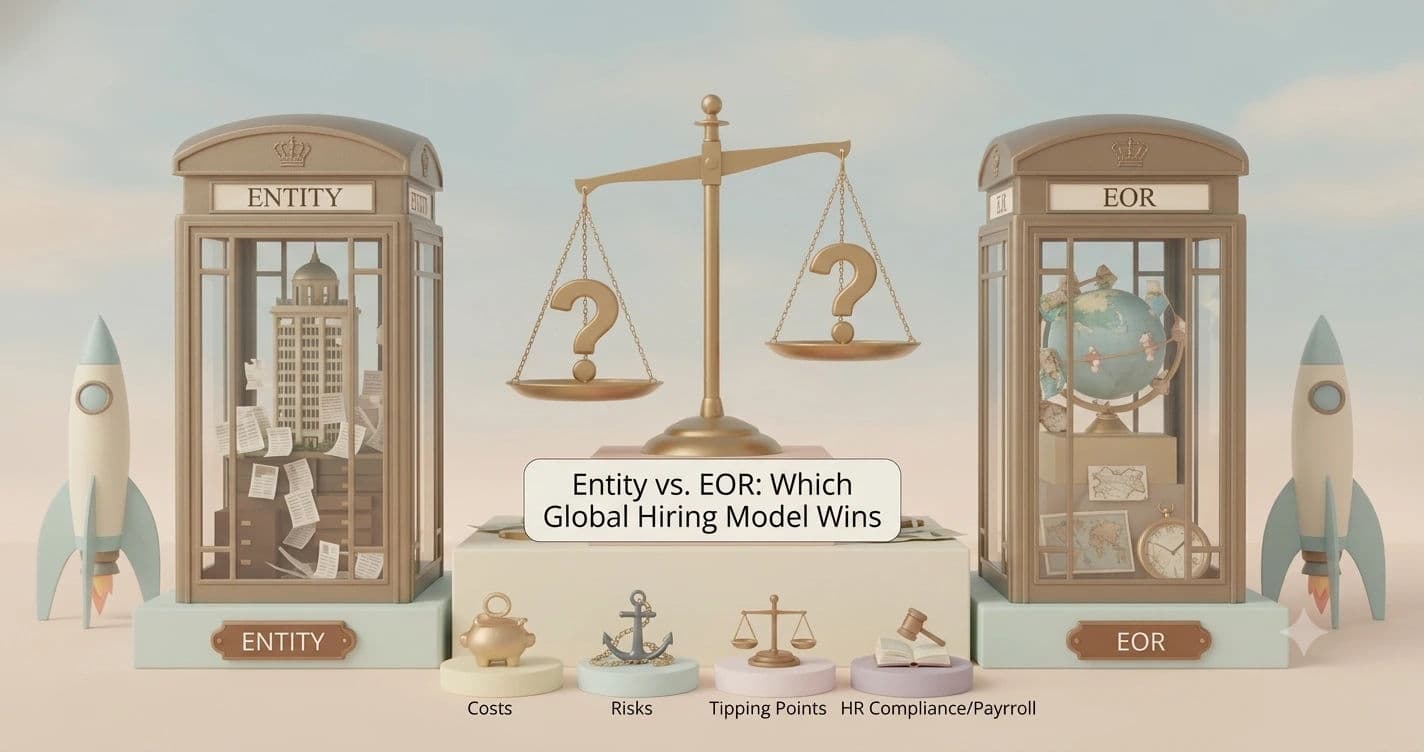
When a global company decides to hire in India, they face a critical strategic choice: establish a local legal entity (such as a Private Limited Company) or partner with an Employer of Record India solution.
Partnering with an Employer of Record India provider allows you to bypass the entity setup entirely. An EOR already has a fully compliant legal entity established in India.
They act as the legal employer of your Indian talent on paper—handling the employment contracts, payroll processing, tax withholding, and statutory benefits—while you retain complete day-to-day management of the employee's work and productivity. For companies looking to hire quickly, test the market, or scale without massive upfront capital expenditure, an EOR is the most efficient and risk-free expansion strategy.
Conversely, setting up a Private Limited Company in India is a time-intensive and capital-heavy process. It requires incorporating with the Ministry of Corporate Affairs (MCA), appointing local resident directors, opening local bank accounts, and registering for GST, PF, ESI, and Professional Tax across multiple states.
This process can take anywhere from three to six months and requires ongoing legal, accounting, and HR overhead to maintain compliance.
Cost Considerations for Your Indian Workforce
Understanding the true Cost to Company (CTC) is vital for budgeting. The cost of hiring an employee in India extends far beyond their base salary. Global employers must account for the Total Cost of Employment (TCE), which includes:
Gross Salary: The baseline compensation negotiated with the employee.
Employer PF Contribution: 12% of the basic pay.
Employer ESI Contribution: 3.25% of gross wages (if applicable).
Gratuity Provision: Approximately 4.81% of the basic pay, accrued annually.
Private Health Insurance: Premiums for comprehensive family coverage.
EOR Management Fees: A predictable monthly fee if utilizing an Employer of Record.
Failing to accurately forecast these statutory and operational costs can lead to significant budget overruns during international expansion.
How Deel Helps Companies Hire Employees in India Seamlessly
Navigating the intricacies of India's 2026 Labour Codes, state-specific tax laws, and complex CTC structures is a daunting task for any global HR team.
This is where Deel steps in as the ultimate global HR and payroll solution.
Deel’s Employer of Record (EOR) model empowers global businesses to hire full-time employees in India in a matter of days, completely eliminating the need to establish a local subsidiary.
Deel takes on the legal responsibility of employment, ensuring that every aspect of your Indian workforce management is bulletproof and compliant.
Here is how Deel simplifies global hiring in India:
Localized, Compliant Contracts: Deel automatically generates employment contracts drafted by in-country legal experts. These contracts are fully aligned with the 2026 Labour Codes, ensuring the 50% basic pay rule, proper probation periods, and robust IP protection clauses are perfectly executed.
Automated Payroll and Tax Withholding: Deel’s platform automates the entire India payroll compliance process. It accurately calculates gross-to-net salaries, handles Tax Deducted at Source (TDS), and manages state-specific Professional Tax (PT) filings without you having to lift a finger.
Statutory Benefits Management: Deel seamlessly administers all mandatory benefits, calculating and remitting Provident Fund (PF) and Employee State Insurance (ESI) contributions, while accurately tracking Gratuity liabilities for both permanent and fixed-term employees.
Risk-Free Contractor Management: If you choose to hire independent contractors, Deel provides localized contractor agreements and compliance workflows that protect your business from misclassification and Permanent Establishment (PE) risks.
Streamlined Onboarding: From background checks and statutory document verification (like Aadhaar and PAN cards) to benefits enrollment, Deel provides a world-class onboarding experience that makes your Indian hires feel valued and integrated from day one.
Try AuthenCIO
Move to faster, smarter software evaluation with AI
Conclusion: Future-Proofing Your Indian Expansion Strategy
Expanding your workforce into India offers unparalleled access to world-class talent, but it demands strict adherence to a complex, rapidly evolving regulatory landscape.
From the nuances of the 2026 Labour Codes to the heavy administrative burdens of PF, ESI, and multi-state tax withholding, the margin for error in Indian payroll and compliance is virtually zero.
Global employers cannot afford to rely on fragmented processes or outdated legal advice. By partnering with Deel, you can offload the entire burden of entity setup, localized contract generation, and payroll compliance.
Deel provides the infrastructure, the in-country legal expertise, and the automated technology required to hire employees in India swiftly, securely, and completely risk-free. Future-proof your international expansion today by letting Deel handle the compliance, so you can focus on building a high-performing global team.
Appendix: Comparison Table - Local Entity vs. Employer of Record (EOR)
Feature | Local Entity (Private Limited) | Employer of Record (EOR) |
Time to Setup | 3 to 6 months | 2 to 5 days |
Upfront Costs | High (Legal, registration, banking, capital) | Low (Predictable monthly per-employee fee) |
Compliance Liability | 100% on the global employer | Borne by the EOR (Deel) |
Payroll Management | Requires hiring local HR/Finance teams or vendors | Fully automated and managed by the EOR |
Best For | Massive scale (100+ employees), physical manufacturing | Rapid scaling, remote teams, market testing |