

Introduction
Key Takeaways
Conducting a cloud communication security audit is essential to combat AI-driven threats and secure hybrid work perimeters.
Regulatory compliance requires continuous auditing, moving beyond point-in-time checks to automated "Compliance as Code."
Balancing End-to-End Encryption (E2EE) with regulatory archiving mandates (e.g., SEC/FINRA) requires strategic configuration.
Evaluating vendors demands scrutiny of AI transparency, quantum-resistant encryption, and explicit Business Associate Agreements (BAAs).
The State of Enterprise Cloud Communications Security
Streamline your software evaluation process
Securing enterprise cloud communications requires moving beyond traditional perimeter defenses to continuous, identity-driven verification. With unified platforms integrating voice, video, SMS, and AI transcription, Chief Information Officers (CIOs) must implement proactive best practices to mitigate expanding attack surfaces.
To secure your cloud communications infrastructure today, prioritize these core practices:
Implement Zero-Trust Architecture: Authenticate every user and device continuously. The hybrid work model has dissolved the corporate perimeter, making strict access controls for all communication channels mandatory.
Combat Shadow IT with Usability: Employees often bypass rigid corporate systems using non-compliant consumer messaging apps. Eliminate this vulnerability by deploying secure platforms that offer a seamless, consumer-grade user experience.
Defend Against Advanced Threats: Modern cyber threats include real-time deepfake audio and video injection. Require vendors to provide AI-driven threat detection and end-to-end encryption to verify participant authenticity.
Shift to Continuous Auditing: Point-in-time compliance is insufficient. Security must be woven into the platform's architecture and continuously monitored against strict frameworks like SOC2 and HIPAA.
By balancing strict security protocols with frictionless usability, enterprises can maintain operational resilience without driving users to unauthorized workarounds.
Software Covered in this Article
The following articles break down the key aspects of Cloud Communications Software, featuring a carefully curated set of key players:








Core Compliance Frameworks: HIPAA, SOC2, and Beyond
Evaluating a cloud communications vendor requires a deep understanding of the regulatory frameworks governing data privacy.
Claiming to be "secure" is meaningless without third-party attestation and adherence to established legal standards.
1. Navigating HIPAA in Cloud Communications
For any organization handling protected health information (PHI), HIPAA compliance is non-negotiable.
However, a common pitfall is confusing "HIPAA-eligible" with "HIPAA-compliant."
A platform may have the technical capability to secure ePHI, but it is not compliant unless properly configured and legally bound by a Business Associate Agreement (BAA).
When evaluating vendors, scrutinize the BAA.
A robust BAA should explicitly outline the Shared Responsibility Model: the cloud provider secures the infrastructure, while the enterprise manages access controls and user behavior.
The BAA must clearly define breach notification timelines and specify data destruction protocols.
Furthermore, the vendor must demonstrate how features isolate and encrypt ePHI to prevent unauthorized access.
2. SOC2 Type II: The Enterprise Gold Standard
SOC2 is the universal benchmark for enterprise SaaS security.
Developed by the American Institute of CPAs (AICPA), SOC2 evaluates a vendor's systems based on Security, Availability, Processing Integrity, Confidentiality, and Privacy.
It is crucial to distinguish between SOC2 Type I and Type II.
Type I only assesses the design of security processes at a specific point in time.
In contrast, SOC2 Type II evaluates the operational effectiveness of those controls over a continuous observation period.
A SOC2 Type I report is insufficient for enterprise procurement; demand a recent SOC2 Type II report and conduct a thorough review of the auditor's findings.
3. Compliance as Code and Public Sector Standards
For organizations in the public sector or government contracting, FedRAMP and StateRAMP authorizations are critical baselines.
Additionally, modern compliance has shifted toward "Compliance as Code."
This approach automates the auditing process by embedding compliance checks directly into the deployment pipeline, ensuring that cloud communication configurations cannot drift out of alignment with HIPAA, SOC2, or FedRAMP standards without triggering immediate alerts.
The Ultimate Cloud Communications Security Checklist
Evaluating a new vendor requires a structured, step-by-step approach.
To translate ambiguous regulatory requirements into actionable tasks, execute this how-to checklist during your Request for Proposal (RFP) and due diligence phases. Follow the phased steps below to systematically audit potential cloud communications platforms.
1. SOC2 Enterprise Messaging Checklist (Phase 1)
Verify Certifications: Request the most recent SOC2 Type II report and ISO 27001 certification. Ensure the audit covers the specific communication products you intend to deploy.
Review the BAA: Confirm the vendor's willingness to sign a comprehensive BAA. Evaluate specific clauses regarding liability, incident response, and data ownership.
Assess the Supply Chain: Cloud providers rely on their own third-party vendors. Require a mapping of the vendor's digital supply chain and verify that sub-processors meet the same compliance standards.
Evaluate the Shared Responsibility Model: Demand a documented matrix detailing which security controls the vendor manages and which fall under your IT team's purview.
2. Technical Architecture and Data Protection (Phase 2)
Data Residency and Sovereignty: Confirm where data is physically stored and processed. Ensure the architecture supports geo-fencing to comply with evolving "Splinternet" regulations.
Data Segregation: In multi-tenant environments, verify how enterprise data is logically separated from other customers to prevent cross-tenant leakage.
Quantum-Resistant Encryption Readiness: Ask vendors for their roadmap regarding quantum-resistant cryptographic algorithms to future-proof against next-generation decryption capabilities.
AI Transparency: Explicitly ask if your corporate communication data (voice, text, video) is used to train the vendor's proprietary Large Language Models (LLMs). Opt-out mechanisms must be verifiable.
3. Administrative Controls and User Management (Phase 3)
Identity and Access Management (IAM): The platform must support SAML 2.0 for Single Sign-On (SSO) and enforce multi-factor authentication (MFA).
Role-Based Access Control (RBAC): Ensure administrators can implement the principle of least privilege.
Audit Logging: Verify that the platform generates immutable, comprehensive audit logs detailing user logins, configuration changes, and data access.
The "Red Flag" Cheat Sheet for Vendor Demos
Be wary of non-compliant marketing claims.
Red flags include vendors claiming their software is "100% secure," those who hesitate to provide a SOC2 Type II report under an NDA, or platforms requiring you to disable essential security features to enable legacy integrations.
Find Perfect Software for Your Business
Evaluating Data Encryption and Access Controls
Robust data encryption and strict access controls form the foundation of secure enterprise cloud communications. Meeting HIPAA and SOC2 requirements demands a defense-in-depth strategy that actively protects data across its entire lifecycle, ensuring only authorized personnel can access sensitive information.
1. Encryption Standards: At Rest, In Transit, and End-to-End
Data at rest must be encrypted using Advanced Encryption Standard (AES) with 256-bit keys.
AES-256 remains the cryptographic gold standard, providing resilience against modern brute-force attacks.
Data in transit must be protected by Transport Layer Security (TLS).
TLS 1.2 is widely considered deprecated for highly sensitive enterprise data; TLS 1.3 is the mandatory standard, offering faster handshakes and eliminating obsolete cryptographic algorithms.
For the highest level of confidentiality, evaluate End-to-End Encryption (E2EE).
E2EE ensures that only communicating users can decrypt messages; the vendor's servers act merely as a conduit.
However, CIOs must carefully navigate the privacy versus compliance paradox.
E2EE prevents the platform from reading the data, which inherently breaks centralized compliance archiving required by regulatory bodies like FINRA and the SEC.
Organizations must explicitly clarify this technical trade-off before deploying E2EE across regulated communication channels.
2. Zero-Trust Access Controls
Encryption is useless if access controls are weak.
Modern cloud communications must operate on a Zero-Trust Architecture (ZTA)—authenticating and authorizing every connection.
Integration with enterprise identity providers (IdPs) via SSO and mandatory MFA are critical.
Specifically, organizations should mandate FIDO2/WebAuthn standards, which serve as the primary defense against sophisticated MFA-bypass and phishing attacks.
Vendor Spotlights: How Leading Platforms Approach Compliance
To understand how these frameworks apply in the real world, examine how leading vendors approach security.
Different platforms cater to different needs, and their compliance postures reflect their target markets.
1. Enterprise UCaaS Giants: Twilio, RingCentral, and Dialpad
Large-scale enterprises rely on comprehensive platforms to manage global communications, but compliance capabilities vary heavily by architecture and tier.
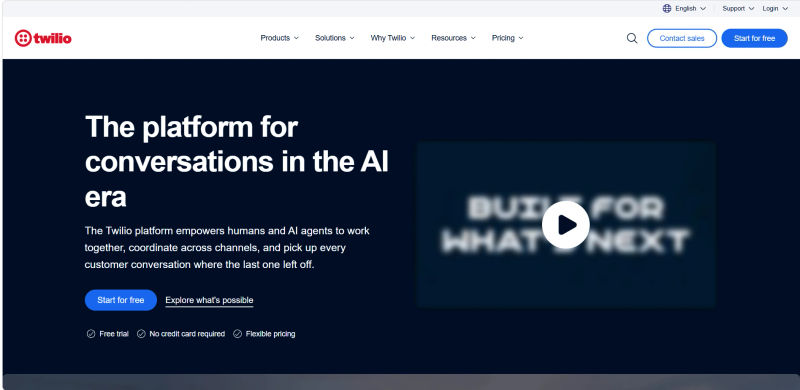
Twilio provides a highly customizable infrastructure managed via its centralized Trust Hub.
Compliance & Pricing: Maintains SOC2 Type II and offers HIPAA-eligible SKUs. Its 2027 CustomerAI features include strict data masking and opt-out controls. Advanced compliance tools require Enterprise editions, moving beyond basic consumption pricing.
Strategic Consideration: The configuration burden rests heavily on enterprise developers; API misconfigurations can easily lead to compliance failures.
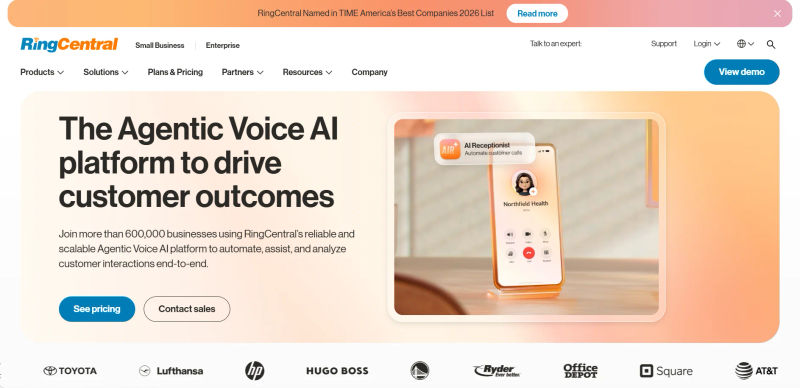
RingCentral offers all-in-one voice, video, and messaging with deep regulatory coverage.
Compliance & Pricing: Boasts SOC2 Type II, HIPAA, and HITRUST CSF certifications. Recent updates expanded End-to-End Encryption (E2EE) across all endpoints. Advanced auditing and RingSense AI compliance require the top-tier Ultra plan.
Strategic Consideration: The platform's sheer complexity and breadth can make enterprise-wide deployment and continuous auditing a resource-intensive process.
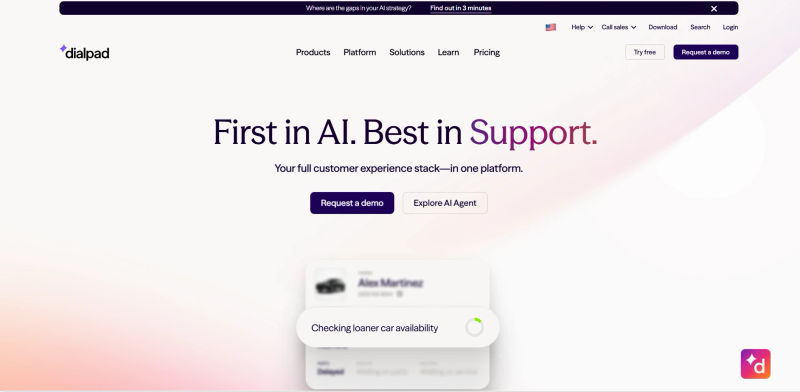
Dialpad secures AI data pipelines using its proprietary DialpadGPT, delivering real-time analytics without routing data through third-party LLMs.
Compliance & Pricing: Maintains SOC2 Type II and offers HIPAA BAAs. Enterprise plans are mandatory for critical controls like SSO and custom data retention.
Strategic Consideration: AI data privacy requires strict administrative configuration to ensure proprietary conversations aren't inadvertently exposed during machine learning processing.
2. Specialized and Healthcare-Focused Platforms: Textline, WestFax, and Weave
For organizations where patient communication and document transmission are critical, specialized platforms offer tailored compliance.
Textline provides secure, HIPAA-compliant SMS for clinical teams. By 2027, it features automated 10DLC compliance registration and built-in patient consent management, utilizing secure portals for sensitive ePHI.
Strategic Consideration: Highly specialized for text messaging and automated reminders; lacks the broader voice and video UCaaS capabilities required for full enterprise communications.

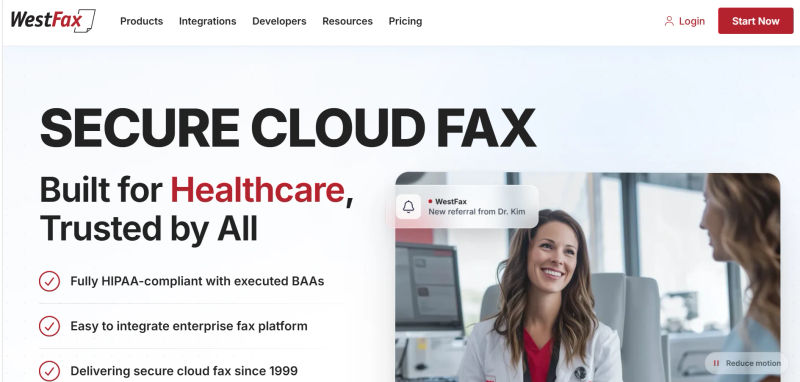
WestFax addresses the persistent need for secure document transmission. Moving beyond legacy faxing, its modern architecture focuses on API-driven cloud faxing, supporting TEFCA interoperability standards, TLS 1.3, and AES-256 encryption for secure OCR data extraction.
Strategic Consideration: Serves a specific document-routing use case. Enterprises must integrate it via API alongside a primary communications platform rather than using it standalone.
Weave focuses on patient communication and practice management. It now supports AI-driven scheduling and automated billing, maintaining strict ePHI safeguards alongside PCI-DSS compliance for integrated payments.
Strategic Consideration: The platform is highly optimized for clinical, dental, and veterinary workflows, making it less suited for general corporate or financial enterprise use.

3. Developer-First and Niche Messaging: CometChat, Zenzap, and KrispCall
When enterprises embed secure communications into proprietary applications, they increasingly turn to agile platforms with targeted compliance frameworks.
CometChat provides in-app messaging APIs and SDKs via consumption-based pricing. It maintains strict SOC2 Type II compliance and offers Business Associate Agreements (BAAs) for HIPAA-ready integrations, alongside end-to-end encryption (E2EE) modules.
Strategic Consideration: Requires a strong internal development team to implement and maintain the security perimeter around the APIs.

Zenzap and KrispCall offer secure business messaging and modern VoIP solutions on per-user SaaS tiers, helping IT combat Shadow IT. Zenzap focuses on compliant multi-channel messaging (including WhatsApp Business API governance), while KrispCall ensures SOC2 compliance via strict data residency controls and STIR/SHAKEN authentication.
Strategic Consideration: As newer or niche players, they may lack the deep legacy PBX integrations and global carrier relationships offered by UCaaS giants.
Continuous Auditing and Incident Response Planning
Achieving compliance during the vendor selection phase is only the beginning.
Regulatory bodies expect continuous compliance—the ongoing monitoring and enforcement of security policies post-implementation.
Treating compliance as an annual exercise leaves the enterprise vulnerable to configuration drift.
1. Establishing Continuous Compliance with XDR
CIOs must implement automated compliance monitoring tools that continuously scan the environment.
This involves integrating the communication platform's audit logs with modern Extended Detection and Response (XDR) platforms.
By pushing communication logs into an XDR system, security teams can correlate anomalous behavior—such as a user downloading massive call recordings while simultaneously attempting an unauthorized login from a foreign IP—across the entire enterprise ecosystem in real-time.
Furthermore, enterprises should conduct regular gap analyses.
As platforms release new features, the compliance team must evaluate how these impact data privacy and update risk assessments accordingly.
2. Incident Response in Cloud Communications
Despite the strongest preventative measures, breaches can occur.
A robust Incident Response (IR) plan specific to cloud communications is critical.
This playbook must detail the exact steps to take if a vendor experiences a breach.
Crucially, organizations should conduct annual "Tabletop Exercises" specifically focused on cloud communication outages and breaches.
These simulated scenarios ensure that IT, legal, and executive teams know how to establish independent communication channels, instantly revoke API keys, and align with breach notification timelines stipulated in the BAA.
Streamlining Your Vendor Selection Process
Securing enterprise cloud communications requires auditing vendors, interpreting regulations, and balancing encryption with operational efficiency. Streamline your vendor selection by standardizing the evaluation process around three core criteria:
Regulatory Alignment: Verify SOC2 and HIPAA documentation upfront.
Technical Capabilities: Assess how the vendor balances robust encryption with system performance.
Strategic Value: Prioritize infrastructures that protect intellectual property and act as business enablers rather than compliance cost centers.
Top 3 Actions for Monday Morning
Initiate a Gap Analysis: Cross-reference your current communication tools against the SOC2 Enterprise Messaging Checklist to identify immediate Shadow IT vulnerabilities.
Review Active BAAs: Audit all existing Business Associate Agreements to ensure they explicitly cover new AI features and LLM data usage.
Schedule a Tabletop Exercise: Plan a simulated communication breach scenario for the upcoming quarter to test your incident response readiness.
Navigating the crowded UCaaS and CPaaS markets requires a vendor-neutral, analytical approach.
By leveraging these checklists and frameworks, enterprise leaders can cut through the marketing fluff and identify partners truly committed to data security.
Appendix: Reference Guide for Enterprise Encryption & Access
Protocol / Standard | Primary Application | Enterprise Compliance Status | Key Business Benefit |
AES-256 | Data at Rest (Storage, Backups) | Mandatory for HIPAA / SOC2 | Provides military-grade symmetric encryption for stored data, mitigating physical server breaches. |
TLS 1.3 | Data in Transit (Network Traffic) | Mandatory baseline | Prevents man-in-the-middle (MitM) attacks and ensures secure client-to-server communication. |
E2EE (Signal Protocol) | Highly Sensitive Messaging | Optional (Conflicts with SEC/FINRA) | Ensures zero-knowledge privacy; the service provider cannot access the communication content. |
SAML 2.0 / OIDC | Identity Federation (SSO) | Mandatory for Enterprise | Centralizes user authentication, reducing password fatigue and streamlining onboarding/offboarding. |
FIDO2 / WebAuthn | Multi-Factor Authentication | Highly Recommended | Provides phishing-resistant authentication, moving beyond vulnerable SMS-based OTPs. |
Try AuthenCIO
Move to faster, smarter software evaluation with AI
Conclusion
Securing cloud communications requires more than checking compliance boxes. Organizations must adopt a continuous security strategy that combines HIPAA and SOC 2 governance, zero-trust access controls, strong encryption, and ongoing monitoring to protect sensitive data. By thoroughly evaluating vendors, defining clear shared-responsibility expectations, and integrating compliance into daily operations, enterprises can reduce risk, strengthen regulatory readiness, and support secure collaboration across hybrid work environments. Ultimately, the most effective cloud communication platforms balance security, compliance, usability, and scalability, enabling organizations to maintain trust while confidently adapting to evolving cyber threats. [AuthenCIO Blog]