

Introduction
Key Takeaways
Centralize procurement to eliminate Shadow IT: Mandate company-wide audits to identify and consolidate decentralized communication software purchases.
Conduct quarterly audits for hidden fees: Actively strip out unused licenses, integration debt, and compliance surcharges (e.g., TCPA) to lower Total Cost of Ownership (TCO).
Deploy a consolidation decision matrix: Evaluate enterprise suites (RingCentral) versus best-of-breed tools (Kixie, CallHippo) based on specific departmental ROI rather than feature bloat.
Calculate the true "Security Premium": Require vendors like Wati.io and Treble.ai to itemize HIPAA and SOC2 compliance costs during the RFP stage to prevent budget surprises.
Build exit strategies into every contract: Prevent vendor lock-in by legally defining data extraction fees and number porting timelines before signing.
The 2027 Cloud Communication Budget Drain: Why Costs Are Spiraling
Streamline your software evaluation process
In 2027, the shift from on-premise PBX to Unified Communications as a Service (UCaaS) has inadvertently replaced predictable capital expenditures (CAPEX) with bloated, decentralized operational expenditures (OPEX). To stop the budget drain and protect EBITDA margins, CFOs and Procurement Heads must immediately implement the following cost-control practices:
Centralize Procurement to Eliminate Shadow IT: Individual departments frequently bypass formal channels to purchase preferred SaaS tools. Mandate centralized purchasing to eliminate redundant subscriptions, overlapping features, and compliance risks.
Forecast and Cap AI Usage Fees: The aggressive integration of AI (transcription, sentiment analysis, automated routing) consumes computational tokens often passed on as variable fees. Negotiate flat-rate AI tiers or implement hard usage caps to prevent fluctuating monthly liabilities.
Consolidate Regional Telephony Billing: Managing fragmented billing from multiple regional providers makes it impossible to attribute costs. Standardize on a centralized management platform to track usage-based messaging and telephony costs by specific departments or customer segments.
Tie CCaaS Deployments to Concrete Financial Metrics: The Contact-Center-as-a-Service (CCaaS) market is projected to reach $24.45 billion by 2032. Move beyond marketing promises of "digital transformation" and require stringent vendor audits to ensure every license directly improves operational efficiency.
Software Covered in this Article
The following articles break down the key aspects of Cloud Communications Software, featuring a carefully curated set of key players:







Identifying Hidden Fees and Unused Licenses in Your Stack
Before implementing any new software, procurement heads must establish a financial baseline by conducting a comprehensive audit of their current communication stack.
The most significant financial waste in cloud telephony does not usually stem from the core subscription price, but rather from hidden fees, "ghost" licenses, and underutilized premium features.
Achieving SaaS Communication Cost Reduction Through Audits
To identify and eliminate unnecessary spend, CFOs should mandate a 90-day rolling audit checklist focused on the following critical areas:
1. Identify and Terminate Ghost Licenses
Growing teams frequently provision licenses for new hires, contractors, or temporary staff, but fail to de-provision them upon offboarding. These "ghost licenses" or "shelfware" silently drain the budget month after month.
Cross-reference your active telephony user list with your HR Information System (HRIS) on a quarterly basis to eliminate inactive seats and reclaim wasted spend.
2. Analyze Feature Utilization Rates
Many enterprise tiers bundle advanced features like predictive dialing, AI call coaching, or custom API access. If your team is only utilizing basic inbound/outbound calling and voicemail, you are overpaying.
Audit feature usage logs and downgrade non-power users to a standard tier to instantly realize cost savings.
3. Audit International Termination and Roaming Rates
International calling and messaging rates fluctuate wildly based on the destination country and the carrier.
Review your billing statements for unexpected spikes in international termination rates, which often occur when sales or support teams expand into new regions without optimizing their dial plans or negotiating localized SIP trunks.
4. Review Regulatory and Compliance Surcharges
In 2027, compliance is a material component of ROI. Carrier surcharges for SMS delivery, A2P 10DLC registration fees in the US, and GDPR compliance tools in Europe can add significant overhead.
Furthermore, Telephone Consumer Protection Act (TCPA) violations can result in statutory damages of $500 to $1,500 per message. Ensure your stack includes automated consent management to mitigate these severe financial risks.
5. Assess Integration Debt
A frequently overlooked hidden fee is "Integration Debt"—the ongoing costs of maintaining custom API connections between your telephony stack and CRM systems.
If an API requires constant developer maintenance to prevent data silos, the total cost of ownership for that "cheap" telephony tool is actually much higher than a premium tool with native integrations.
By systematically addressing these areas, procurement teams can often reclaim 15% to 20% of their communication budget without altering the end-user experience or switching vendors.
Cost-Optimization Strategies for Cloud Telephony
CFOs must approach cloud telephony ROI by implementing best practices that align vendor pricing models directly with departmental usage patterns. A one-size-fits-all approach inevitably leads to overspending or operational bottlenecks. To maximize returns, finance leaders should rightsize licenses based on actual consumption, conduct quarterly usage audits, and match specific operational needs to the appropriate service tiers.
Consolidation vs. Best-of-Breed: A Decision Matrix
When evaluating comprehensive platforms versus specialized tools, procurement teams must carefully assess the feature-to-value ratio. Use the following decision matrix framework to guide purchasing:
When to Consolidate: If your organization requires deep cross-departmental collaboration, unified video conferencing, and advanced AI analytics across the entire company, consolidation is the most financially sound path. Platforms like RingCentral offer a robust, enterprise-grade unified communications suite. While the per-seat cost may be higher, consolidating eliminates redundant software subscriptions and lowers IT administrative overhead.
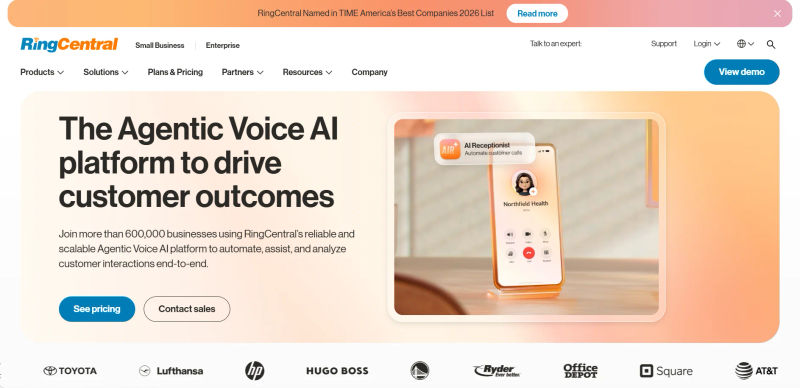
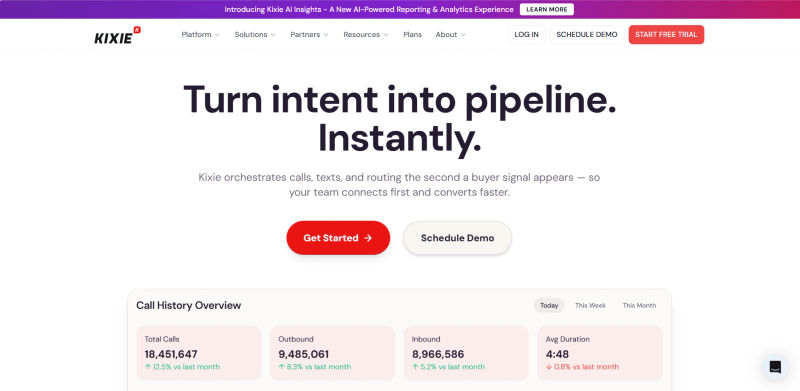
When to Choose Best-of-Breed: If a specific department has high-volume, specialized needs, a best-of-breed solution often yields a higher ROI. For example, deploying RingCentral's highest tier to a high-volume outbound sales team might result in paying for unused collaborative capacity. Instead, outbound teams can leverage Kixie, which specializes in local presence dialing and automated voicemail drops. While procurement must monitor the per-minute costs, the resulting decrease in agent idle time significantly lowers the overall labor cost per acquisition (LCA).
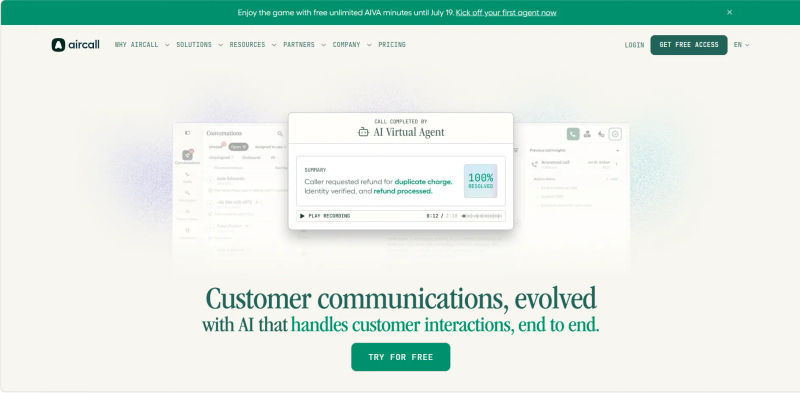
When to Prioritize Native CRM Integration: For customer support and account management teams, the cost of integration debt must be weighed heavily. Aircall provides exceptional financial value in this scenario due to its seamless, out-of-the-box CRM integrations and rapid deployment capabilities, minimizing the need for expensive internal developer resources.
Targeted Solutions for International Operations
For growing teams expanding globally, managing the costs of international numbers and localized support is a primary concern. Platforms like CallHippo and CloudTalk offer highly scalable, cost-effective solutions for provisioning international virtual numbers.
They allow businesses to establish a local presence in dozens of countries without the heavy infrastructure costs associated with legacy telecom providers.
By routing international calls over optimized VoIP networks, these platforms help CFOs bypass exorbitant traditional carrier fees, ensuring that international expansion does not linearly inflate the communication budget.
Ultimately, a neutral financial evaluation must consider the portability of numbers, the cost of data extraction, and the historical uptime of the provider when deciding between a single suite and a diversified stack.
Maximizing ROI on Omnichannel and Global Messaging
While voice communication remains vital for complex customer interactions, the volume of asynchronous omnichannel messaging—SMS, WhatsApp, and in-app chat—has skyrocketed. Optimizing omnichannel messaging costs requires a different financial framework than VoIP budget management, primarily because messaging is heavily subjected to consumption-based pricing, carrier filtering, and regional data regulations.
1. Controlling the Variable Costs of High-Volume Messaging
Standard SMS pricing can range from $0.01 to $0.05 per message, with carrier surcharges adding additional fractions of a cent. For a business sending hundreds of thousands of notifications monthly, these micro-transactions quickly erode profit margins.
To combat this, procurement heads should evaluate platforms that offer volume-tiered pricing or dedicated messaging infrastructure.
For global teams, WhatsApp has become the preferred channel for customer engagement, often providing a lower cost-per-interaction than traditional SMS, especially for international audiences.
Utilizing a specialized WhatsApp Business API provider like Wati.io allows growing teams to consolidate their customer support and marketing messages into a single, cost-effective channel. Wati.io's shared inbox and automated template routing help reduce the need for multiple disparate messaging apps, thereby lowering software licensing costs and improving agent efficiency.

2. Leveraging AI Automation and Global Data Solutions
Labor overhead remains the most expensive component of customer communication. Integrating AI-driven automation within messaging platforms is a proven strategy to offset these costs.
Solutions like Treble.ai enable businesses to automate routine customer touchpoints—such as appointment reminders, lead qualification, and basic support queries—directly within WhatsApp and SMS.
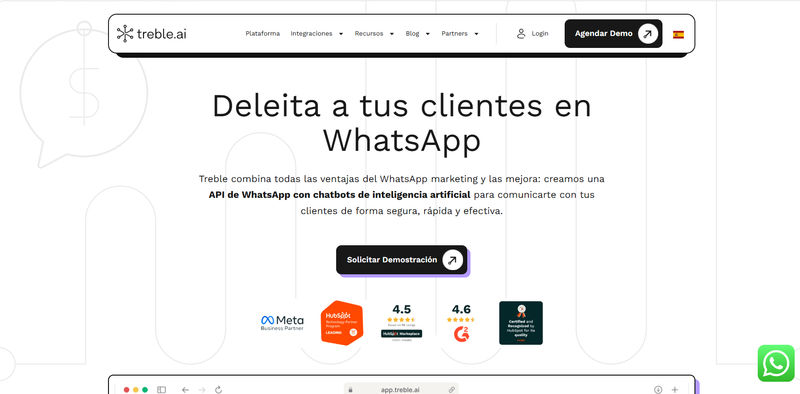
By measuring the ROI of Treble.ai through metrics like "containment rate" (the percentage of queries resolved without human intervention) and reduced agent handling time, CFOs can clearly justify the software investment against tangible payroll savings.
Furthermore, for teams that require extensive international travel or operate distributed global fleets, roaming data charges can cause severe bill shock.
Partnering with global connectivity providers like Voye Global allows organizations to manage international data and roaming costs through centralized eSIM deployments and predictable, flat-rate global data plans. This eliminates the unpredictable variable costs associated with traditional mobile carriers.

Finally, for businesses that rely heavily on inbound customer inquiries, managing toll-free number costs is essential.
Providers like 800.com offer streamlined, cost-effective toll-free management, allowing businesses to maintain a professional national presence while tightly controlling the per-minute routing costs associated with high-volume inbound traffic.

3. The Security Premium: Navigating Compliance Costs
When evaluating omnichannel ROI, CFOs must account for the "Security Premium." Moving to enterprise tiers specifically for HIPAA, SOC2, or GDPR compliance significantly impacts the ROI of messaging platforms.
While tools like Wati.io or Treble.ai offer immense operational savings, ensuring that patient data or financial records are transmitted securely often requires purchasing dedicated, compliant infrastructure.
Procurement must weigh the hard cost of these premium security tiers against the potential financial devastation of a data breach or regulatory fine, treating compliance not as an IT expense, but as a core risk-mitigation investment.
Find Perfect Software for Your Business
Comparing Vendor Pricing Models: What Procurement Needs to Know
Evaluating vendor pricing models requires a systematic approach for accurate financial forecasting. Follow these steps to assess OPEX billing structures:
Map Usage: Quantify baseline communication volume versus peak spikes.
Analyze Billing: Identify flat-rate, usage-based, or hybrid models.
Uncover Hidden Fees: Scrutinize contracts for overage penalties and API limits.
Model TCO: Project 36-month costs factoring in headcount and volume growth.
Per-User vs. Usage-Based Billing
Per-User (Seat-Based) Pricing: This model charges a flat monthly fee for each active user, typically bundling a set amount of minutes or messages. It offers excellent predictability for financial forecasting and is ideal for teams with consistent, moderate usage. However, the downside is the risk of paying for shelfware. Procurement must actively manage seat allocation to ensure ROI.
Usage-Based (Consumption) Pricing: This model charges strictly based on the volume of minutes consumed, messages sent, or API calls made. It is highly flexible and ideal for businesses with seasonal spikes in demand or highly variable communication patterns. The primary risk is bill shock during periods of unexpected high volume.
When evaluating these models, growing teams should track marginal costs separately from fixed costs.
Platform subscriptions, CRM integrations, phone number rentals, and compliance tooling form the fixed layer. Minutes, messages, AI processing tokens, and carrier surcharges form the variable layer.
Below is a breakdown of common hidden fees encountered during vendor evaluations and actionable strategies for procurement teams to mitigate them.
Hidden Fee Category | Typical Cost Impact | Avoidance & Mitigation Strategy |
|---|---|---|
Carrier Surcharges (SMS/MMS) | Adds $0.003 - $0.01+ per message sent. | Negotiate "pass-through" pricing directly with the vendor; audit monthly invoices for unexpected carrier markup. |
International Termination Rates | Highly variable; can exceed $0.10+ per minute. | Implement strict dial-plan routing; utilize localized SIP trunks; block high-cost country codes by default. |
10DLC Registration & Vetting | $4 - $15 per campaign, plus monthly fees. | Consolidate messaging campaigns; ensure strict compliance to avoid penalty fees and message filtering. |
API Overage & Rate Limit Fees | $50 - $500+ monthly for exceeding API calls. | Accurately forecast CRM sync volumes; negotiate higher API limits during initial contract signing. |
Implementation/Onboarding Labor | High internal soft costs; lost productivity. | Demand dedicated vendor onboarding support; negotiate waived implementation fees for multi-year commitments. |
Premium Support Tiers | 10% - 20% of annual contract value (ACV). | Leverage internal IT for deployment where possible; negotiate SLA-backed support inclusions in the base contract. |
Negotiating Better Contracts with Communication Vendors
Securing favorable terms with cloud communication vendors requires a structured methodology focused on long-term scalability. Rather than solely targeting the lowest per-minute rate, procurement teams must systematically leverage usage data, benchmark competitive pricing, and align contract flexibility with projected headcount growth. This best-practice approach ensures robust cost control and safeguards EBITDA margins throughout 2027.
1. Leveraging Volume Discounts and Multi-Year Caps
Vendors are highly motivated to secure long-term recurring revenue. Procurement leaders can leverage this by negotiating multi-year contracts that include built-in price caps.
A common strategy is to agree to a two- or three-year term in exchange for a contractual guarantee that renewal rates will not increase by more than 3% to 5% annually. This protects the budget from sudden inflationary price hikes.
Furthermore, when negotiating volume discounts for omnichannel messaging or VoIP minutes, avoid getting locked into excessively high minimum commitments.
Instead, negotiate a tiered pricing structure where the per-unit cost automatically decreases as your volume crosses specific thresholds. This ensures that economies of scale are realized without the financial risk of paying for unused capacity if growth slows.
2. Service Level Agreements (SLAs) and Financial Penalties
Cost optimization also means ensuring you get the quality you pay for. A cheap telephony provider is ultimately a financial liability if frequent outages lead to lost sales or customer churn.
Procurement must demand stringent Service Level Agreements (SLAs) that guarantee at least 99.99% uptime.
Crucially, these SLAs must be backed by meaningful financial penalties.
If the vendor fails to meet the uptime guarantee, the contract should stipulate automatic service credits applied to the next billing cycle. This shifts technical risk back to the provider, ensuring cost-quality alignment.
3. Exit Strategies: Planning for the End of the Contract
One of the most expensive mistakes a procurement team can make is failing to plan an exit strategy. Vendor lock-in can force companies to endure sub-par service simply because leaving is too costly.
Before signing, explicitly negotiate the costs of data extraction and number porting. Ensure the contract stipulates that the vendor will release all proprietary data and facilitate the porting of local, international, and toll-free numbers to a new provider without exorbitant "divorce costs" or artificial delays.
4. Implementing Automated Cost Controls
Finally, the most effective negotiation strategy is proactive internal control. Before finalizing any contract, ensure the vendor's platform supports granular, role-based access and automated budget alerts.
Step-by-step instructions should be established within the IT and Finance departments to set up usage caps within communication APIs.
For example, if a marketing campaign unexpectedly triggers a massive volume of outbound SMS, the system should automatically pause sending and alert the finance team once a predefined daily budget threshold is reached. Preventing bill shock is just as important as negotiating the initial rate.
Try AuthenCIO
Move to faster, smarter software evaluation with AI
Conclusion: Building a Sustainable Communication Stack for the Future
Optimizing cloud telephony ROI in 2027 requires CFOs and Procurement Heads to transition from passive bill payers to active strategic architects of their communication infrastructure.
As the industry continues to evolve—with AI automation, omnichannel integration, and global compliance shaping the market—the businesses that thrive will be those that rigorously manage their Total Cost of Ownership.
By conducting regular 90-day audits to eliminate ghost licenses and integration debt, carefully selecting between per-user and usage-based pricing models, and leveraging targeted solutions like Wati.io, CallHippo, or Treble.ai for specific departmental needs, growing teams can significantly reduce their communication spend.
Ultimately, sustainable cost optimization does not mean sacrificing call quality or customer experience; it means intelligently aligning your technology investments with your operational reality, ensuring every dollar spent drives measurable business value and protects your bottom line.