
Introduction
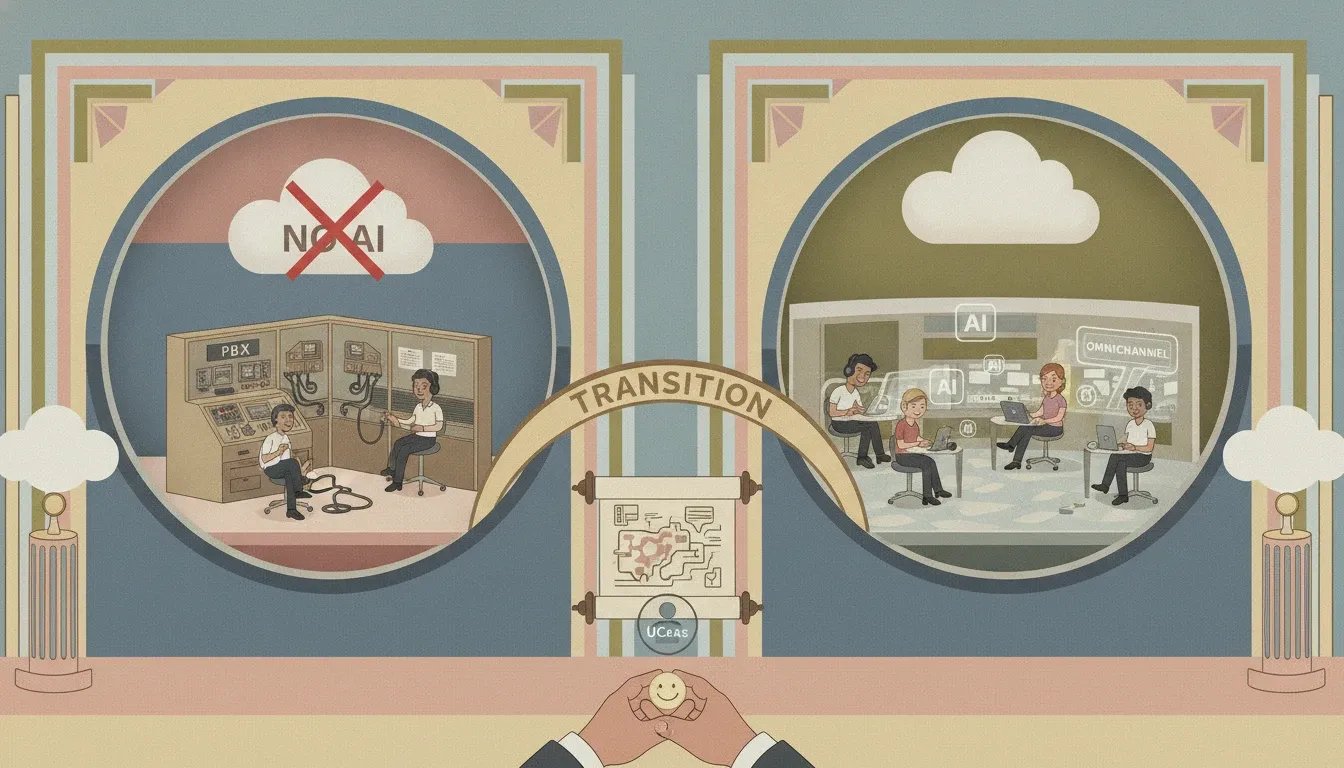
The healthcare landscape in 2027 demands absolute security and interoperability, driving IT administrators to seek the best HIPAA-compliant cloud fax alternatives to legacy on-premise servers and outdated physical machines. Traditional setups and older, rigid enterprise fax providers are no longer just administrative bottlenecks—they are massive security liabilities and financial drains. As medical offices evaluate their communication infrastructure, finding a modern alternative that ensures compliance, integrates seamlessly, and avoids heavy regulatory fines is a non-negotiable priority.
Streamline your software evaluation process
With a saturated market, finding the right alternative to major legacy providers requires looking beyond basic digital transmission. Decision-makers need agile solutions that solve the "siloed data" problem and eliminate manual sorting into patient records. A modern healthcare fax alternative must offer a signed Business Associate Agreement (BAA) by default, advanced encryption (AES-256 for data at rest and TLS 1.3 in transit), and seamless EHR integration (Epic, Cerner, Athenahealth) using HL7 or FHIR standards. While the industry shifts toward the "Direct" protocol, these cloud fax alternatives remain the essential bridge connecting legacy systems with modern digital infrastructure.
Key Takeaways for Healthcare IT Administrators
Top Recommendations for 2027: WestFax leads for large-scale EHR integrations (Epic/Cerner), while mFax and SRFax offer the best cost-to-compliance ratio for small to medium practices.
Compliance is Mandatory: Never assume a vendor is compliant; always require a signed Business Associate Agreement (BAA) before transmitting Protected Health Information (PHI).
EHR Interoperability: Look for providers supporting HL7 and modern FHIR API standards to eliminate manual data entry and streamline patient record updates.
Total Cost of Ownership (TCO): Evaluate flat monthly fees against per-page overage costs. Average 2027 base pricing ranges from $10 to $30 per user/month, but seasonal volume surges can spike overage fees.
Security Standards: Ensure the platform supports TLS 1.3 in transit, AES-256 at rest, and offers multi-factor authentication (MFA) alongside detailed audit logs.
Data Portability & Migration: Factor in the 7-14 day lead time required for porting existing medical fax numbers. Ensure you can export your fax history easily to avoid vendor lock-in.
Tool | Best For | Pricing (USD $) | Key Features | SLA Guarantee / BAA Included |
WestFax | Large-Scale EHR Integration | Custom Enterprise | AI PHI Extraction, HL7/FHIR API | 99.99% SLA / Yes (Default) |
Concord Fax | High-Volume Medical Routing | Custom Enterprise | Active-Active Architecture, AI Routing | 100% SLA / Yes (Default) |
RightFax | Hybrid Enterprise Deployments | Custom Enterprise | Legacy Compatibility, Zero-Trust | Custom SLA / Yes (Default) |
Weave | Patient Engagement Workflows | Starts at $425/mo | Unified VoIP/SMS/Fax, Smart Sync | 99.9% SLA / Yes (Included) |
Nextiva | Unified Healthcare Comms | Starts at $30/user | Enterprise HIPAA Tiers, AI Analytics | 99.999% SLA / Yes (Enterprise) |
mFax | Administrative Security Controls | Starts at $18/mo | AES-256, Advanced Audit Logs | 99.9% SLA / Yes (Default) |
eFax | Multi-Platform Accessibility | Starts at $22/mo | Corporate Network, Secure Portal | 99.9% SLA / Yes (Corporate) |
RingCentral Fax | Integrated Telehealth Workflows | Starts at $25/user | Team Messaging, Video Sync | 99.999% SLA / Yes (Ultra Tier) |
Fax.plus | Modern Security and UX | Starts at $9.99/mo | TLS 1.3, SOC2, Data Residency | 99.99% SLA / Yes (Enterprise) |
SRFax | Small Practice Cost-Efficiency | Starts at $12.95/mo | Low Cost Per Page, PGP Encryption | 99.9% SLA / Yes (Healthcare) |
MyFax | Simple Digital Faxing Needs | Starts at $14/mo | Email-to-Fax, Mobile App | No SLA / Surcharge Required |
HelloFax | Paperless Document Signing | Starts at $18/mo | E-signatures, Dropbox Sync | 99.9% SLA / Yes (Premium) |
*Note: All prices shown reflect typical monthly billing. Vendors often offer lower pricing for annual commitments, but those discounts are excluded here for easier comparison. Actual costs may vary depending on your requirements, usage volumes, and negotiated terms.
Top Software Picks
WestFax — best for HIPAA-compliant cloud faxing and healthcare communications
Weave — best for patient communication and healthcare practice management
Nextiva — best for unified business communications and cloud faxing
mFax — best for secure online faxing with eSignatures and APIs
eFax — best for global faxing and large-file document sharing
Concord Fax — best for healthcare document automation and EHR integrations
RingCentral Fax — best for integrated business communications and internet faxing
FAX.PLUS — best for API-driven fax automation and team collaboration
SRFax — best for HIPAA-compliant faxing with secure email integration
MyFax — best for international faxing and mobile accessibility
HelloFax — best for Google Workspace integration and digital signatures
RightFax — best for enterprise fax automation and workflow integrations
Software Covered in this Article
The following articles break down the key aspects of Cloud Communications Software, featuring a carefully curated set of key players:








Frequently Asked Questions About Cloud Fax Alternatives
What makes a cloud fax service HIPAA-compliant? To be HIPAA-compliant, a cloud fax provider must sign a Business Associate Agreement (BAA) with your organization. They must also enforce strict access controls, utilize end-to-end encryption (such as TLS for transmission and AES-256 for storage), and maintain detailed audit logs of all fax activity.
Can I keep my existing fax number if I switch to a cloud service? Yes. Most top-tier providers support local and toll-free number porting. The process typically takes one to three weeks, during which your existing number remains active until the transfer is fully complete.
Are traditional fax machines more secure than cloud faxing? No. Cloud faxing is generally more secure. Traditional fax machines leave physical documents exposed on trays, risking unauthorized access. Cloud services route faxes directly to secure, password-protected digital inboxes, ensuring only authorized personnel can view Protected Health Information (PHI).
Enterprise & High-Volume Solutions: WestFax, Concord Fax, RightFax
When evaluating solutions for large multi-site hospital networks, the conversation shifts from basic digital faxing to advanced interoperability, high-volume surge handling, and deep EHR integration. These three enterprise-grade platforms are built to handle the rigorous demands of modern healthcare systems. For these providers, custom enterprise pricing typically becomes highly cost-effective at volumes exceeding 5,000 pages per month compared to per-user licensing models.
1. WestFax
WestFax operates as a highly specialized infrastructure designed for enterprise healthcare organizations that require deep interoperability and automated data extraction. Unlike standard digital transmission tools, WestFax acts as a secure bridge between legacy systems and modern clinical dashboards.
Who is this best for: Large-scale hospitals and enterprise health networks needing deep EHR integration (Epic, Cerner, Athenahealth) and high-volume reliability.
Key Features & 2027 Capabilities:
Machine-Learning OCR: Utilizes advanced Optical Character Recognition algorithms to automatically extract structured data from handwritten medical notes and standard forms, significantly reducing manual data entry.
Robust API & Interoperability: Offers extensive HL7 and FHIR API capabilities, allowing IT teams to build custom workflows directly within existing clinical software.
Uncompromising Compliance: Provides a signed BAA immediately, backed by HITRUST certification, SOC2 compliance, and AES-256 encryption.
Decision Context: If your organization struggles with the "siloed data" problem where faxes are trapped as static images, WestFax's OCR and FHIR integration make it a superior alternative to traditional providers like eFax. It is engineered specifically for interoperability rather than just document delivery.

2. Concord Fax
Concord Fax is widely recognized for its robust infrastructure, specifically designed to handle massive document volumes without latency or failure during public health events or seasonal peaks.
Who is this best for: Multi-site health systems and large diagnostic laboratories processing millions of pages monthly that require absolute zero downtime.
Key Features & 2027 Capabilities:
Active-Active Architecture: Concord's network is built on a true active-active cloud infrastructure, meaning redundancy is built into every layer. If one node fails, traffic is instantly routed without dropping a single patient record.
Advanced Document Routing: Automates the sorting and delivery of incoming faxes to specific departments or individual practitioner inboxes based on barcode recognition or caller ID.
Surge Capacity: Capable of handling massive, unexpected spikes in fax volume without triggering overage bottlenecks or delivery delays.
Decision Context: For IT administrators whose primary pain point is network reliability and disaster recovery, Concord Fax offers a more resilient infrastructure than budget-tier alternatives. It is the definitive choice for organizations that mandate a 100% uptime SLA.

3. RightFax (OpenText)
RightFax remains a dominant force for organizations that are not entirely ready to abandon their on-premise infrastructure but need the scalability of the cloud.
Who is this best for: Hybrid enterprise deployments and large organizations transitioning from legacy on-premise servers to a secure cloud environment over a multi-year phased migration.
Key Features & 2027 Capabilities:
Hybrid Deployment Models: Allows hospitals to maintain certain on-premise servers for highly sensitive internal routing while utilizing the cloud for external transmissions.
Granular Administrative Controls: Offers detailed administrative dashboards for managing complex user permissions, active directory syncing, and immutable audit logs.
Legacy Compatibility: Integrates seamlessly with older MFP (Multifunction Printer) fleets and legacy software that newer cloud-only startups cannot support.
Decision Context: If your hospital is burdened by a complex web of legacy hardware and requires a methodical migration to cloud faxing, RightFax provides the necessary bridge. It prevents the need for a "rip and replace" strategy, allowing IT teams to modernize at their own pace.

Best for Small to Medium Clinics: Weave, Nextiva, mFax
Small to medium-sized private practices need solutions that balance enterprise-grade security with intuitive user interfaces. These tools focus on reducing administrative overhead without requiring a dedicated IT team. When migrating to these platforms, administrators must account for Number Porting. Porting existing medical fax lines away from legacy telecom providers typically takes 7 to 14 days and requires a signed Letter of Agency (LOA). Planning this transition carefully ensures zero disruption to patient referrals.
Find Perfect Software for Your Business
4. Weave
Weave has evolved beyond a simple communication tool into a comprehensive patient engagement platform that includes robust, HIPAA-compliant faxing capabilities.
Who is this best for: Dental, optometry, and specialized private practices wanting to unify patient communication (VoIP, SMS, scheduling) alongside secure faxing in a single pane of glass.
Key Features & 2027 Capabilities:
Unified Communications: Consolidates phone systems, two-way texting, appointment reminders, and digital faxing into one cohesive desktop and mobile application.
Seamless Patient Intake: Allows front-desk staff to easily attach incoming faxes directly to a patient's profile within the Weave ecosystem.
User-Friendly Interface: Designed for non-technical clinical staff to ensure high adoption rates and minimal workflow disruption.
Decision Context: If your clinic is looking to consolidate software vendors and reduce the TCO of maintaining separate phone, text, and fax providers, Weave is the ideal all-in-one alternative to standalone fax services. It significantly reduces "app fatigue" for front-office staff.

5. Nextiva
Nextiva is a powerhouse in the VoIP space, and its vFAX solution is highly regarded for medical offices looking to overhaul their entire communications infrastructure with strict compliance in mind.
Who is this best for: Mid-sized medical offices and multi-provider clinics needing a complete, HIPAA-compliant VoIP and fax overhaul with high reliability.
Key Features & 2027 Capabilities:
Enterprise HIPAA Tiers: While Nextiva offers standard plans, their enterprise tiers include strict BAA agreements and enhanced security protocols tailored for healthcare.
High-Fidelity Transmission: Utilizes advanced routing to ensure high success rates for fax delivery, minimizing the "failed to send" errors associated with traditional fax lines.
Scalability: Easily add or remove virtual fax lines as the clinic grows, without the need for physical hardware installations.
Decision Context: Nextiva is the logical choice for practice managers who are already migrating to cloud telephony and want to bundle a highly secure, BAA-backed fax service into their unified communications strategy. It offers a 99.999% SLA, ensuring clinical communications remain online.

6. mFax
mFax is built with a primary focus on security, administrative control, and providing a frictionless experience for compliance officers and IT managers.
Who is this best for: Compliance-focused clinic managers and IT admins who require granular user permissions, strict access controls, and detailed audit logs for HIPAA audits.
Key Features & 2027 Capabilities:
Advanced Security Protocols: Employs AES-256 encryption for data at rest and TLS 1.3 for data in transit, ensuring maximum protection of Protected Health Information (PHI).
Robust Audit Trails: Features an administrative dashboard that tracks every single document interaction, providing immutable logs that are crucial for compliance.
Intuitive Routing: Allows admins to easily set up complex routing rules, ensuring that sensitive lab results are only accessible to the specific ordering physician.
Decision Context: When comparing mFax to generic services, mFax wins on administrative governance. It is best for clinics where controlling exactly who sees which PHI is the top operational priority, offering far more granular security controls than basic email-to-fax providers.

General Purpose & Budget-Friendly HIPAA Online Fax Alternatives: eFax, RingCentral Fax, Fax.plus
For organizations that need versatile, widely adopted platforms that offer HIPAA compliance on specific enterprise or corporate tiers, these general-purpose tools provide excellent accessibility. These tools serve as excellent HIPAA online fax alternatives for organizations looking to move away from rigid, legacy telecom contracts.
Is WestFax the best HIPAA-compliant fax server for your hospital? Find out on AuthenCIO.
7. eFax (Corporate)
As one of the oldest and most recognized names in digital faxing, eFax Corporate has continuously updated its infrastructure to meet the stringent demands of 2027 healthcare regulations.
Who is this best for: Distributed healthcare teams, home health agencies, and mobile practitioners needing highly accessible, mobile-friendly faxing with a massive global network.
Key Features & 2027 Capabilities:
Corporate BAA Inclusion: While consumer eFax is not compliant, the eFax Corporate tier includes a signed BAA and robust security measures.
Superior Mobile Experience: Offers a highly refined mobile application, allowing home health nurses to securely view and send faxes directly from their smartphones.
Massive Number Inventory: Provides easy access to local and toll-free numbers across almost any geographic region, facilitating localized communication.
Decision Context: eFax Corporate is the strongest alternative for organizations with highly mobile workforces. If your providers need to manage faxes on the go without compromising HIPAA standards, eFax's mobile UX provides significant operational flexibility.

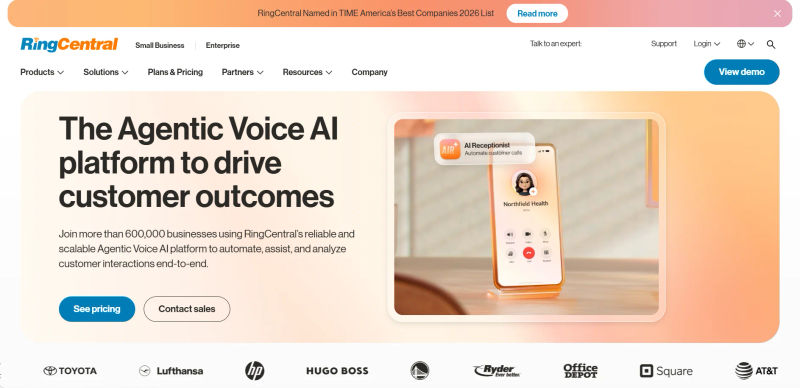
8. RingCentral Fax
RingCentral Fax is integrated directly into the broader RingCentral ecosystem, making it a natural extension for organizations already utilizing their unified communications platform.
Who is this best for: Practices and telehealth providers already using or migrating to RingCentral for video consultations, team messaging, and cloud PBX.
Key Features & 2027 Capabilities:
Integrated Telehealth Workflows: Seamlessly blends faxing into the same application used for telehealth video calls and internal clinical messaging.
High-Capacity Infrastructure: Leverages RingCentral's massive global network to ensure fast, reliable document transmission even during peak hours.
Centralized Administration: Allows IT admins to manage voice, video, and fax users from a single, unified administrative portal.
Decision Context: Standalone fax solutions require separate app management. RingCentral Fax is the best choice for organizations looking to minimize "app fatigue." However, administrators must be aware of hidden costs: HIPAA compliance and the BAA are typically restricted to their "Ultra" or "Enterprise" tiers, which can inflate the required budget if you do not need their full VoIP suite.
9. Fax.plus
Fax.plus has rapidly gained market share by prioritizing modern security architectures, a sleek user interface, and seamless integrations with modern productivity suites.
Who is this best for: Tech-savvy private practices and modern health tech startups prioritizing a sleek UI, international data residency options, and strict modern security standards.
Key Features & 2027 Capabilities:
Top-Tier Security Certifications: Goes beyond basic HIPAA compliance with SOC2 Type 2 certification, ISO 27001, and advanced TLS 1.3 encryption.
Data Residency Controls: Offers expert-level controls over international data residency, which is critical for healthcare providers operating across borders.
Modern Integrations: Integrates effortlessly with Google Workspace, Slack, and Microsoft 365, allowing staff to send and receive faxes directly from their daily productivity tools.
Decision Context: If your medical office relies heavily on modern tech stacks and demands the most intuitive interface available, Fax.plus provides a vastly superior user experience compared to legacy fax portals. It is an excellent alternative for startups that prioritize modern API design.

Specialized & Niche Use Cases: SRFax, MyFax, HelloFax
Not every healthcare provider needs an enterprise-grade API or unified communications platform. For specific niche requirements, budget constraints, or specialized workflows, these tools offer targeted solutions. However, IT administrators must carefully review the pricing structures of these budget tiers to verify if a BAA is included in the base price or if it carries a mandatory monthly surcharge.
10. SRFax
SRFax has built a strong reputation by offering highly cost-effective, straightforward faxing solutions specifically tailored to the healthcare industry.
Who is this best for: Solo practitioners, small therapy offices, and independent pharmacies operating on a strict budget who need reliable compliance without paying for unused enterprise features.
Key Features & 2027 Capabilities:
Healthcare-Specific Plans: Offers pricing tiers explicitly designed for medical users, ensuring that a BAA is included even at lower price points.
Cost-Efficiency: Provides highly competitive per-page costs and flat monthly fees, making it easy for small practices to calculate their Total Cost of Ownership (TCO).
Simple Interface: Strips away unnecessary complex features in favor of a clean, straightforward web portal that requires zero training.
Decision Context: For a solo mental health counselor or a small independent clinic, enterprise tools are overkill. SRFax is the best alternative for achieving strict HIPAA compliance at the lowest possible price point without sacrificing security.

11. MyFax
MyFax focuses on the absolute basics of digital document transmission, providing a reliable email-to-fax gateway that mimics traditional workflows.
Who is this best for: Administrative staff and small back-office teams who simply need reliable email-to-fax capabilities without the complexity of EHR integrations or API management.
Key Features & 2027 Capabilities:
Email Integration: Allows users to send and receive faxes directly from their existing secure email clients simply by attaching a PDF.
Basic Archiving: Provides secure, compliant storage of transmitted documents for easy retrieval during basic audits.
Rapid Deployment: Can be set up and deployed to a small team in minutes, requiring absolutely no technical expertise.
Decision Context: If your goal is simply to unplug the physical fax machine and move that exact same workflow to an email inbox, MyFax provides the path of least resistance. However, administrators must explicitly request and verify the BAA execution, as it often requires an account upgrade or surcharge.

12. HelloFax (Dropbox Fax)
Now integrated deeply into the Dropbox ecosystem, HelloFax (Dropbox Fax) combines secure document transmission with robust electronic signature capabilities.
Who is this best for: Clinics and specialized treatment centers that combine faxing with frequent e-signature requirements for patient intake forms, consent documents, and referrals.
Key Features & 2027 Capabilities:
Integrated E-Signatures: Allows staff to receive a faxed document, prepare it for a digital signature, send it to a patient, and fax it back to a referring physician.
Dropbox Ecosystem: Seamlessly syncs all incoming and outgoing faxes directly into secure, compliant Dropbox folders for streamlined document management.
Premium Tier Compliance: Offers full HIPAA compliance and a signed BAA on their premium enterprise tiers.
Decision Context: For offices drowning in paper consent forms that require physical signatures, HelloFax eliminates the "print, sign, scan, fax" loop. It is the best choice for signature-heavy workflows, significantly reducing administrative processing time.

How to Choose the Right HIPAA-Compliant Fax Service
Selecting a cloud fax provider in 2027 requires evaluating security, integration, data mobility, and cost. Look beyond basic transmission capabilities to assess how the platform aligns with your broader healthcare IT infrastructure.
Use this technical vendor evaluation checklist during your procurement process to compare alternatives effectively:
BAA Execution & Tiering: The vendor must sign a formal Business Associate Agreement (BAA). Verify whether the BAA is included in the base price or if it requires a costly enterprise tier upgrade (common with unified communications providers).
EHR Integration (HL7 & FHIR): Basic email-to-fax is insufficient for systems like Epic, Cerner, or Athenahealth. Evaluate API documentation for HL7 and FHIR standard support to ensure faxes automatically route to the correct digital patient records.
AI & OCR Data Extraction: Modern platforms should offer Optical Character Recognition (OCR) and AI capabilities. These tools extract text and patient data from inbound faxes to auto-populate EHR fields, significantly reducing manual data entry.
Security & Compliance Audits: Demand AES-256 encryption for data at rest and TLS 1.3 for data in transit. Prioritize vendors holding third-party validations like HITRUST certification and SOC 2 Type 2 reports.
Immutable Audit Trails: The administrative dashboard must provide unalterable logs detailing exactly who accessed, sent, or deleted a fax. These easily exportable logs are mandatory for surviving HIPAA compliance audits.
Total Cost of Ownership (TCO) & Overages: Compare flat monthly fees against per-page overage costs. Model your costs against high-volume seasonal surges to uncover hidden limitations or punitive overage charges.
Data Portability (Avoiding Lock-in): Ask vendors about the process for exporting fax history, patient documents, and audit logs in standard formats (CSV or PDF). Difficult export processes create severe vendor lock-in.
By systematically evaluating these criteria, healthcare administrators can successfully migrate from legacy analog fax machines to a secure cloud infrastructure, ensuring zero downtime for critical communications and strict adherence to federal regulations.
Try AuthenCIO
Move to faster, smarter software evaluation with AI
Conclusion: Selecting the Right Secure Fax Partner
Transitioning to a HIPAA-compliant cloud fax service is a critical step in modernizing healthcare communications in 2027. By eliminating the high costs and unreliability of maintaining physical fax lines, healthcare organizations can significantly reduce administrative overhead, mitigate the risk of regulatory fines, and improve overall clinical workflows. The shift from analog to digital is no longer optional; it is a fundamental requirement for operational resilience.
Whether you are a large hospital network requiring the deep EHR integration and automated data extraction capabilities of WestFax, or a small private practice looking for the cost-efficiency and simplicity of SRFax, the right solution exists for your specific use case. The key is to look beyond marketing claims, demand strict security certifications, and ensure the platform aligns with your exact operational needs and budget constraints.
Take the time to utilize the evaluation framework provided, compare the technical capabilities of these top 12 providers, and choose a secure fax partner that will protect your patient data. As a specific next step, we recommend requesting a sandbox trial with your top two vendor choices specifically to test their EHR integration capabilities and verify their API documentation before signing a long-term contract.