
Introduction
Key Takeaways
Market Growth: U.S. sponsored content spending will hit $9.29 billion in 2026, making the best influencer marketing platforms for startups essential for customer acquisition.
Specialized Needs: Startups often outgrow generic CRMs, requiring specialized alternatives to influencer hero software for DTC logistics or e-commerce CPA tracking.
Cost Efficiency: Avoid the "Enterprise Price Trap" by choosing the best influencer marketing tools for startups that offer transparent pricing.
Finding the right influencer hero alternatives is a top priority for resource-strapped growth leads. While identifying the most popular influencer marketing platform among startups is helpful, the ideal choice depends on your specific niche. U.S. sponsored content spending is projected to reach $9.29 billion in 2026. As 74% of marketers increase their budgets this year, campaign management software must evolve.
Streamline your software evaluation process
Influencer Hero has built a strong reputation as a comprehensive influencer CRM, offering a solid suite of discovery, outreach, and reporting tools. Yet, as startups scale, growth teams are realizing that a "one-size-fits-all" platform often falls short. A direct-to-consumer (DTC) brand sending physical products requires robust logistics and product seeding features. A SaaS startup might prioritize deep social listening, while an e-commerce brand needs flawless Shopify integration and Cost-per-Acquisition (CPA) tracking to justify the budget to stakeholders.
Furthermore, the "Enterprise Price Trap" remains a massive pain point. Many platforms start with an affordable entry tier but quickly scale to $2,000+ per month as you add user seats or increase API calls. Startup decision-makers need cost-effective influencer tools that offer transparent pricing, advanced AI capabilities, and seamless tech stack integrations without being locked into a 4-week onboarding process.
🔝 Top Software Alternatives for Influencer Hero
Brand24 — best for real‑time social listening and sentiment analytics.
Roster — best for influencer CRM and brand‑creator collaboration.
Upfluence — best for e‑commerce influencer discovery and affiliate tracking.
Grin — best for creator relationship management and product seeding workflows.
AspireIQ — best for scalable influencer programs and UGC management.
Traackr — best for enterprise influencer analytics and compliance reporting.
Klear — best for influencer vetting and audience demographic insights.
HypeAuditor — best for fraud detection and influencer authenticity scoring.
CreatorIQ — best for global campaign orchestration and data‑driven insights.
Modash — best for fast influencer search and audience matching.
Heepsy — best for affordable influencer discovery and outreach for small brands.
Skeepers — best for AI‑powered influencer marketing, UGC creation, and customer advocacy.
Software Covered in this Article
To help you understand Earned Media & Creator Marketing software in the right context, this article refers to a carefully curated set of leading software alternatives:





Comparison Table: Top 12 Influencer Hero Alternatives at a Glance
Below is a direct comparison of the 12 best Influencer Hero alternatives for startups in 2026, categorized by their absolute best use case to help you make an immediate, data-driven decision.
Tool | Pricing | Best For | Key Features |
Brand24 | From $249/mo | Social Listening & Mentions | AI sentiment analysis, real-time tracking |
Roster | From $599/mo | Customer Advocacy Programs | Community CRM, automated rewards |
Upfluence | Custom (~$795/mo) | E-commerce & Affiliates | Multi-touch attribution, affiliate tracking |
Grin | Custom (~$1,500/mo) | DTC Product Seeding | Advanced logistics, automated shipping |
AspireIQ | Custom (~$1,000/mo) | Long-Term Creator Communities | Compounding relationship CRM |
Traackr | Custom (Enterprise) | Data-Driven Relationship Management | Enterprise-level data scaling, CPA tracking |
Meltwater | Custom Pricing | Influencer Audience Demographics | Deep audience vetting, niche filtering |
HypeAuditor | Custom Pricing | Fraud Detection & Quality | Bot detection, quality benchmarking |
CreatorIQ | Custom Pricing | Advanced Campaign Workflow | Highly customizable API, multi-platform CRM |
Modash | From $299/mo | Massive Creator Discovery Without Logins | Massive database, targeted local discovery |
Heepsy | From $75/mo | Budget-Friendly Micro-Influencer Filtering | Cost-effective search, high-accuracy database |
Skeepers | Custom Pricing | User-Generated Content (UGC) at Scale | Scalable UGC generation, review syndication |
*Note: All prices shown reflect typical monthly billing. Vendors often offer lower pricing for annual commitments, but those discounts are excluded here for easier comparison. Actual costs may vary depending on your requirements, usage volumes, and negotiated terms.
Deep Dive: The 12 Best Influencer Hero Alternatives
1. Brand24 – Best for Social Listening and Brand Mention Tracking
Platform Overview: Brand24 is a highly specialized social listening platform that tracks mentions across the web, news, blogs, forums, and podcasts. For earned media, it scans the internet to find out who is already talking about your startup organically, making it a powerful discovery engine for creator marketing.

Who is this best for? Startups needing to track brand sentiment, monitor competitor PR, measure earned media reach, and turn existing organic fans into official brand ambassadors.
Influencer Hero vs. Brand24: While Influencer Hero is built for outbound campaign management and CRM workflows, Brand24 excels at inbound discovery and earned media tracking. It allows you to bypass cold outreach by identifying creators and publications that already mention your product.
2026 Feature Deep Dive: Brand24’s latest updates focus on AI-driven insights, offering automated sentiment analysis (positive, negative, neutral), topic mapping, and an "Influencer Score" metric to instantly evaluate the authority of the profiles mentioning your brand.
Creator Licensing & Whitelisting: While not a direct whitelisting tool, it is the best platform for finding organic User-Generated Content (UGC) and earned media placements that you can then request rights to use in paid ads.
Pricing & Hidden Costs: Starts at a highly startup-friendly $249/month.
Migration Score & Integration: 8/10. It is largely plug-and-play with Slack and GA4, requiring no complex onboarding.
Growth Lead Tip: Watch your monthly mention limits. If your startup goes viral or launches a major PR campaign, you may be forced into a higher tier mid-month to capture all incoming earned media data.
2. Roster – Best for Automating Brand Ambassador Programs
Platform Overview: Roster operates on the philosophy of community-led growth. Instead of paying premium rates to external creators, Roster provides the infrastructure to turn your existing customer base into a scalable ambassador program.
Who is this best for? Startups with a passionate, established customer base looking to automate referral programs and customer advocacy.
Influencer Hero vs. Roster: Influencer Hero searches outward; Roster searches inward. Roster offers far better automated reward systems for nano-creators and everyday customers.
2026 Feature Deep Dive: Roster features exceptional CPA tracking capabilities. It automatically generates unique discount codes and affiliate links for every ambassador.
Creator Licensing & Whitelisting: Features built-in rights management, allowing you to easily secure permissions for customer-generated content.
Pricing & Hidden Costs: Plans typically start around $599/month.
Migration Score & Integration: 7/10. Seamlessly integrates with Shopify and Klaviyo.
Growth Lead Tip: Negotiate transaction fees on affiliate payouts upfront to avoid hidden costs as your ambassador program scales.
Use AuthenCIO to find the most cost-effective influencer tool for your brand.
3. Upfluence – Best for E-commerce Integration and Sales Attribution
Platform Overview: Upfluence remains a powerhouse for e-commerce brands, focusing heavily on identifying influential individuals who are already interacting with your brand's website. While it is a top choice for sales-driven campaigns, startups scaling out of its ecosystem frequently search for the best upfluence alternatives 2025 2026. If you need different pricing or workflow models, platforms like Grin or AspireIQ (covered next) are strong substitutes in the earned media and creator marketing software space.

Who is this best for? E-commerce startups prioritizing sales attribution, CPA tracking, and affiliate-heavy compensation models.
Influencer Hero vs. Upfluence: When evaluating Influencer Hero vs Upfluence, the deciding factor is e-commerce integration. Upfluence’s native plugins allow you to analyze the social reach of your actual customers during checkout.
2026 Feature Deep Dive: Upfluence has perfected multi-touch attribution, allowing growth leads to track exactly which micro-influencer drove a specific sale.
Creator Licensing & Whitelisting: Offers seamless creator licensing workflows, making it easy to run paid social ads through influencer handles.
Pricing & Hidden Costs: Custom pricing, typically starting around $795/month.
Migration Score & Integration: 6/10. Deep Shopify integration is powerful but requires technical setup.
Growth Lead Tip: Watch out for hidden costs related to adding extra user seats or exceeding API call limits during high-volume holiday campaigns.
4. Grin – Best for Scaling High-Growth DTC Influencer Operations
Platform Overview: Grin is widely recognized as the premium standard for creator management, specifically built for brands that ship physical products to influencers and need to scale rapidly.

Who is this best for? If you are asking what influencer marketing software is best for fast-growing DTC brands that want to scale creator collaborations quickly, Grin is the definitive answer. It is built specifically for high-growth DTC startups focused on scaling product seeding operations without drowning in logistics.
Influencer Hero vs. Grin: If your startup sends out 500+ products a month, Influencer Hero’s manual tracking will bottleneck your team. Grin automates the entire fulfillment process.
2026 Feature Deep Dive: Grin handles the complete lifecycle: discovery, outreach, product shipping, content collection, and affiliate payout within a single dashboard.
Creator Licensing & Whitelisting: Provides full content rights management and automated whitelisting permissions.
Pricing & Hidden Costs: Custom pricing (~$1,500/month).
Migration Score & Integration: 5/10. Heavy onboarding due to inventory management integration.
Growth Lead Tip: Grin is notorious for the Enterprise Price Trap. Negotiate aggressively by asking for their newly introduced startup-friendly entry tiers before committing to an annual contract.
Find Perfect Software for Your Business
5. AspireIQ – Best for Building Long-Term Creator Communities
Platform Overview: AspireIQ (now Aspire) is built to foster deep, compounding creator partnerships. If you need an influencer marketing platform that helps startups run always-on creator programs instead of one-off campaigns, AspireIQ is a top recommendation.

Who is this best for? Growth-stage startups and enterprise teams scaling into continuous, always-on creator programs.
Influencer Hero vs. AspireIQ: When asking if Influencer Hero vs AspireIQ is better for managing large-scale influencer marketing campaigns and partnerships for enterprise teams, AspireIQ is the definitive winner. While Influencer Hero suits early-stage outreach, AspireIQ provides the robust CRM and automated workflows required to manage thousands of creators at scale.
2026 Feature Deep Dive: Features integrated AI-predictive ROI modeling that analyzes a creator's past campaign performance before you send an outreach email.
Creator Licensing & Whitelisting: Strong ad permissions and automated licensing agreements are built directly into the creator onboarding flow.
Pricing & Hidden Costs: Custom pricing (~$1,000/month).
Migration Score & Integration: 8/10. Excellent white-glove onboarding and Shopify integration.
Growth Lead Tip: Avoid paying for enterprise bloat; ask for modular pricing so you only pay for the CRM and discovery features you actually use.
6. Traackr – Best for Data-Driven Relationship Management
Platform Overview: Traackr provides unparalleled data-driven relationship management, allowing you to track the historical performance of an influencer over years of collaboration.

Who is this best for? Data-obsessed startups that need to track multi-touch attribution and CPA across complex, multi-platform campaigns.
Influencer Hero vs. Traackr: Traackr offers far superior enterprise-level data scaling and custom reporting capabilities compared to Influencer Hero.
2026 Feature Deep Dive: Offers robust multi-platform tracking, ensuring you capture ROI across TikTok, Instagram, YouTube, and emerging decentralized social platforms.
Creator Licensing & Whitelisting: Advanced licensing workflows designed for global campaigns.
Pricing & Hidden Costs: Custom Enterprise pricing.
Migration Score & Integration: 8/10. Integrates well with Salesforce and custom BI tools via API.
Growth Lead Tip: Lock in your API call limits and data export allowances before signing the contract to prevent mid-year price hikes.
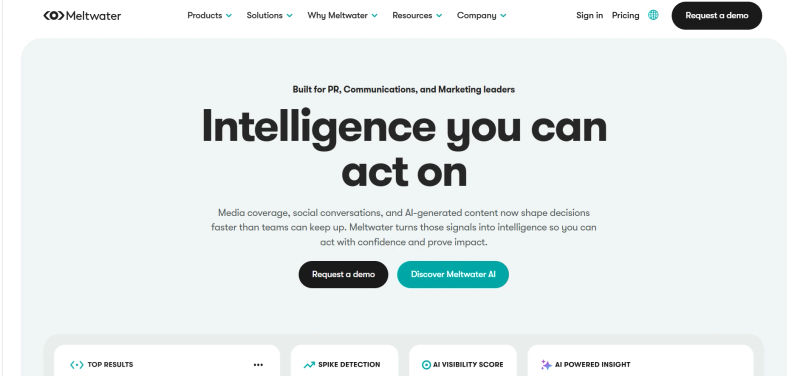
7. Meltwater – Best for Influencer Audience Demographics and Analysis
Platform Overview: Meltwater focuses heavily on data integrity, ensuring you are paying for real human attention by providing deep audience demographic slicing.
Who is this best for? Startups that need absolute certainty in audience demographics to ensure creators match their exact buyer persona.
Influencer Hero vs. Meltwater: Does Influencer Hero identify micro and macro influencers matching specific brand audience demographics across all teams? While Influencer Hero provides basic audience data, it lacks the advanced infrastructure to seamlessly identify and share granular demographic matches for micro and macro influencers across multiple internal teams. In contrast, Meltwater offers rigorous, cross-team evaluation of audience location, age, brand affinities, and authenticity to ensure exact demographic alignment.
2026 Feature Deep Dive: Meltwater’s predictive ROI modeling helps startups forecast campaign success based on granular demographic alignment.
Creator Licensing & Whitelisting: Easy integration for securing rights for paid social campaigns.
Pricing & Hidden Costs: Custom pricing. Starts at around $249/month.
Migration Score & Integration: 9/10. Functions brilliantly as a standalone vetting tool alongside your existing stack.
Growth Lead Tip: Use their extended trial period to run a Database Accuracy Check on influencers you already work with to verify their data quality.

8. HypeAuditor – Best for Fraud Detection and Quality Benchmarking
Platform Overview: With the rise of synthetic influencers and sophisticated engagement bots, HypeAuditor is the industry standard for vetting creator authenticity.

Who is this best for? Startups heavily investing in macro-influencers where the financial risk of fake followers and bot engagement is high.
Influencer Hero vs. HypeAuditor: HypeAuditor’s fraud detection algorithms are vastly superior, capable of detecting AI-generated engagement that bypasses standard CRM checks.
2026 Feature Deep Dive: Offers deep quality benchmarking, scoring influencers against industry standards to ensure you get what you pay for.
Creator Licensing & Whitelisting: Standard rights requests are supported within the platform.
Pricing & Hidden Costs: Custom Enterprise pricing. Typically starts around at $399/month.
Migration Score & Integration: 9/10. Plug-and-play functionality for immediate auditing.
Growth Lead Tip: Use HypeAuditor's quality benchmarking reports as leverage to negotiate lower rates with creators who have inflated follower counts.
Find Perfect Software For Your Business
9. CreatorIQ – Best for Advanced Campaign Workflow Customization
Platform Overview: CreatorIQ wraps massive data capabilities in a highly customizable workflow engine designed for complex organizational structures.

Who is this best for? Series B/C funded startups with dedicated engineering teams that require bespoke API integrations and custom approval processes.
Enterprise Comparison: When evaluating grin vs upfluence vs aspire vs creatoriq 2026 for enterprise needs, CreatorIQ stands out for its custom API integrations and advanced security, whereas Grin excels in DTC logistics, Upfluence in e-commerce sales attribution, and Aspire in community building. Expanding the scope to aspire vs upfluence vs creatoriq vs grin vs traackr 2026, Traackr competes closely with CreatorIQ on data-driven relationship management, but CreatorIQ offers deeper workflow customization for complex organizational structures.
Influencer Hero vs. CreatorIQ: CreatorIQ is strictly enterprise. It replaces standard CRM features with highly customizable workflows that Influencer Hero cannot support.
2026 Feature Deep Dive: Unmatched security and custom API capabilities for integrating influencer data directly into proprietary internal dashboards (like Looker or Tableau).
Creator Licensing & Whitelisting: Enterprise-grade licensing and legal compliance tracking.
Pricing & Hidden Costs: Custom Enterprise pricing.
Migration Score & Integration: 4/10. Requires a massive implementation effort from your technical team.
Growth Lead Tip: Only choose this platform if you have the internal developer resources to actually build out the custom workflows; otherwise, it is an expensive paperweight.
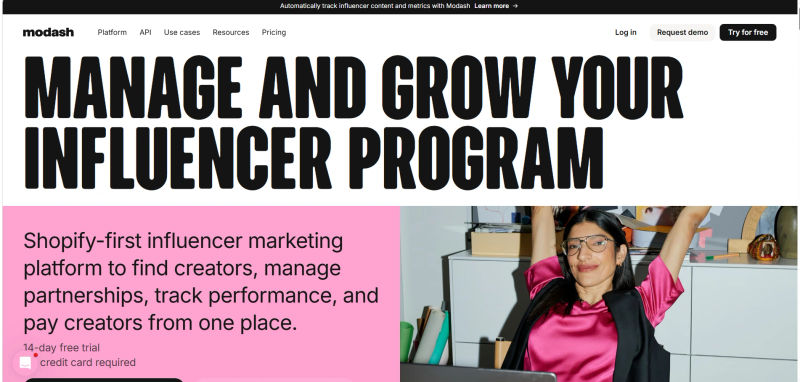
10. Modash – Best for Massive Creator Discovery Without Logins
Platform Overview: Modash is the ultimate search engine for the creator economy, boasting a database of over 250 million creators globally.
Who is this best for? Seed-stage and budget-conscious startups that need to find highly specific, niche micro-influencers globally.
Influencer Hero vs. Modash: When comparing Influencer Hero vs Modash, the definitive difference is the authentication barrier. Modash does not require the influencer to authenticate or log in to the platform for you to see their data.
2026 Feature Deep Dive: The "no-login" database feature is a massive time-saver. Since creators don't need to authenticate, lean startup teams save hundreds of hours not chasing sign-ups, allowing for instant discovery and list building.
Creator Licensing & Whitelisting: You can export lists to dedicated whitelisting tools easily.
Pricing & Hidden Costs: Starts at $299/month. Highly transparent pricing.
Migration Score & Integration: 10/10. Pure plug-and-play discovery.
Growth Lead Tip: Export your discovered creator CSVs directly into cold email tools like Instantly or Klaviyo to automate your outreach at scale.
11. Heepsy – Best for Budget-Friendly Micro-Influencer Filtering
Platform Overview: Heepsy offers a highly affordable approach to influencer discovery with excellent filtering capabilities specifically designed for finding micro-influencers.
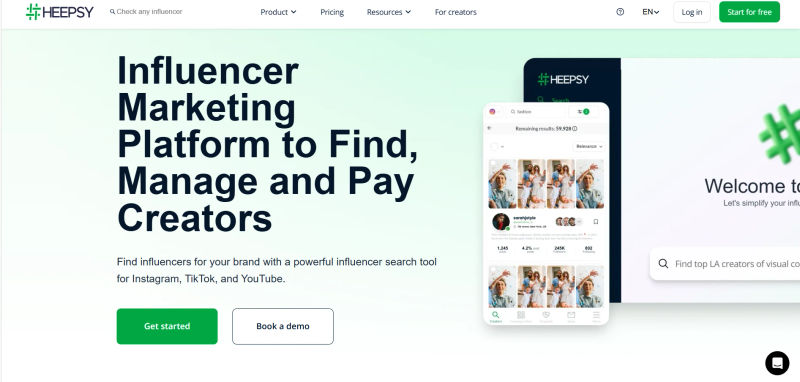
Who is this best for? Bootstrapped startups that need cost-effective micro-influencer search without committing to a massive software contract.
Influencer Hero vs. Heepsy: If your primary frustration with Influencer Hero is the cost of accessing a large database, Heepsy provides high-accuracy filtering at a fraction of the price.
2026 Feature Deep Dive: Allows you to filter by highly specific criteria: follower count (e.g., 5k-15k), specific cities, engagement rate minimums, and fake follower percentages.
Creator Licensing & Whitelisting: Basic content rights management.
Pricing & Hidden Costs: Incredibly affordable, starting around $75/month.
Migration Score & Integration: 10/10. Easy CSV exports to your existing marketing stack.
Growth Lead Tip: Take advantage of their monthly plans for ultimate contract flexibility, allowing you to scale up during campaign seasons and pause during downtime.
Join 8000+ businesses using AuthenCIO to choose their marketing software.
12. Skeepers – Best for User-Generated Content (UGC) at Scale
Platform Overview: Skeepers focuses on generating massive amounts of authentic UGC and reviews by connecting brands with a pre-vetted community of micro-influencers and consumers.
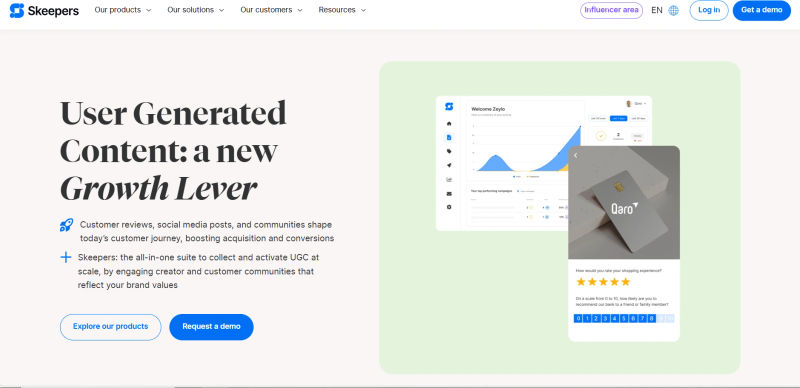
Who is this best for? Startups that need high volumes of video content for TikTok ads and authentic product reviews for their e-commerce product pages.
Influencer Hero vs. Skeepers: Influencer Hero is for relationship management; Skeepers is a content generation engine. If you need 100 UGC videos by next week, Skeepers is the better tool.
2026 Feature Deep Dive: Seamless review syndication that pushes influencer reviews directly to your Shopify store or retail partners.
Creator Licensing & Whitelisting: Automated 1-click licensing for all content generated through the platform.
Pricing & Hidden Costs: Custom pricing (~$500/month).
Migration Score & Integration: 8/10. Strong e-commerce integrations.
Growth Lead Tip: Leverage their micro-influencer community for fast content turnaround to rapidly test creative variations in your paid social campaigns.
Alternatives to Creator.co, SARAL, ReachHero, and INFLCR
If you are searching for the best alternatives to creator.co for product seeding micro influencers, platforms like Upfluence and Grin are top contenders. They offer superior e-commerce integrations and automated shipping workflows, answering the common question: what’s the most legit alternative to creator.co for product seeding with micro influencers? Additionally, if you need a reliable creatorhero alternative for managing creator communications and analytics, Modash provides excellent discovery without requiring creators to authenticate or log in.
Startups looking for getsaral alternatives often want streamlined, budget-friendly outreach for their ambassador programs. Heepsy steps in perfectly here, offering affordable micro-influencer filtering without the enterprise price tag. For brands needing a reachhero alternative focused on localized campaigns and authentic engagement, Skeepers is highly effective for generating user-generated content (UGC) at scale.
Finally, if your brand is pivoting from sports-centric NIL (Name, Image, and Likeness) management and needs an inflcr alternative, Roster is the standout choice. Roster excels at turning student-athletes, existing customers, and brand fans into active ambassadors with automated reward tracking and robust performance reporting.
Key Features to Look for in an Influencer Hero Alternative
When evaluating alternatives to find the best crm for creators brand deals influencer crm tools 2026 has to offer, startup growth leads must look beyond basic functionality. The landscape has shifted, and modern tools must provide advanced capabilities to justify their cost.
AI-Predictive ROI Modeling: You can no longer afford to guess campaign outcomes. Look for platforms that analyze a creator's historical data to predict your specific Cost-per-Acquisition (CPA) before you sign a contract. This data is critical for justifying influencer budgets to your CFO.
Automated Creator Contract Generation: Manual legal paperwork is a massive bottleneck for lean teams. When selecting a "creator contract" automation platform or software, prioritize systems that automatically generate, send, and track compliance on creator agreements, saving thousands in legal fees.
Creator Licensing and Whitelisting: In 2026, organic reach is only half the battle. The ability to seamlessly request whitelisting permissions to run paid ads through a creator's social handle is a major growth lever. Ensure your chosen platform has built-in licensing workflows.
Ease of Integration: A tool that does not natively talk to your existing tech stack (Shopify, GA4, Klaviyo) will create data silos. Plug-and-play integrations are essential for proving multi-touch attribution without requiring a 4-week onboarding process.
Decision Guide: How to Choose the Right Alternative for Your Budget
Choosing among affordable influencer marketing platforms means aligning the tool's core strength with your business goals. Do not overpay for an enterprise suite if you only need specific functions.
Match the Platform to Your Business Stage:
What are the best value-for-money influencer platforms for startups? Lean teams needing raw discovery power without enterprise lock-in should choose Modash or Heepsy.
Influencer marketing for funded startups: If you recently closed a round and must scale rapidly, prioritize robust e-commerce integrations like Grin or Upfluence.
Leading alternatives for creator-led businesses: Brands relying on community should use AspireIQ or Roster to turn customers into long-term ambassadors.
The "When to Switch" Checklist:
If manual shipping takes >10 hours/week, move to Grin.
If chasing creator authentications delays campaigns, switch to Modash.
If driving trackable affiliate sales is the priority, migrate to Upfluence.
Conduct a 5-Step Database Accuracy Check: Before signing an annual contract, verify data:
Search for 5 influencers you previously worked with.
Compare platform engagement rates against your historical data.
Check audience location accuracy (city/country).
Review fraud/bot detection scores.
If data is wildly inaccurate, walk away.
Prioritize Contract Flexibility: Look for tools offering modular pricing, monthly flexibility, or clear API call limits to avoid mid-year price hikes.
Try AuthenCIO
Move to faster, smarter software evaluation with AI
Final Verdict: Which Tool Wins for Your Startup in 2026?
There is no single "best" platform, only the most cost-effective solution for your specific operational bottleneck.
If you are a bootstrapped startup looking for raw discovery power without authentication hurdles, Modash and Heepsy are your clear winners. If you are an e-commerce brand obsessed with multi-touch attribution and affiliate sales, Upfluence is unmatched. For DTC brands drowning in product seeding logistics, Grin will save your operations team hundreds of hours. And if your goal is to harness the power of your existing customers for authentic UGC, Roster and Skeepers represent the future of community-led growth.
Evaluate your actual needs, leverage the transparent pricing of these alternatives, and scale your influencer ROI efficiently this year.