
Introduction
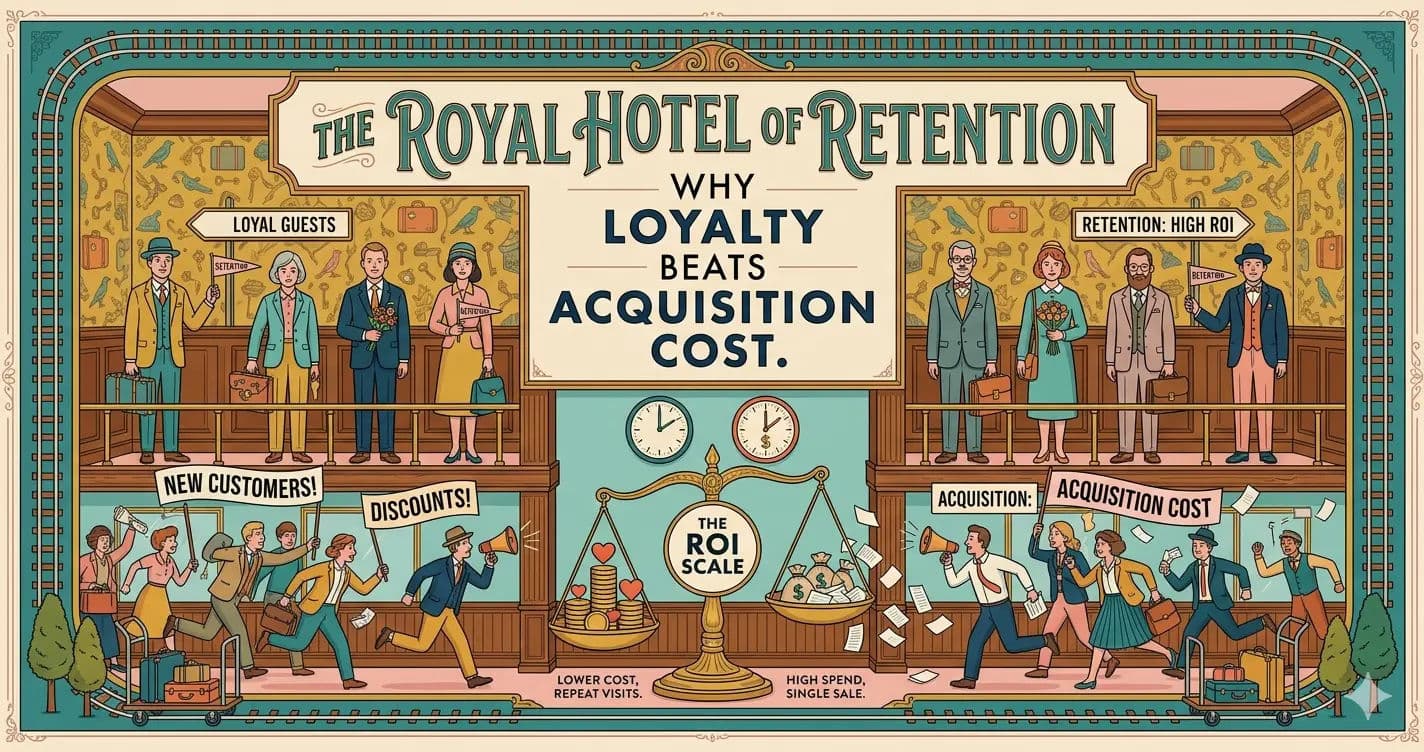
Acquiring a new customer costs 5x to 25x more than retaining an existing one. With average annual churn for e-commerce stores hovering between 70% and 77%, brands must focus intensely on what happens after the checkout process is complete. A widely cited Bain & Company finding reveals that a mere 5% increase in customer retention can raise profits by 25% to 95%. This economic reality has forced e-commerce store owners to build robust, automated post-purchase engagement engines, actively searching for the best loyalty program software 2026 has to offer.
Streamline your software evaluation process
As privacy changes make first-party data the foundation of marketing success, e-commerce review management software has evolved into comprehensive platforms designed to drive customer lifetime value (LTV) through user-generated content (UGC) and AI-driven personalization.
Is Stamped the best post-purchase retention tool 2026 has to offer, or should growing brands look toward alternatives like Yotpo, Okendo, or Loox? This comprehensive review strips away the marketing fluff to evaluate Stamped’s true ROI, feature depth, and scalability.
Tool | Best For | Pricing ($) | Key Features | Use Cases |
Stamped | Mid-market brands seeking an all-in-one reviews and loyalty suite. | Starts at $23/mo | AI sentiment analysis, Smart Reminders, VIP tiers, Shoppable Instagram. | Automating post-purchase engagement, combining loyalty and UGC data. |
Yotpo | Enterprise brands needing high scalability and deep SMS integration. | Starts at $89/mo | SMS marketing, subscriptions, advanced syndication, enterprise APIs. | Large-scale retail syndication, multi-brand enterprise management. |
Okendo | Shopify Plus merchants focused on zero-party data collection. | Starts at $105/mo | Micro-surveys, customer attributes, deep Klaviyo integration. | Gathering granular customer insights, advanced email segmentation. |
Loox | Visual-first brands (fashion, beauty) relying on photo/video UGC. | Starts at $50/mo | Beautiful visual widgets, automated photo review requests. | Driving conversion through highly visual social proof. |
Junip | Brands prioritizing site speed and lightweight widget performance. | Starts at $29/mo | Ultra-fast loading, seamless mobile UI, straightforward setup. | Maintaining Core Web Vitals while collecting basic reviews. |
Trustpilot | Brands needing off-site SEO and third-party trust signals. | Starts at $99/mo | Verified third-party company reviews, Google Seller Ratings. | Building top-of-funnel brand authority and off-site trust. |
Bazaarvoice | Global enterprise brands requiring massive retail syndication. | Custom enterprise pricing. | Network syndication (Walmart, Target), sampling campaigns. | Distributing reviews across big-box retailer websites. |
*Note: All prices shown reflect typical monthly billing. Vendors often offer lower pricing for annual commitments, but those discounts are excluded here for easier comparison. Actual costs may vary depending on your requirements, usage volumes, and negotiated terms.
Software Covered in this Article
To help you understand Customer Retention & Reputation Management Software in the right context, this article refers to a carefully curated set of key players:







The State of Post-Purchase Retention
To determine if Stamped is the best tool alongside its review capabilities, we must analyze its core features. Stamped divides its offering into two main products: Reviews & Ratings and Loyalty & Rewards. When combined, they create a powerful ecosystem for automated post-purchase engagement.
1. AI-Driven Review Requests and UGC Management
Manual review moderation is inefficient and costly. Stamped leverages AI to streamline the entire UGC lifecycle. The platform features AI sentiment analysis, which automatically categorizes reviews as positive, neutral, or negative, allowing customer service teams to prioritize outreach to dissatisfied buyers instantly.
Stamped’s "Smart Reminders" utilize machine learning to optimize send times based on historical customer behavior, significantly boosting review completion rates. Instead of relying on easily ignored emails, Stamped allows brands to deploy pre-built automation flow templates for post-purchase SMS and email review requests. These flows can be customized to ask specifically for photo or video reviews, which current data shows have a direct correlation with increased purchase intent.
2. Loyalty and Rewards: Building a Repeat Purchase Engine
Recent surveys from Attentive indicate that shoppers respond better to second-purchase perks—such as product bundles, subscribe-and-save options, free shipping thresholds, and exclusive gifts—than to blanket discounting. Stamped’s Loyalty & Rewards module is built around this exact philosophy.
Store owners can create highly customized VIP tiers that reward customers not just for spending money, but for valuable engagement. For example, a mid-market apparel brand could structure a "The Insider Club" VIP tier where customers earn points for leaving a photo review, following the brand on social media, or referring a friend. Once they hit the "Gold" tier, they unlock early access to new drops and free expedited shipping.
This seamless integration between the review system and the loyalty program is Stamped's greatest strength. By turning zero-party data (like a customer's stated skin type in a review) into actionable segments for loyalty campaigns, Stamped drives a reported 10% to 15% retention lift for brands utilizing its AI-powered personalization.
3. Omnichannel Orchestration and Post-Purchase Education
Retention requires more than a single email blast. Stamped supports omnichannel orchestration, allowing brands to sync social proof across multiple sales channels. A concrete example of this cross-channel flow is an automated sequence where an email review request is sent first; if it remains unopened after 48 hours, an SMS reminder is automatically triggered to the customer's mobile device, ensuring maximum visibility without spamming. The mobile experience is optimized to load natively, reducing friction compared to desktop pop-ups.
Furthermore, the platform facilitates post-purchase education. Instead of immediately hitting a customer with a discount code, Stamped allows brands to trigger educational content—like care tips or usage inspiration—alongside the review request, building trust before asking for the next sale.
Stamped Pricing and Value for Money
Evaluating Stamped pricing requires looking at the platform's modular structure. Decision-makers often struggle to justify subscription costs without a clear ROI framework. Stamped offers a transparent pricing model that scales with order volume, making it highly accessible for mid-market brands.
1. The Pricing Structure Breakdown
Stamped separates its pricing into Reviews and Loyalty, though they offer a "Full Suite" bundle for brands wanting both, which typically provides a 15% to 20% discount over purchasing the modules individually.
Free Plan: Suitable for bootstrapped startups handling up to 50 orders per month. It includes basic review collection and simple widgets.
Basic Tier (Starting around $23/month): Covers up to 200 orders. This unlocks SMS review requests and basic photo reviews.
Premium Tier (Starting around $99/month): The sweet spot for growing stores. It includes advanced AI sentiment analysis, smart reminders, and custom email templates.
Business/Professional Tiers (Scaling up to $119+): Designed for high-volume merchants, unlocking advanced reporting, Klaviyo integration depth, and dedicated success managers.
2. Variable Costs and Hidden Fees
When budgeting for Stamped, it is crucial to account for variable costs. While the base subscription covers email sends and widget hosting, SMS review requests require purchasing dedicated SMS credits. Depending on your region and send volume, these credits can add $50 to $200+ to your monthly bill. Additionally, exceeding your tier's monthly order limit may result in overage charges or require an immediate upgrade to the next tier, which high-growth stores must monitor closely during peak seasons like Black Friday.
3. ROI Calculator Framework for Decision-Makers
To justify the cost, e-commerce owners should run a simple ROI calculation. If your store processes 1,000 orders a month with an average order value (AOV) of $50, and Stamped's automated flows increase your review generation by 15%, you are actively building a conversion-boosting asset. Furthermore, if the integrated loyalty program increases your repeat purchase rate by just 5% (aligning with the Bain & Company statistic), the additional revenue generated will exponentially cover the $119/month software cost.
For mid-market Shopify and BigCommerce stores, Stamped offers incredible value. However, enterprise brands processing tens of thousands of orders daily may find the pricing scales steeply, prompting a look at custom enterprise contracts from competitors.
Find Perfect Software for Your Business
Pros and Cons: Where Stamped Excels and Falls Short
No software is perfect, and an honest review requires a vendor-neutral look at platform limitations alongside its strengths.
1. Where Stamped Excels (The Pros)
Unified Ecosystem: Having reviews, NPS, and loyalty in one dashboard eliminates the need to duct-tape multiple apps together, reducing tech stack bloat.
Zero-Party Data Activation: Stamped excels at capturing customer attributes (e.g., fit, sizing, age) during the review process and pushing that data directly into marketing platforms like Klaviyo for hyper-personalized campaigns.
Pre-Built Automation: The platform offers robust, out-of-the-box automation templates that make launching a retention strategy fast and efficient.
Platform Agnostic: While it is one of the premier Shopify review apps for retention, it boasts equally strong integrations with BigCommerce, WooCommerce, and Magento.
2. Where Stamped Falls Short (The Cons)
Widget Performance Impact: Third-party performance benchmarks show that if not configured correctly, Stamped's heavy visual widgets can impact site loading speed and Core Web Vitals.
Technical Pro-Tip: To mitigate site speed issues, developers should implement lazy loading for Stamped widgets. This ensures the review snippets and photo galleries only load when the user scrolls down to that specific section of the product page, preserving your initial page load time and protecting your SEO rankings.
Enterprise Limitations: For massive, multi-national brands requiring complex, multi-store architecture, Stamped's infrastructure can feel restrictive. Limitations include a lack of seamless multi-store single sign-on (SSO) and less robust global retail syndication compared to enterprise-first solutions.
UI Complexity for Advanced Flows: While the basic setup is intuitive, configuring highly complex, behavior-triggered lifecycle journeys requires a steep learning curve and dedicated administrative time.
Stamped vs. The Competition: Top Alternatives
To truly determine if Stamped is the right choice, we must perform a head-to-head comparison against the industry leaders.
1. Stamped vs Yotpo: Which Offers Better Enterprise Scalability?
When comparing Stamped vs Yotpo, the decision usually comes down to scale and budget. Yotpo is an enterprise behemoth, offering a massive suite that includes reviews, loyalty, SMS marketing, and subscriptions. If you are a massive brand needing all these tools under one roof with dedicated enterprise support, Yotpo wins. However, Yotpo’s pricing is notoriously opaque and expensive. For mid-market brands, Stamped provides 90% of Yotpo’s functionality at a fraction of the cost, making Stamped the clear winner for ROI-focused decision-makers.
2. Stamped vs Okendo: The Battle for Customer Data
Okendo has positioned itself as the premium review tool for Shopify Plus brands obsessed with zero-party data. Okendo’s micro-surveys and customer attribute collection are arguably more granular than Stamped’s. If your entire retention strategy relies on hyper-segmenting customers based on detailed profiles (e.g., a skincare brand needing exact skin profiles), Okendo is superior. However, Stamped counters with a native, tightly integrated loyalty program, whereas Okendo relies heavily on third-party integrations for loyalty features.
3. Stamped vs Loox and Junip: Best for Visual Social Proof?
For brands comparing Stamped vs Loox, the choice is aesthetic. Loox is designed specifically for highly visual brands (apparel, beauty) and focuses relentlessly on photo and video reviews. Loox’s widgets are beautiful out-of-the-box. However, Loox lacks the deep loyalty and NPS infrastructure of Stamped.
When evaluating Stamped vs Junip, the conversation shifts to site speed. Junip is built for speed and lightweight performance, ensuring zero impact on Core Web Vitals. If site speed is your absolute top priority and you only need basic review collection, Junip is excellent. But if you want to build a comprehensive repeat purchase engine, Stamped offers far more depth.
4. Stamped vs Trustpilot and Bazaarvoice
Comparing Stamped to Trustpilot or Bazaarvoice is an apples-to-oranges evaluation. Trustpilot is designed for top-of-funnel brand authority and off-site SEO (Google Seller Ratings). It collects reviews about your company, whereas Stamped collects reviews about your products to drive on-site conversion. Many successful brands use both in tandem.
Bazaarvoice, on the other hand, is built for global retail syndication. If you need your reviews pushed to Walmart.com or Target.com, Bazaarvoice is mandatory. If you sell direct-to-consumer (DTC) on your own site, Stamped is much more agile and cost-effective.
Evaluating UGC Platforms for Online Stores: Internationalization
When expanding globally, evaluating UGC platforms for online stores requires looking at internationalization capabilities. Yotpo and Okendo offer robust multi-language support and seamless multi-currency integrations, allowing enterprise stores to display reviews in the local language of the shopper dynamically. Stamped does support multiple languages through its translation settings, but managing translations across separate regional storefronts can be slightly more manual compared to Yotpo’s enterprise-grade global architecture. For mid-market brands, Stamped's internationalization is sufficient, but global conglomerates may prefer Yotpo.
Use Cases: Is Stamped the Right Fit for Your Store?
Choosing the right software depends entirely on your business model. Here is a breakdown of who should adopt Stamped.
The Ideal Stamped User
Mid-Market DTC Brands: If you are generating between $1M and $20M in annual revenue on Shopify or BigCommerce, Stamped is arguably the most cost-effective, feature-rich option available.
Brands Needing Consolidation: If you are currently paying for a standalone review app, a separate loyalty app, and an NPS tool, migrating to Stamped will reduce your monthly overhead and unify your customer data.
Data-Driven Marketers: Teams that actively use Klaviyo or Omnisend will benefit massively from Stamped’s ability to push review data and loyalty tiers directly into email segments for personalized flows.
Migration Readiness Checklist
Before initiating a platform switch, ensure your team has completed this migration readiness checklist:
CSV Formatting: Export existing reviews and ensure columns map to Stamped's requirements (Name, Rating, Body, Date, Product ID).
SKU Mapping: Verify that your historical product IDs match your current live catalog to prevent orphaned reviews.
API Verification: Check that your existing integrations (e.g., Klaviyo, Zendesk) have active API keys ready to plug into Stamped.
Customer Support Alignment: Ensure your support team is trained on the new AI sentiment analysis dashboard.
The Step-by-Step Migration Guide
One of the biggest pain points for decision-makers is the fear of losing historical data when switching platforms. Stamped has streamlined this process.
Export: Export your existing reviews from Yotpo, Okendo, or Loox via CSV.
Format: Use Stamped’s pre-formatted CSV templates to map your data columns accurately.
Import: Upload the file into Stamped’s migration wizard.
Sync: Stamped automatically matches the historical reviews to your existing product catalog via SKU or Product ID, ensuring zero downtime in your social proof.
Time to Value Expectations
Decision-makers often ask about the "Time to Value" (TTV). With Stamped, the TTV is remarkably fast. Once the tracking script is installed and the historical data is imported (typically a 24-to-48-hour process), your widget will instantly display existing social proof. For new reviews, brands utilizing the pre-built SMS and email automation flows usually see their first new review generated within 72 hours of launching the campaign.
Who Should Look Elsewhere?
Massive Enterprises: Brands doing $100M+ with complex multi-region setups may outgrow Stamped’s architecture and should evaluate Yotpo or Bazaarvoice.
Bootstrapped Micro-Stores: If you only have 10 orders a month, Stamped’s premium features are overkill. Stick to a free, lightweight tool like Junip until you have the volume to justify a loyalty program.
Try AuthenCIO
Move to faster, smarter software evaluation with AI
Final Verdict: Making Your Decision
Post-purchase retention is the primary growth lever for e-commerce survival. Relying on outdated tactics or fragmented software stacks will result in lost revenue and high churn.
After a comprehensive review, Stamped stands out as one of the most powerful, balanced, and ROI-positive retention platforms on the market. By seamlessly combining AI-driven review collection with a robust loyalty program, it allows mid-market brands to build the repeat purchase habits necessary for long-term profitability. While enterprise giants might require the heavy infrastructure of Yotpo, and data-obsessed niche brands might prefer Okendo, Stamped occupies the perfect middle ground of affordability, feature depth, and ease of use.
Decision Matrix: Must-Have Conditions
To finalize your choice, ensure you meet these top three must-have conditions for choosing Stamped:
Condition 1: You are a mid-market brand processing enough monthly order volume (200+) to generate meaningful data for the AI-driven "Smart Reminders."
Condition 2: You want to actively tie your user-generated content and product reviews directly into a tiered loyalty and rewards program.
Condition 3: You utilize an advanced email marketing platform like Klaviyo or Omnisend and want to inject zero-party customer data into your segmentation flows.