

Introduction
As of mid-2026, the global affiliate marketing industry has surpassed $21 billion. This growth is driven by multi-channel campaigns, the exponential rise of user-generated content (UGC) creators, and strict privacy-first tracking mandates. Whether you are launching a new program or actively seeking alternatives to a clunky legacy system, managing affiliates through fragmented spreadsheets and manual invoicing is no longer viable.
Streamline your software evaluation process
What makes a top-tier affiliate platform? Today’s best solutions provide end-to-end partner relationship management (PRM), predictive partner vetting, and real-time, cross-border automated payouts. By upgrading, you eliminate high operational overhead, human error in commission calculations, and partner churn caused by delayed payments.
In this guide, we break down the 12 best affiliate partner management software platforms of 2026. We explore their automated payout workflows, CRM integrations (like Salesforce and HubSpot), and how they tackle cookie-less tracking challenges so you can find the exact tool—or alternative—for your specific use case.
Key takeaways
🌐 Affiliate marketing growth — The global industry surpassed $21 billion by mid‑2026, driven by multi‑channel campaigns and UGC creators.
⚙️ Automation advantage — Modern platforms simplify partner onboarding, tracking, and payout management for lean teams.
📊 Data‑driven ROI — Transparent dashboards connect affiliate performance directly to revenue outcomes.
🛡️ Privacy‑first compliance — GDPR‑aligned tracking ensures ethical, secure affiliate operations.
🔗 Integration flexibility — API‑ready tools connect seamlessly with CRM and e‑commerce systems for scalable workflows.
Top Software Picks
PartnerStack — best for SaaS partner programs and automated affiliate payouts.
Reditus — best for B2B referral tracking and recurring commission management.
Dub — best for creator‑driven affiliate campaigns and video‑based referrals.
Impact.com — best for enterprise partnership automation and cross‑channel attribution.
Partnerize — best for global brand partnerships and performance optimization.
TUNE — best for customizable tracking and advanced analytics dashboards.
FirstPromoter — best for subscription‑based affiliate programs and SaaS growth.
Tapfiliate — best for e‑commerce affiliate tracking and easy integrations.
Post Affiliate Pro — best for multi‑tier affiliate management and flexible commission rules.
Rewardful — best for Stripe‑integrated referral programs and startup scalability.
ReferralCandy — best for e‑commerce referral automation and customer rewards.
Everflow — best for performance marketing analytics and multi‑channel tracking.
Software Covered in this Article
To help you understand Partner and Affiliate Management Software in the right context, this article refers to a carefully curated set of key players:








.webp?tr=w-112%2Cq-80%2Cf-auto%2Cc-at_max)



Why Seek Alternatives to Legacy Affiliate Platforms?
Legacy affiliate platforms struggle to keep pace with the complex, multi-channel partnership ecosystems of 2026. Businesses are actively abandoning older systems because they rely heavily on manual workflows, lack real-time data attribution, and offer clunky partner experiences that ultimately stall revenue growth.
Modern brands are migrating away from legacy tools to solve several recurring pain points:
Inaccurate Attribution: Older platforms often rely on outdated cookie-based tracking, which fails in today's privacy-first, cross-device environment.
Manual Administrative Burden: Managing global payouts, tax compliance, and partner onboarding manually drains internal resources and increases the risk of costly human errors.
Poor Partner Experience (PX): A confusing, outdated dashboard discourages top-tier affiliates from promoting your brand. Modern partners expect intuitive portals with real-time analytics and instantly accessible marketing assets.
Rigid Commission Structures: Legacy systems struggle to support hybrid payout models (such as CPA combined with recurring revenue shares), limiting a brand's ability to incentivize diverse partner types.
Transitioning to modern partner relationship management (PRM) software resolves these bottlenecks. By automating payouts, integrating seamlessly with modern billing stacks, and providing cookieless tracking, newer platforms empower brands to scale their affiliate programs efficiently without adding administrative overhead.
Ready to scale? Use AuthenCIO to choose the right partner tech without sales pressure.
Why End-to-End Partner Relationship Management is Non-Negotiable
In previous years, businesses often stitched together multiple tools to manage different phases of the partner lifecycle. You might have used one tool for recruitment, another for link tracking, and a completely separate financial platform for processing payments. As of 2026, this fragmented approach is a massive liability.
End-to-end partner relationship management is now non-negotiable for scaling programs effectively. An all-in-one lifecycle management platform centralizes every touchpoint between your brand and your partners. This consolidation provides several critical business advantages:
1. Unified Partner Experience: High-quality affiliates, influencers, and B2B partners expect a frictionless experience. A centralized PRM provides a single portal where partners can access promotional assets, view real-time performance dashboards, and track their upcoming commissions. This transparency builds trust and significantly reduces partner churn.
2. Advanced Multi-Touch Attribution: With the phase-out of third-party cookies fully realized, relying on simple last-click attribution is no longer viable. Modern PRM platforms utilize enhanced multi-touch attribution models, server-to-server tracking, and first-party data integrations to accurately map the fragmented, multi-device customer journey. This ensures partners are fairly compensated for their precise role in the conversion funnel.
3. Predictive Partner Vetting & Automated Anomaly Detection: Automation is no longer just about triggering emails. Modern PRM software leverages algorithmic performance modeling for predictive partner vetting, identifying high-value partners before they even launch a campaign. Furthermore, automated anomaly detection analyzes traffic patterns to prevent affiliate fraud in real-time, protecting your marketing ROI without requiring manual audits.
4. Seamless CRM and ERP Integrations: For B2B organizations, affiliate data must flow seamlessly into existing tech stacks. Modern partner platforms offer deep, native integrations with CRMs like Salesforce and HubSpot, as well as enterprise resource planning (ERP) systems. This ensures that lead data, deal stages, and partner attribution remain synchronized across your entire organization.
The Business Impact of Automated Partner Payouts Software
Perhaps the most critical feature of any modern partner management platform is the ability to automate global payouts. Manual commission calculation is not only incredibly time-consuming but also highly susceptible to human error. When you are managing hundreds or thousands of partners across different geographical regions, automated partner payouts software shifts from a convenience to an operational necessity.
Eliminating Administrative Overhead Calculating tiered commission structures, performance-based bonuses, and recurring subscription payouts manually requires dedicated financial headcount. Automated payout software instantly calculates these complex variables in real-time based on predefined rules. This drastically reduces administrative hours, freeing your partnership team to focus on strategic growth and relationship building rather than data entry.
Ensuring Global Tax Compliance Managing cross-border payments introduces a labyrinth of international tax laws and compliance requirements. Top-tier affiliate software automatically handles the collection and verification of crucial tax documentation, such as 1099-NEC forms for US-based partners and W-8BEN forms for international affiliates. This automated compliance mitigates legal risks and ensures your business remains audit-ready.
Facilitating Multi-Currency Transactions and Net Terms Your partners are global, and they expect to be paid in their local currency. Modern platforms support multi-currency payouts, seamlessly handling exchange rates. Additionally, modern software allows partnership managers to automate net-30 or net-60 payment terms, ensuring cash flow aligns with company policy while keeping partners informed of their exact payout dates.
Plugging Hidden Financial Leaks Manual payout systems often bleed capital through hidden financial leaks. Intermediary bank fees, unfavorable foreign exchange (FX) markups, and manual wire transfer costs are frequently absorbed by the company. Automated payout systems consolidate these transactions, utilizing bulk payment gateways that drastically reduce per-transaction costs and offer wholesale exchange rates.
Building Trust and Retaining Partners Partner dissatisfaction is most frequently tied to delayed, inaccurate, or non-transparent payout processes. When affiliates know they will be paid automatically, accurately, and on time, their trust in your program skyrockets. Reliable, automated payouts are the ultimate retention tool, encouraging your best partners to continue investing their time and traffic into your brand.
Top 12 Affiliate Partner Management Software Solutions
Modern affiliate partner management software provides a direct alternative to traditional affiliate networks, giving brands full ownership of their partner relationships, data attribution, and payout structures. Below is our analysis of the 12 best software picks for 2026, categorized by their core capabilities and ideal use cases.
1. PartnerStack: Best for B2B SaaS Ecosystems
PartnerStack remains the undisputed leader for B2B SaaS companies looking to scale their partner ecosystems. Built specifically for software companies, it excels at managing complex B2B sales cycles, recurring revenue models, and multi-tiered partner structures (affiliates, referral partners, and resellers).

Automation and Payouts: PartnerStack entirely automates the payout process, calculating recurring commissions and processing payments globally via Stripe or PayPal. It handles the heavy lifting of tax compliance and multi-currency conversions, ensuring SaaS partners are paid accurately for lifetime customer value.
Implementation Note: Typical setup takes 2 to 4 weeks, largely depending on the complexity of your CRM data mapping and existing billing provider integrations.
2. Reditus: Best for B2B SaaS Growth and Simplicity
For growing B2B SaaS startups that find enterprise solutions overly complex, Reditus offers a streamlined, highly effective alternative. It focuses exclusively on recurring revenue tracking and provides an exceptionally user-friendly interface for both partnership managers and affiliates.
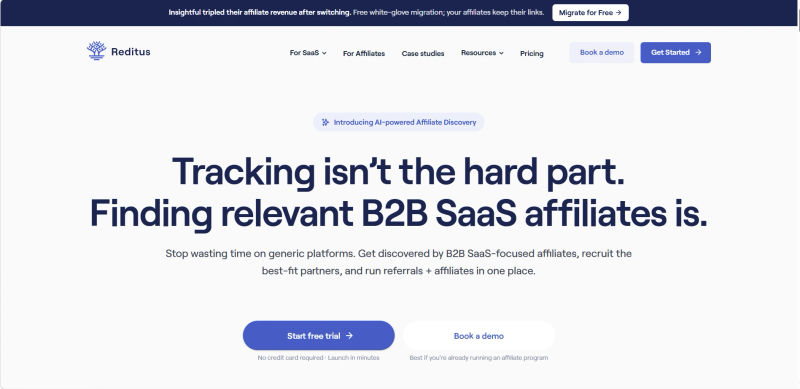
Automation and Payouts: Reditus integrates deeply with Stripe to automatically track subscriptions, upgrades, downgrades, and churn. Payouts are calculated automatically based on these real-time Stripe events, eliminating the need for manual reconciliation at the end of the month.
Implementation Note: Reditus boasts a rapid implementation time of 1 to 2 weeks, making it ideal for agile teams looking to launch their program quickly without heavy developer reliance.
3. Dub: Best for Modern Link Management and Attribution
Dub has emerged as a powerhouse for modern link management and granular attribution. Originally known for short links, it has evolved into a robust infrastructure for tracking partner performance with unparalleled precision, favored heavily by developer-centric teams.
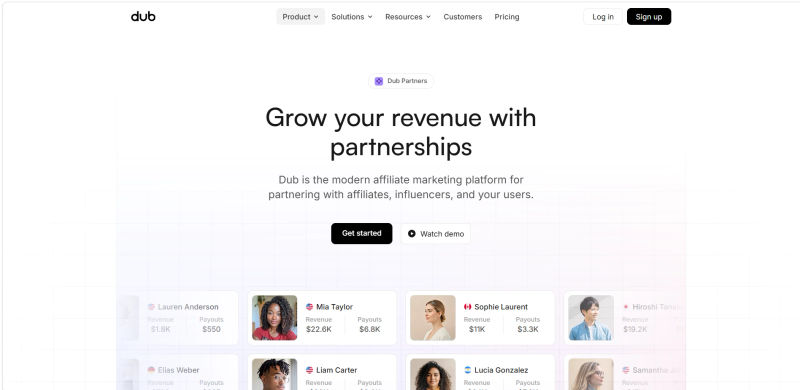
Automation and Payouts: It is important to clarify that Dub operates primarily as an attribution and link infrastructure tool. To automate payouts, it requires integration with an external financial gateway via its robust API and webhook capabilities. It provides the exact, real-time data required to trigger automated commissions in external financial systems without data loss.
Implementation Note: Basic link infrastructure can be set up in under 1 week, though mapping webhooks to external payout gateways may require an additional week of developer time.
4. Impact.com: Best for Global Enterprise Partnerships
Impact.com is an enterprise-grade powerhouse designed to manage every type of partnership from traditional affiliates and influencers to strategic B2B alliances and premium publishers. It is the go-to platform for massive global brands requiring maximum scalability.
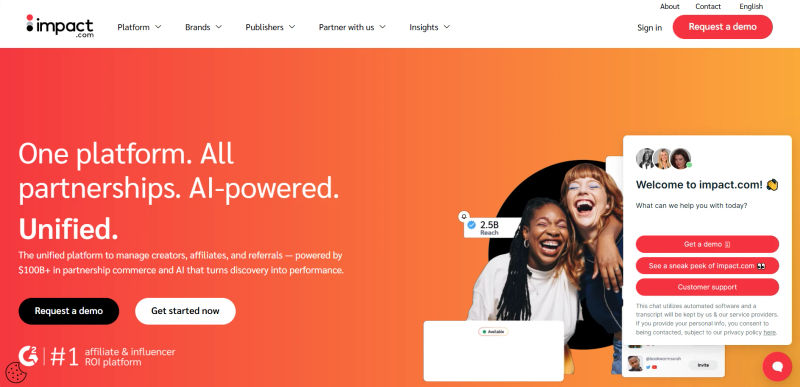
Automation and Payouts: Impact.com offers one of the most sophisticated automated payout engines on the market. It supports dynamic commission structures, performance-based bonuses, and automated cross-border payments in over 100 currencies. It also handles all global tax compliance and documentation automatically.
Implementation Note: Due to its vast capabilities and enterprise nature, expect a 2 to 3 month rollout period involving dedicated onboarding specialists and extensive API configuration.
5. Partnerize: Best for Data-Driven Brand Automation
Partnerize focuses on turning partnerships into a primary profit center through intense data analysis and intelligent automation. It is tailored for large brands that need to optimize their partner spend dynamically based on real-time ROI metrics.

Automation and Payouts: The platform automates commissioning with extreme granularity. You can set rules to automate payouts based on specific SKUs, customer types (new vs. returning), or profit margins. This ensures you are only paying for high-value conversions, protecting your bottom line.
Implementation Note: Similar to Impact.com, Partnerize requires a strategic 2 to 3 month implementation phase to properly map SKU-level data and establish complex commissioning rules.
6. TUNE: Best for Flexible Performance Marketing
TUNE is the veteran platform that has successfully adapted to the 2026 landscape, offering unparalleled flexibility for performance marketing networks and sophisticated advertisers. It is highly customizable, making it ideal for businesses with unique tracking requirements.

Automation and Payouts: TUNE automates complex payout structures, including cost-per-action (CPA), cost-per-lead (CPL), and revenue-sharing models. Its automated invoicing and payment integrations ensure that large networks of performance marketers are compensated swiftly and accurately.
Implementation Note: TUNE's flexibility means setup can vary, but most organizations complete their integration and white-labeling within 4 to 6 weeks.
7. FirstPromoter: Best for SaaS Referral Programs
FirstPromoter is specifically engineered to help SaaS companies launch and manage affiliate and customer referral programs with minimal friction. It is beloved by startups for its rapid implementation and direct focus on subscription metrics.
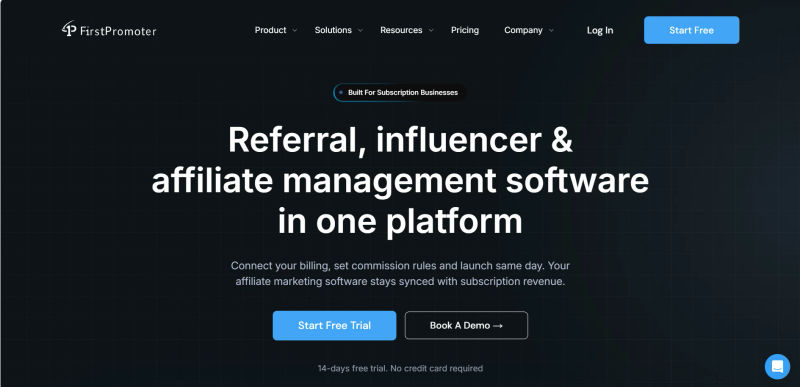
Automation and Payouts: FirstPromoter syncs directly with billing providers like Stripe, Recurly, and Chargebee. It automatically tracks recurring commissions, handles refunds seamlessly, and automates mass payouts to affiliates via PayPal or direct bank transfers, completely removing manual ledger updates.
Implementation Note: Implementation is incredibly fast, typically taking just 1 to 2 weeks, allowing partnership managers to onboard affiliates almost immediately.
8. Tapfiliate: Best for Seamless E-commerce Integration
Tapfiliate is a versatile, cloud-based affiliate tracking software that shines in the e-commerce sector. It is designed to integrate effortlessly with major online store builders and payment gateways, making it a top choice for direct-to-consumer (D2C) brands.
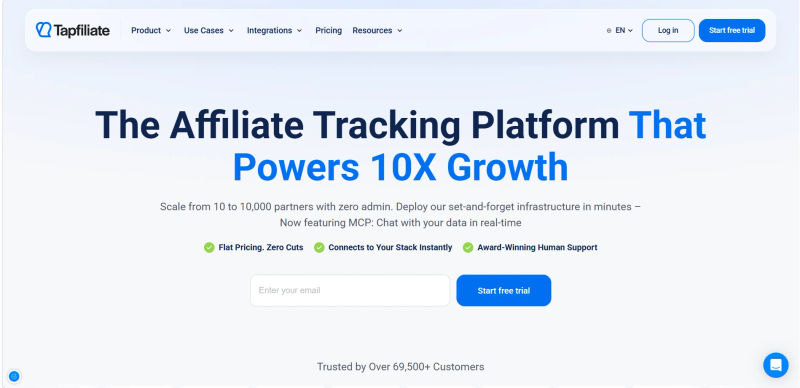
Automation and Payouts: Tapfiliate automates the calculation of one-time and recurring commissions. It supports automated mass payouts and allows brands to set up tiered commission structures or performance bonuses that trigger automatically when affiliates hit specific sales milestones.
Implementation Note: Thanks to native plugins for Shopify, WooCommerce, and Magento, Tapfiliate can be fully operational within 1 to 2 weeks.
9. Post Affiliate Pro: Best for Customization and Security
Post Affiliate Pro is renowned for its extreme customizability and robust security features. It caters to businesses that require a highly tailored affiliate infrastructure, offering both cloud-hosted and self-hosted deployment options.
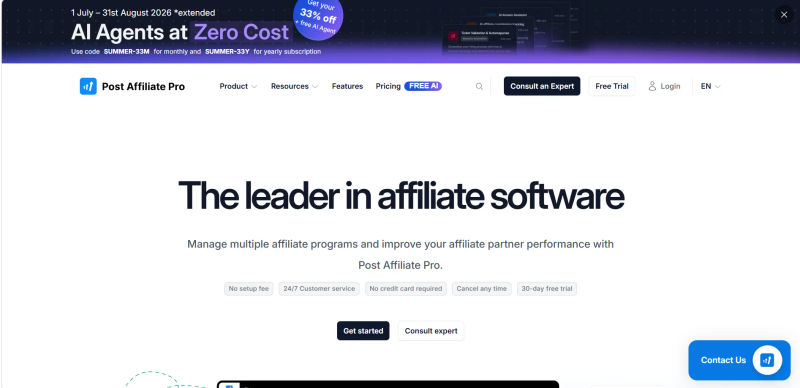
Automation and Payouts: The software automates complex, multi-tiered payout structures and supports mass payments through multiple gateways. It excels in environments where businesses need to define highly specific, rule-based commission triggers based on custom conversion events.
Implementation Note: Depending on whether you choose cloud or self-hosted deployment, implementation generally takes 2 to 4 weeks to configure custom tracking scripts and security protocols.
10. Rewardful: Best for Stripe-Based SaaS Affiliate Programs
Rewardful is the ultimate plug-and-play solution for SaaS companies running exclusively on Stripe. By bypassing traditional tracking scripts and integrating directly at the payment gateway level, it offers incredibly accurate, foolproof attribution.
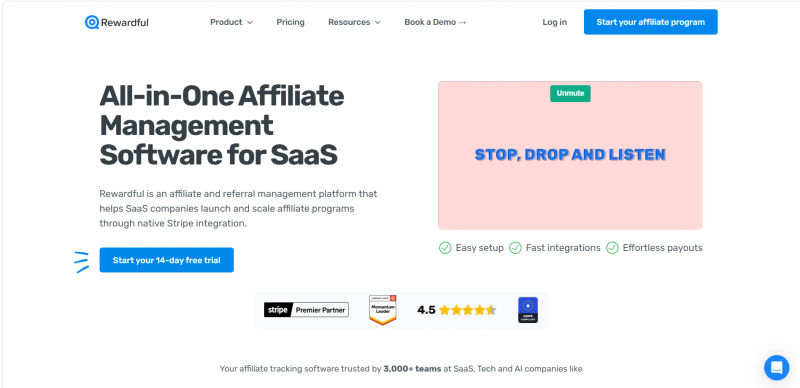
Automation and Payouts: Because Rewardful sits directly on top of Stripe, it automatically handles everything: upgrades, downgrades, cancellations, and refunds. It automatically calculates commissions and generates mass payout files that can be executed with a single click, ensuring zero discrepancies between sales and payouts.
Implementation Note: Rewardful offers one of the fastest setups on the market, usually completed in under 1 week due to its direct Stripe integration.
11. ReferralCandy: Best for Automated Customer Referrals
While many tools focus on professional affiliates, ReferralCandy specializes in turning your existing customer base into a massive, automated sales force. It is the premier tool for e-commerce brands looking to leverage word-of-mouth marketing at scale.

Automation and Payouts: ReferralCandy completely automates the reward fulfillment process. Whether you are offering cash payouts, store discounts, or custom gifts, the platform automatically detects successful referrals and instantly distributes the rewards to the referring customer without any manual intervention.
Implementation Note: With deep e-commerce integrations, ReferralCandy can be launched and integrated with post-purchase email flows in just 1 week.
12. Everflow: Best Partner Relationship Management Tools for Multi-Channel Tracking
Everflow is a powerhouse performance marketing platform designed for brands and agencies running complex, multi-channel campaigns. It goes beyond traditional affiliate tracking to measure the performance of media buying, influencer campaigns, and strategic partnerships in one place.

Automation and Payouts: Everflow offers robust automated payout capabilities, supporting complex CPA and revenue-sharing models. It integrates with major global payment gateways to facilitate automated, cross-border payments while maintaining strict financial compliance.
Implementation Note: Given its multi-channel tracking capabilities and MMP integrations, expect a 3 to 4 week implementation timeline to ensure all data streams are accurately mapped.
Find Perfect Software for Your Business
How to Transition to an Automated Affiliate Management Workflow
Transitioning to an automated workflow starts with selecting software that natively supports your business model and integrates with your existing tech stack. A B2B SaaS company managing complex, multi-touch sales cycles requires entirely different features than a D2C e-commerce brand driving high-volume, single-click conversions. Use this framework to evaluate and compare alternatives:
1. Match the Software to Your Business Model Identify platforms built for your specific conversion types. B2B SaaS programs need recurring commission structures, CRM lead tracking, and long-term attribution windows. Conversely, e-commerce models require robust coupon tracking, influencer gifting capabilities, and direct shopping cart integrations.
2. Map Your Tech Stack Integrations Automated workflows fail if systems cannot communicate. Audit the software's native integrations against your current infrastructure. Ensure deep, bi-directional syncing with your CRM (Salesforce, HubSpot), payment gateways (Stripe, Chargebee), and marketing automation tools. Prioritize platforms with flexible APIs and webhook support for custom data routing.
3. Calculate Total Cost of Ownership (TCO) Base subscription prices rarely reflect the final cost. When comparing alternatives, project your program's growth and calculate the TCO. Account for network access charges, payout processing costs, and hidden transaction fees that scale with your affiliate revenue.
4. Audit Security and the Partner Experience Verify that the platform meets 2026 data privacy regulations (GDPR, CCPA, SOC2) and automates global tax compliance (1099-NEC, W-8BEN) for payouts. Finally, test the partner-facing dashboard. An intuitive portal where affiliates can easily grab links and track payouts is critical for high adoption rates.
2026 Migration Guide: Moving from Manual Tracking to Automated PRM
Transitioning from manual spreadsheets or legacy systems to a modern automated platform can feel daunting. However, following a structured migration plan minimizes downtime and ensures partner trust remains intact. Here is a 4-step migration guide for partnership managers:
Step 1: Data Auditing and Legacy Cleanup Before touching a new platform, audit your existing partner data. Remove inactive affiliates, resolve any outstanding manual payouts, and consolidate your partner contact information into a single, clean CSV file. This prevents migrating bad data into your new, pristine PRM environment.
Step 2: API Mapping and Gateway Integration Work with your technical team to establish the core integrations first. Connect your CRM to ensure lead flow is tracked, and integrate your financial gateway (e.g., Stripe, PayPal) to establish the automated payout pipeline. Do not invite partners until these data pipelines are fully tested.
Step 3: Partner Onboarding and Communication Draft a clear communication sequence for your partners. Explain the benefits of the new platform (e.g., faster payouts, better dashboards). Provide them with step-by-step login instructions and require them to update their tax documentation (W-8BEN/1099) within the new secure portal before their next payout.
Step 4: Testing Payout Workflows and Net Terms Run a parallel payout cycle for the first month. Calculate commissions in your legacy system while allowing the new automated PRM to calculate them simultaneously. Compare the results to ensure accuracy. Verify that your net-30 or net-60 automation rules are triggering correctly before fully sunsetting your old process.
Join 10,000+ businesses who found their perfect partner software on AuthenCIO.
Comparison Table: 2026 Pricing and Key Features
To help you evaluate the landscape, we have compiled a strict, side-by-side comparison matrix of the top 12 platforms. This table focuses on exact 2026 pricing for standard business tiers and highlights the top 5-7 features corresponding to that specific plan.
Plan | Price | Best For | Features |
PartnerStack | Custom | B2B SaaS Startups | Automated Stripe payouts, CRM integrations, Multi-tier tracking, Partner portal, Custom rewards |
Reditus | Starts at $149/month | Growing SaaS | Stripe integration, Marketplace listing, Automated invites, Tiered commissions, Analytics dashboard |
Dub | Starts at $90/month | Link Management | Custom domains, API access, Link cloaking, Advanced analytics, Team collaboration, Webhooks |
Impact.com | Custom Pricing | Enterprise Brands | Cross-device tracking, Global tax compliance, Anomaly detection, Dynamic payouts, Custom contracts |
Partnerize Brand | Custom Pricing | Global Brands | Predictive discovery, Real-time reporting, Automated commissioning, Fraud prevention, API access |
TUNE | Starts at $1500/month | Performance Networks | Postback tracking, Mobile app tracking, White-labeling, API access, Fraud prevention, Custom portals |
FirstPromoter | Starts at $49/month | SaaS Referrals | Stripe integration, Multi-campaign tracking, Fraud protection, Automated payouts, Custom affiliate portal |
Tapfiliate | Starts at $89/month | E-commerce | Shopify integration, Multi-level marketing, Custom commission structures, White-labeling, Automated payouts |
Post Affiliate | Starts at $60/month | Custom Programs | Multiple tracking methods, Fraud protection, Mass payouts, Customizable interface, API access, Self-hosting option |
Rewardful | Starts at $49/month | Stripe SaaS | Deep Stripe integration, Unlimited affiliates, Custom domains, Automated payouts, Multi-currency, Zero transaction fees |
ReferralCandy | Starts at $39/month | D2C Brands | Automated email campaigns, Fraud prevention, Analytics dashboard, Custom rewards, E-commerce integrations |
Everflow | Custom Pricing | Multi-Channel | Click-level tracking, Smart links, Fraud prevention, Automated payouts, Real-time analytics, MMP integrations |
*Note: All prices shown reflect typical monthly billing. Vendors often offer lower pricing for annual commitments, but those discounts are excluded here for easier comparison. Actual costs may vary depending on your requirements, usage volumes, and negotiated terms.
Try AuthenCIO
Move to faster, smarter software evaluation with AI
Conclusion: Choosing the Best Software for Your 2026 Strategy
The transition from manual tracking to an automated partner management platform is the most impactful step a partnership manager can take in 2026. By implementing end-to-end PRM software, you eliminate the operational overhead of manual commission calculations, eradicate human error, and foster deep trust with your affiliates through reliable, automated payouts.
Whether you are a B2B SaaS company leveraging PartnerStack, an enterprise brand utilizing Impact.com, or a growing e-commerce store using Tapfiliate, the right software will transform your partner program from a logistical headache into a streamlined, high-margin revenue engine.