
Introduction
The era of single-format content is officially dead. For podcast producers and content strategists, the expectation is no longer just to publish a high-quality audio file. Today's audiences demand a fully integrated multimedia experience, spanning long-form video, vertical shorts, SEO-optimized blog posts, and engaging social media threads. Navigating this landscape without a massive production budget leads directly to "Content Treadmill" exhaustion—the relentless pressure to maintain a daily presence across every platform without burning out your team.
Streamline your software evaluation process
To survive and scale, decision-makers are turning to the most advanced AI audio and content repurposing tools the current landscape has to offer. However, the strategy has shifted from sheer volume to a "quality-over-quantity" approach. Producers do not just need more content; they need highly accurate, context-aware assets. These platforms have evolved far beyond basic text-to-speech or simple transcription. They are now sophisticated engines capable of automated content scaling for multimedia, transforming a single 60-minute recording into a month's worth of multi-channel assets in minutes.
Choosing the best podcast repurposing software requires looking past vague buzzwords and evaluating concrete business outcomes: transcription precision, multi-channel snippet generation, rendering speeds, and the ability to maintain a consistent brand voice without sounding robotic. In this comprehensive guide, we will explore the top 11 platforms designed to help you maximize content mileage.
Key Takeaways
AI content repurposing tools help businesses turn long-form content into multiple formats, saving time and production effort.
Video-focused platforms make it easier to create short-form clips for social media from longer recordings.
Podcast-focused tools simplify transcription, editing, show notes, summaries, and promotional content creation.
AI-powered automation reduces manual work and helps maintain a consistent publishing schedule.
Different tools serve different needs, so the right choice depends on content format, workflow requirements, budget, and publishing goals.
Businesses should prioritize tools that offer reliable output quality, useful integrations, and support for multiple distribution channels.
🏆Top 11 AI Content Repurposing Tools
Descript — Best for text-based video and podcast editing.
Opus Clip — Best for AI-powered short-form video creation.
Riverside.fm — Best for high-quality podcast and video production.
Castmagic — Best for turning recordings into written content.
Munch — Best for AI-powered social media clipping.
Swell AI — Best for automated content repurposing at scale.
Quso.ai — Best for multi-platform video repurposing.
Capsho — Best for podcast marketing content.
Async — Best for podcast recording and editing.
Adobe Podcast — Best for AI audio enhancement.
Otter.ai — Best for transcription and content extraction.
Software Covered in this Article
To help you understand Video and Design Software in the right context, this article refers to a carefully curated set of key players:








The Evolution of Content Repurposing in the Current Landscape
The landscape of podcasting and digital media has shifted dramatically over the past few years. By 2025, podcast consumption in the U.S. reached record highs, with 55% of the population aged 12 and older consuming podcasts weekly, translating to 773 million hours per week. More importantly, video redefined the medium. YouTube emerged as the dominant platform for podcast consumption, proving that successful distribution increasingly requires coordinated audio and video workflows.
Fast forward to 2027, and content repurposing is no longer an optional efficiency tactic; it is a cross-format distribution requirement. A single source recording must seamlessly transition into a full video upload, an audio-only episode, bite-sized vertical clips, accessible captions, searchable transcripts, quote graphics, and comprehensive newsletter sequences. Furthermore, projected 2027 growth statistics indicate a massive shift toward decentralized distribution platforms and spatial audio formats, requiring tools that can export highly specialized file types.
Technology driving these workflows has matured. We have moved past the era of "Native AI" wrappers that simply plugged into basic LLMs. Today's tools offer context-aware repurposing. They do not just transcribe; they understand the nuance, sentiment, and climax of a conversation to automatically select the most engaging clips.
Despite this automation, the "Human-in-the-loop" requirement remains critical. While AI can drastically reduce production time, near-perfect accuracy still requires minimal human oversight for quality control, especially concerning technical terminology, sensitive subjects, and brand alignment. The tools that win are those that empower strategists to edit efficiently rather than replacing the editorial process entirely.
Key Features to Look for in AI Audio Repurposing Software
When evaluating the best tools for scaling multimedia assets from single recordings, decision-makers must prioritize features that directly impact ROI and audience engagement. Here are the essential capabilities high-volume production teams require.
1. Transcription Precision and Niche Accuracy
Transcription is the foundational layer of all content repurposing. If the initial text is flawed, every subsequent asset—from captions to blog posts—will require manual correction, defeating the purpose of automation. Today, near-perfect accuracy requiring minimal human oversight is the baseline expectation. The true test lies in handling niche-specific terminology, such as medical, legal, or highly technical jargon. Top-tier tools now offer custom vocabulary inputs and dynamic learning algorithms that adapt to distinct speaker accents and industry dialects, ensuring that automated content scaling for multimedia starts with a flawless foundation.
2. Multi-Channel Snippet Generation
The bottleneck of manual video clipping has historically been the most resource-intensive part of podcast production. Modern AI video snippet generators solve this by analyzing the transcript for high-engagement hooks, emotional spikes, and complete thoughts. Beyond simply cutting the video, these tools automatically reframe horizontal footage into vertical formats, apply dynamic captions, and optimize the aspect ratio for specific social algorithms. This multi-channel snippet generation ensures that a single long-form interview yields dozens of platform-native assets without manual timeline scrubbing.
3. Automated Social Post Drafting and Asset Management
Generating a great video clip is only half the battle; distributing it effectively requires compelling copy. AI social media drafting for podcast producers has evolved to solve the problem of inconsistent brand voice. Instead of generating robotic, generic captions, advanced tools allow strategists to input specific prompt templates. This ensures the AI mimics the creator's unique tone, seamlessly drafting Twitter threads, LinkedIn posts, and newsletter sequences that align perfectly with the extracted audio or video snippet.
Data Privacy, Security, and Ownership
As enterprise-level podcasting scales, data privacy and ownership have become major concerns for decision-makers. Uploading proprietary interviews, internal corporate communications, or unreleased product discussions to a third-party AI tool carries inherent risk.
In 2027, evaluating a tool's security infrastructure is just as important as its feature set. Content strategists must look for platforms that offer SOC2 compliance and end-to-end encryption for all uploaded media. Furthermore, it is critical to understand the terms of model training. The best platforms explicitly state that your audio and video files will not be used to train their foundational AI models without explicit, opt-in consent.
Voice cloning and deepfake technology also present ethical and legal challenges. Enterprise tools now include strict voice authentication protocols, ensuring that synthetic voices can only be generated by the verified owner of that voice. When selecting a platform, prioritize vendors that offer clear data ownership policies, allowing you to permanently delete source files and generated assets from their servers upon request.
API and Integration Ecosystem for Enterprise Scaling
For high-volume content agencies and single-person media empires alike, a standalone application is often not enough. The true power of AI content automation is unlocked through seamless integration into existing production pipelines.
Decision-makers must evaluate the API capabilities of these platforms. Teams looking to automate their production pipelines via Zapier or Make.com require robust webhooks and API endpoints. A highly integrated ecosystem allows a producer to drop a raw audio file into a specific cloud folder, triggering an automated sequence that transcribes the audio, generates show notes, drafts social media copy, and pushes the final assets directly into a CMS or a Slack channel for final human review.
11 Best Podcast Repurposing Software Tools
To help you navigate the landscape, we have analyzed the top 11 platforms based on their ability to scale content workflows, maintain transcription precision, and generate high-ROI multimedia assets.
1. Castmagic
Castmagic has positioned itself as the premier tool for turning a single audio file into a comprehensive suite of written assets. It excels at extracting the core value from long-form interviews and instantly generating show notes, timestamps, social media threads, and blog posts. For content strategists, Castmagic's standout feature is its custom prompt engineering, allowing users to build specific templates that instruct the AI to write in their exact brand voice.
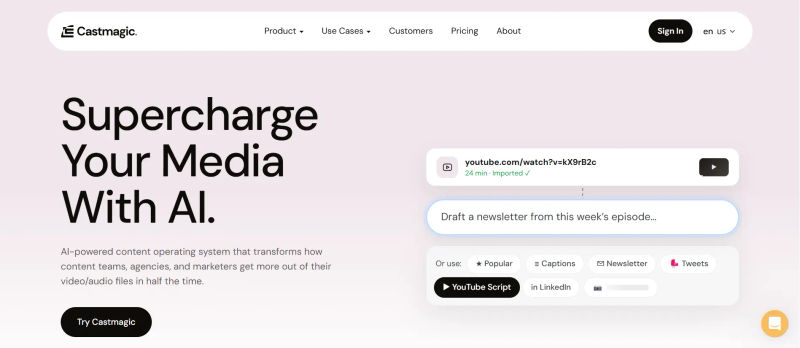
Strategic Consideration: Castmagic utilizes a credit-based pricing model based on minutes uploaded, which can limit high-volume text generation for daily, long-form podcasters on lower-tier plans.
2. Descript
Descript revolutionized the industry by allowing producers to edit audio and video by editing text. As a legacy editing software that has deeply integrated AI features, Descript bridges the gap between traditional timeline editing and automated repurposing. Its "Studio Sound" feature uses advanced AI to remove background noise, while its AI voice cloning capabilities allow producers to fix flubbed words by simply typing the correction.
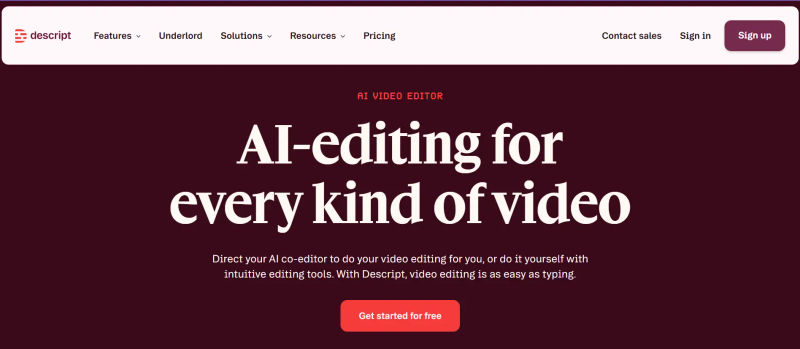
Strategic Consideration: Descript has a high learning curve for purely text-based marketers, and its heavy reliance on local desktop processing can slow down older machines.
3. Async
Async (formerly known as Podcastle) is designed for creators who want a seamless, all-in-one environment for recording, editing, and repurposing. Its primary strength lies in its studio-quality remote recording capabilities, ensuring that the raw audio fed into its AI engine is as clean as possible. Async's "Magic Dust" AI continues to be a standout feature for instant audio enhancement, built with strict consent and ethics controls.
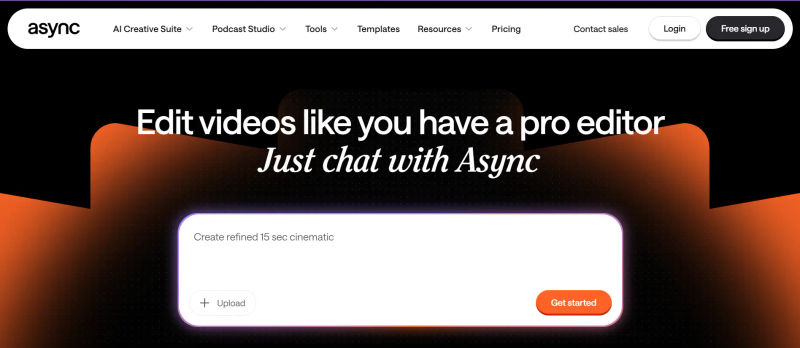
Strategic Consideration: While excellent for audio, Async offers fewer advanced features for viral video clipping compared to dedicated visual platforms.
4. Capsho
Capsho is specifically engineered to solve the marketing bottleneck for podcast producers. By uploading a single audio or video file, Capsho generates a complete marketing suite: episode titles, descriptions, email newsletters, LinkedIn articles, and promotional social media captions. Its highly advanced context-aware AI understands the narrative arc of an episode, ensuring the generated copy highlights the most compelling hooks.
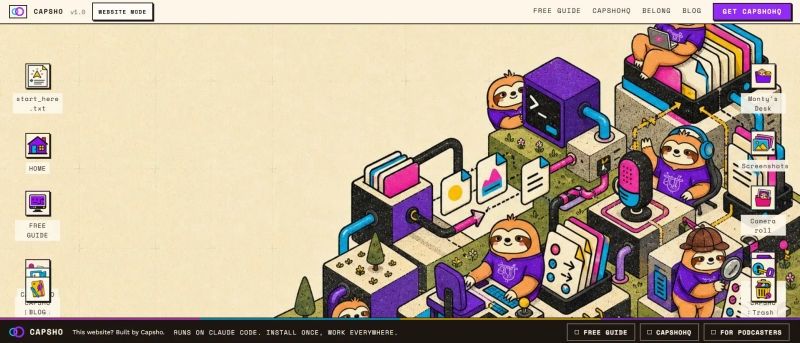
Strategic Consideration: Capsho's standard plans often impose strict monthly episode limits, requiring costly upgrades for high-frequency publishers.
5. Riverside.fm
Riverside.fm is the gold standard for high-fidelity remote video and audio capture, recording uncompressed 4K video directly locally. Recognizing the shift toward multi-modal outputs, Riverside has deeply integrated AI repurposing features directly into its recording environment. Its "Magic Clips" feature automatically identifies key moments and generates vertical, shareable shorts with burned-in captions with zero latency or rendering degradation.
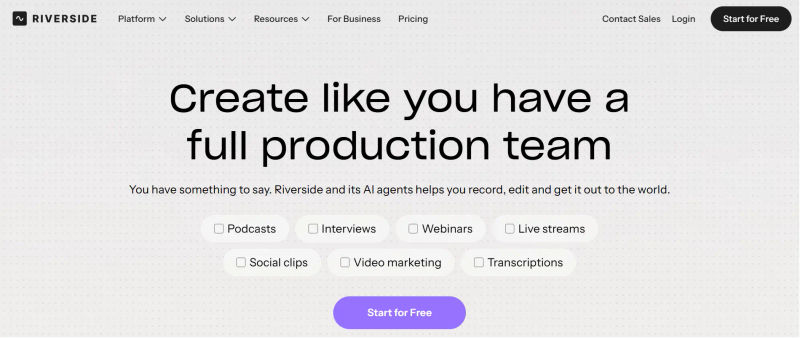
Strategic Consideration: Because it records locally, Riverside requires a strong, stable internet connection from all guests to ensure the final synchronized upload completes successfully.
6. Otter.ai
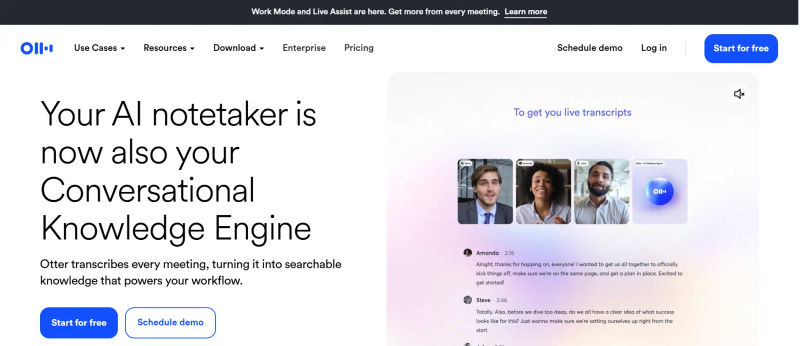
Otter.ai remains a dominant force in transcription precision and team collaboration. Its robust enterprise workflows make it a powerful asset for high-volume podcast production teams. Otter's real-time transcription allows producers to highlight key quotes and leave collaborative notes while an interview is still being recorded, utilizing custom vocabulary features for niche accuracy.
Strategic Consideration: Otter is primarily built for corporate meetings and lacks native video editing or social media clip generation capabilities.
Find Perfect Software For Your Business
7. Munch
As a leading AI video snippet generator for podcasts, Munch is laser-focused on social media virality. It analyzes long-form video podcasts against current social media trends to extract the clips most likely to generate high engagement. Munch excels at avoiding the "Uncanny Valley" effect; its auto-cropping technology uses advanced speaker detection to keep the subject perfectly centered, ensuring natural-looking video avatars.

Strategic Consideration: The credit-per-minute model can escalate costs rapidly for producers managing long-form daily shows or extensive back-catalogs.
8. Opus Clip
Opus Clip is a dedicated AI video snippet generator for podcasts that has mastered the art of vertical video conversion. It takes a single YouTube URL or raw video file and instantly generates dozens of short-form clips, each graded with an "AI Virality Score" to help strategists prioritize their publishing schedule. It features dynamic b-roll insertion and highly customizable brand templates.
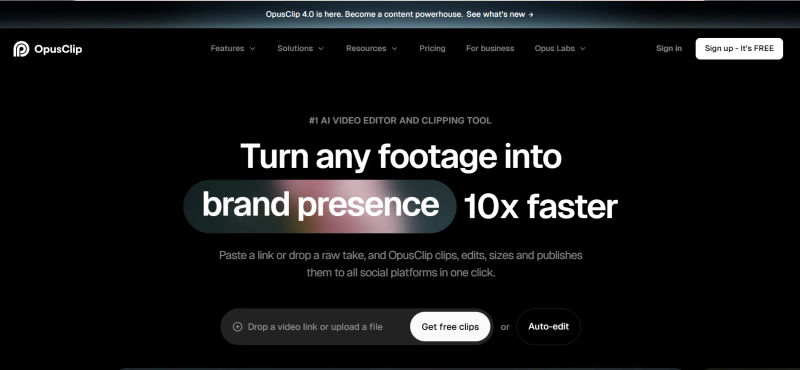
Strategic Consideration: When multiple speakers talk over each other, Opus Clip's automated rendering can sometimes misalign captions, requiring manual adjustment.
9. Swell AI
Swell AI is built specifically for enterprise teams and high-volume content agencies looking to automate their production pipelines via API capabilities. It is the ultimate tool for developers who want to integrate AI repurposing into their existing tech stacks. Swell AI can ingest audio, transcribe it with near-perfect accuracy, and automatically route different formatted outputs to specific CMS platforms.
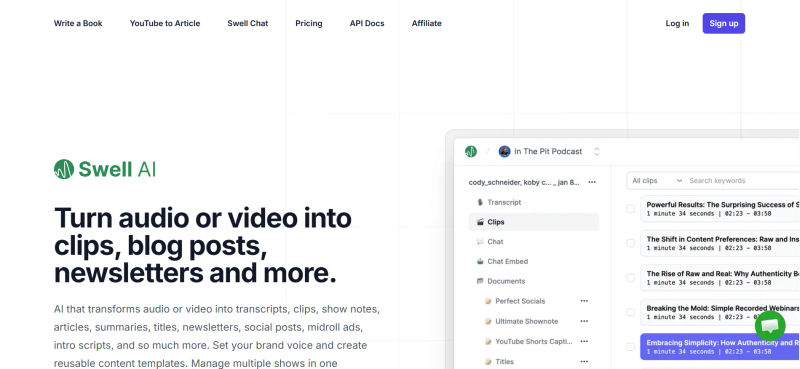
Strategic Consideration: Initial setup and workflow optimization require technical knowledge of API endpoints and webhook configurations.
10. Quso.ai
Quso.ai tackles platform fatigue head-on by allowing producers to automatically resize and re-optimize content for every major social platform simultaneously. Its robust "Brand Kit" feature ensures that every generated clip automatically applies the correct fonts, colors, and logos. Quso.ai also features "Cut-Magic" transitions that automatically switch camera angles based on who is speaking.
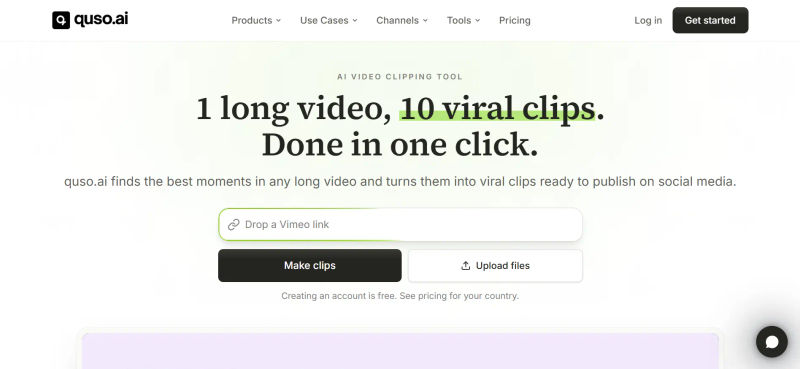
Strategic Consideration: High-definition 1080p rendering and advanced brand kit features are often locked behind higher-tier subscription paywalls.
11. Adobe Podcast
Adobe Podcast represents the successful integration of AI into legacy, professional-grade software ecosystems. As part of the broader Adobe Creative Cloud, it offers seamless integration for teams already using Premiere Pro and Audition. Its standout feature is the AI-powered "Enhance Speech," which can make a cheap headset microphone sound like a professional studio setup.
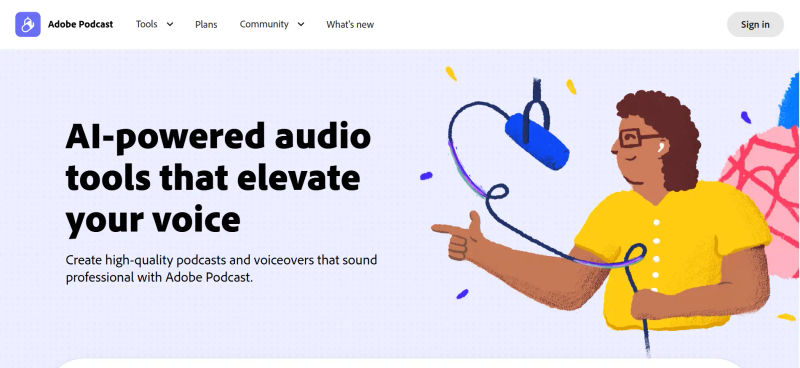
Strategic Consideration: Adobe Podcast is best utilized within the Adobe ecosystem; standalone users may find the broader Creative Cloud subscription cost prohibitive.
Best Tools by Category Summary
To simplify the decision-making process, it is helpful to categorize these tools based on their primary strengths and your team's core content format.
Best for Video-First Workflows: If your primary goal is generating visual assets for YouTube Shorts, TikTok, and Instagram Reels, tools like Opus Clip, Munch, and Quso.ai are the industry leaders. They excel at auto-framing, dynamic captioning, and visual virality scoring.
Best for Audio-First Production: For traditional podcasters focused on pristine sound quality and seamless recording, Riverside.fm, Async, and Adobe Podcast provide the highest fidelity. They prioritize uncompressed capture and advanced noise reduction over social media gimmicks.
Best for Text-Heavy and SEO Strategies: If your strategy relies on turning audio into written newsletters, blog posts, and LinkedIn articles, Castmagic and Capsho are unmatched. Their context-aware prompt templates ensure your written content maintains a highly persuasive, conversion-focused brand voice.
2027 Pricing and Feature Comparison Table
To help you evaluate the ROI of each tool based on subscription cost versus capabilities, we have compiled a comparison of the pricing, top features, and key integrations for the primary plans of each platform.
Plan | Price | Best For | Features | Key Integrations |
Castmagic | Starts from $29/month | Solo content creators | 500 minutes, Custom prompts, Workspaces, Magic Chat, Timestamps | Slack, Zapier, HubSpot |
Descript | Starts from $24/month | Video editors | 10 hrs transcription, Filler word removal, 4K export, AI voices | SquadCast, YouTube, Restream |
Async | Starts from $39.99/month | Audio-first podcasters | Unlimited recording, 10 hrs transcription, Magic Dust AI, Voice cloning | Apple Podcasts, Spotify |
Capsho | At $379 (one time payment) | Marketers | 4 episodes/month, Show notes, Social captions, Email drafts | WordPress, Mailchimp, LinkedIn |
Riverside.fm | Starts from $29/month | High-fidelity interviews | 15 hrs separate tracks, 4K video, AI Magic Clips, Teleprompter | Premiere Pro, Spotify, Descript |
Otter.ai | Starts from $8.49/month | Team collaboration | 1200 mins transcription, Custom vocabulary, Slide capture, Workspaces | Zoom, Google Meet, Slack |
Munch | Starts from $68/month | Viral clip hunters | 200 mins upload, AI trend analysis, Auto-cropping, Subtitle generation | TikTok, Instagram, YouTube |
Opus Clip | Starts from $9/month | Short-form video | 3000 mins processing, AI virality score, Auto-emojis, Brand templates | YouTube, Google Drive, Dropbox |
Swell AI | Starts from $29/month | Enterprise scaling | 15 hrs upload, API access, Prompt templates, Multi-language support | Zapier, Make.com, Notion |
Quso.ai | Starts from $29/month | Social media managers | 300 mins upload, Brand kit, 1080p rendering, Cut-magic transitions | Hootsuite, Buffer, TikTok |
Adobe Podcast | Starts from $19.99/month | Professional enhancement | Enhance speech, Mic check, Studio recording, Bulk upload | Premiere Pro, Audition, Express |
*Note: All prices shown reflect typical monthly billing. Vendors often offer lower pricing for annual commitments, but those discounts are excluded here for easier comparison. Actual costs may vary depending on your requirements, usage volumes, and negotiated terms.
The Repurposing Blueprint: Choosing the Highest-ROI Platform
Selecting the best podcast repurposing software requires more than just looking at a feature list; it requires a strategic alignment with your production goals. To ensure you are making the right choice, decision-makers should utilize a "Repurposing Blueprint" to evaluate potential ROI.
First, calculate the "Cost per Asset" and "Hours Saved" versus the "Subscription Cost." If your team currently spends 10 hours a week manually finding clips (costing roughly $400 in labor), a $49/month tool like Munch offers immediate, massive ROI. Conversely, if your bottleneck is writing promotional copy, investing in Capsho or Castmagic will yield the highest return.
Consider implementing a Pilot Program before fully committing your enterprise to a single tool. Select three recent podcast episodes and run them through the freemium tiers or sandbox environments of your top two software choices. Evaluate the outputs based on this checklist:
Transcription Accuracy: Did the AI correctly spell industry-specific terms and guest names?
Brand Voice Consistency: Did the automated social media drafting sound authentic, or did it require heavy manual rewriting?
Workflow Integration: How seamlessly did the tool connect with your existing CMS, Slack channels, or Adobe editing suites?
Human-in-the-Loop Friction: When the AI inevitably made a mistake, how easy was the user interface for your editors to apply corrections?
By directly linking your software choice to your specific production bottlenecks and rigorously testing the output quality, you can build a streamlined, highly automated workflow that scales your multimedia presence without scaling your payroll.
Try AuthenCIO
Move to faster, smarter software evaluation with AI
Conclusion: Automate Your Content Production Today
The mandate for production teams is clear: you must maximize your content mileage to remain competitive. Relying on manual editing and siloed production workflows is no longer sustainable in a landscape dominated by multi-channel multimedia consumption. By integrating the right AI audio and content repurposing tools, podcast producers and content strategists can transform a single recording into a vast, highly engaging media empire.
Whether you prioritize transcription precision, rapid video snippet generation, or automated social post drafting, there is a platform tailored to your specific enterprise needs. The key is to evaluate your workflow, identify your bottlenecks, prioritize data security, and select the tool that offers the highest ROI for your team.